
Chinese Herbal Supplement Guide to TCM Botanicals

Key Takeaways (TL;DR)
The same source of medicine is an important concept of traditional Chinese medicine, many of which are both food and medicine. As the global demand for natural health products grows, traditional applications of drugs in modern health products grow wider.
The same source of medicine is an important concept of traditional Chinese medicine, many of which are both food and medicine. As the global demand for natural health products grows, traditional applications of drugs in modern health products grow wider.

What Does Food-Medicine Homology Mean?
“Medicinal-and-dietary homology” refers to certain substances that can be consumed as everyday foods and also possess medicinal value. China’s Ministry of Health has published a catalogue of medicinal-and-dietary-homology items containing 100+ substances, such as goji berry, red date (jujube), astragalus, dong quai, ginseng, and lingzhi (reishi). These raw materials are used in health supplements and are supported both by traditional experience and by validation from modern scientific research.
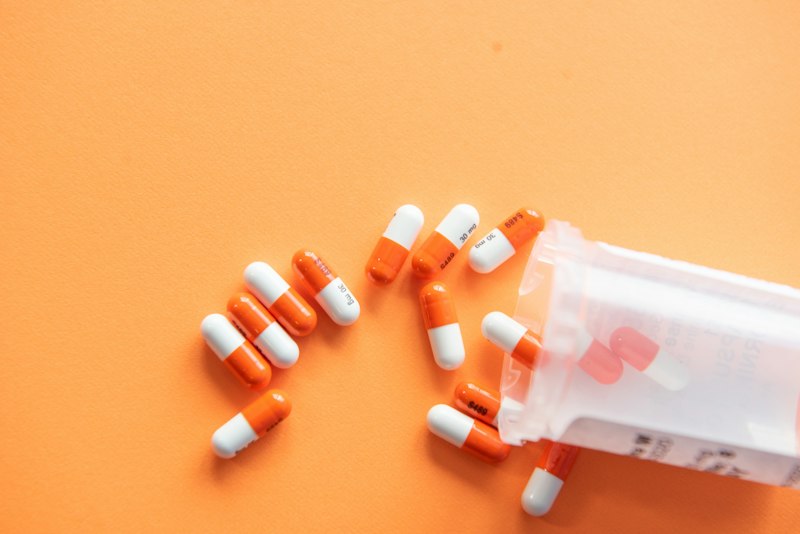
Common Traditional Chinese Herbs in Supplements
Goji berry — traditionally used in TCM and often included in formulas associated with eye and general wellness; noted for antioxidant constituents in research contexts. Red date (jujube) — traditionally used to nourish blood and support complexion; commonly paired with calming formulas. Astragalus — used in TCM to ‘tonify qi’ and support defensive functions. Ginseng — regarded in TCM as a qi‑tonic for vitality and fatigue management. Angelica sinensis (dong quai) — used to nourish and activate blood and to support menstrual comfort in TCM theory. Sour jujube seed (suan zao ren) — a classic calming herb in TCM sleep‑support formulas. Poria (Poria cocos) — used to support spleen function, fluid balance and calmness in TCM. Lily bulb — used in TCM to moisten the lung and soothe the spirit.
| Topic | Key Summary |
|---|---|
| The concept of traditional botanicals | “Medicine‑food homology” refers to substances that may be consumed as everyday foods and are also recorded for traditional medicinal use. The Chinese Ministry of Health has published a medicine‑food homology catalogue that lists many such items, such as goji berries. |
| Common Traditional Chinese Herbs in Supplements | Goji berry — traditionally associated with eye and general wellness; contains constituents noted for antioxidant activity in research contexts. Red date — used in TCM to nourish blood and complement calming blends. Astragalus — a qi‑tonic in TCM, commonly included for seasonal wellness formulas. Ginseng — a classic qi‑tonic used for vitality in TCM. |
| Modern application trends | Standardised extraction — apply modern techniques to help achieve consistent marker compound levels. Compound formulation — use TCM compatibility principles to design balanced, science‑informed formulas. |
| Key Considerations | 1. Quality of raw materials — source reputable medicinal materials from recognised origins to support consistent marker profiles (e.g. goji from Ningxia, dong quai from Gansu, ginseng from the Changbai Mountains). 2. Extraction process — select suitable solvents, time/temperature controls and validated methods to manage actives and impurities. |

Modern Extraction and Formulation Trends
1. Standardised extraction — employ modern extraction technologies to help achieve consistent marker compound targets. 2. Compound formulation — integrate Traditional Chinese Medicine compatibility theory with contemporary research when designing formulas. 3. Modern dosage forms — prepare herbs as capsules, tablets, powders and other convenient formats. 4. Scientific assessment — evaluate traditional uses with appropriate laboratory or clinical studies. 5. Internationalisation — present TCM health‑maintenance concepts in formats suitable for target markets.
Need a Professional Manufacturing Solution?
Complimentary project consultation with dedicated follow-up based on your product needs. Small-batch sampling is available, and production batch sizes are confirmed per project.

Raw Material Quality and Classification Checks
1. Raw material quality — Source premium medicinal herbs from their authentic production regions to ensure active ingredient content (e.g., goji berries from Ningxia, dong quai from Gansu, ginseng from the Changbai Mountains). 2. Extraction methods — Choose the most suitable extraction method per raw material: water extraction (polysaccharides), alcohol extraction (flavonoids, saponins), or supercritical extraction (volatile components). 3. Compatibility contraindications — Follow traditional Chinese medicine compatibility principles and avoid antagonistic combinations (e.g., ginseng with li lu/Veratrum; licorice with Da Ji/Euphorbia). 4. Regulatory compliance — Ensure all raw materials are permitted as food ingredients in the target market. China's Ministry of Health "Catalogue of Substances that are Both Food and Medicine" is a primary reference. 5. Quality standards — Establish specifications for active ingredient content, pesticide residues, heavy metals, aflatoxins, etc. 6. Standardized extraction — Ensure consistent active ingredient content across batches to avoid inter-batch variability.

Formulation Considerations for Food-Medicine Homology Concepts
Time-dependent health care providers have a unique advantage: a team of professional caregivers – members of the team are equipped with a dual background of Chinese medicine and modern nutrition, capable of designing a science-based Chinese medicine-care formula. 2. The supply chain of quality raw materials — in cooperation with the GAP certification base in multi-track land-use areas to ensure that the material is stable. 3. Advance extraction equipment — with water, ethanol and ultra-frontier extraction equipment — can select the best works from different feedstocks. Modern agent technology — using traditional drugs as capsules, tablets, powders, etc. to increase consumer acceptance. Complete Quality System — FSSC 22000 certification to ensure safety and quality assurance of Chinese medicine health products. Export support — help clients verify the regularity of raw materials in the target market and process export certificates. Hot pharmacological homogenesis formulations: Lingji immunosuppressants, acid-fossilers, osteoporosis, yellow plating gas etc.

Market Positioning by Audience and Region
Pharmacological co-products need attention in market positioning: 1. Cultural acceptance – China’s market has a natural cultural acceptance of Chinese medicine care, and can use the positioning of “traditional wisdom, modern technology.” Young strategies — Traditional drug images tend to be aging, requiring the attraction of young consumers through modern packaging, new formulations (e.g., drinking water, soft sugar) and social media marketing. 3. Efficacy is clear — avoiding the use of more than a professional medium-medicine term, describing efficacy in a language that consumers can understand (e.g. “Sleeping God” rather than “Securing God, transportation kidneys”). Quality visualization — demonstration of the origin of raw materials, extraction of works, quality testing reports, etc., to build consumer trust. Export considerations - Some of the drugs may not be recognized as food raw materials in overseas markets and require prior identification of the legal requirements of the target market.
Overseas Market Checks for Herbal Ingredients
Overseas demand for medicine‑food homology ingredients varies by region. Before export, check market acceptance and consumer familiarity (e.g. South‑East Asia, Japan/Korea, Europe/North America) and, critically, verify ingredient legality in the destination market. Prepare product descriptions in English and/or local languages, and confirm any required export documents or certifications.
Article Recap
- The concept of traditional botanicals
- Common Traditional Chinese Herbs in Supplements
- Modern application trends
- Key Considerations
- Advantages of Medicine-Food Homology
Project‑based delivery scheduling.
Easy Health — a Hong Kong health‑supplement manufacturer offering OEM/ODM, formulation development and packaging services. Certification scope and supporting documents (e.g. FSSC 22000‑related food‑safety management) can be provided for review on request.
Evidence used for product planning should identify the original study or guidance, its scope and its limitations. Review proposed product claims separately before approving label copy.
Chinese Herbal Supplement Guide FAQs
Is the drug product suitable for export?
We need to confirm the laws of the target market. Some of the drugs may not be legal food raw materials in some countries. The South-East Asian market has the highest acceptance, and the European-American market needs to verify the regularity of raw materials on a case-by-case basis.
The target group for Chinese medicine?
The main clients are people over the age of 35 who are focused on subsistence, Chinese communities, international consumers interested in natural health care. There is a clear trend towards youth, which attracts young people through modern packaging and portable formulations.
Want to know more about contract manufacturing?
Our professional team will provide you with free counselling at any time.
Free WhatsApp Consultation