Liquid supplement packaging for bottles and droppers
This page focuses on bottle packaging for liquid supplements: oral liquids, syrups, drops and liquid oils (e.g., fish oil). Compare glass, PET and HDPE with amber light protection, pair with foil seals, tamper‑evident caps or droppers, and manage oxidation and oil/moisture‑resistant labels. Easy Health provides OEM/ODM, label and box design, sampling and packaging coordination, individually assessed by a project manager.
Summary:Liquid supplement packaging must balance light protection, leakage control and oil/moisture‑resistant labelling. Easy Health operates in Hong Kong and coordinates projects with reference to recognised food safety frameworks (e.g., FSSC 22000) within GMP‑aligned working areas, offering bottle selection, label/box design, sampling and packaging coordination. Fish oil liquid packaging design is assessed and confirmed by a dedicated project manager.
How should you choose bottles and closures for liquid supplements?
Start with formulation: oxidation sensitivity, oil content, viscosity and volatility. Then match material/colour (amber for light protection), volume and neck finish. Oral liquids often use PET or glass with tamper‑evident caps and foil seals; drops pair with glass or HDPE plus droppers; fish oil softgels typically go in HDPE/PET jars with moisture‑tight seals. Use oil‑ and moisture‑resistant label stocks. Details and timelines are project‑dependent and confirmed by a project manager.
Bottle materials and colour for liquid supplement packaging
When selecting liquid supplement packaging, start with material and colour. Glass offers strong barrier and chemical inertness for oxidation‑prone or alcohol‑containing formulas. PET is lightweight and clear to showcase liquids; choose amber to mitigate light sensitivity. HDPE provides impact and chemical resistance, often used for syrups and children’s products. For fish oil packaging design, softgel bottles commonly use HDPE or thick‑wall PET with desiccants and light protection. Amber helps reduce photo‑oxidation and colour shifts. Pair the chosen material with suitable closures and label stocks to build a complete protection system. Easy Health can advise on bottle options and coordinate sampling per project.
- Glass is inert for sensitive formulas
- PET is light/clear; use amber for light‑sensitive
- HDPE resists impact; common for syrups
- Fish oil softgels often use HDPE plus desiccant
Closures and accessories: foil seals, tamper-evident caps and droppers
The closure system drives leak protection and user experience. A common setup is an induction foil seal paired with a tamper‑evident cap to improve first‑open integrity and transport safety. Drops benefit from glass or plastic droppers; orifice size and dropper tip should match viscosity and target drop rate. Syrups may include a dosing cup or reducer for controlled pouring. Anti‑drip and wiping features help reduce residue that soils labels. For filling and sealing operations, Easy Health confirms collaboration arrangements case by case and coordinates material and printed component supply.
- Foil seals improve tightness and first‑open integrity
- Tamper‑evident caps aid transit and retail control
- Dropper geometry must match viscosity
- Dosing cup/reducer improves portion control
Visual highlights for bottle materials and project checks
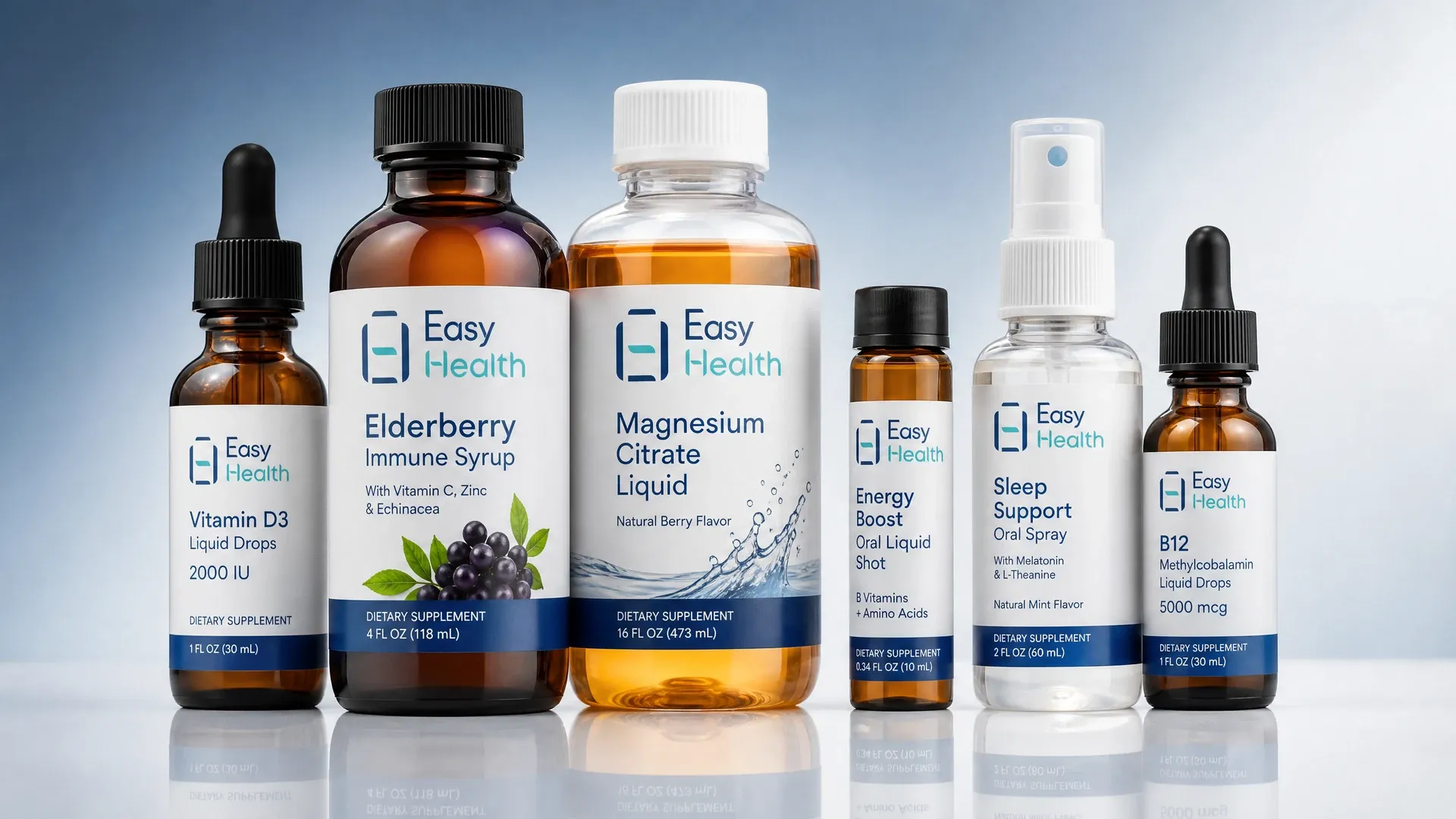
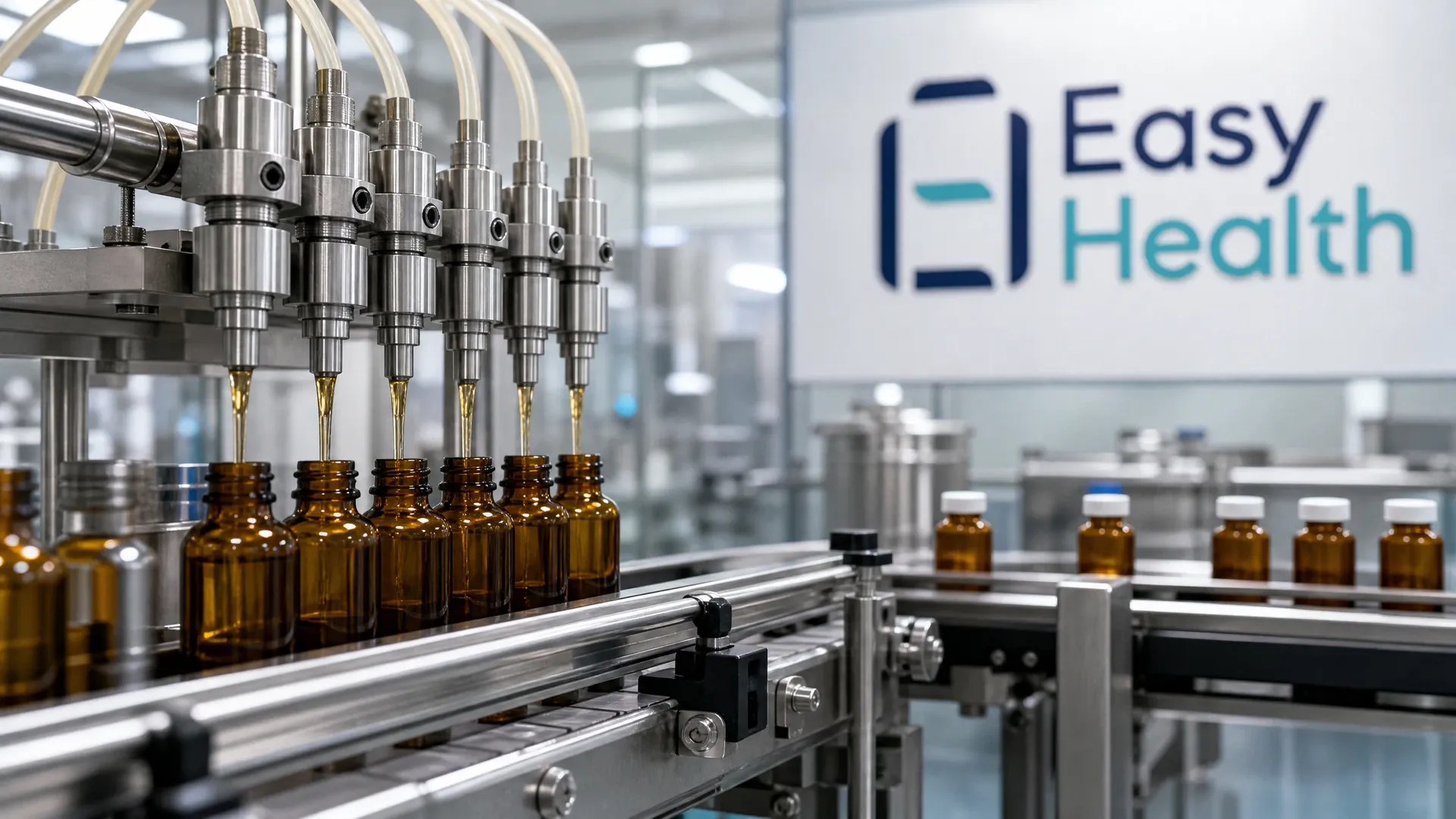
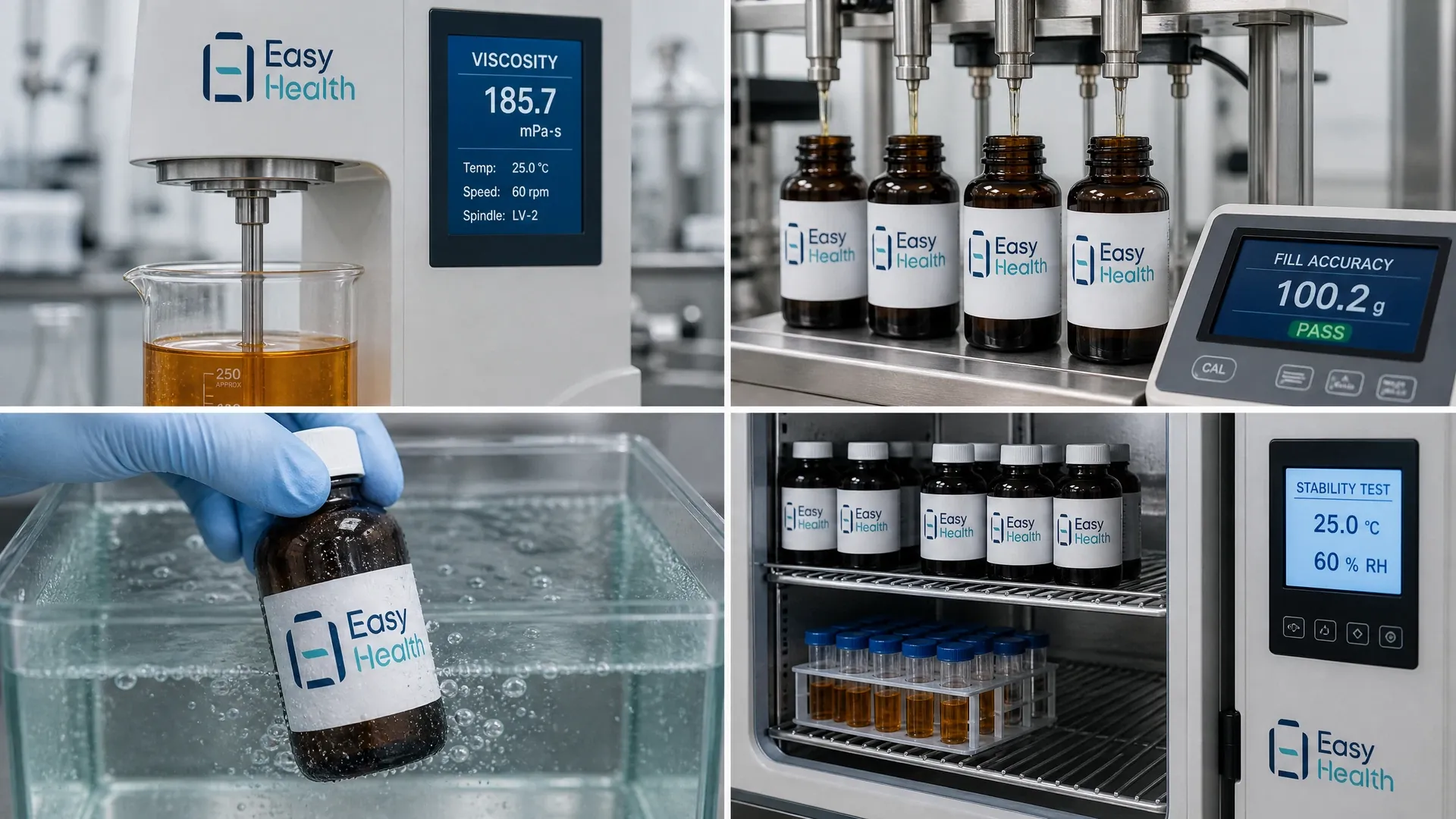
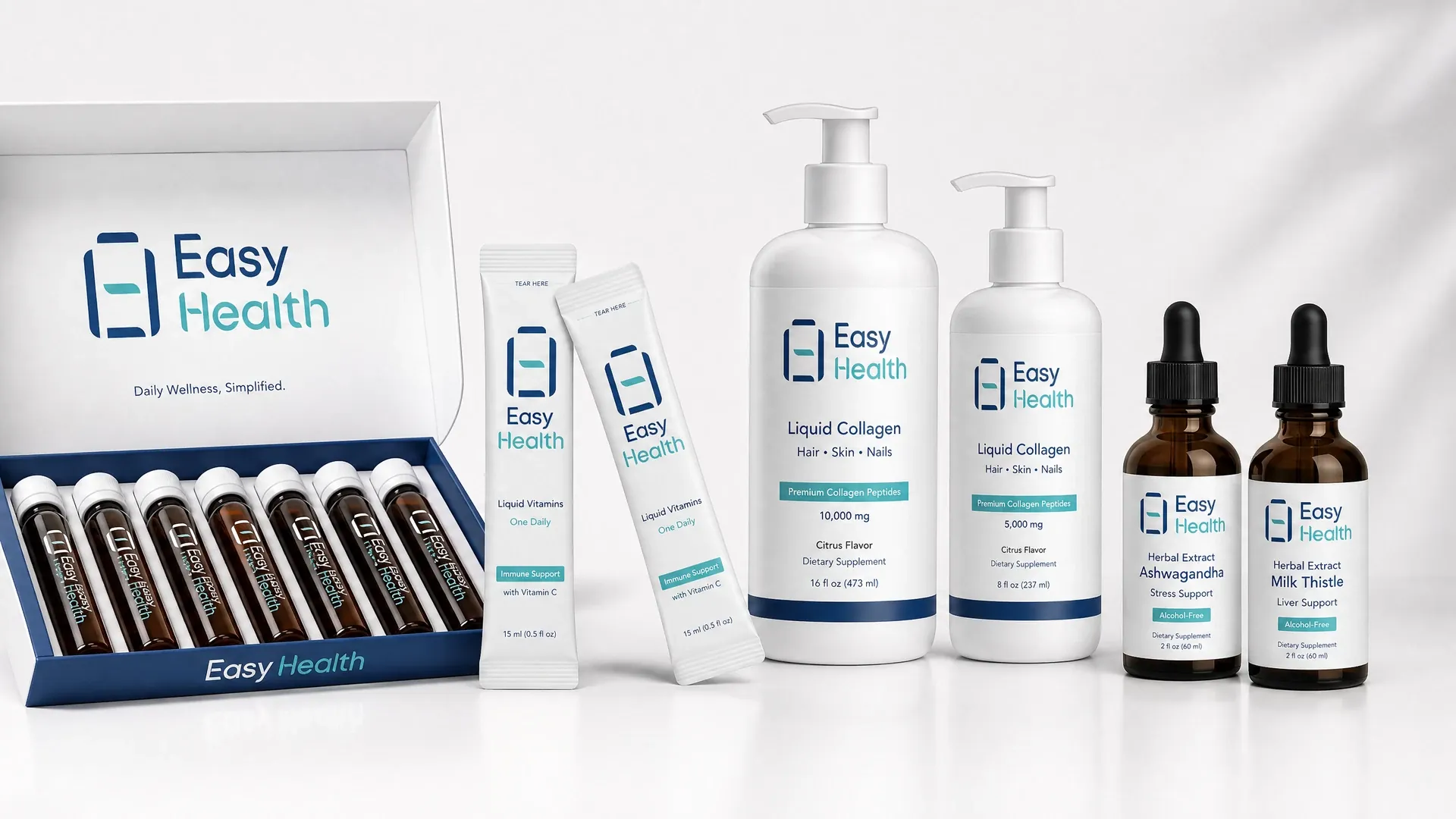
The images illustrate the liquid supplement bottle range, project‑confirmed filling and sealing collaboration, common quality checks (seal integrity, drop rate, temperature tolerance) and available pack types. They also contrast amber versus clear bottles for display and light protection.
Oxidation, light protection and labels for liquid fish oil packaging
Oxidation and light sensitivity are common risks. Use amber bottles, manage headspace, apply foil seals and match liner materials to reduce exposure. For fish oil and oil‑rich formulas, watch for odour and oil seepage over time; specify PP/PET film labels or over‑lamination with oil‑resistant adhesives. Thermal cycling and transit vibration may trigger leaks—arrange temperature and transport simulation tests where appropriate. Easy Health provides recommendations on materials, closures and labels, and coordinates sampling and production test arrangements.
- Amber reduces photo‑degradation
- Manage headspace and liner selection
- Choose oil/moisture‑resistant labels
- Arrange transport simulation if needed
Labelling essentials for Hong Kong and Mainland China prepackaged foods
For Hong Kong prepackaged foods, consider Cap. 132W and the “1+7” nutrition labelling framework where applicable. Labels may be in Chinese or English; if both languages are used, the name and ingredients must appear in both. Typical items include product name and ingredients, net quantity, origin (where applicable), allergen declaration, and date marks as “best before” or “use by”. For Mainland sales, refer to GB 7718 and GB 28050 principles. Chinese proprietary medicines/herbal materials fall under Cap. 549, with different rules. Easy Health can assist in checking key labelling points and coordinate printing and carton arrangements; details and timelines are confirmed by a project manager.
- Cap. 132W applies to HK prepackaged foods
- “1+7” nutrition labelling where applicable
- Use “best before”/“use by” date wording
- Refer to GB 7718/GB 28050 for Mainland
Process for liquid supplement bottles
- Needs and formulation review:Assess formula traits, target markets and fill volumes to define light protection, leakage control and labelling scope.
- Material and closure proposal:Recommend glass/PET/HDPE with amber options and matching foil seals, tamper‑evident caps or droppers.
- Label content and artwork:Assist in checking key declarations and bilingual layout; coordinate label and carton artwork preparation.
- Sampling and functional checks:Coordinate sampling per project; arrange drop rate, seal and temperature tolerance tests as needed, timeline confirmed by the manager.
- Production coordination and dispatch:Coordinate packaging production in our Hong Kong GMP‑aligned environment and confirm packaging materials and dispatch arrangements.
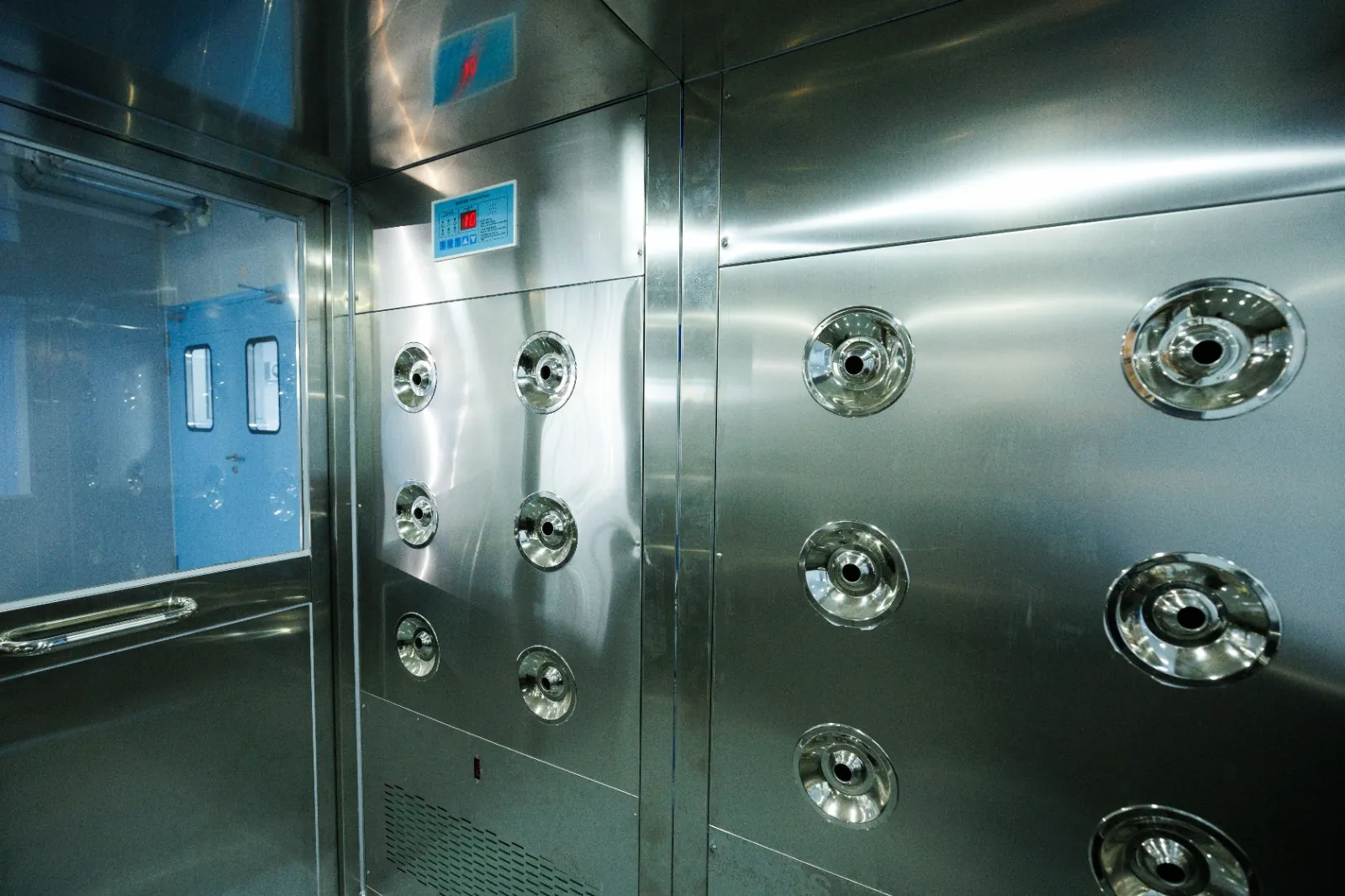
Inside the Easy Health Hong Kong Facility


Bottle material comparison for liquid supplements
| Criteria | Glass | PET | HDPE |
|---|---|---|---|
| Barrier/inertness | High, very inert | Medium, needs closures | Medium, good for many formulas |
| Light protection | Amber/dark available | Amber available | Opaque/coloured available |
| Suitable formats | Oral liquids, drops | Oral liquids, syrups | Syrups, children’s, drops |
| Closures | Foil + TE cap/dropper | Foil + TE cap | Foil + TE cap/reducer |
| Look/handling | Premium, heavier | Clear product display | Impact‑resistant, practical |
Note: Fish oil softgels often use HDPE or thick‑wall PET jars with desiccants and light protection; liquid fish oil requires stronger light protection and sealing.
Pre-launch checklist for liquid bottles
- Is the formula oxidation‑prone or oily; do you need amber and a foil seal?
- For drops, do viscosity and target drop rate match the orifice and tip?
- For fish oil liquids, do you need amber/light‑protected bottles and a secure foil seal?
- Do label stocks offer oil/moisture resistance and suitable adhesive?
- Transit conditions and thermal cycling—arrange simulation tests?
- Bilingual text (if using both languages), allergens and date marks included?
Bottled liquid supplement FAQs
Should liquid fish oil use amber glass or PET?
For liquid fish oil, amber glass is common for inertness and light protection; amber PET can be considered with induction foil and suitable liners to manage oxidation. For fish oil softgels, HDPE or thick‑wall PET with desiccants is typical. The final choice depends on channels, transit and display needs and is confirmed case by case.
How do we set drop rate and orifice for droppers?
Measure formulation viscosity and target drop size, then select tip orifice and material (glass or plastic). Sampling and drop‑rate tests can be coordinated, checking anti‑drip, backflow and residue to fine‑tune reducers or wipers.
What should you do if labels lift on oily products?
Specify PP/PET film labels or oil‑resistant over‑lamination with oil‑tolerant adhesive. Optimise surface energy and label panel placement away from pour/grip zones. Oil/moisture testing can be arranged and application methods adjusted.
How can leakage in transit be reduced?
Use induction foil plus tamper‑evident caps, specify compatible liners, control headspace and torque, and arrange thermal/vibration tests where needed. Outer cartons, inserts and upright handling instructions further help.
What label fields are commonly required?
For Hong Kong prepackaged foods, labels may be in Chinese or English; if both languages are used, the name and ingredients must appear in both. Common fields include product name and ingredients, net quantity, allergen statement, origin (where applicable) and date marks (“best before”/“use by”). For Mainland, refer to GB 7718 and GB 28050. Easy Health can help check key items and layout.
Related Packaging Services
Discuss your liquid supplement packaging needs
Exploring liquid supplement packaging or fish oil packaging design? Message Easy Health on WhatsApp. Share your formulation and target markets and we will advise on bottles, closures, labels/boxes, sampling and packaging production coordination. Arrangements and timelines are confirmed by our project manager.
Last updated: