Packaging Project Brief for Health Supplement Brands
Easy Health is based in Hong Kong. Projects reference GMP principles and the FSSC 22000 food safety management framework; certificate/document scope can be reviewed on request. We provide health supplement OEM/ODM, packaging design, labels and boxes, bottle/pouch/stick/blister formats, and coordinate sampling and packaging production. Project scope is reviewed and confirmed by the account manager.
Summary:Want clarity on preparing a packaging project brief? This page breaks down materials and barriers, structure and capacity, printing and finishing, labelling and markets, quantity planning, and sampling, plus the files you should prepare. Each project is reviewed item by item with an account manager; timelines vary by scope.
What Should Your Packaging Project Brief Include?
Provide product type/dosage and sensitivities; intended markets and label languages; preferred format and capacity; material and barrier needs; printing colours, screens and finishing; initial quantity planning by batch; sampling rounds and review checkpoints; logistics and storage scenarios. The account manager confirms based on completeness. Timelines vary by scope.
Six Inputs for a Practical Packaging Design Brief
There is no single standard. The assessment hinges on scope and technical choices: 1) materials and barrier (stability, odour, moisture, light protection); 2) structure and capacity (bottle, pouch, stick, blister, inserts), affecting sealing and robustness; 3) printing and finishing (colour management, spot/metallic inks, varnish, foil, emboss, selective coatings); 4) labelling and target markets; 5) sampling and design iteration; 6) quantity planning and transport packaging. Easy Health coordinates material and print supply and related arrangements as needed. Your account manager evaluates each item and highlights confirmation points.
- Material and barrier level
- Structure and capacity
- Printing methods
- Finishing direction / Labelling and markets / Sampling checkpoints / Quantity and transport
How Can a Packaging Project Checklist Support Review?
Frame the brief around product–market–format–labelling–process–quantity–timeline. Include product base and stability needs; target markets and applicable rules (e.g. HK Cap.132W and “1+7” for prepackaged foods; GB 7718 and GB 28050 for Mainland prepackaged foods; Cap.549 for Chinese medicines); packaging format and capacity; label languages, nutrition panels and date wording; intended printing and finishing; initial quantity planning; sampling rounds and proof checkpoints. Clear inputs reduce back-and-forth and accelerate confirmation.
- Product and storage
- Markets and key rules
- Format and capacity
- Labels and nutrition / Printing and finishing / Quantity planning / Sampling and proofing
Visual Checkpoints from Materials to Transport Packaging
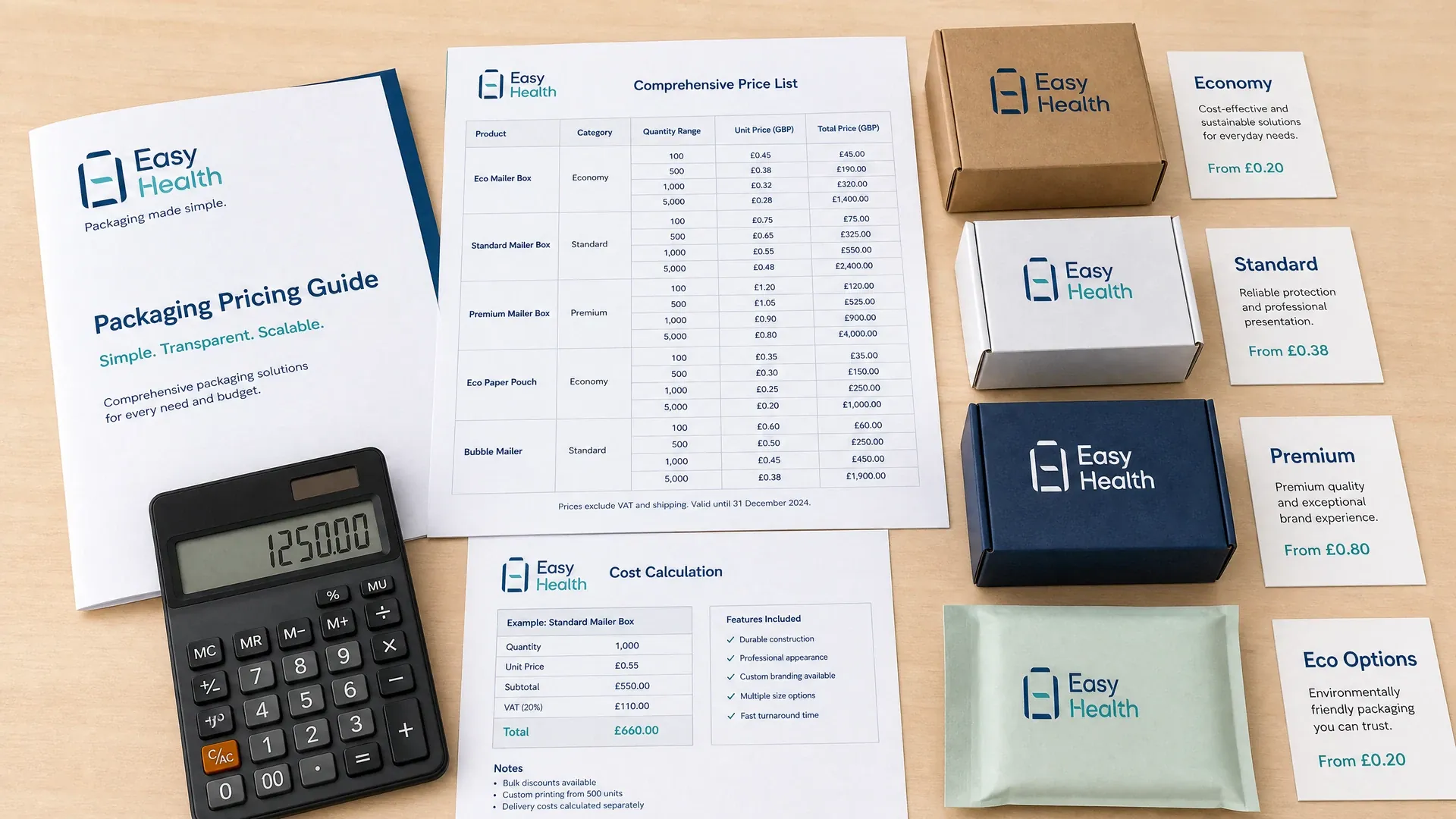
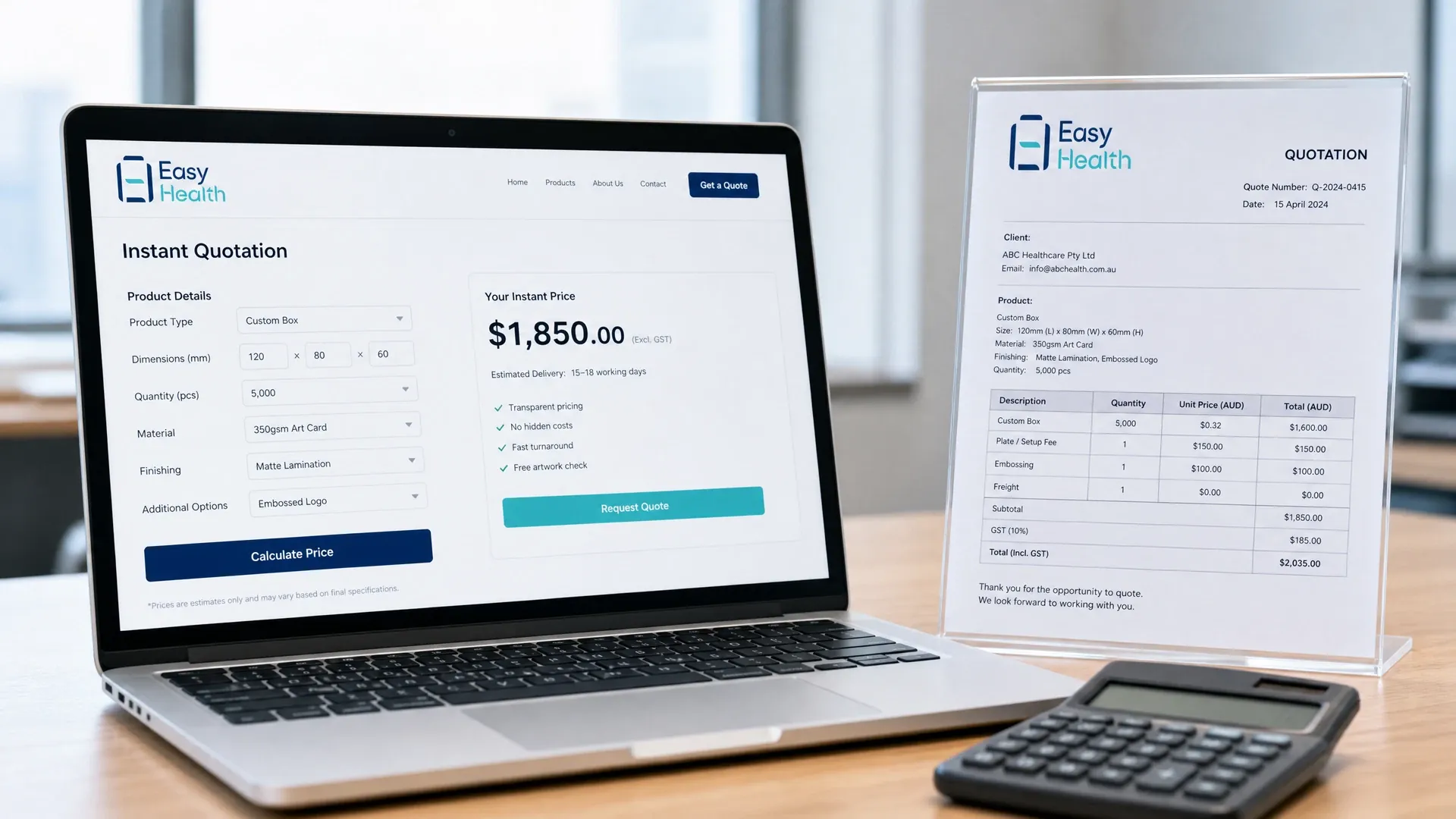
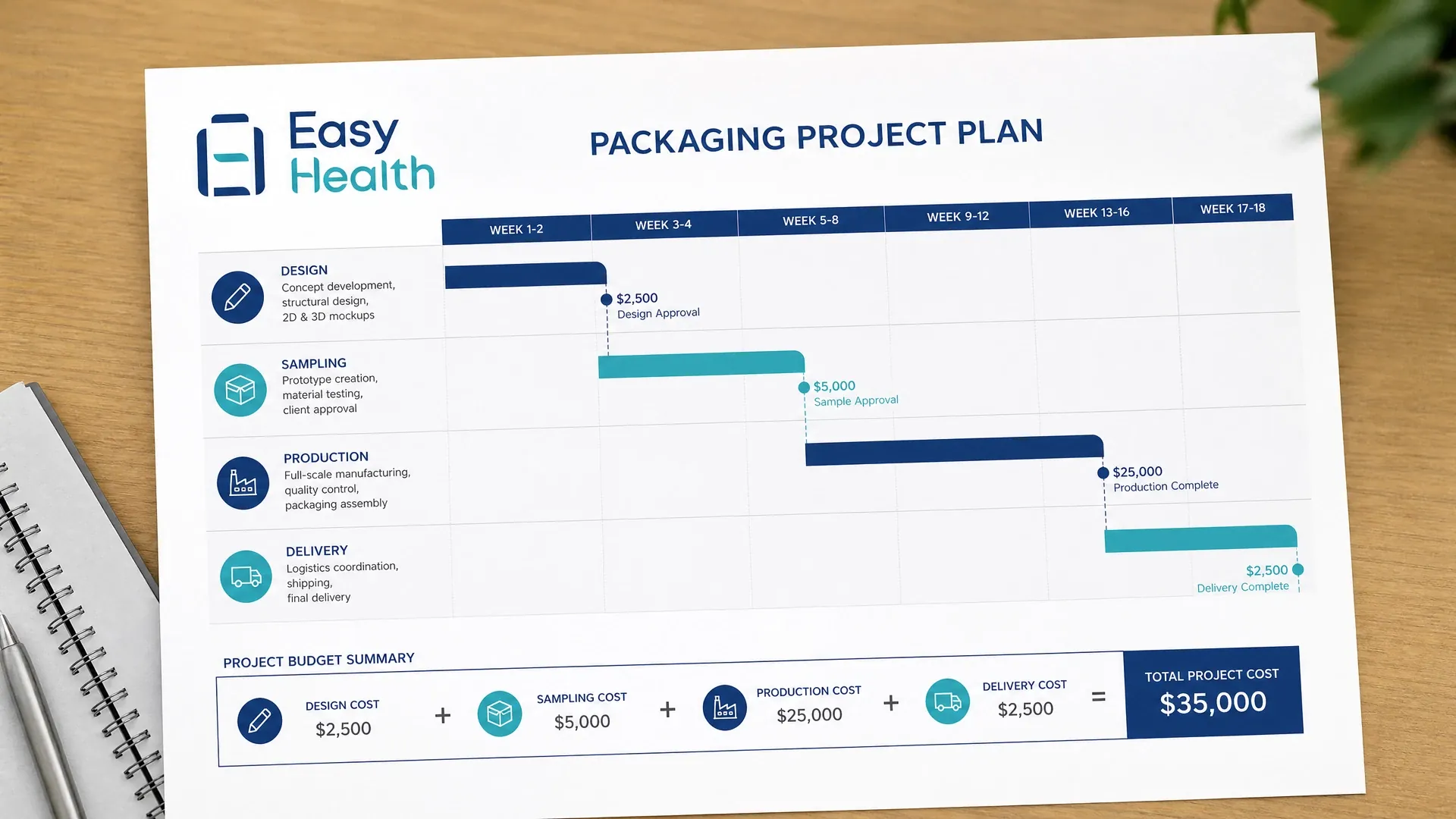
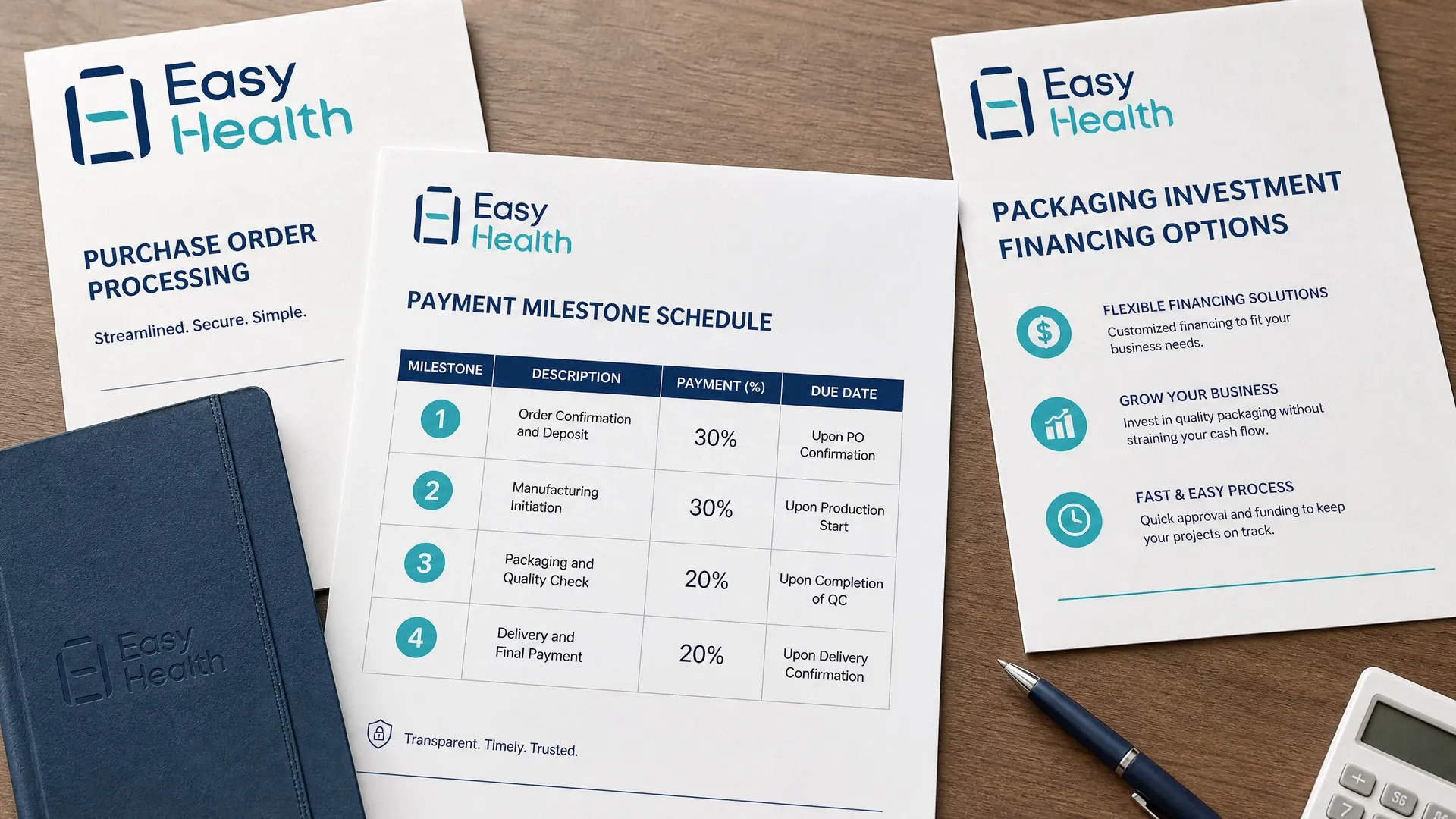
Use the project overview, online consultation, timeline and engagement visuals to understand checkpoints from materials to transport packaging and which inputs help faster confirmation by the account manager.
Packaging Scope from Design to Transport
Split the scope into five parts: design (layout, font size, regulatory readability, die-line); materials (paper stiffness, plastic resistance, alu–plastic laminates, sealing, barrier grade); printing (tolerances, overprint sequence, spot/metallic ink suitability); packaging operations (label placement, cartoning flow, sealing, tamper seals); transport packaging (inserts, cushioning, moisture protection, shipper markings). Easy Health coordinates materials/printing and sampling as needed. Your account manager confirms item by item.
- Artwork and die-lines
- Readability and sizing
- Material and barrier grade
- Colour tolerance and spots / Labelling and sealing / Inserts and shippers
Material and Barrier Choices for Your Brief
Anchor material selection to product needs and context: light protection, oxygen/moisture sensitivity, aroma retention or taint risk. Mono structures aid recyclability; laminates enhance barrier and strength. Sealing must match substrate sealability, opening force and any reclose feature. For food contact, confirm material grade and documentation; details are confirmed per project. The account manager outlines feasible options and recommends stepwise validation via plain and functional samples.
- Light/oxygen sensitivity
- Mono vs laminate trade-offs
- Sealing conditions and opening
- Food-contact documentation / Plain and functional samples
Brief Review Flow and Variable Timelines
- Briefing and initial review:Clarify product, markets, format and process intents; list uncertainties and required inputs.
- Risk mapping and materials:Map stability/barrier risks; outline material/structure options; plan plain or functional samples.
- Print and finishing confirmation:Define colour tolerances and spot strategy; mark varnish/foil/emboss areas; prepare proof files.
- Labelling and regulatory check:Cross-check languages, nutrition fields and date wording; review proofs under applicable rules.
- Sampling and iteration:Arrange samples; consolidate feedback; tune materials, structure or visuals.
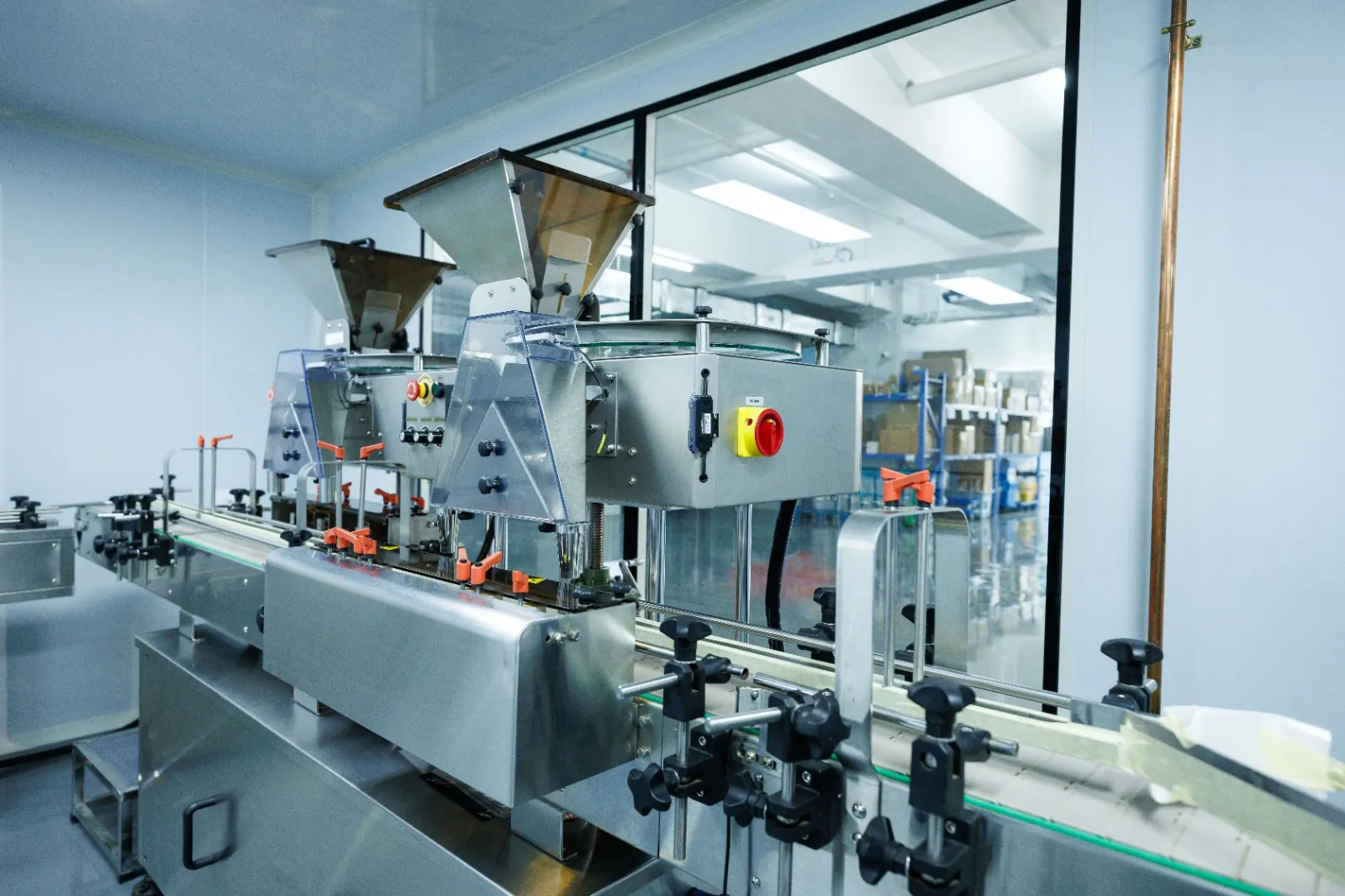
Inside the Easy Health Hong Kong Facility


Packaging Options Reference Map
| Item | Typical options | When it fits | Design notes |
|---|---|---|---|
| Structure | Bottle/Pouch/Stick/Blister | Based on dosage form/use case | Capacity, tolerances, die-line |
| Materials/barrier | Paper, plastics, alu–plastic | Light/oxygen sensitive or shelf-life | Barrier grade and sealing mode |
| Printing/colour | Spot, metallic ink, varnish | Brand identity or tactility | Colour tolerance and overprint |
| Finishing | Foil, emboss, selective coat | Emphasise hierarchy/key info | Area, position, substrate match |
| Labelling/regulations | HK Cap.132W, 1+7; GB 7718/28050; Cap.549 | Market/category dependent | Bilingual text and legal terms |
For reference only; actual arrangements are confirmed by the account manager per project.
Packaging Project Checklist Before Discussion
- Product nature and storage conditions (temperature/light/moisture sensitive)
- Intended markets and label languages (bilingual/multi-language)
- Preferred format and capacity (bottle/pouch/stick/blister)
- Material and barrier direction (mono or laminate)
- Printing colours and finishing (spot, varnish, foil)
- Sampling needs and review checkpoints
Packaging Brief Preparation FAQs
How Should I Describe the Design Scope?
There is no universal standard. It depends on design scope (layout, die-line), packaging format, materials/barrier, printing and finishing, labelling languages/markets, and sampling rounds. Share product/market details, design direction and quantity planning for a step-by-step assessment by the account manager.
Which Details Help the Team Review My Brief?
Structure inputs by product–market–format–labelling–process–quantity–timeline: product traits and storage; markets and applicable rules; bottle/pouch/stick/blister direction and capacity; label languages, nutrition panels and date wording; intended printing/finishing; batch quantity planning; sampling rounds and proof checkpoints. Clear inputs help the account manager confirm faster.
What Artwork Files and Specifications Are Useful?
Editable vectors, fonts and linked images, spot/colour references, finishing callouts, and die-lines or critical dimensions. If no die-line exists, the account manager can suggest specs and arrange sampling. Colour and regulatory text are cross-checked at proof stage.
How Are Samples Typically Arranged?
Start with a plain mock-up for structure/fit, then move to press proofs or small functional runs to validate colour, sealing and haptics. Rounds and methods vary by project. Easy Health coordinates proofing, consolidates feedback and tunes materials, processes or labelling, with final confirmation by the account manager.
What Should I Note for Multi-Market Labels?
HK prepackaged foods follow Cap.132W and the “1+7” scheme; Mainland prepackaged foods follow GB 7718 and GB 28050; Chinese medicines follow Cap.549. Confirm languages, nutrition fields and date wording early (e.g. “best before”), and arrange proof reviews. Easy Health assists with cross-checking.
Related Packaging Services
Share Your Packaging Details via WhatsApp
Share your product, markets, format, label languages and design direction on WhatsApp. We will assess materials, processes and labelling, and coordinate sampling and packaging production. Timelines vary by project and are confirmed by the account manager.
Last updated: