Small batch packaging printing assessment for pilot runs
This page focuses on practical planning for small-batch packaging: using stock materials, choosing digital print and finishing, phasing label and carton versions for pilot or crowdfunding, and building design flexibility for future scale-up. Each project is individually assessed and confirmed by an account manager; we coordinate printing and material supplies throughout.
Summary:When planning small-batch packaging print, focus on material and structure, digital versus conventional print, finishing needs, staged versioning, and labelling compliance. Easy Health coordinates the project requirements in Hong Kong. Confirm which certificate scopes, quality records and supporting documents apply to the proposed arrangement.g. the FSSC 22000 framework), with scope confirmed per project. Each project is assessed and confirmed by a dedicated account manager, with printing and material coordination handled end-to-end.
Planning a pilot run with small quantities: where should you start?
Define product format and storage needs, map inner/outer packaging (bottle, pouch, stick pack, carton or blister) and barrier/seal requirements. Decide whether to use digital print and stock materials, and plan phased versions (initial essentials, later enhancements). Prepare bilingual name, ingredients, allergens, directions, net content, nutrition (for prepackaged foods), and best before/use by placement. Share these via WhatsApp with our account manager for project-specific assessment and confirmation.
Key factors in a small-batch packaging print assessment
There is no single standard for small-batch packaging, as materials, structures, print processes and finishing vary by project. Consider: 1) using stock bottles/pouches and standard structures to reduce lead-in; 2) whether labels/cartons should be digitally printed to handle multiple flavours or batches; 3) required finishes such as varnish, spot gloss, foil or emboss and their scheduling impact; 4) logistics and storage (moisture, oxygen, scuff) to determine films, inks and adhesives; 5) phased versioning and modular design to preserve dieline and colour consistency when scaling. Your account manager will assess and confirm needs, coordinating printing and material supplies.
- Use stock bottles/pouches where possible
- Choose digital print for version agility
- Decide on special finishes early
- Match films/adhesives to storage/transport needs; plan phased versions and modular design
Pilot runs: balancing digital print and stock materials
Digital printing supports multiple versions and quick iterations; conventional litho/flexo can offer stable spot colours and robust finishing compatibility. For small runs, consider stock bottles with digitally printed labels, a standard carton dieline with versioned artwork, or preformed pouches/sticks with batch details applied via labelling. If future scale-up is planned, lock colour management files, dielines and barcode zones early, and use modular layouts with reserved panels for market-specific info. Based in Hong Kong, Easy Health assigns an account manager to assess and coordinate printing, materials and sampling.
- Use digital print for version agility
- Standard dielines ease later scale-up
- Fix colour and barcode zones early
- Labelling bridges batch differences
Visual guide: planning small-batch packaging
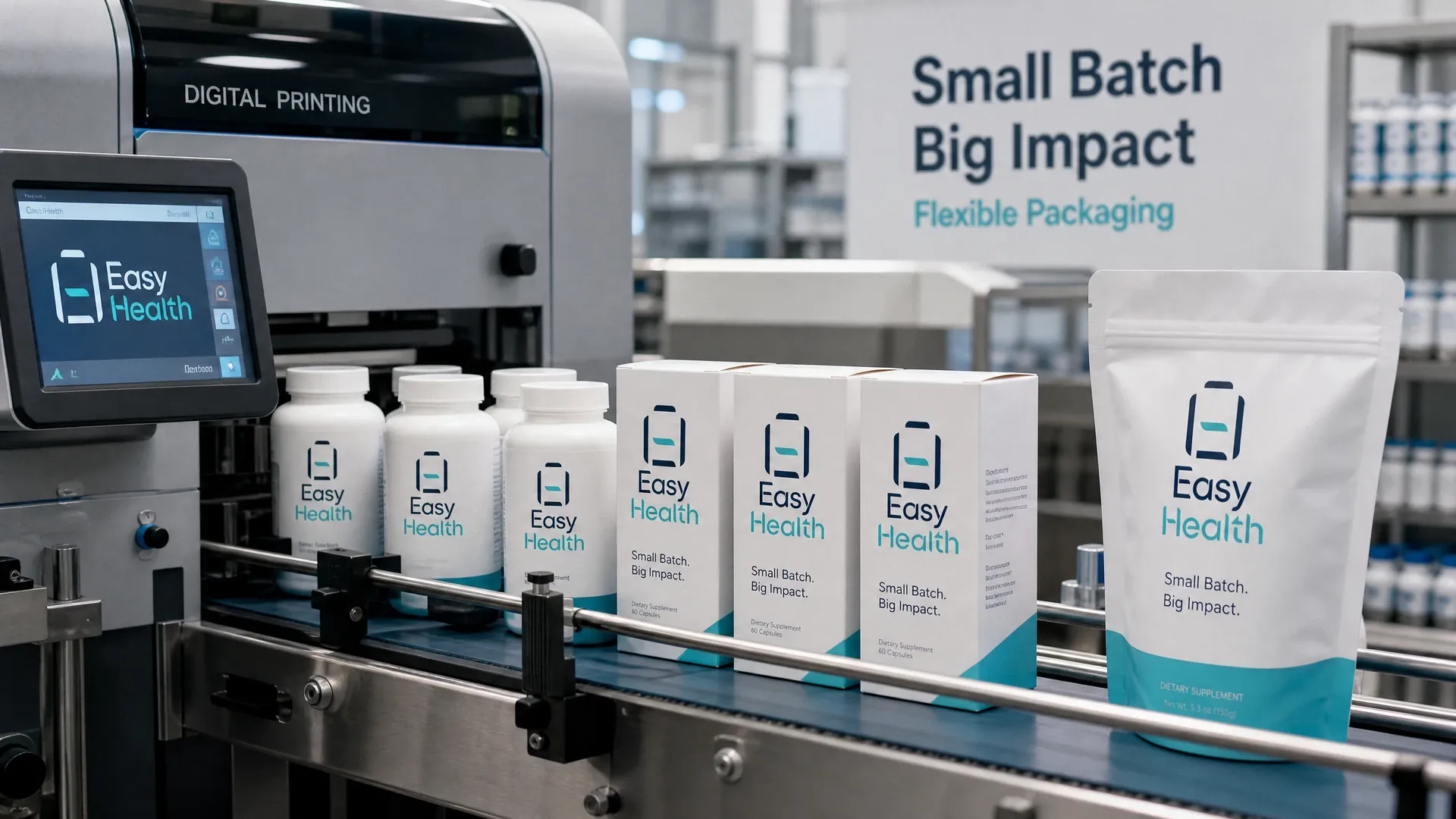
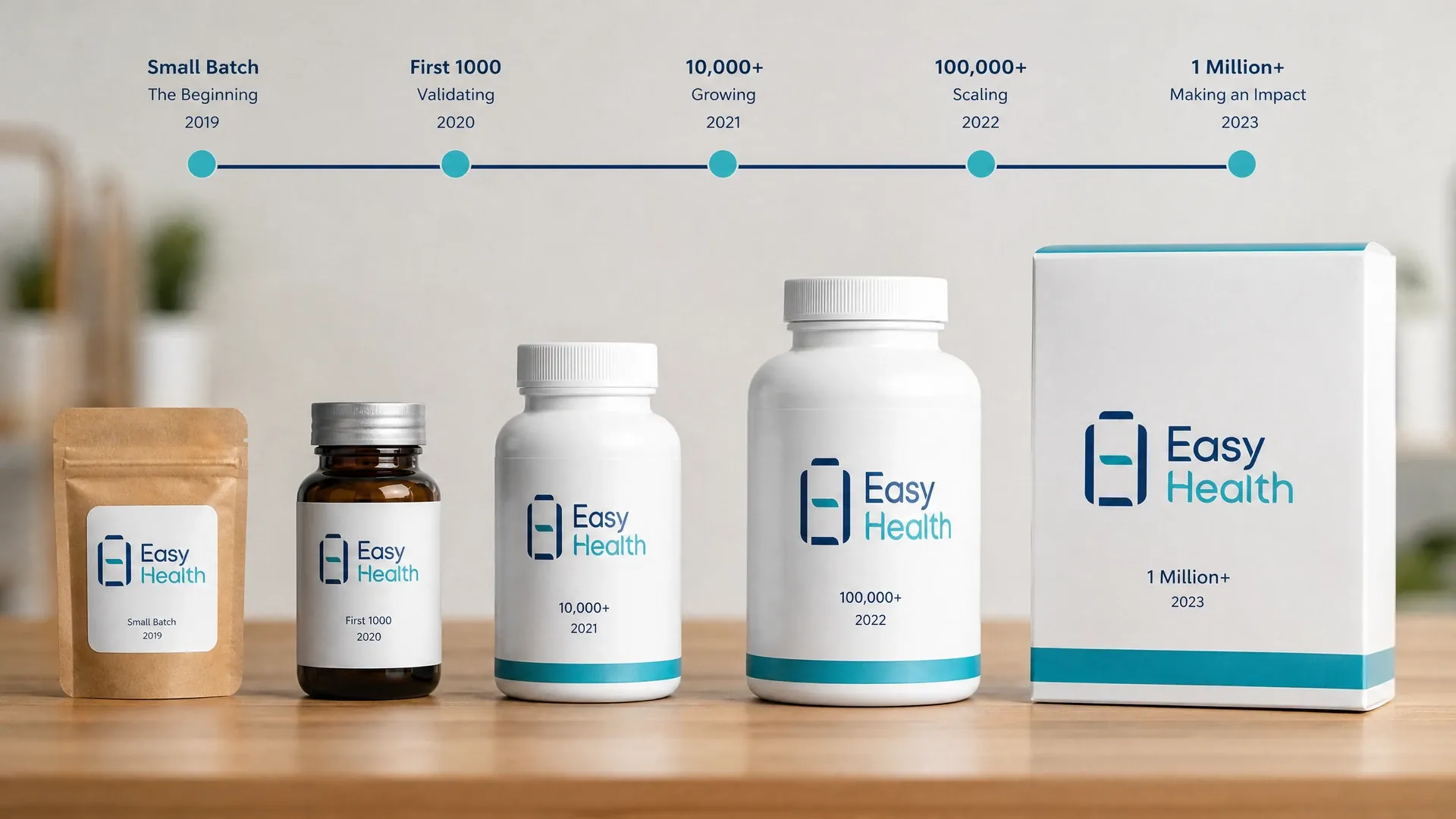
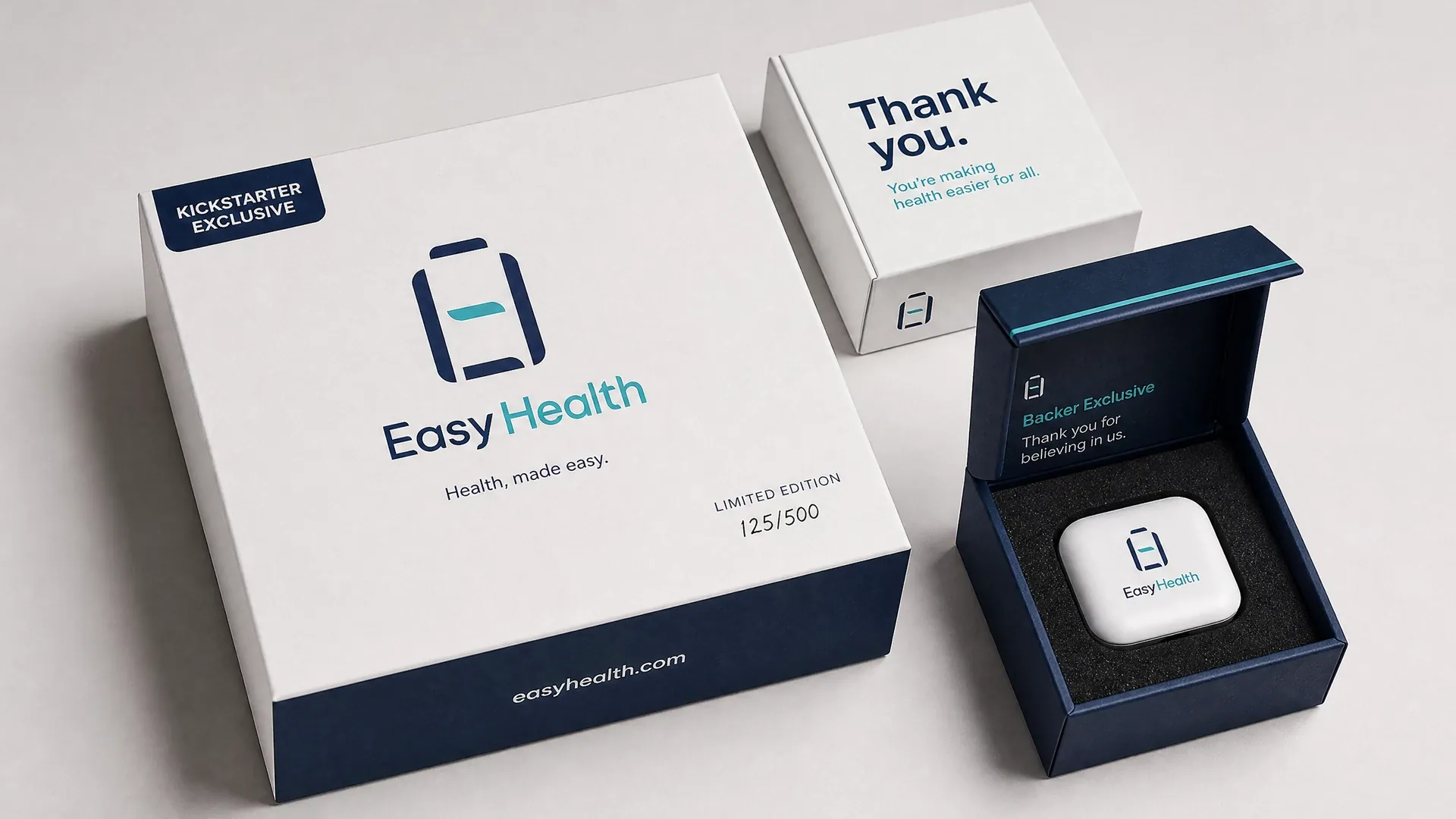
The following visuals illustrate typical pilot approaches: stock bottle with digital label, standard carton dieline, preformed pouch and stick pack, plus phased version layouts. Each highlights key dimensions, date wording and batch areas for internal review and sampling.

Labels and cartons: compliance information and layout
For prepackaged foods in Hong Kong, the Food and Drugs (Composition and Labelling) Regulations (Cap.132W) and the “1+7” nutrition scheme commonly apply; for Mainland China, refer to GB 7718 and GB 28050. For proprietary Chinese medicines/herbs, see the Chinese Medicine Ordinance (Cap.549). Applicability differs; cosmetics and medicines are outside Cap.132W. Reserve space for 'best before'/'use by' statements and, where bilingual labelling is used, corresponding text on the dieline. Easy Health can coordinate relevant testing and assist with information checks, and will schedule label/carton printing and finishing accordingly.
- Confirm applicable regulations and languages
- Reserve date wording and its placement
- Prepare nutrition and allergen data
- Arrange info checks and testing
Storage, transport and barrier: practical material choices
Small runs still require robust barrier and durability. Oil-based or liquid formulas may need oxygen and grease resistance; powders and tablets demand moisture control, breakage protection and portability. Consider barrier films, scuff-resistant inks/overlaminates, tear notches and reclose features, with allocated areas for batch/traceability. Outer cartons and inserts affect stacking and shipping stability. Your account manager will assess needs and coordinate material sourcing, structural samples and production scheduling.
- Liquids may need oxygen/grease resistance
- Powders/tablets prioritise moisture control
- Consider reclose and tear-notch features
- Reserve areas for batch/traceability
Project flow for small batch packaging printing
- Scoping and data collection:Confirm product format, storage, target markets and number of versions; compile required regulatory info for labels/cartons.
- Material and structure proposal:Evaluate bottle/pouch/stick/blister and outer carton structures, matching barrier, sealing and logistics needs, with traceability zones.
- Print and finishing selection:Select digital or conventional printing with varnish/foil/emboss options; coordinate materials and scheduling.
- Sampling and version refinement:Arrange samples and reviews; adjust colours, substrates and layouts for readability as needed.
- Production coordination and handover:Coordinate packaging production and supplies, provide assembly guides and marking maps, and confirm shipping details.
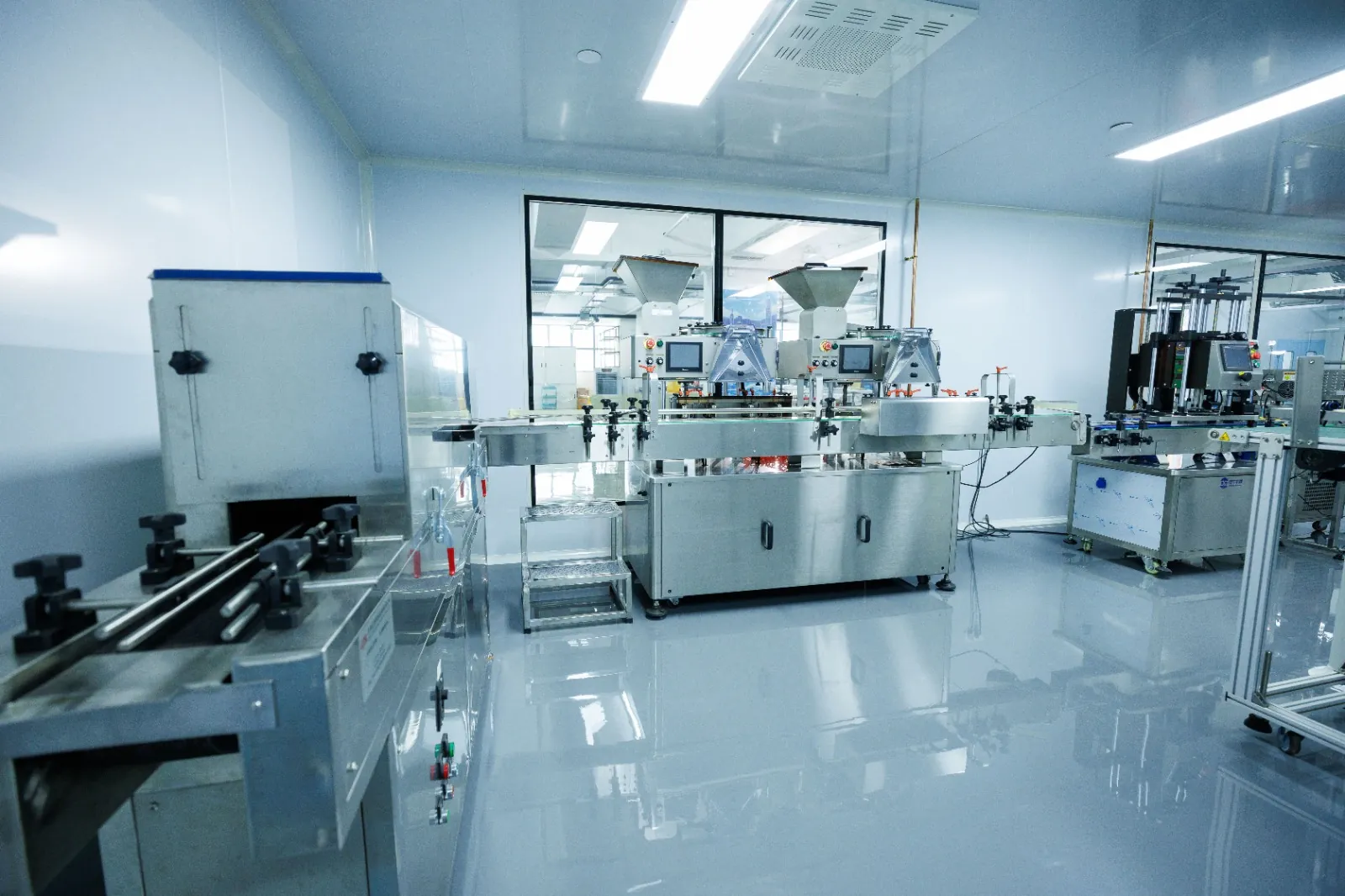
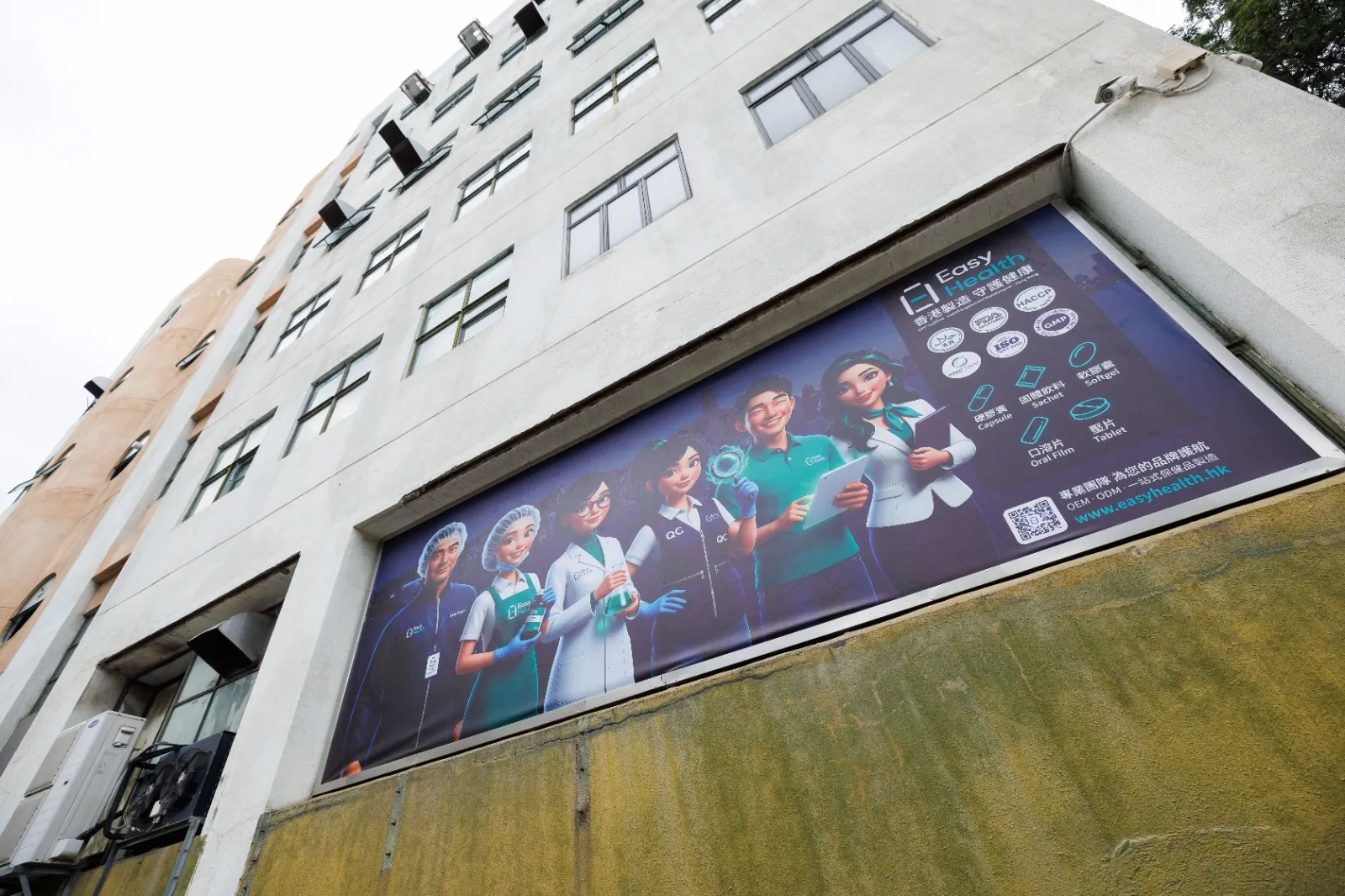
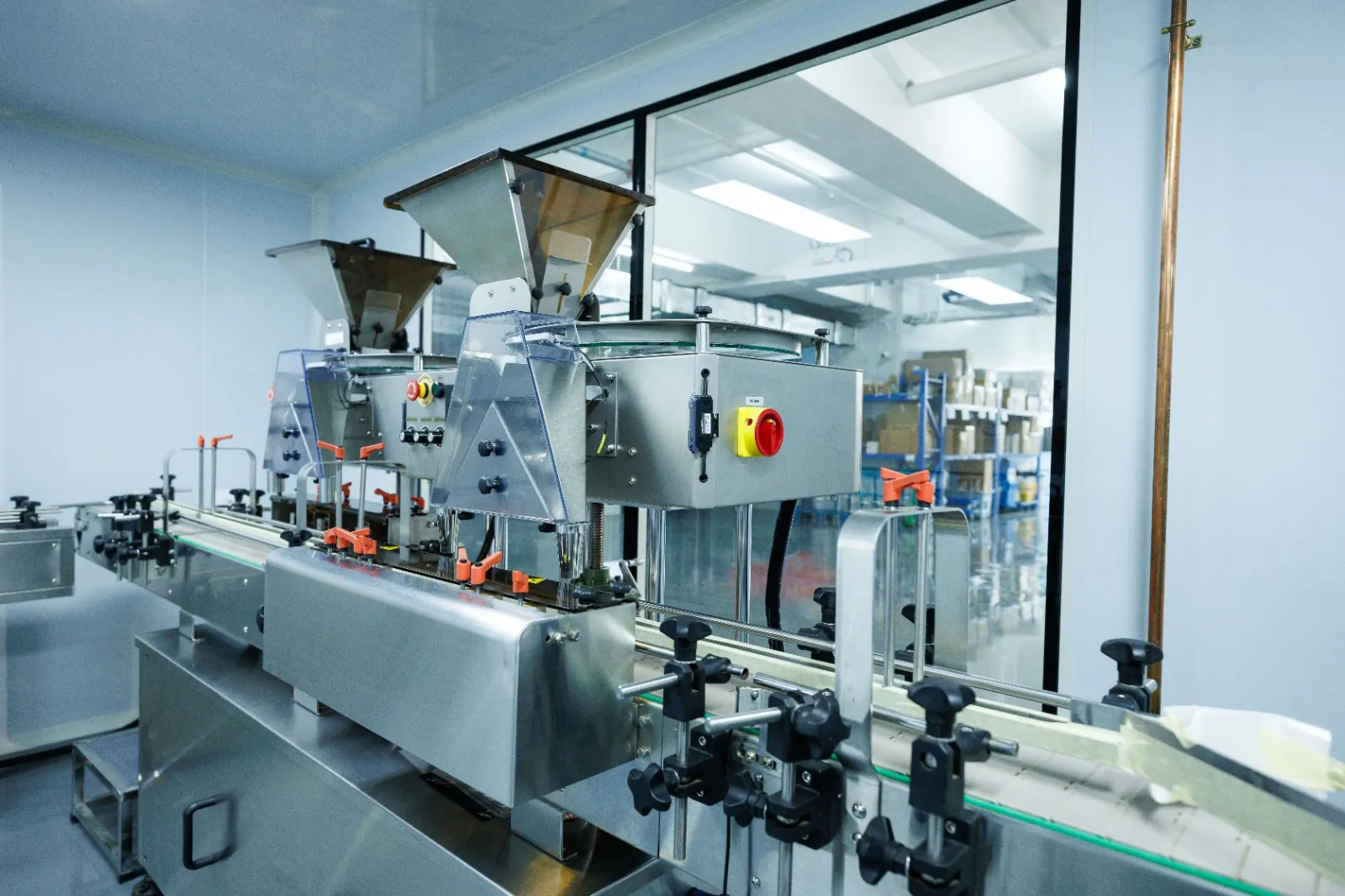
Inside the Easy Health Hong Kong Facility
Common small-batch pilot packaging routes
| Item | Key traits | Suitable for | Print and finishing direction |
|---|---|---|---|
| Stock bottle + digital label | High agility, quick versioning | Liquids, capsules, tablets | Digital label print; varnish or overlaminate |
| Standard dieline carton | Layout easy to scale | Single or multipack | Digital or offset; optional foil or emboss |
| Preformed alu/zip pouch | Good barrier, portable | Powders, snacks, solid drinks | Digital or flexo; tear notch and reclose |
| Stick pack with applied label | Easy batch differentiation | Single-serve formats | Digital label or coding; scuff resistance and tear line |
| Blister + paperboard card | Good display, protection | Fragile or peg-hung SKUs | Digital or offset; hang hole and lamination |
For planning reference only; specifics are assessed and confirmed by your account manager.
What to prepare before your assessment
- Product formula traits and storage needs (humidity, temperature, light)
- Bilingual name, ingredients, allergens, directions and net content
- Target markets and applicable rules (Cap.132W, 1+7, GB 7718/28050, or Cap.549)
- Barcode, batch and best before/use by placement
- Planned versions/flavours and phased release plan
- Structure/size sketches, dielines or reference samples
Small batch packaging printing FAQs
How is a small-batch packaging project assessed?
There is no single standard. Key drivers include whether stock structures can be used, digital print suitability, special finishes, number of versions/flavours, sampling and revisions, storage/transport conditions influencing films and inks, and the scope of labelling checks. Prepare product details and applicable regulations for assessment and confirmation by our account manager.
Should I choose digital or conventional printing?
Digital often suits small runs and multiple versions for faster iterations. Conventional processes can better anchor spot colours, specific ink systems and complex finishing. Start with digital for pilots while establishing colour and dieline standards to support future transitions. Your account manager will advise based on the project scope.
What should I consider for labelling and languages?
For prepackaged foods in Hong Kong, refer to Cap.132W and the “1+7” nutrition scheme; for Mainland, GB 7718 and GB 28050. Proprietary Chinese medicines/herbs fall under Cap.549. Applicability differs by category and market. Reserve bilingual areas, date wording and batch fields on the dieline early, and arrange information checks.
What files do I need for sampling?
Provide editable artwork with embedded/linked fonts, bleeds and dielines, barcode and date placement. Include swatches or references for spot colours or metallic effects. For digital print, a colour-check sample can verify key images and readability. Sampling and iteration will be arranged by your account manager.
How do I build flexibility for future scale-up?
Use standard dielines and modular layouts with fixed panels for statutory info, batch and multilingual areas to maintain consistency. Establish colour management profiles and proofs, and document inks/films and finishing parameters. This supports visual consistency across batches and materials.
Related Packaging Services
Discuss your small batch packaging printing project
Message Easy Health on WhatsApp with your product details, label content and structural ideas. We will assess materials, printing and finishing options for your project, and coordinate sampling and packaging production.
Last updated: