Small batch packaging planning and sampling
When planning packaging quantities and sampling, priorities include phasing, language/regulatory fields, how to segment shared runs, and rotation of finished and semi-finished goods. Easy Health provides OEM/ODM, label and carton coordination, and formats such as bottles, pouches, sticks and blisters. We assess material feasibility, structural integrity and labelling, colour/finishing stability, and cross-market labelling differences, then propose a practical sampling and scheduling plan, confirmed point by point by a project manager.
Summary:This page focuses on quantity planning and sampling. There is no single threshold; material supply, structure/tooling, print/finishing, labelling markets, and distribution/storage all shape batching and sampling order. Easy Health coordinates the project requirements in Hong Kong. Confirm which certificate scopes, quality records and supporting documents apply to the proposed arrangement.
How should we begin packaging sampling planning?
Prepare product attributes, target launch window, sales channels and labelling markets, plus an initial packaging direction such as bottle, pouch, stick or blister with visual references. Our project manager will assess material availability and structure feasibility, print/finishing compatibility, sealing and application, propose sampling sequence and checkpoints, and coordinate any required tests. We will also organise languages/regulatory fields, barcodes/traceability, and file versioning. Quantity groupings and production setup vary by project and are confirmed item by item.
What affects packaging order planning for a run?
There is no single numerical threshold to start a run. Drivers include material supply and batch norms (films, label stocks, boards), structure and any tooling, print method and colour management, finishing such as varnish, foil or emboss, sampling rounds and approval gates, and expected sales and storage. Multimarket labels/cartons introduce language and regulatory variants affecting artworks, barcodes, origin and date wording. Our project manager plans feasible groupings and phased runs based on your product, format and launch sequence, verifying materials, processes and labelling details, with checkpoints and file specs defined before confirmation to balance certainty and flexibility.
- Material batch norms shape flexibility
- Structure/tooling need early evaluation
- Print method affects colour stability
- Finishing sequence influences scheduling
Smaller batches in practice
For market tests or phased rollout, smaller batches pair well with staged artwork to balance speed and risk. First lock key label fields (name, ingredients, net quantity, nutrition, allergens, date wording and batch marks), then schedule carton printing and finishing to match sales cadence while evaluating barrier, sealing and label application on the primary pack. For cross-market or multilingual packs, reserve variant and barcode areas to limit rework; for flavours or dosage forms, build a shared element library and validate only differing fields. Easy Health coordinates label/carton supply, sampling and any required tests, and, upon confirmation, lists schedule, checkpoints, retention samples and documentation rules to ease later scale-ups.
- Label-first, then phased cartons
- Reserve variant/barcode areas
- Assess barrier and sealing in parallel
- Define checkpoints in advance
See scheduling and quantity options
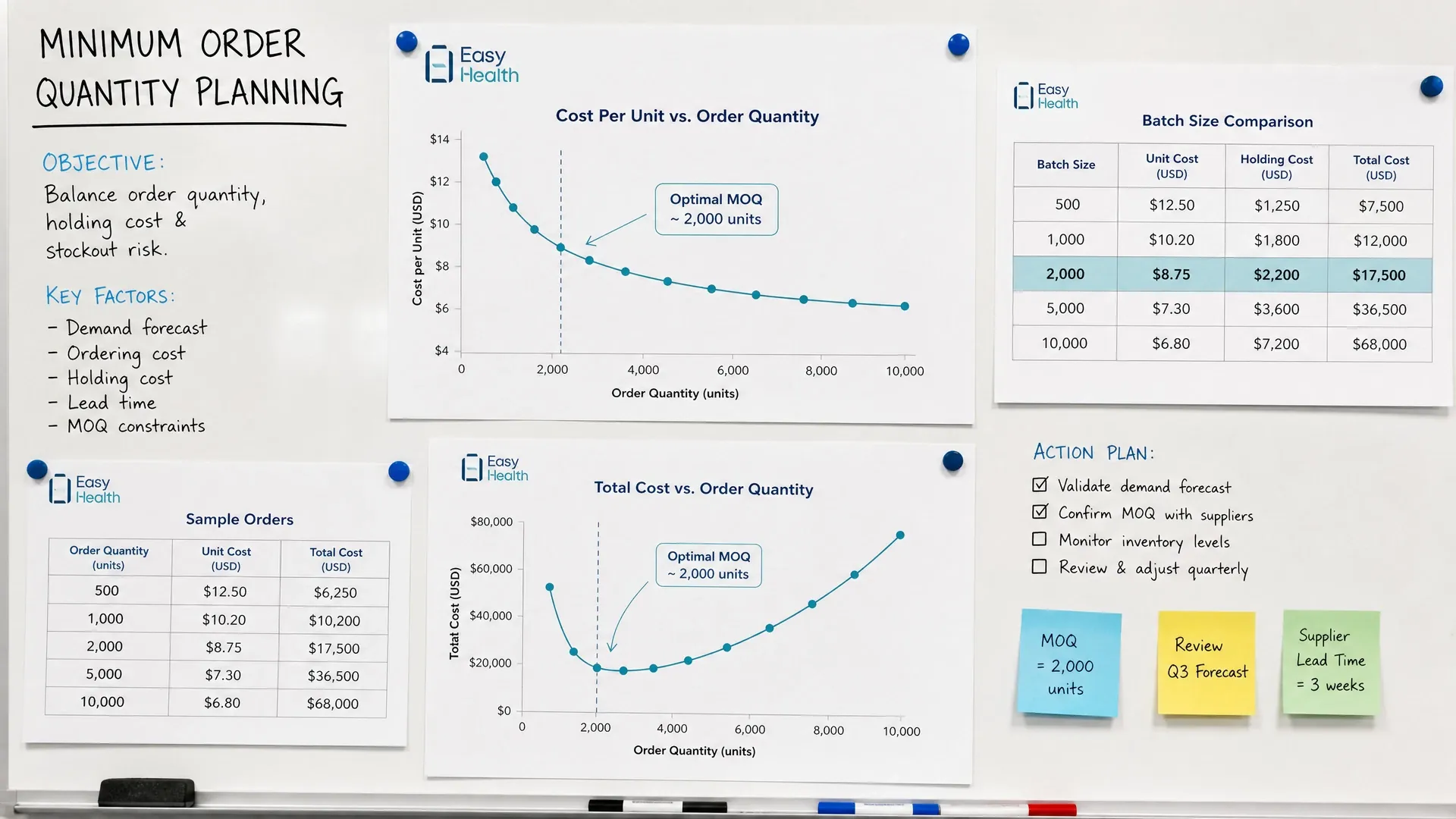
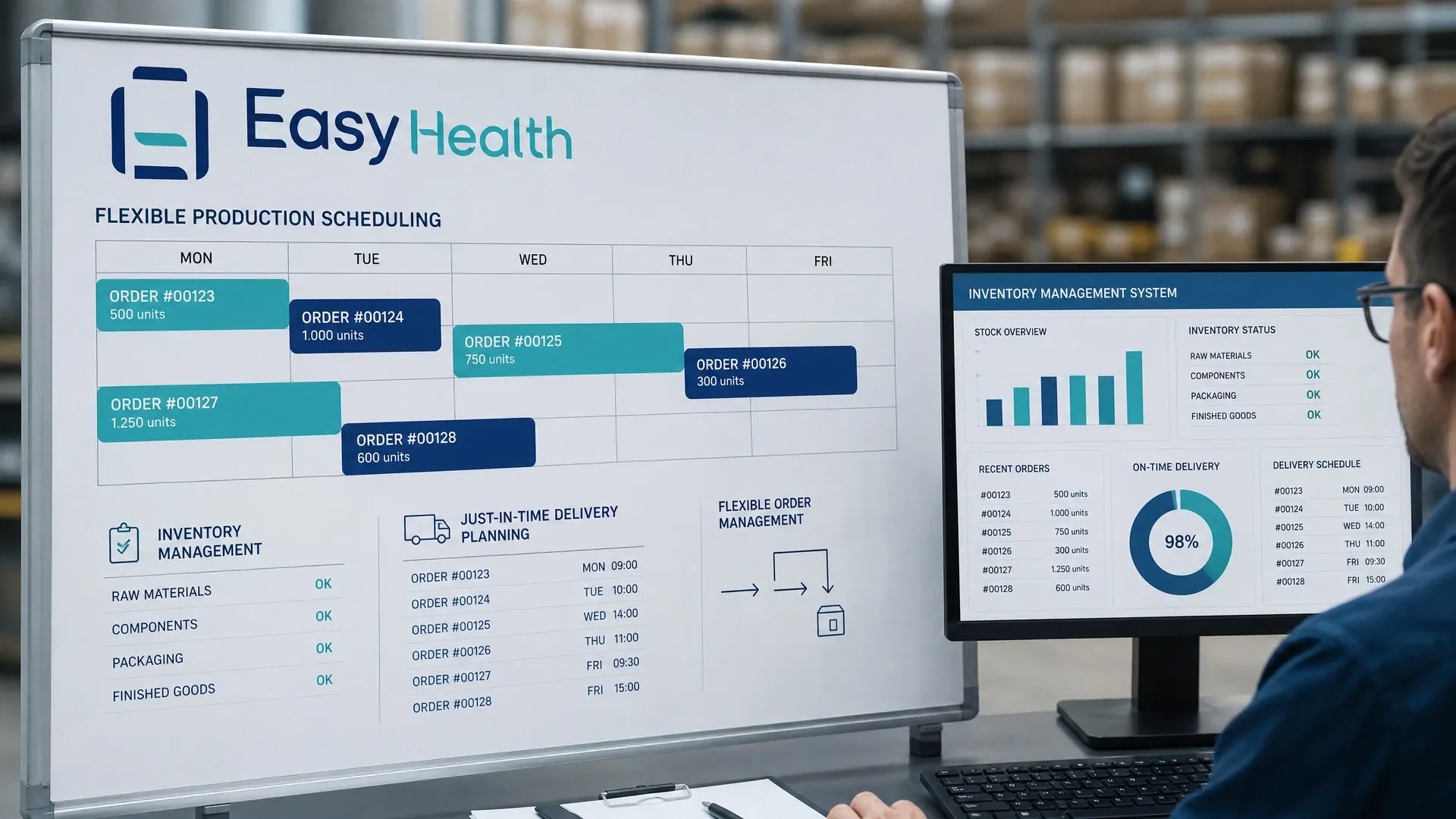
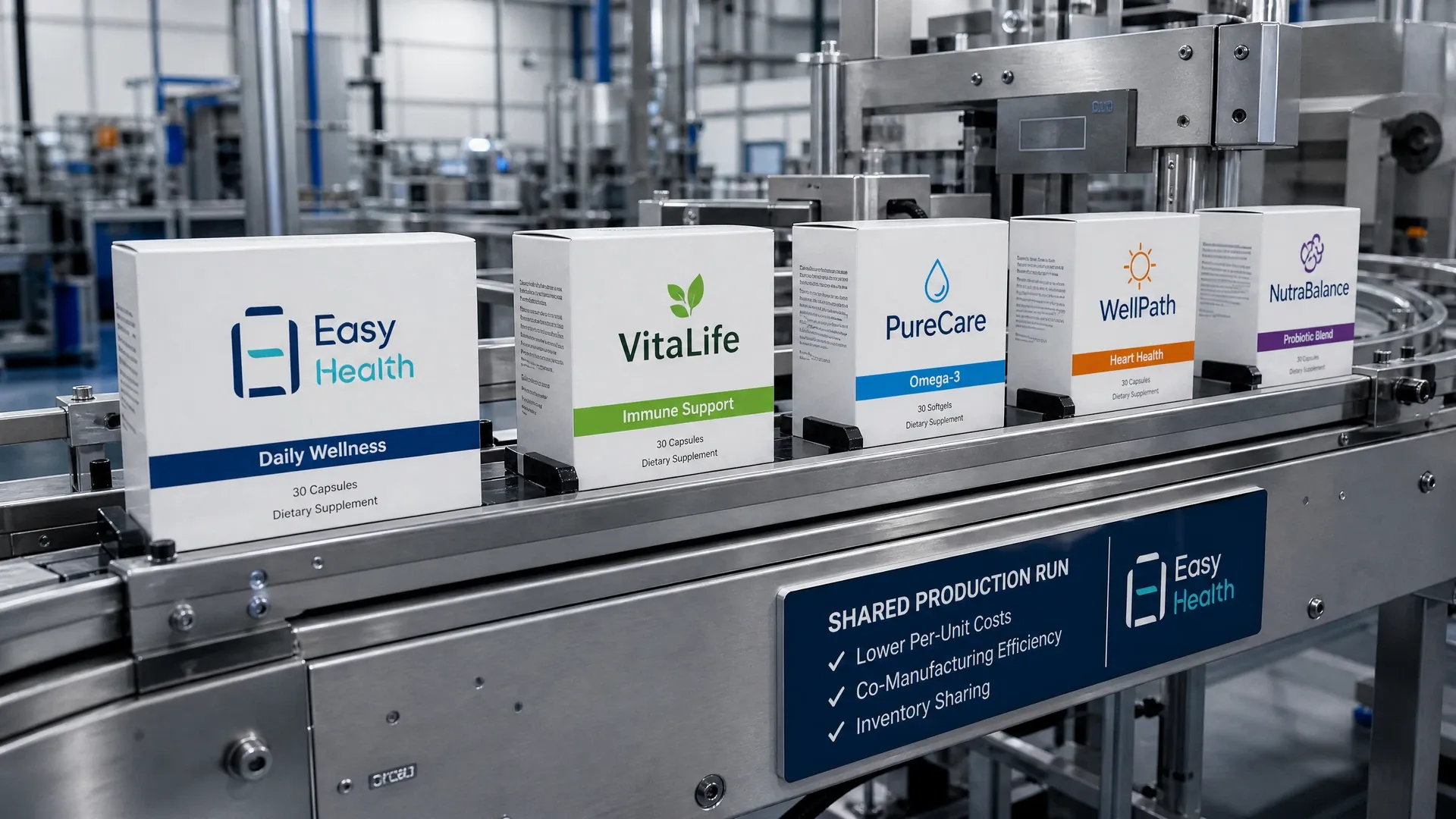
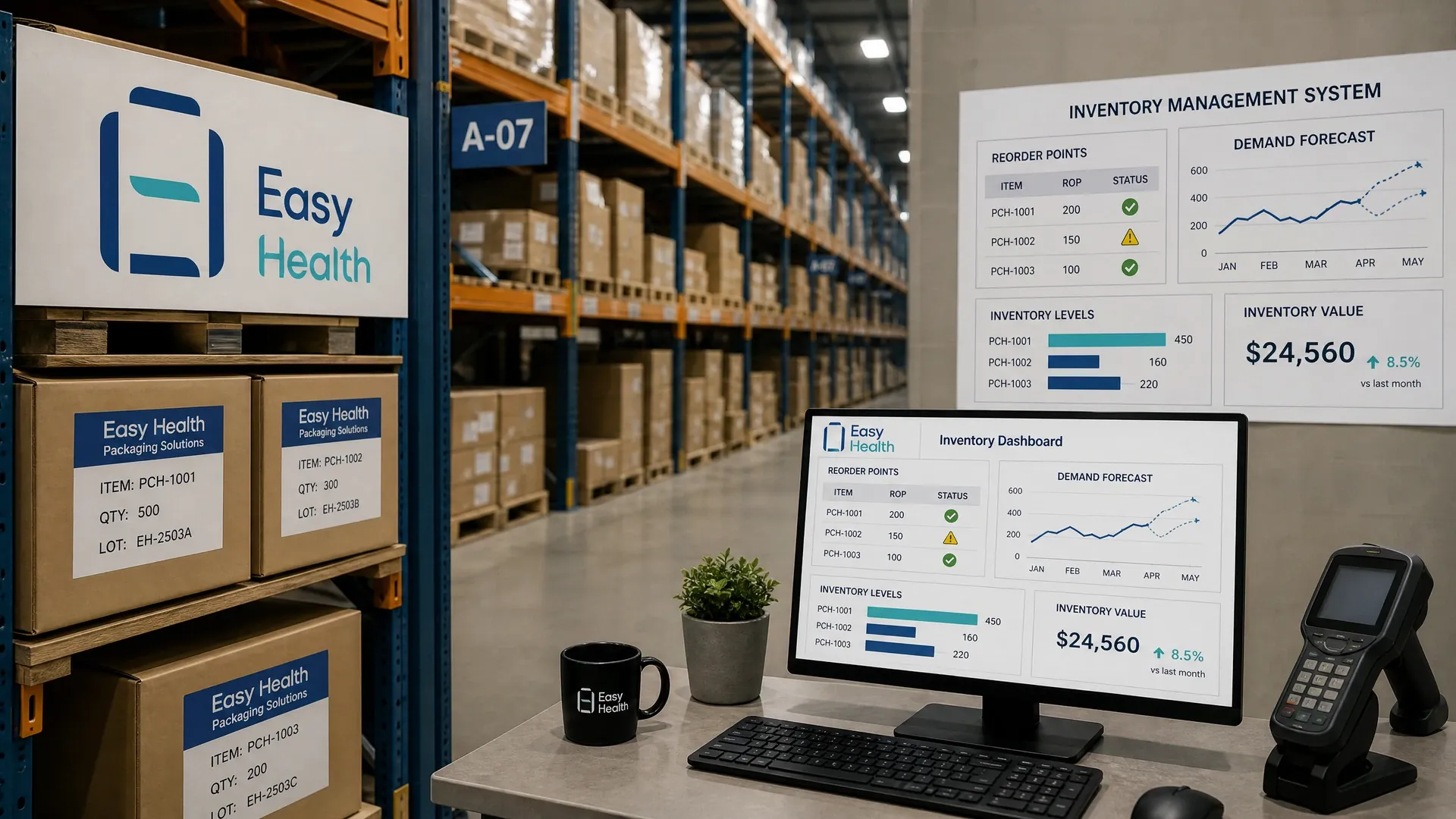
The visuals illustrate phased scheduling, shared production and inventory handling: running label samples first to lock key fields, then cartons and primary packs; layering shared elements versus variants for easier batch switching; and using checkpoints to verify markings, barcodes and sealing with retention samples and documentation, helping you see what to submit and confirm at each node.
Packaging formats and batch flexibility
Packaging formats vary in flexibility. Labels support variant and language changes; cartons involve dielines, gluing and finishing; bottles, pouches, sticks and blisters centre on barrier, sealing and application. Plan from product stability, expected shelf life and distribution rhythm, then define phased runs and sampling sets, clarifying whether shared runs and inventory buffers are needed. For early market tests, start with common artwork bases and unified colour specs, then progress to regional languages or decorative finishing after sales cadence is clearer. Easy Health evaluates material feasibility, print/finishing, labelling and traceability elements, including label coverage, shrink or direct print options, and sealing compatibility, with arrangements and hand-offs specified per project by the manager.
- Start from stability and barrier
- Phase to match distribution
- Align container and labels
- Test sealing and application
Shared runs, flexible scheduling and inventory
When variants or languages are numerous, consider shared runs: complete common steps first (e.g., primary pack or universal labels), then process variant steps in phases (e.g., regional labelling or cartons). Define shared artwork and variant fields early, with clear versioning and barcode rules at each node. Also specify storage conditions, bin labelling and batch traceability for semi-finished and finished goods, and set checkpoints to update date wording and batch data. For promos or seasonal packs, keep structure and colour baselines shared and vary labels or inserts. Easy Health coordinates supply and scheduling, listing responsibilities, retention/release records and document hand-offs to keep multi-variant projects manageable.
- Design common-first, then variants
- Mark shared and variant fields clearly
- Define semi-finished storage rules
- Ensure versioning and traceability
Our packaging planning workflow
- Brief and scope:Share category, markets, target launch sequence and initial packaging direction (bottle, pouch, stick or blister), and outline languages/regulatory scope to set assessment priorities.
- Material and structure:Propose material and structure options by stability, barrier and labelling method, covering label area, sealing compatibility and key sampling risks.
- Sampling plan and checkpoints:Set sampling order, review focus and any test coordination, listing submissions, retention and pass criteria for cross-batch tracking.
- Label and carton artwork:Organise language/regulatory fields, barcodes and date wording, define shared versus variant artwork to enable phased and shared runs.
- Documentation and traceability:Define file naming, versioning and barcode specs, with warehouse labelling and retention records, so each batch’s origin and status are traceable.
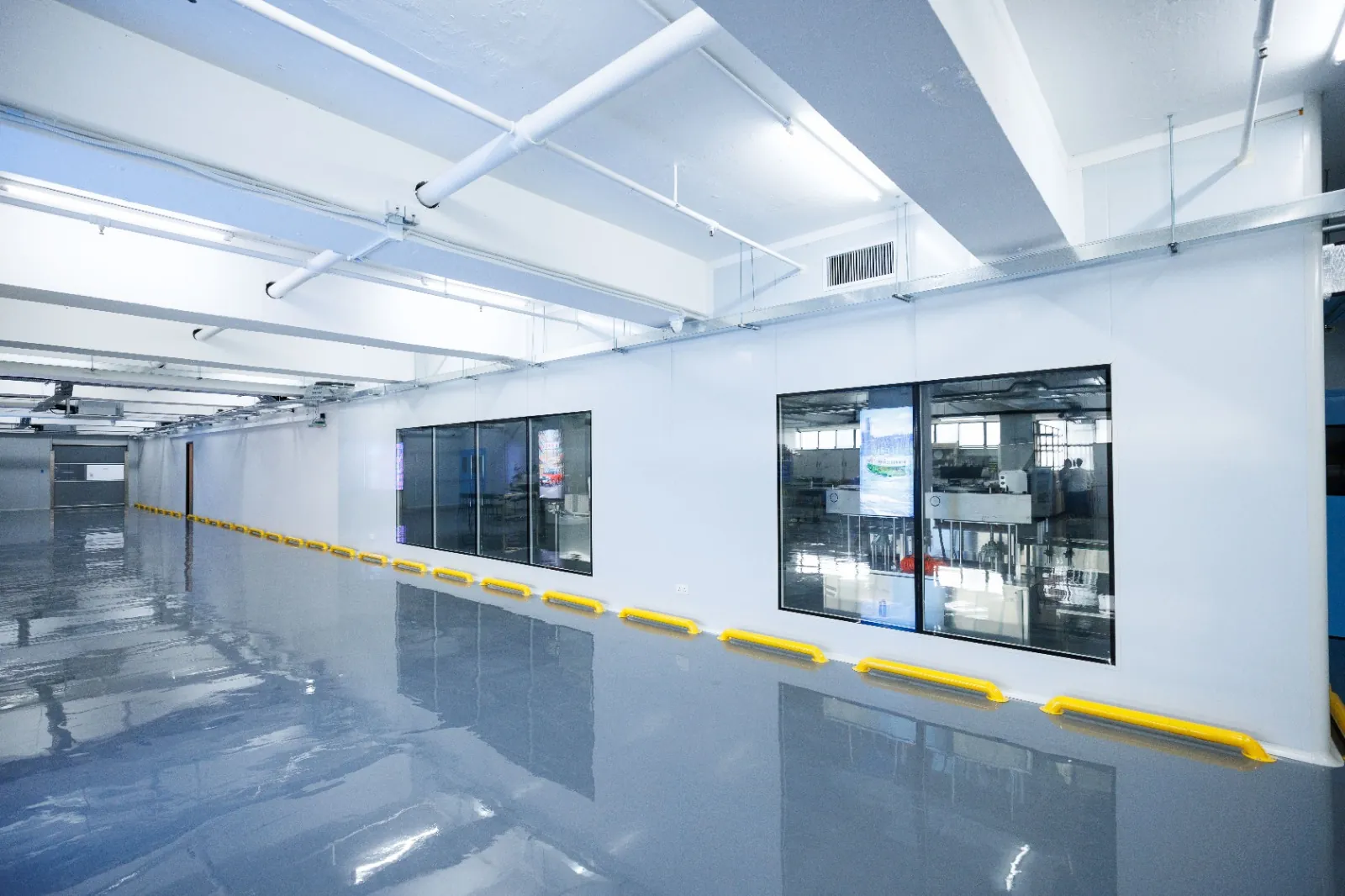
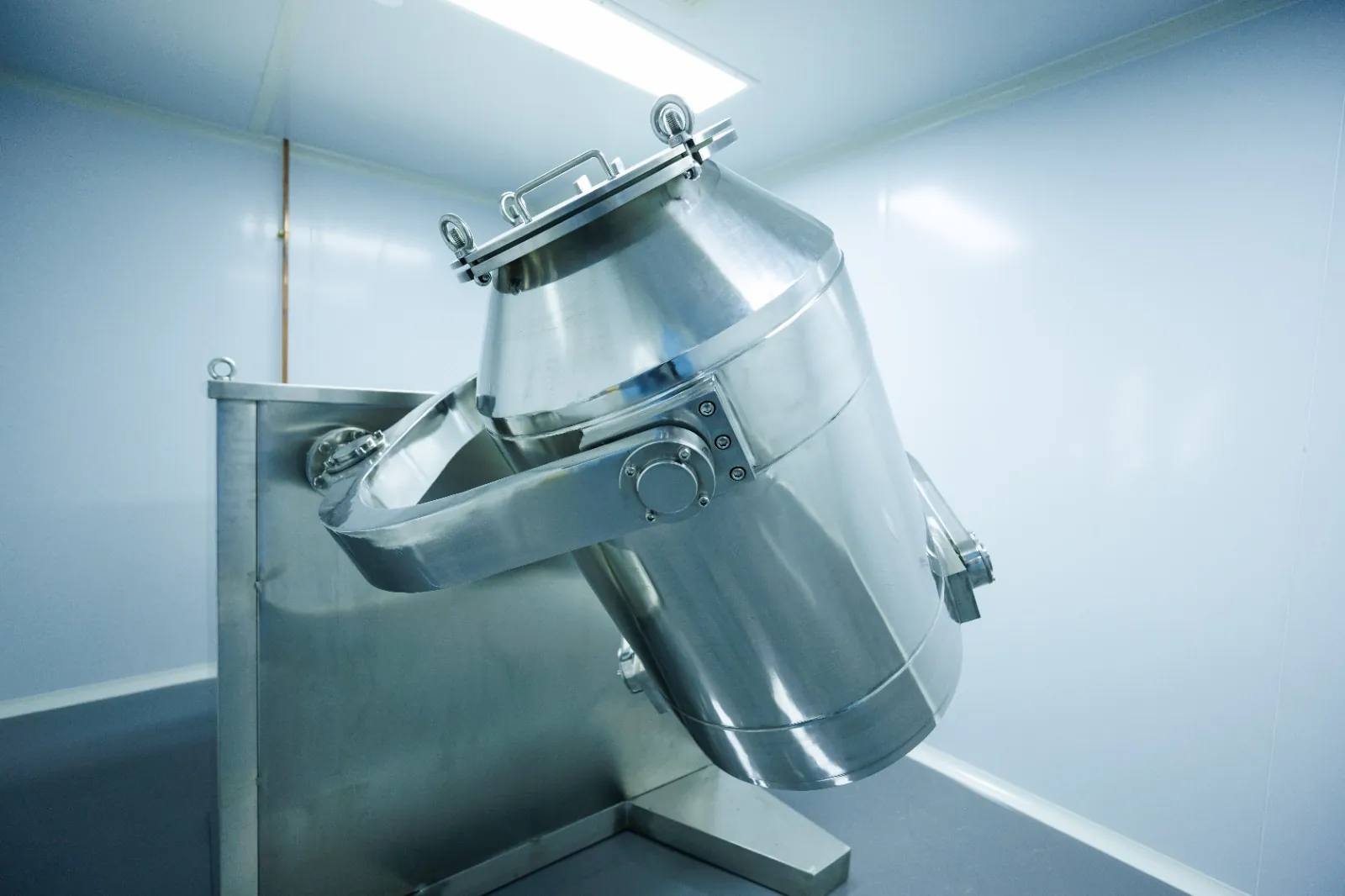
Inside the Easy Health Hong Kong Facility

Key points for quantity planning
| Item | Labels | Cartons | Bottles/Jars |
|---|---|---|---|
| Variant/language flex | High | Medium | Depends on labelling |
| Print method | Digital or offset | Offset-led | Label or direct print |
| Typical finishing | Varnish, spot effects | Foil, emboss, gluing | Sealing, shrink or label |
| Sampling focus | Colour and adhesion | Structure and colour control | Seal and application |
| Storage & transit | Scuff and roll handling | Compression and moisture | Shock and seal integrity |
These are general pointers; specific arrangements are confirmed per project.
What to prepare before we begin
- Product attributes and target markets
- Initial packaging direction and visual references
- Labelling languages, regulatory fields and barcode needs
- Primary pack capacity, sealing and labelling preferences
- Expected rollout rhythm and storage conditions
- Any third-party tests or reviews to arrange
Small batch packaging planning FAQs
How should we stage sampling and define checkpoints?
Begin with structure and key labelling elements, then validate colour and finishing. Typical steps include confirming material feasibility and sealing, reviewing label layout and languages, and testing carton or primary-pack processing. For close hues or metallic inks, test registration and lamination early. The manager coordinates samples and tests, setting pass criteria, revision scope and retention specs at each checkpoint.
If one pack targets Hong Kong and mainland China, what labelling points differ?
Hong Kong prepacked foods refer to the local regulation and the nutrition-labelling framework, while Mainland commonly refers to GB 7718 and GB 28050. Differences include product name, ingredient list language rules (e.g., when bilingual labelling is used in Hong Kong, the product name and ingredients must appear in both languages), nutrition table display, allergen statements and date wording such as best before or use by. Share your markets and intended languages; our manager will help check key points and plan phased artworks and checkpoints.
What design and technical files are required for sampling?
Share editable vector files, fonts or outlines, image originals and colour settings. Specify any spot colours and finishing such as coatings, foil or emboss areas. Provide dielines with bleed and fold marks. For barcodes or traceability elements, include specifications and test needs with examples or proofs so checks and records can be arranged in parallel.
Do storage and transit conditions affect quantity planning?
Yes. Heat, humidity and vibration can affect barrier performance, adhesion and print durability, which shape batching and scheduling. For long-haul or cross-climate storage, define outer-carton markings, in-box protection and pallet specs, and set checkpoints to verify legibility and seal integrity. Share conditions early so the manager can recommend phasing and reviews.
What tests and checks can Easy Health coordinate?
Depending on the project, we can coordinate checks such as colour consistency, adhesion and sealing, barcode readability, and common packaging durability reviews. Where scuff, humidity or transit simulations are relevant, these can be arranged during sampling. For labelling checks or third-party reports, include requirements in the brief so scheduling and document hand-offs can be set by the manager.
Related Packaging Services
Discuss small batch packaging planning with our team
Message us on WhatsApp with your product attributes, target markets and packaging direction. Easy Health coordinates the project requirements in Hong Kong. Confirm which certificate scopes, quality records and supporting documents apply to the proposed arrangement. We will assess quantities, sampling schedule and packaging formats per project, confirming arrangements and checkpoints for your case.
Last updated: