Cosmetic tube packaging, airless and spray bottles
This page focuses on three cosmetic packaging formats: tubes (PE/laminated), airless bottles (piston-driven) and spray bottles (fine mist). We translate viscosity, oxidation sensitivity, dosing and spray pattern into actionable choices, including tail sealing and pump options. Based in Hong Kong, Easy Health coordinates materials, sampling, labels and cartons; filling partnerships are confirmed per project.
Summary:Choosing between cosmetic tubes, airless bottles and spray bottles hinges on material compatibility, barrier performance, dispensing control and pre-filling checks. Easy Health coordinates the project requirements in Hong Kong. Confirm which certificate scopes, quality records and supporting documents apply to the proposed arrangement. Our account managers coordinate sampling, labels and cartons, plus packaging materials and testing arrangements. Timelines are project-specific and confirmed by the account manager.
Should I choose tubes, airless bottles or spray bottles?
Start with texture and formula sensitivity: for lotions/creams and portability, consider tubes; for air- and backflow-sensitive formulas with precise dosing, consider airless bottles; for watery or low-viscosity formulas requiring even coverage, choose spray bottles. Then verify material compatibility and barrier (PE, laminated tubes, PET/glass), pump/spray mechanisms, tail sealing integrity and orifice size, filling approach and cleanliness. Arrange compatibility and functional tests. Our account manager can coordinate samples and pre-fill checks.
Cosmetic tube packaging: PE vs laminated trade-offs
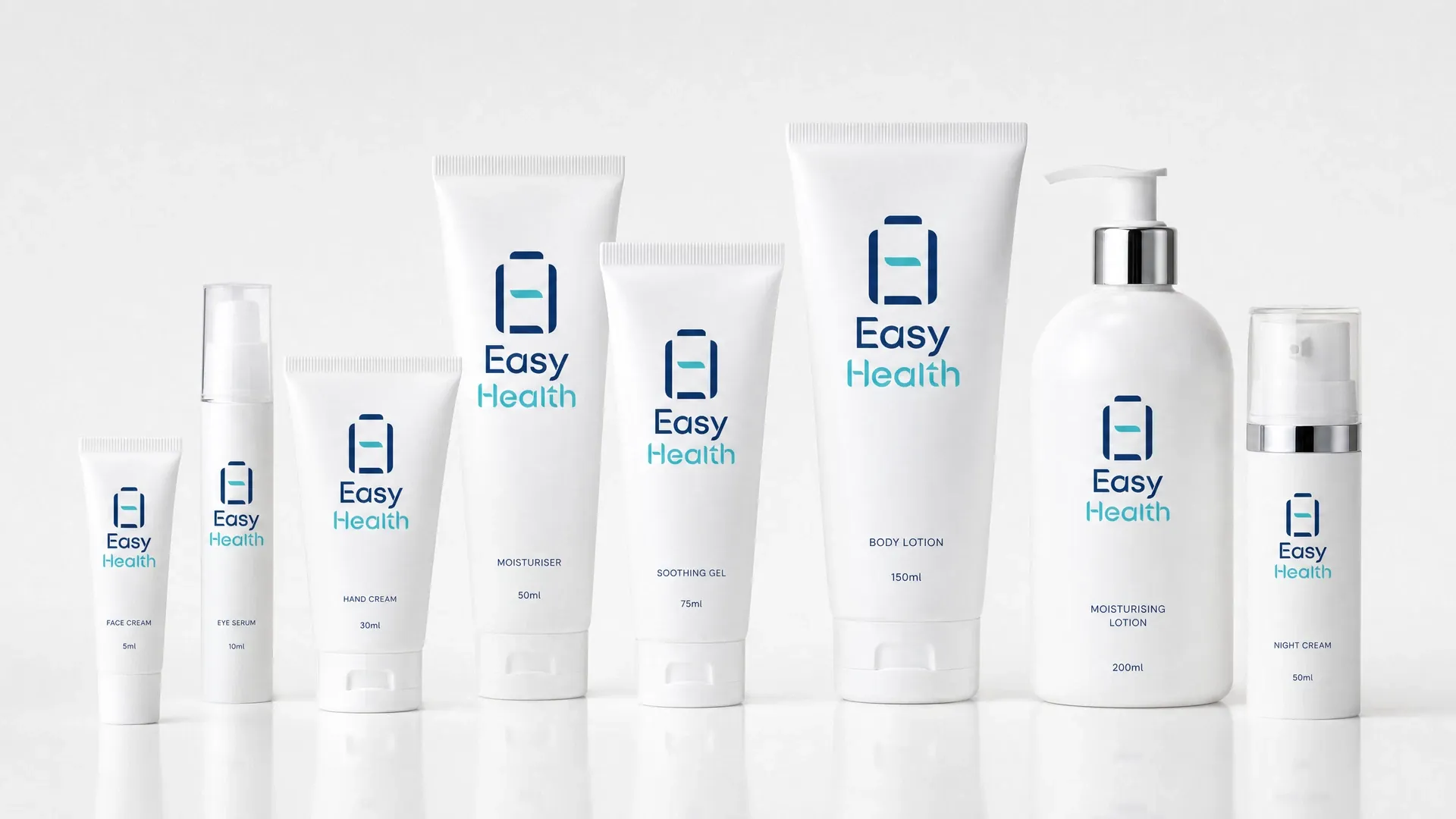
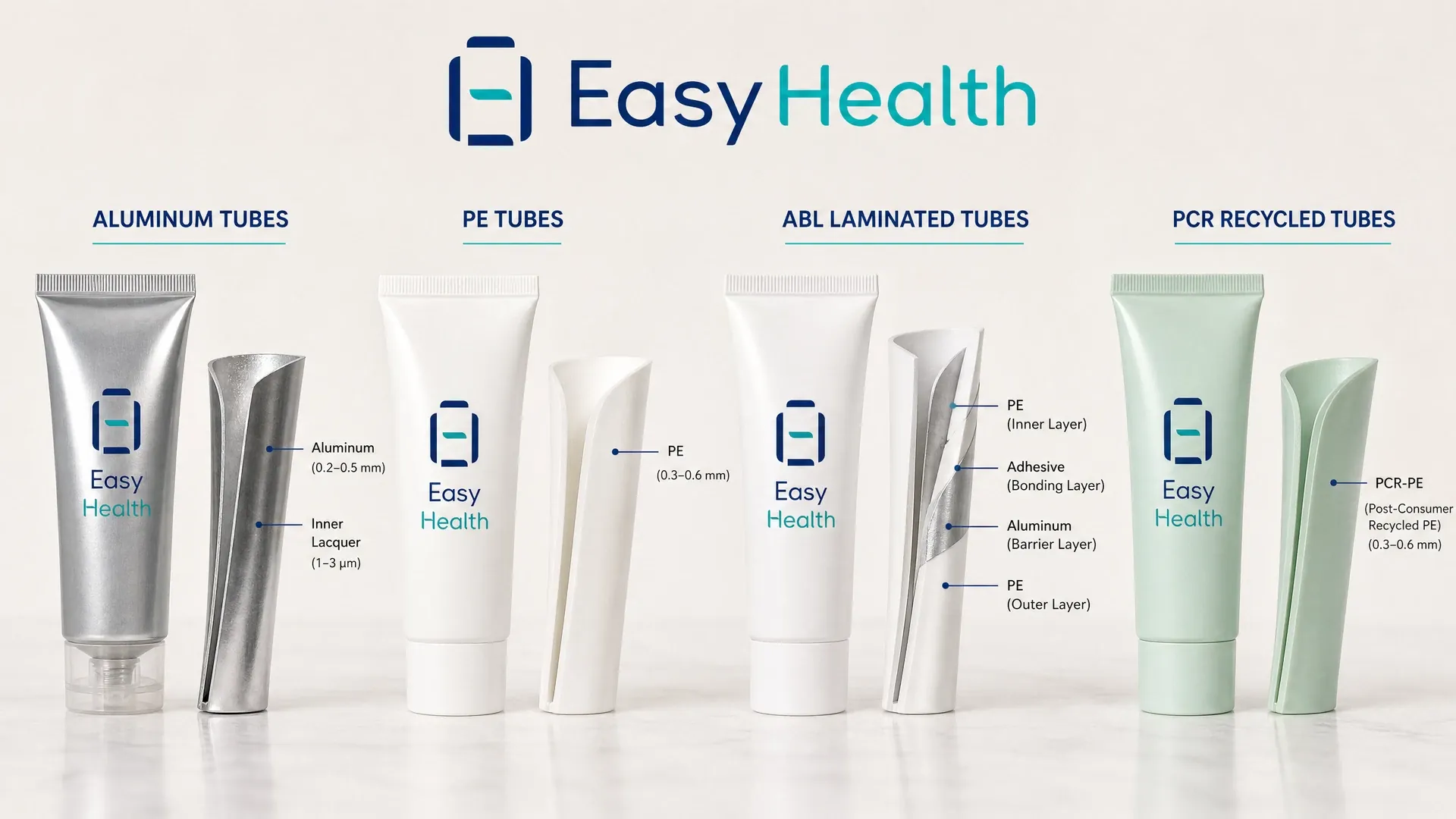
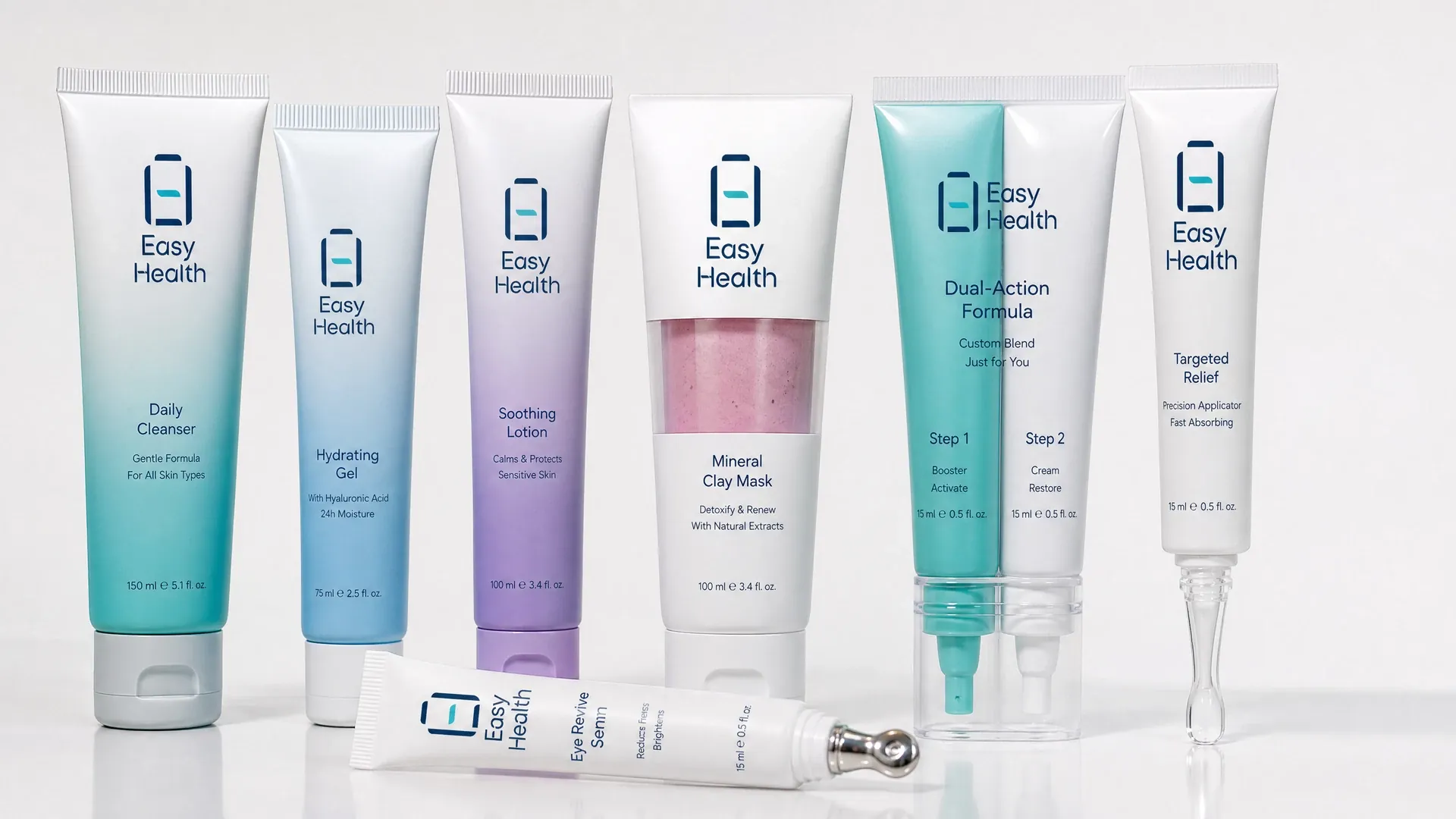
Tubes suit lotions, gels and medium-to-high viscosity formulas, offering portability and intuitive dispensing. Mono-/multi-layer PE tubes provide flexibility and a soft touch; laminated tubes offer stronger barrier to reduce fragrance loss and oxidation risk. Key details: shoulder and cap must match viscosity and orifice size; tail sealing must withstand transport compression; finishes (matte, gloss, spot UV) should remain legible and be compatible with the oil phase. Pre-filling, assess formula compatibility with tube substrate, inner coatings or inks, long-term squeeze recovery and secondary contamination risk. Easy Health coordinates material selection, sampling and seal tests, and provides practical advice on labels and cartons.
- Multi-layer PE enhances barrier and rigidity
- Laminates suit more oxygen-sensitive formulas
- Match orifice diameter to viscosity
- Reserve space for tail mark and batch code
Cosmetic airless bottles: pump, piston and dosing consistency
Airless bottles use a piston and non-venting pump to limit backflow and air exposure, ideal for oxidation- or moisture-sensitive serums and lotions. Prioritise pump architecture and rebound, dosing consistency, and compatibility/barrier of bottle and inner components (e.g., PP, PETG, SAN). Review protective parts (overcap, dust cover) to prevent accidental actuations. Before filling, confirm priming and de-aeration steps, initial actuations, and whether piston travel aligns with declared volume; transport simulations should watch for air locks. Easy Health can arrange functional tests, coordinate samples and structural refinements, and assist in checking pack copy and carton fit.
- Airless limits backflow and oxidation risk
- Stable rebound and dosing are critical
- Match materials to formula chemistry
- Align priming strokes with piston travel
Visual guide: tube layers, pump parts and mist coverage
The visuals illustrate PE vs laminated tube cross-sections and tail seals; airless piston travel and pump parts; and fine-mist spray coverage and droplet distribution as a reference before sampling and tests.
Cosmetic spray bottles: fine mist, coverage and actuation feel
Spray bottles suit toners, refreshing mists and low-viscosity essences. Focus on atomisation uniformity, coverage width and actuation feel, plus leakage control and cap fit. Common substrates are PET and glass: PET is lightweight and travel-friendly; glass offers premium tactility and relatively stable thermal behaviour. In trials, assess droplet distribution under varied actuation rhythms, consistency over continuous use, and compatibility with fragrance/solvents. Pre-filling checks include dip tube length and flexibility, ferrule-to-pump tightness, and whether label adhesion is affected by bottle curvature. Easy Health coordinates sampling and spray evaluations.
- Uniform mist affects skin feel
- PET for light weight; glass for look
- Verify leak-proofing and cap lock
- Match droplet size to use distance
Pre-filling checks and compatibility testing
Across tubes, airless and sprays, run both accelerated and real-time observations: compatibility between formula and packaging resins, adhesives and inks; heat/light and agitation stability; functional consistency under repeated squeezing or actuations. Review cleanliness and handling needs, seal integrity at tails/threads, and positions for batch codes and best-before/use-by dates. Filling collaboration is confirmed per project. Easy Health can coordinate required tests and functional evaluations, and provide practical advice on labels, cartons and barcode placement.
- Pair compatibility with ageing studies
- Test functions under extremes
- Seal integrity underpins logistics
- Reserve space for codes and dates
Packaging format selection workflow
- Brief and formula overview:Understand viscosity, sensitivities and usage to shortlist tubes, airless or sprays.
- Material and structure proposal:Evaluate barrier, compatibility and tactility; propose tube layers, pump/spray and substrate.
- Sampling and functional tests:Coordinate samples and arrange compatibility/functional tests for squeeze, pump and spray.
- Label and carton layout:Assist in checking key copy, code/date placement, and bilingual information and warnings.
- Packaging production coordination:Coordinate materials, production and filling partnerships per project; timing confirmed by the account manager.
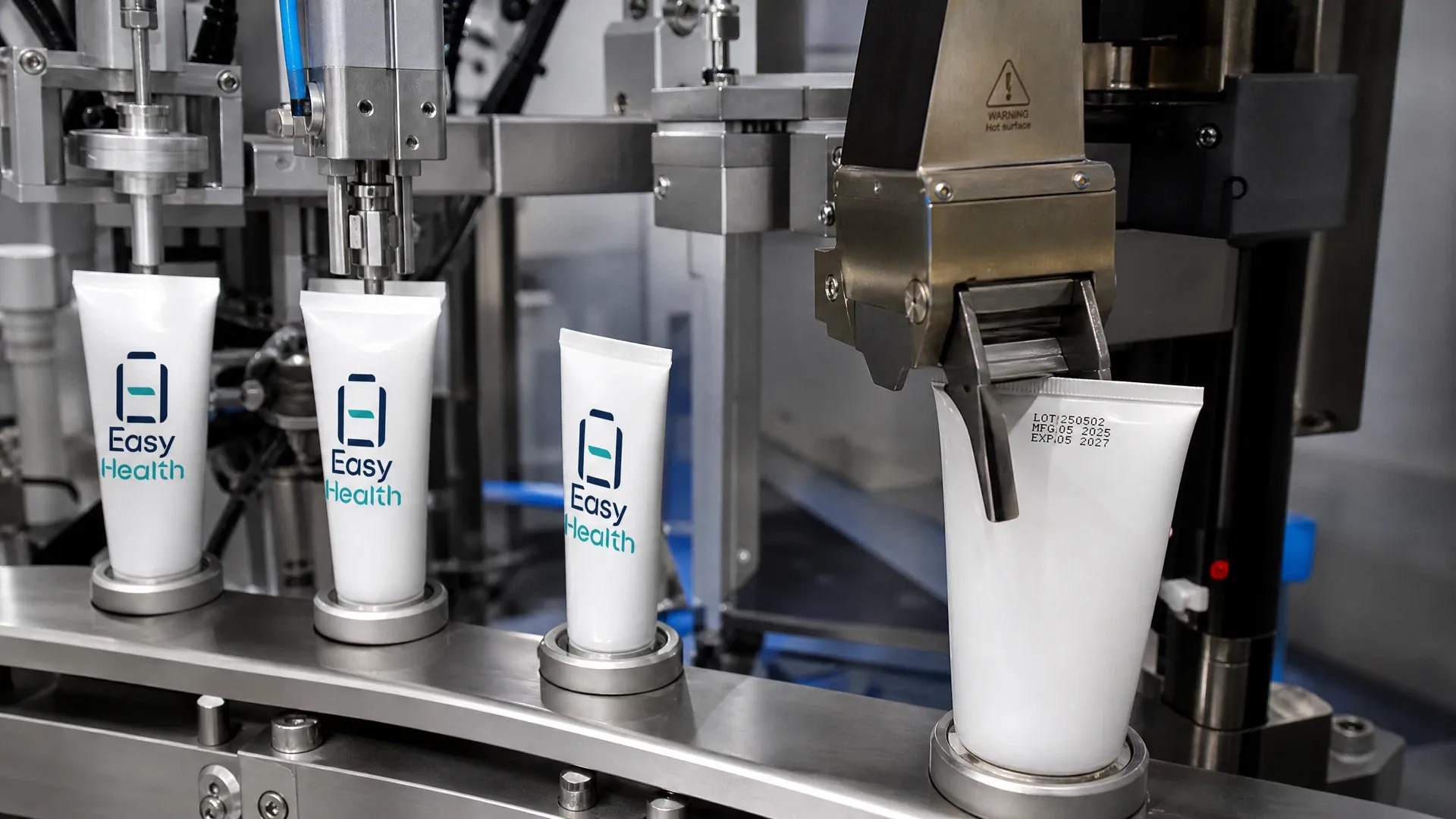
Inside the Easy Health Hong Kong Facility
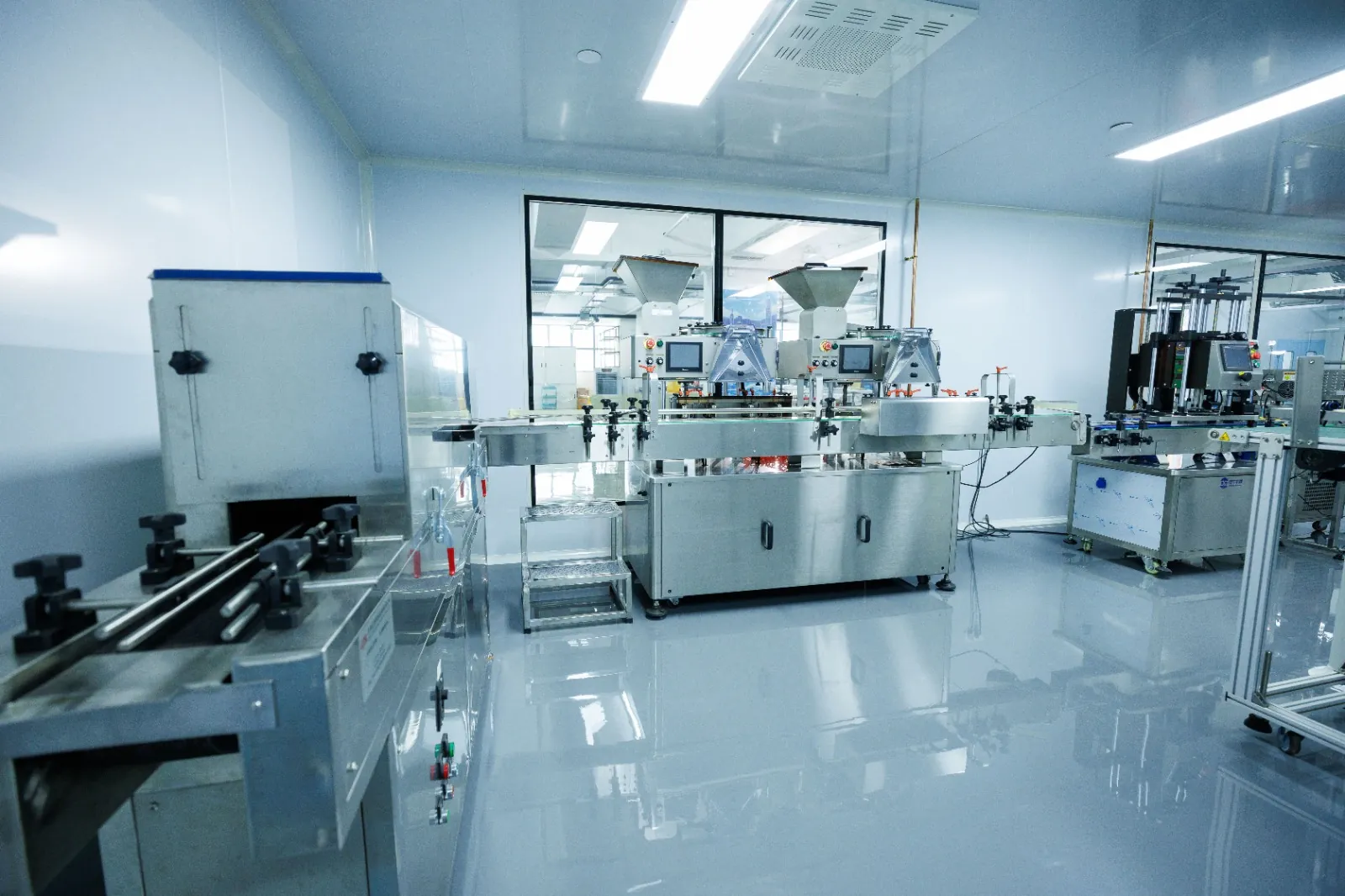

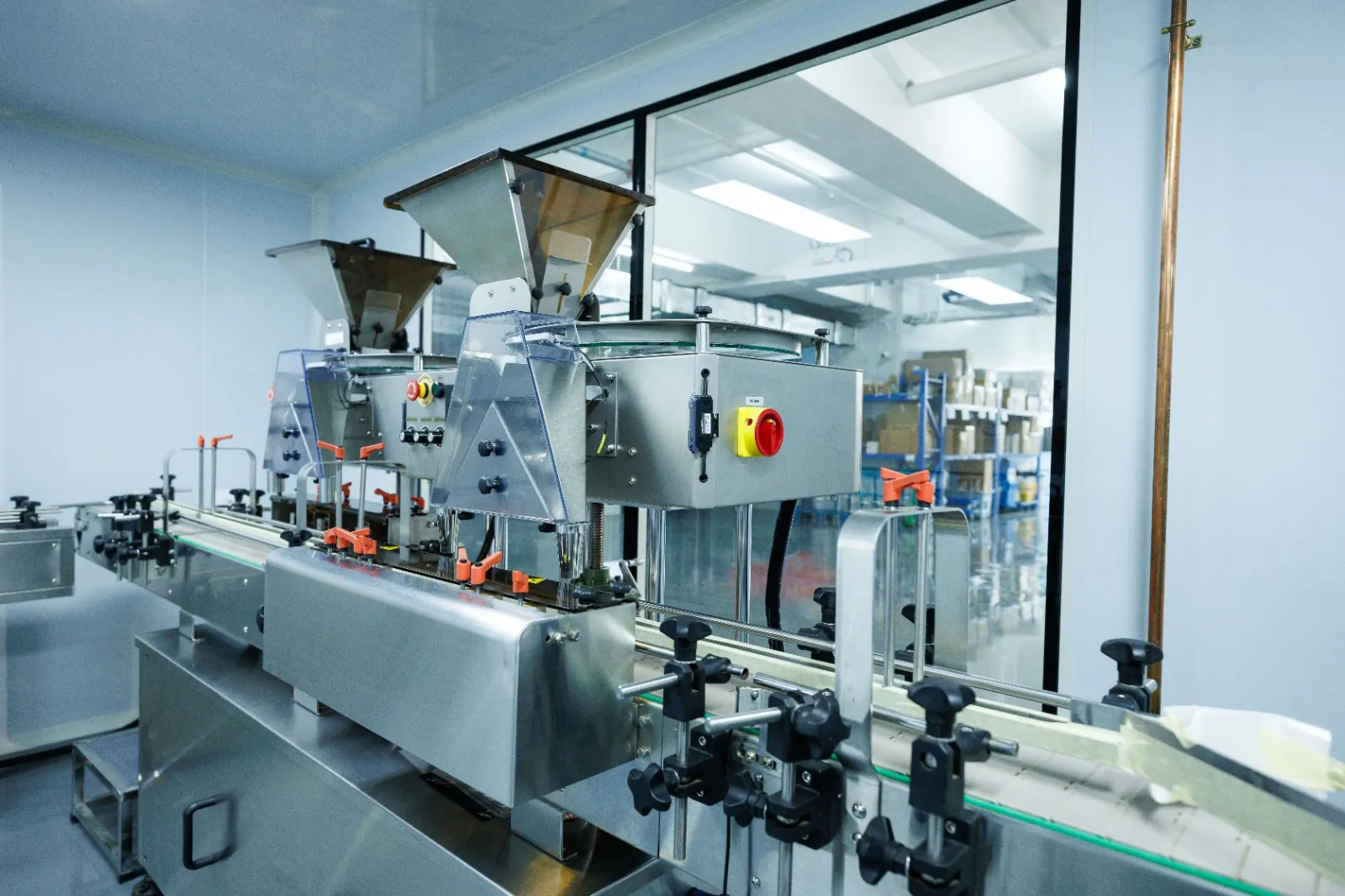
Tubes vs airless vs spray: key points
| Factor | Tubes | Airless | Spray |
|---|---|---|---|
| Structure | Squeeze with tail seal | Piston-driven airless | Fine-mist actuator |
| Suitable textures | Lotions, gels, creams | Serums, lotions | Toners, low-viscosity essences |
| Oxygen exposure | Moderate; layer-dependent | Low; limited backflow | Moderate; bottle-dependent |
| Dispensing | Orifice size governs flow | Stroke consistency matters | Atomisation drives coverage |
| Materials | PE, multilayer laminate | PP, PETG, SAN | PET, glass |
Comparison reflects structure and usage; final selection requires compatibility and functional tests.
Pre-sampling and pre-production checklist
- Confirm compatibility and odour migration with tube/bottle materials
- Select pump output feel and spray coverage; run continuous actuation tests
- Tube tail seal strength and notch (if needed) placement
- Spray dip tube length, flexibility and bottom reach angle
- Areas for batch/date codes; label/foil legibility
- Leakage and deformation checks after transport simulation
Tube, airless and spray bottle packaging FAQs
How do I choose pump or spray output?
Define a range based on viscosity and expected actuations, then trial multiple pumps/sprays to assess hand feel and residue. Observe atomisation stability and rebound under continuous use. Repeat under varied environments and record priming strokes and actuation experience before finalising.
How should tube shoulders and caps be matched?
Match viscosity to orifice size: higher viscosity benefits from wider orifices and grippable screw caps; lower viscosity often suits smaller orifices and flip-tops for control. Check inner plugs, anti-leak features and squeeze recovery, and test tail seal strength alongside hand feel.
What should be considered for labels and warnings?
In Hong Kong, cosmetic warning statements should be bilingual (Cap. 456A). For other markets, confirm with local authorities or advisors. Reserve space for batch and date codes where applicable, ensuring critical text is not obstructed by seals or curvature. Easy Health can assist in checking copy and placement.
What is covered in compatibility and ageing tests?
Typically: interactions between the formula and resins, adhesives and inks; visual/odour changes under heat/light; functional stability after extended squeezing or spraying; and leak checks. Use findings to refine materials, coatings or structure.
What should be confirmed for filling and cleanliness?
Filling partnerships are confirmed per project. Define cleanliness and environmental requirements, priming/de-aeration steps, sampling/retention plans, and run a pilot before scaling up. Easy Health can coordinate and arrange related tests.
Related Packaging Services
Discuss cosmetic tube packaging, airless or spray bottles
Send your formula highlights, target dispensing feel and labelling needs via WhatsApp. The Easy Health Hong Kong team will provide material/structure recommendations, coordinate sampling and tests, and align label/carton layouts. Timelines are project-specific and confirmed by the account manager.
Last updated: