Elderly supplement packaging for older consumers
This page focuses on practical priorities for elderly supplement packaging: easy-open features (large caps, tear notches, blister push force), readable labels (larger type, high contrast, low glare), and daily intake prompts (calendar blisters, compartment boxes). Easy Health coordinates the project requirements in Hong Kong. Confirm which certificate scopes, quality records and supporting documents apply to the proposed arrangement. Food safety management documentation (FSSC 22000 scope/details) can be checked for your project. Each project is assessed and confirmed by an account manager.
Summary:Designing elderly supplement packaging hinges on easy-open structures, highly legible labels with larger type, and clear daily intake cues, while balancing barrier, storage and logistics. Easy Health coordinates the project requirements in Hong Kong. Confirm which certificate scopes, quality records and supporting documents apply to the proposed arrangement. Food safety management documentation (FSSC 22000 scope/details) can be checked for your project. We offer OEM/ODM, label and carton options, and multiple pack formats with coordinated production, assessed case-by-case by an account manager via WhatsApp.
Why do elderly supplements need specialised packaging?
Older users and caregivers prioritise easy opening, legibility and dose management. Consider large caps or leverage aids, tear notches for pouches, and calibrated blister push force. Use larger type, high contrast and matt finishes to reduce glare, plus calendar-style blisters or companion compartments with pictograms for daily prompts. Easy Health coordinates materials and print, offers bottle, pouch, stick, and blister options, arranges sampling and, if needed, coordinates third-party testing; an account manager confirms details according to your formula and channels.
Elderly supplement packaging: balancing grip, visibility and dosing
Elderly supplement packaging must address opening force, label legibility and daily intake prompts. With reduced grip strength, consider wider caps with clear knurling; add tear notches to pouches and validate tear direction; tune blister lidding to balance protection and push force. For labels, increase type size as needed and run real-object tests; apply high-contrast palettes and matt laminates to cut glare. For dose management, integrate calendar cues, AM/PM pictograms and remaining-quantity windows. Easy Health coordinates bottle, pouch, stick and blister options in Hong Kong, aligning labels and cartons with the intended use context.
- Large caps with knurling reduce opening effort
- Pouches with tear notches; validate tear direction
- Blister push force tuned to protect yet open easily
- Larger type, high contrast and matt finishes
Easy-open structures and tactile design: from concept to samples
Easy-open does not mean loose. Consider wide or winged caps with tactile matt finishes; pouches with dual tear notches and guided corners; blisters tuned via foil thickness and dome height for balanced push force. Conduct physical samples and user trials to compare cap textures, lidding films and sealing temperatures, observing opening force and foil residue. Easy Health coordinates closures, films and packaging materials, can coordinate third-party tests if needed, and orchestrates packaging production in our Hong Kong facility. Project specifics are confirmed by the account manager.
- Winged or wide caps improve torque feel
- Dual tear notches and corner guides help opening
- Blister materials and dome affect push effort
- Sample-based tests verify force and residue
Visual guide: mapping to elderly user scenarios
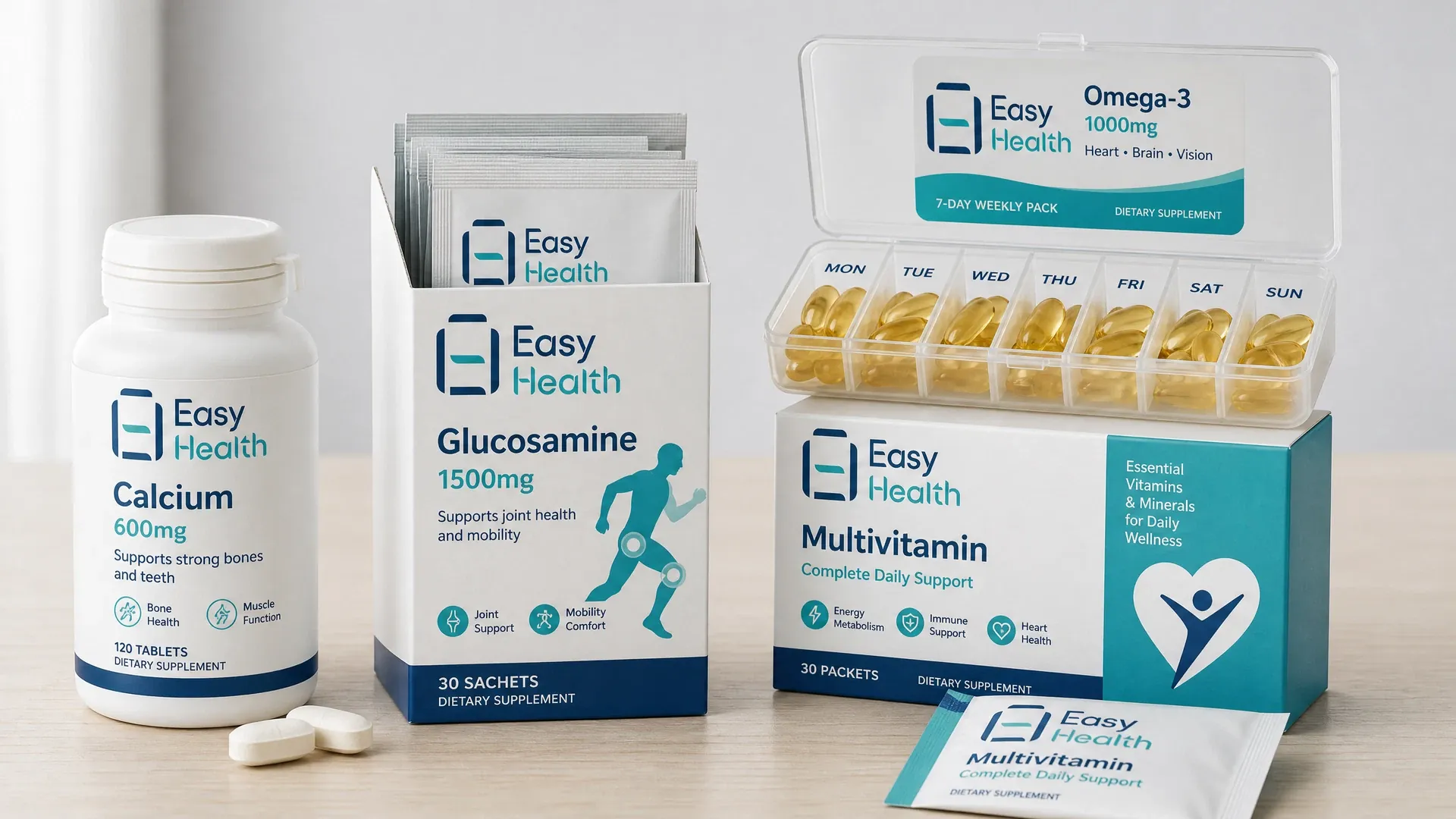
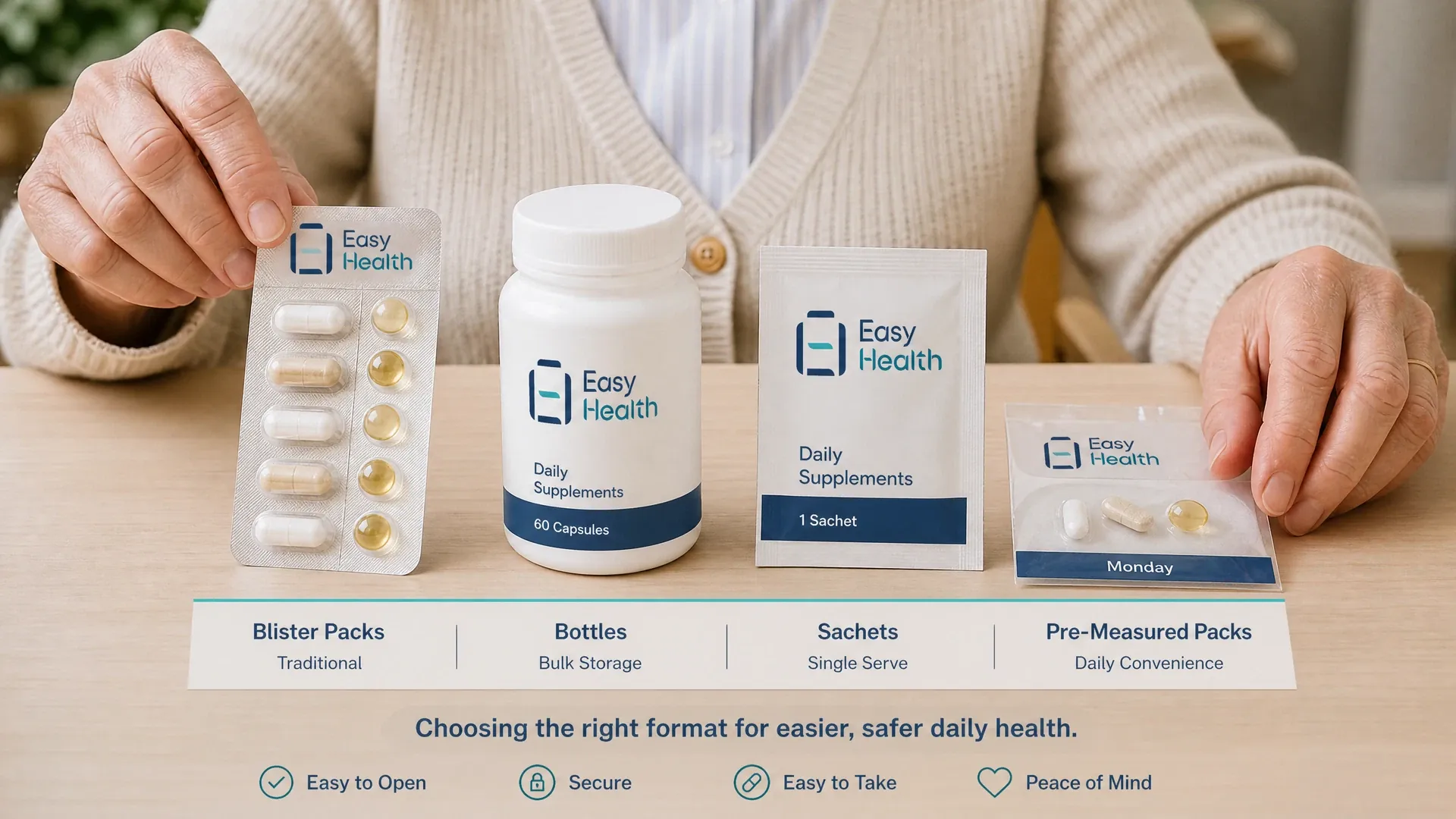
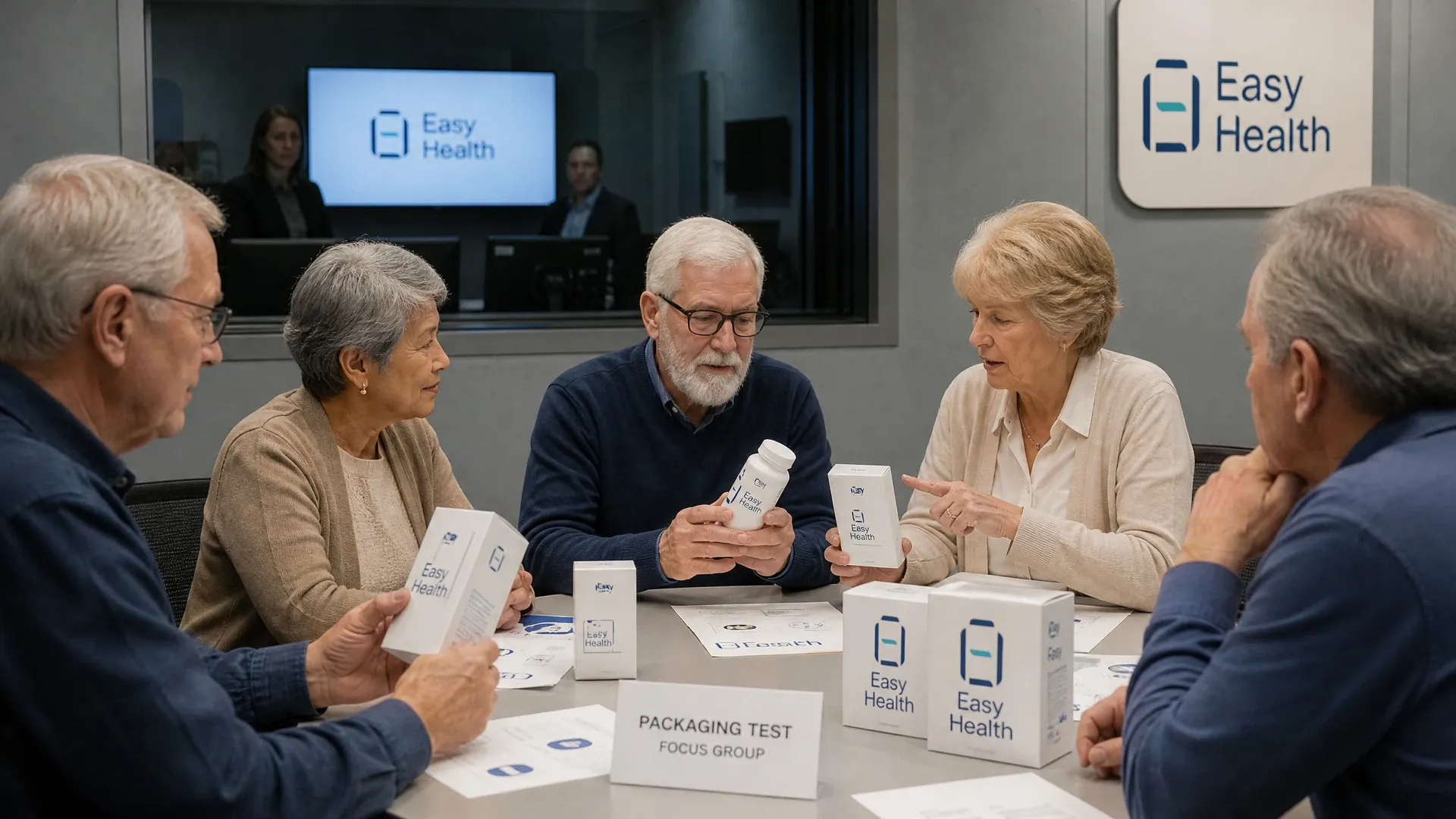
The visuals demonstrate knurled large caps and grip, pouch tear directions, blister push force with calendar layouts, high-contrast matt labels, plus research snapshots on reading distance and icon comprehension. Use them to benchmark against your product’s real use cases.
Large print supplement labels: structure the content first
A larger type label works best with clear hierarchy. Prioritise product name, dosage/directions and cautions; use high-contrast colours with generous whitespace. Support with icons and stepwise graphics, and apply matt lamination to reduce glare. Determine type size by user needs and validate with real samples, especially on curved bottles or compact sticks. Easy Health coordinates label and carton finishes (matt film, spot gloss, emboss) and layout flow, and assists in checking bilingual content and mandatory fields.
- Prioritise key info with contrast and whitespace
- Use icons to aid directions and cautions
- Test legibility on curves and small panels
- Matt finishes reduce glare while reading
Daily-serving prompts: calendar blisters and compartment boxes
Clear cadence helps older users and caregivers. Calendar-style blisters align doses by day/date to reduce missed or double intakes. Companion compartment boxes work with bottles or sticks for multi-formula routines. Add AM/PM icons and a “taken today” visual cue; for on-the-go use, widen openings, include tear notches and step diagrams inside the carton. Easy Health offers blister, stick, and bottle formats, coordinates inserts and trays, and arranges samples to verify handling and print alignment.
- Calendar blisters reduce missed or double doses
- Compartments support multi-formula schedules
- On-the-go designs add steps and tear notches
- Samples validate fit and handling clarity
How we coordinate packaging projects for older-consumer products
- Briefing and product info:Share formula, dosage form, channels and scenarios via WhatsApp so the account manager can outline suitable formats and key priorities.
- Design and compliance review:Propose layout and finish options, and assist in checking bilingual content and the applicable regulatory fields.
- Material selection and samples:Coordinate bottles, closures, films, labels and cartons; arrange samples and, if needed, coordinate third-party tests to validate opening and legibility.
- Production coordination:Orchestrate production and QC checkpoints at our Hong Kong facility; timelines vary by project and are confirmed by the account manager.
- Acceptance and dispatch:Confirm acceptance criteria and transport packs, share storage and labelling advice, and align with your warehousing plan.
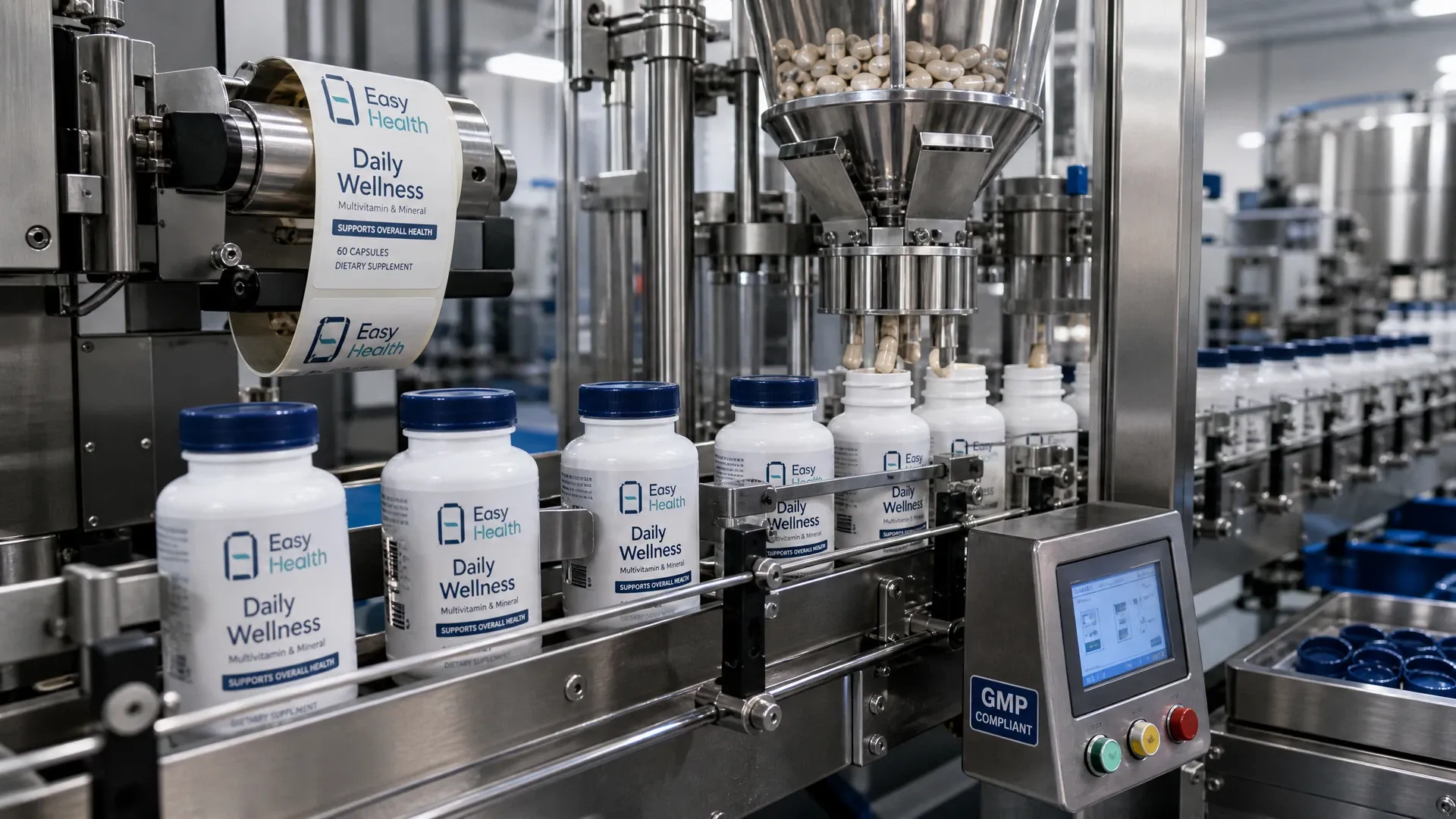
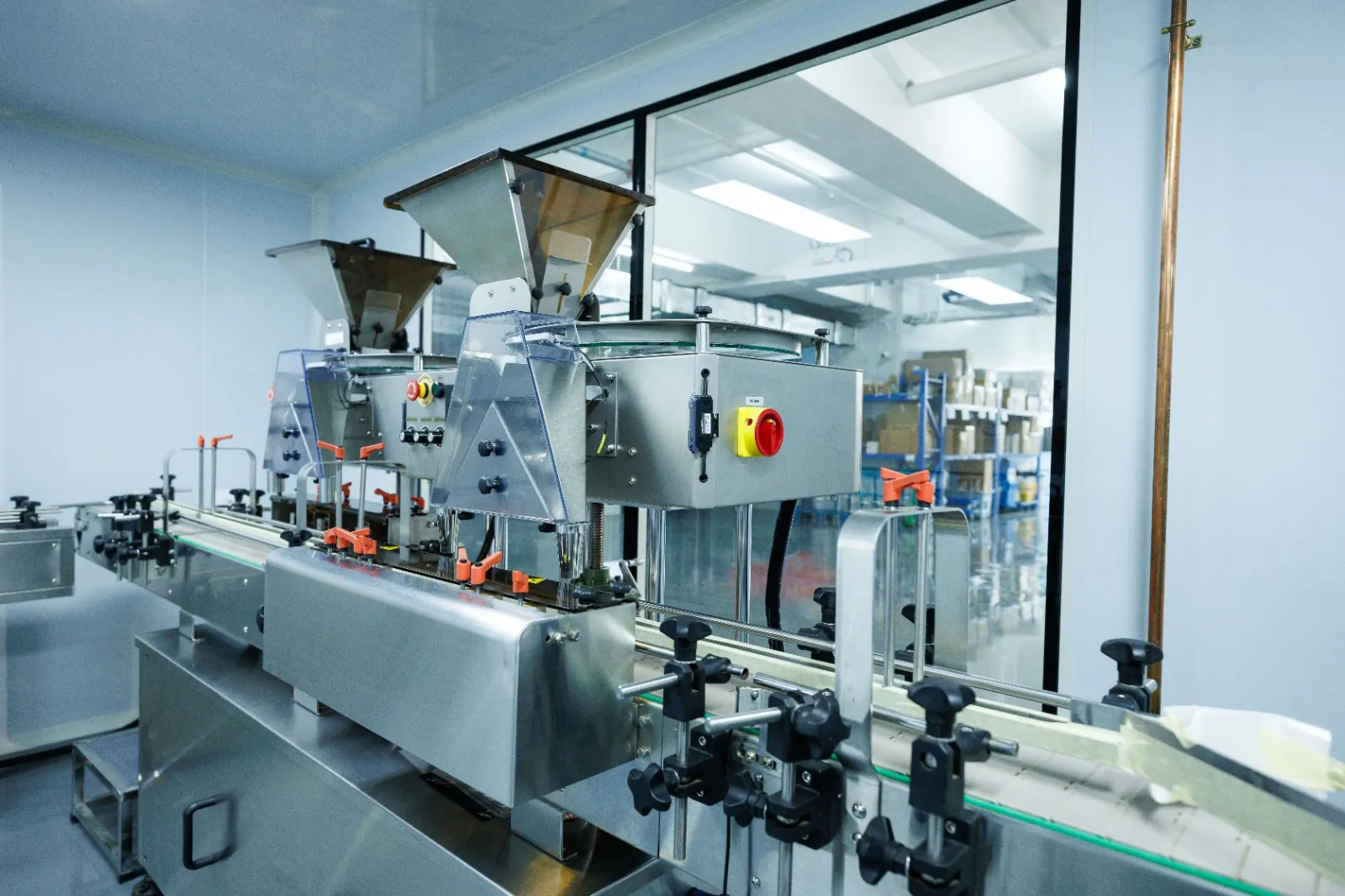
Inside the Easy Health Hong Kong Facility


Common formats for elderly health supplement packaging
| Aspect | Bottle | Pouch/Stick | Blister (calendar) |
|---|---|---|---|
| Ease of opening | Large cap easier to twist | Tear notch, on-the-go | Metered push, clear dates |
| Legibility | Curved surface needs tests | Small area, prioritise info | Small cells, clear icons |
| Barrier/stability | Good seal and light shield | Choose high-barrier films | Foil offers strong barrier |
| Dose prompting | Use layout cues | Print dosage pictograms | Built-in day/date cues |
| Portability | Bulkier single unit | Portable single sticks | Rip a cell to carry |
General comparison only; final selection and details are confirmed per project by the account manager.
Checklist: common gaps in elderly supplement packs
- After enlarging type on curved labels, are key lines still fully visible?
- Do tear notches align with dominant hand and opening height?
- Has blister push force been user-tested to avoid too hard or too soft?
- Do AM/PM or date cues align with actual dosage?
- Is glare controlled via matt finishes and high-contrast colours?
- Are transit packs crush-resistant and retail-friendly for replenishment?
Packaging FAQs for older-consumer supplements
How large should the text be, and how do we validate label legibility?
Increase type size based on user needs and validate with real samples. Simulate common reading distances, check glare under varied lighting, and run target-user read tests on actual materials and curves. Compare matt/gloss, colour contrasts and icon sizes. Easy Health can coordinate multiple proof sets and assist in checking bilingual hierarchy.
How do we test whether an easy-open design suits older users?
Create structural samples or pilot runs to log steps, required force and failure modes. For bottles, compare cap diameters and textures; for pouches, test notch shapes and tear directions; for blisters, vary foil and dome height to tune push force. Arrange user simulations and consolidate findings with your account manager.
What differs between Hong Kong and Mainland China labels?
For prepackaged foods in Hong Kong, the Food and Drugs (Composition and Labelling) Regulations (Cap.132W) apply: labels may be in Chinese or in English; if both languages are used, the name of the food and the ingredients list must appear in both languages; “1+7” nutrition labelling applies. In Mainland China, GB 7718 and GB 28050 apply to prepackaged foods. If the product is a proprietary Chinese medicine or a Chinese herbal medicine, Cap.549 applies. Your account manager can assist in checking fields and languages for your specific product.
Can calendar blisters accommodate multiple doses or formulas?
Yes—use AM/PM rows or colour coding for formulas, but validate cell capacity and push force. Produce samples to assess alignment and legibility, then have the account manager confirm production arrangements.
How should design files be prepared for curves and larger text?
Supply editable vector files with dielines and curved-panel flats, keeping safety margins and whitespace for key text. Include bilingual copy, original icons and colour references. Easy Health provides dielines and layout guidance, and arranges samples to check distortion and real-world legibility.
Related Packaging Services
Let’s plan your elderly supplement packaging
Message our account manager on WhatsApp with your formula, dosage form, channels and panel constraints. We will outline feasible bottle/pouch/stick/blister options and sampling arrangements. Timelines vary by project and are confirmed by the account manager.
Last updated: