Lid and Base Box Packaging Style Guide
Based in Hong Kong, Easy Health coordinates OEM/ODM and carton packaging, including labels, printed boxes and prototyping. This page focuses on lid and base box selection—comparing with hinged lid and drawer styles—and covers structure, unboxing and inserts to set the right direction for retail or gifting.
Summary:Choose the right box type to match product weight, unboxing feel and insert protection. This guide compares rigid set-up (lid–base), flip-top (magnetic), and drawer boxes, plus tuck-end and windowed options, with insert, print and labelling pointers for fast decision-making.
Where Should You Start When Choosing a Box Type?
Begin with product weight and count to define structural strength, then pick the unboxing style for your scenario: flip-top for display, lid–base for gift sets, drawer for compartmental storage and reusability. Match with inserts (paper tray, EPE, EVA, blister) and print finishes. If it is a prepackaged food, present required particulars per Cap.132W and the Hong Kong ‘1+7’ as applicable, in Chinese or English; if both languages are used, the name and ingredient list must appear in both. For Mainland China, refer to GB 7718/28050. Details are confirmed by our account manager per project.
Lid and Base Box Packaging Compared with Hinged Lid and Drawer Boxes
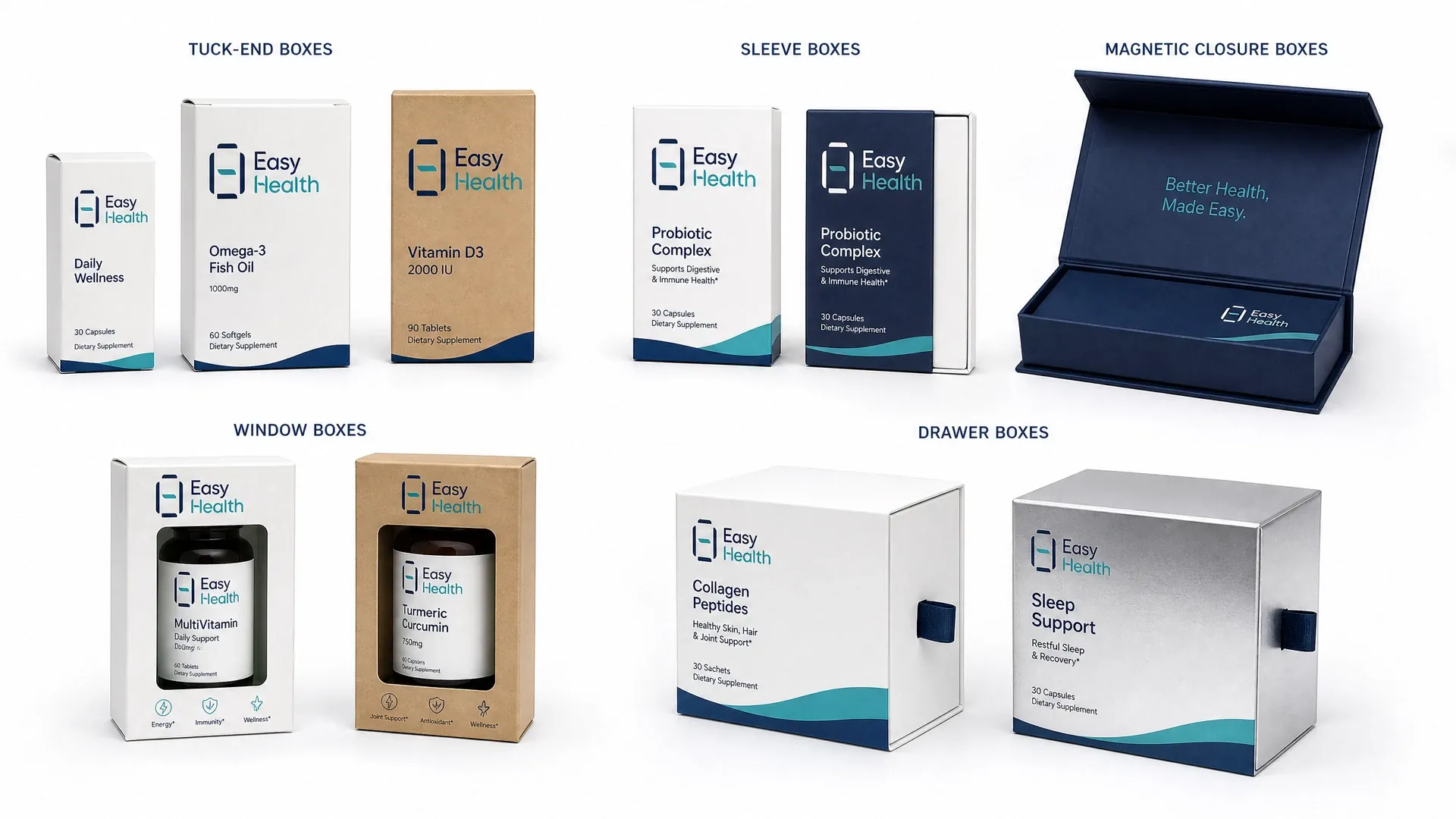
Lid–base boxes offer stable structure and flexible volume, ideal for gift sets and multi-SKU packs; lid height and shoulder lines can be tuned for proportions. Flip-top (often magnetic) opens as one piece, giving a full front display—mind spine thickness and creasing durability. Drawer boxes have an outer sleeve and inner tray, enabling compartments and repeat use; pull resistance and handle design shape the feel. All can use wrapped greyboard or heavy carton with specialty papers; inserts and board thickness should match product weight.
- Lid–base offers flexible capacity
- Flip-top provides full-face display
- Drawer suits repeat opening
- Board caliper must suit weight
Use Cases and Inserts: Stability, Fit and Display
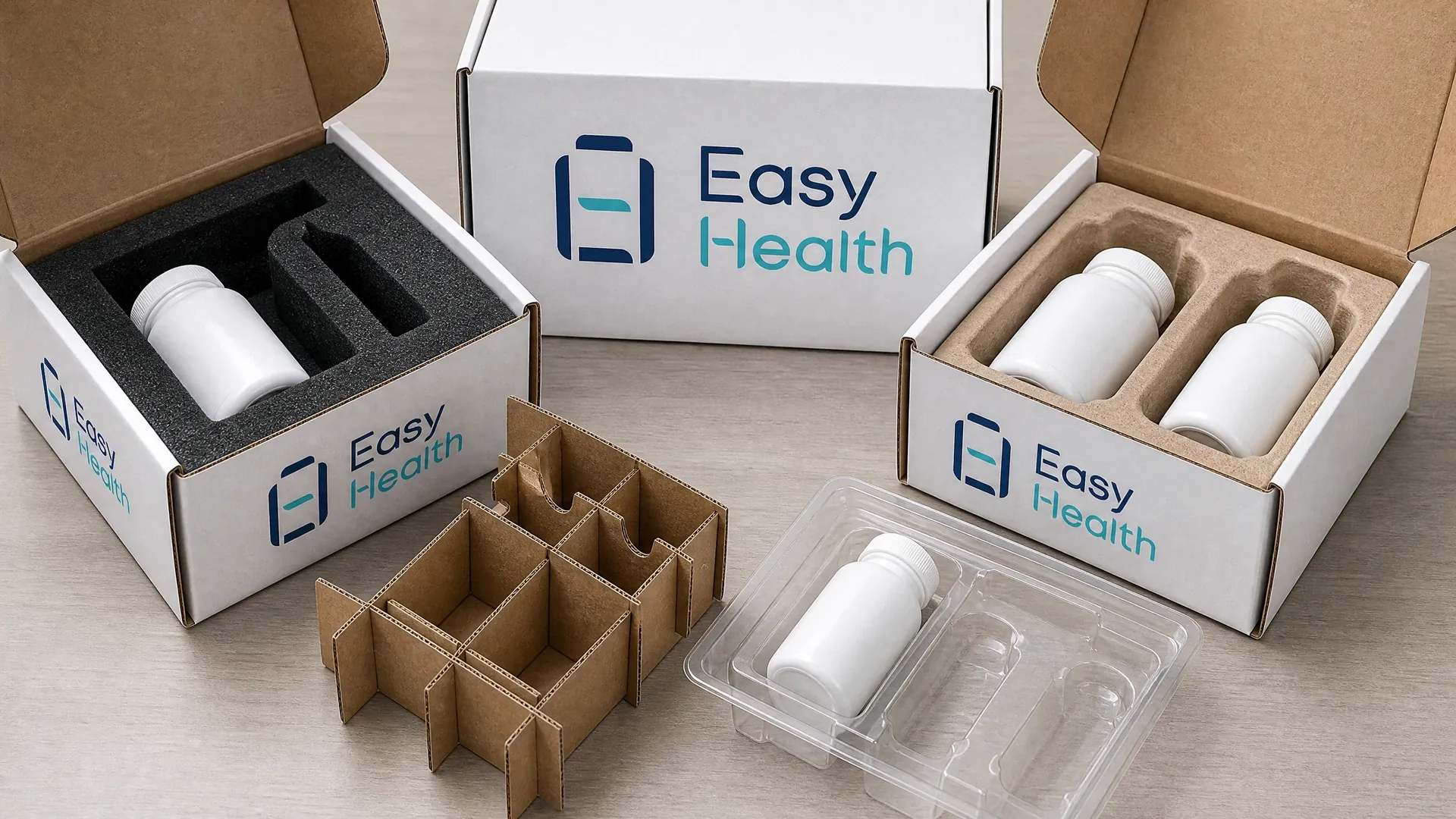
Select inserts for both protection and presentation. Paper trays look unified and are easier to recycle—good for plastic or glass bottles and small cartons. EPE is light with cushioning for fragile glass and heavier loads. EVA gives precise cavities with crisp edges for premium sets. Blister (PVC/PET) offers close fit and clarity, pairing well with windowed boxes. Drawer boxes support multi-compartment layouts; flip-top boxes can hold info cards or spoons under the lid; lid–base boxes can add a shoulder frame for rigidity. Confirm thickness, cut-out tolerances and bonding per product dimensions and finishes. When choosing an insert, test placement, removal and movement after shaking with the actual product or samples; for multi-item sets, mark each position on the insert so recipients can see at a glance where every item belongs.
- Paper trays balance display and recycling
- EPE cushions heavier or fragile items
- EVA provides sharp, precise cavities
- Blister plus window boosts visibility
Visual Breakdown: Structures, Opening Styles and Inserts
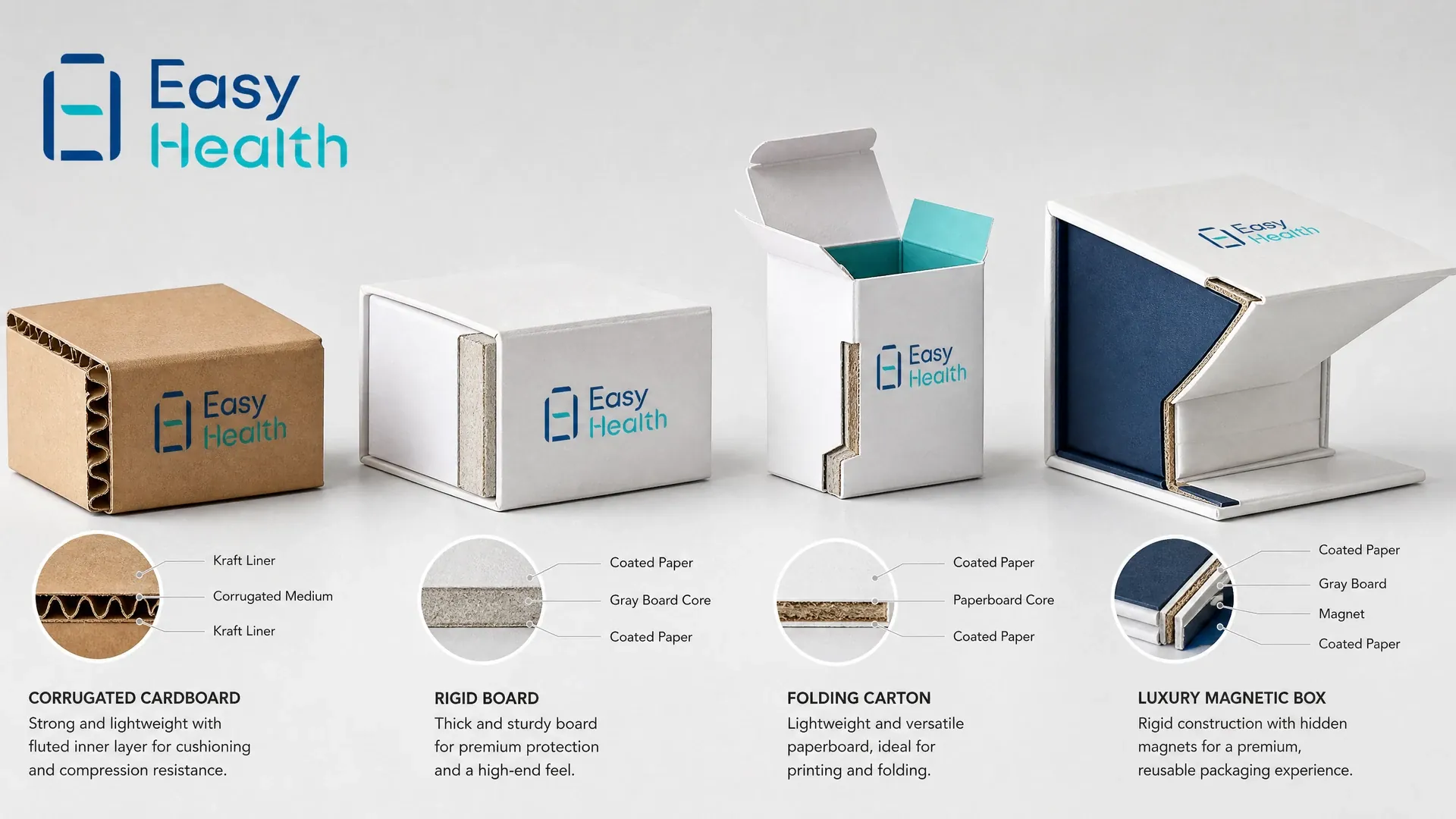
Exploded views show lid–base shoulders, flip-top magnet and crease positions, and the relationship between drawer sleeve and tray. Compare cut-outs and bonding of paper, EVA and blister inserts to quickly match structure and insert design.
Materials and Print Finishes: Feel Versus Durability
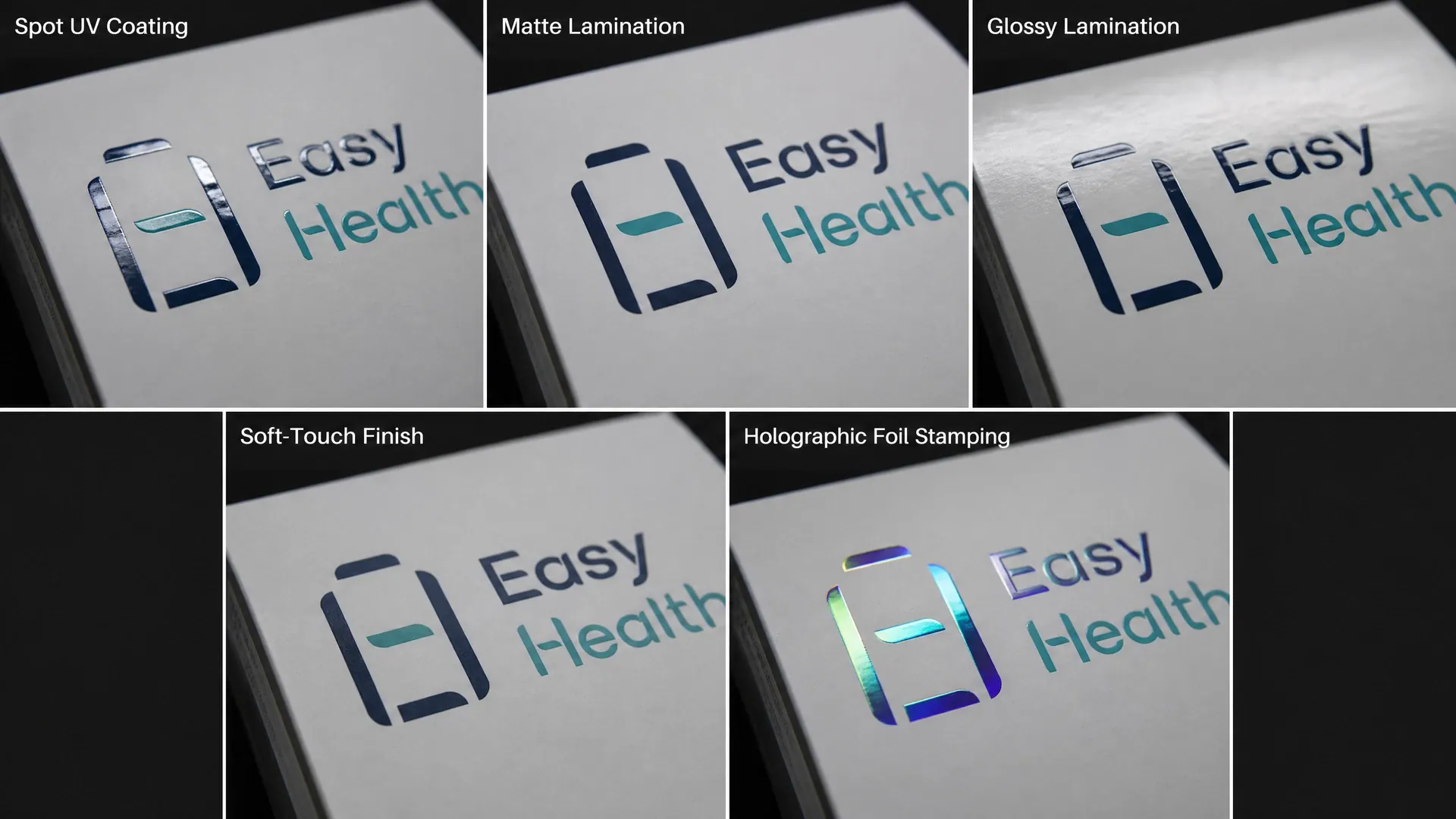
Common wraps include art paper, textured papers and specialty stocks with greyboard cores sized to weight and dimensions. Finishes such as matt/gloss lamination, embossing, foil, spot UV and deboss shape the tactile effect—matt feels refined but marks more easily; gloss resists smudges. For magnetic flip-tops, size and placement of magnets should not interfere with inserts or labelling. Drawer sleeves benefit from reinforced edges. For long shipping or storage, consider corner reinforcements, strong wrap adhesives and arrange drop/transport tests as needed.
- Wrap choice drives hand-feel
- Matt elevates feel; gloss resists dirt
- Place magnets away from labels
- Reinforce corners and sleeve edges
Tuck-End and Windowed Boxes: Lightweight Structure and Visibility
Tuck-end boxes (lock-bottom/airplane-type) are folded from a single board, suited to single items or sachet sets, offering low weight and stacking efficiency; assess whether closures can bear bottle weight and add inner trays or ribs if needed. Windowed boxes cut a viewing area with a clear film for shelf visibility; evaluate effects on rigidity and dust protection. Both can host tamper-evident labels. For prepackaged foods, bilingual name, ingredients and ‘best before’/‘use by’ may be placed on the outer box; our account manager can help check presentation requirements.
- Lightweight and stackable
- Add inserts to support bottles
- Windows improve shelf visibility
- Balance window size and rigidity
Box Type and Packaging Coordination Workflow
- Brief and product data:Confirm weight, item count, container sizes, logistics and display scenario to guide structure and insert choices.
- Box-type and insert proposal:Present options—lid–base, flip-top, drawer etc.—with insert pairings, highlighting pros and caveats.
- Prototyping and artwork:Arrange samples per selection; supply dielines/bleeds and check text and bilingual labelling positions.
- Testing and refinements:Coordinate drop, transport or rub tests as needed; fine-tune board, magnets and opening feel.
- Production coordination:Coordinate printing, materials and assembly with QC. Timelines vary by project and are confirmed by our account manager.
Inside the Easy Health Hong Kong Facility
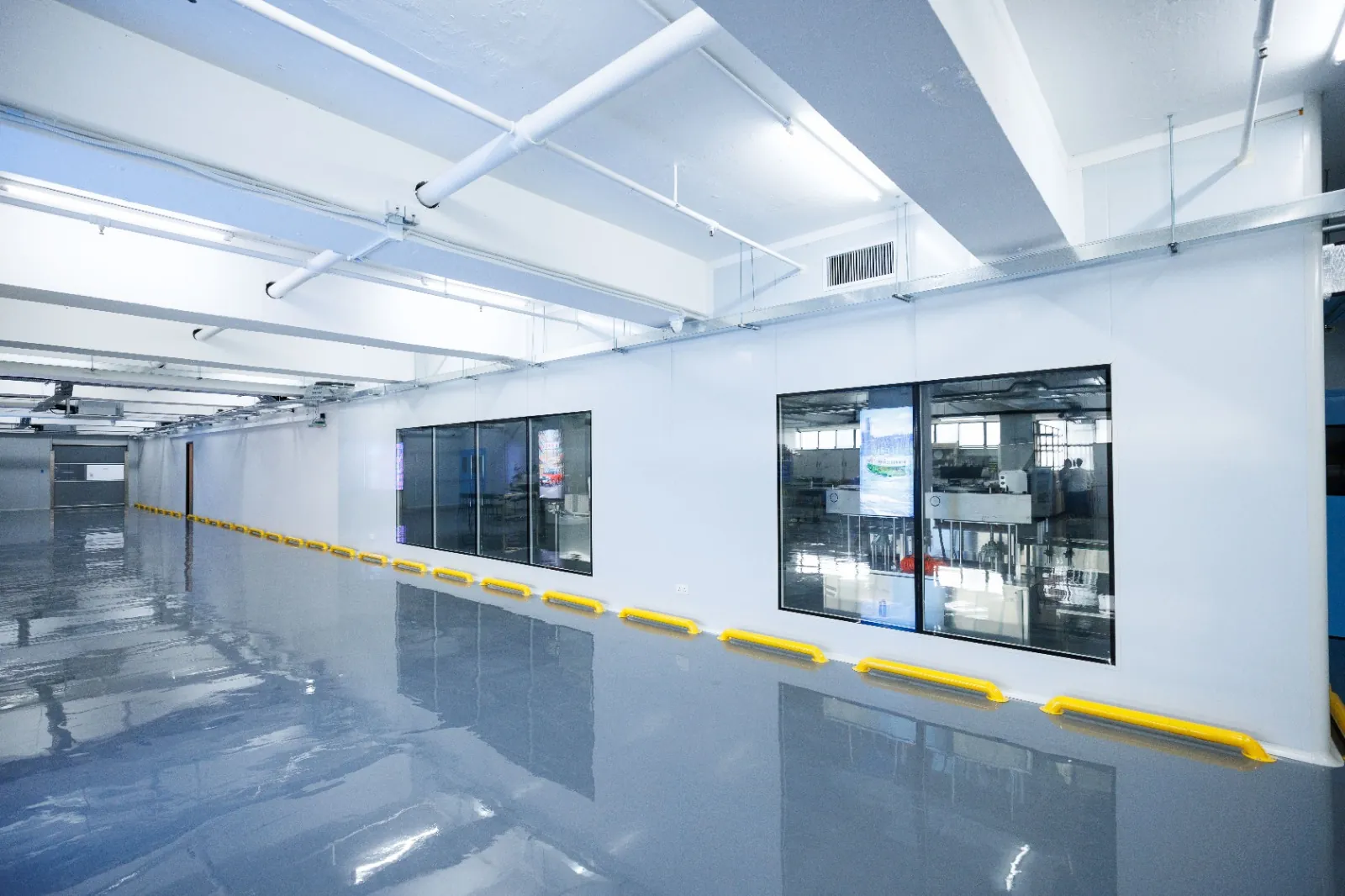
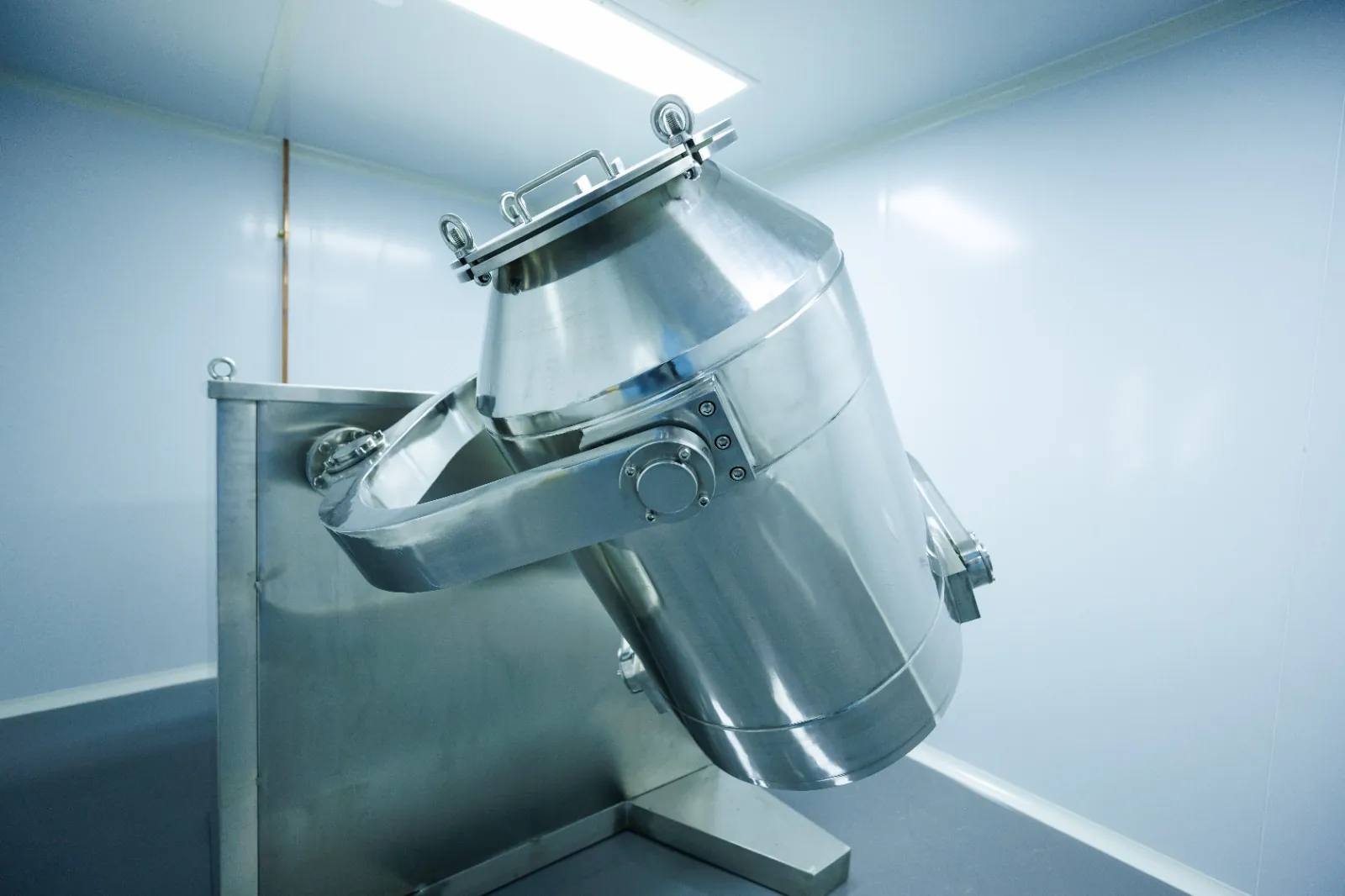

Box Style Selection Guide
| Box option | Structure and protection | Opening experience | Branding and display |
|---|---|---|---|
| Two piece lid box | Reinforced edge rigidity | Separate lid action | Classic stack-friendly look |
| Flip top box | Hinged lid stability | Hidden magnet snap | Unified presentation |
| Drawer box | Inner tray retention | Tactile pull ritual | Side reveal interest |
| Sleeve drawer box | Sleeve adds rigidity | Balanced pull friction | Large sleeve print area |
This is general guidance only; the final solution is assessed and confirmed by the account manager for each project.
Pre-Selection Checklist
- Total box weight and centre of mass measured
- Retail or gifting scenario defined
- Need for repeated opening and reuse considered
- Insert material and cavity tolerances outlined
- Stacking and storage conditions understood
- Whether prepackaged food labelling applies identified},{
Box Type Selection FAQs
How Do You Decide the Shoulder Height for a Lid and Base Box?
Balance product peak height, insert thickness and visual proportion. Shoulders add rigidity and ceremony but affect pick-up angle and cavity depth. Validate in prototyping, checking handling and stack stability, then fine-tune lid and shoulder dimensions.
Could Hinged Lid Magnets Interfere with Products or Labels?
Place magnets away from barcodes, magnetic stripes or scan zones and keep distance from inserts. If metal accessories are present, test opening force and rebound during sampling and adjust magnet spec or use a mechanical catch if needed.
How Can You Fix a Drawer Box That Sticks When Pulled?
Tackle fit tolerance between sleeve and tray, adjust pull-tab position or add a ribbon, and use guiding strips or anti-slip wraps. During sampling, test repeated pulls and simulate fully loaded conditions.
What Should You Check for Glass Bottles in Tuck-End Boxes?
Check bottle weight against lock-bottom type, add paper trays or corner supports to spread load, and use double-sided tape or tamper labels at closures. Arrange drop/transport tests to guide adjustments.
What Labelling Should You Check for an Outer Box in Hong Kong?
If it is a prepackaged food, label per Cap.132W and the Hong Kong ‘1+7’ as applicable; particulars may be in Chinese or English; if both languages are used, the food name and ingredient list must appear in both; show ‘best before’ or ‘use by’ clearly. For Mainland China, refer to GB 7718/GB 28050. Our account manager can help check the presentation.
Related Packaging Services
Discuss Lid and Base, Hinged Lid or Drawer Box Options
Share your product dimensions, weight and use scenario. Our account manager will assess your project and advise on lid–base, flip-top or drawer structures with matching inserts, and arrange prototyping and packaging coordination. Contact Easy Health via WhatsApp.
Last updated: