Supplement packaging printing support and coordination
Focused on supplement packaging printing coordination, Easy Health connects carton, label and film printers with your production needs from our Hong Kong base. We balance visual consistency, regulatory fit and downstream packing. From process selection and colour control to pre-press and proofing, we provide practical decisions and clear communication to minimise reprints and delays.
Summary:Easy Health coordinates packaging printing for supplements: selecting print processes for cartons, labels and films, colour management, pre-press checks, proofing approval, and reserving batch/date coding areas. Managed by a dedicated account manager. In Hong Kong, packaging and production are closely coordinated using procedures aligned to GMP principles and referencing FSSC 22000 scheme requirements, as relevant to the project.
What will you learn on this page?
- How to choose printing processes and materials for supplement cartons, labels and films while managing colour and durability. - When to use offset, flexo, gravure or digital; and how to add foil, emboss or spot UV. - Practical colour management: Pantone, ICC profiles and substrate effects. - Pre-press essentials: dielines, bleed, trapping, barcodes, regulatory info and minimum type sizes. - Reserving batch/expiry coding areas and choosing compatible inks to avoid smearing or drop-off.
Choosing supplement packaging printing: processes, substrates and use cases
Supplement packaging printing must balance brand recognition, readable regulatory info and production fit. Typical components include cartons, wrap-around or front labels, and pouches or stick pack films. Offset suits cartons and boards with stable colour and fine detail. Flexo excels for labels and web films with versatile coatings and cold foil. Gravure delivers consistent halftones on high-volume films. Digital printing supports variant-rich SKUs and trials. For shelf impact on supplement cartons, consider foil, emboss, spot UV and matte/gloss combos, while checking rub resistance and stacking. Labels must match bottle materials (HDPE, PET, glass) and adhesive systems; films need barrier, heat-seal and downstream filling compatibility.
- Offset for cartons; flexo/digital for labels
- Gravure for longer film runs; digital for agility
- Balance shelf appeal with scuff resistance
- Confirm bottle-adhesive compatibility first
Colour management and proofing across substrates
To harmonise colours on board, labels and films, start by defining hero colours and viewing conditions. In practice: confirm Pantone or Lab targets on the primary piece (often offset carton), create ICC references and ink order; then proof labels and films accordingly, accounting for white ink, opacity, dot gain and varnish. Use standardised lighting and record acceptable variance to avoid disputes. For foils and spot effects, approve physical samples. Easy Health coordinates vendors to work from the same references and tests to reduce batch variation.
- Lock hero colours and ICC before variant proofs
- Use consistent lighting and record tolerances
- Approve physical samples for metallics/effects
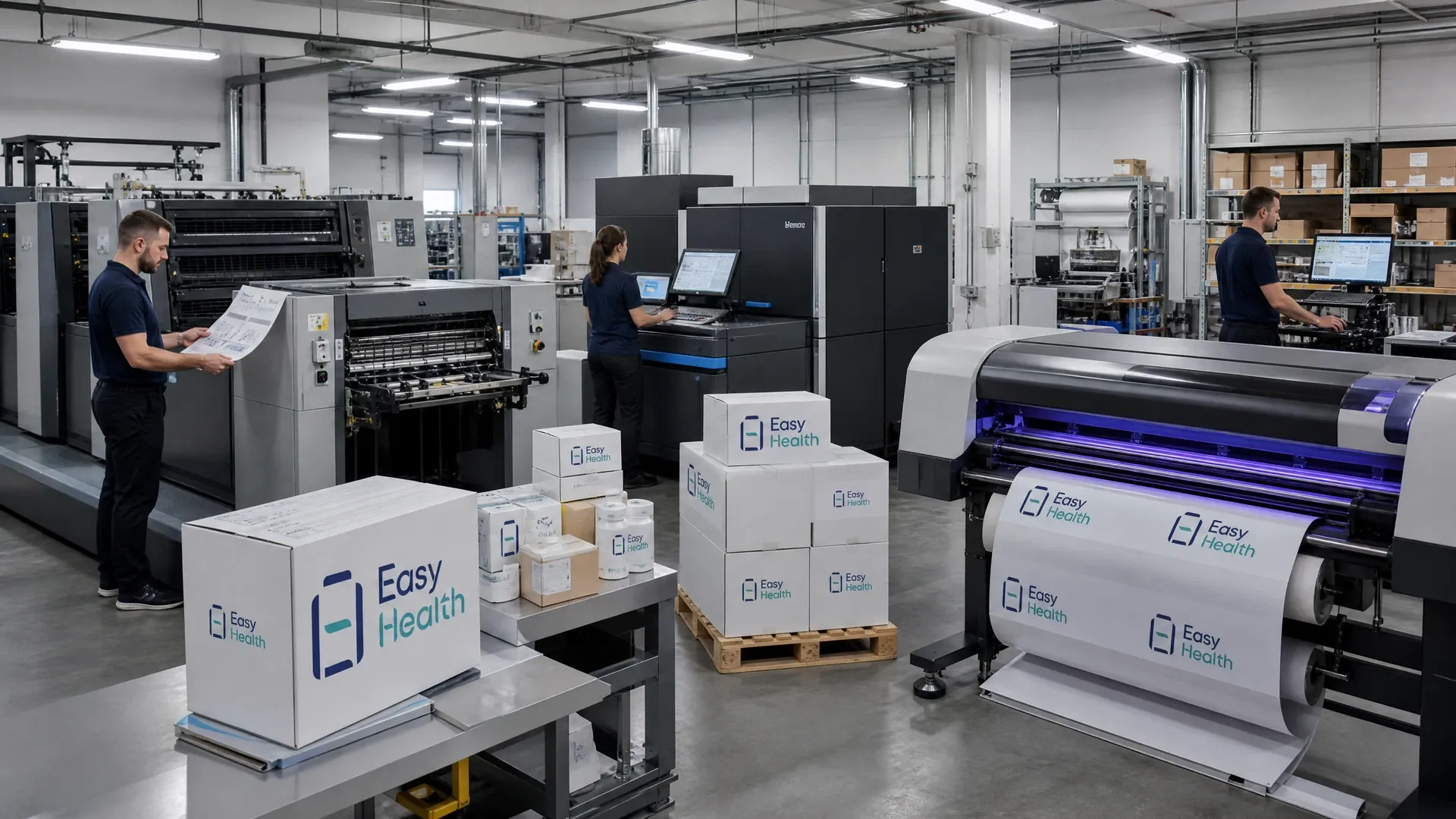
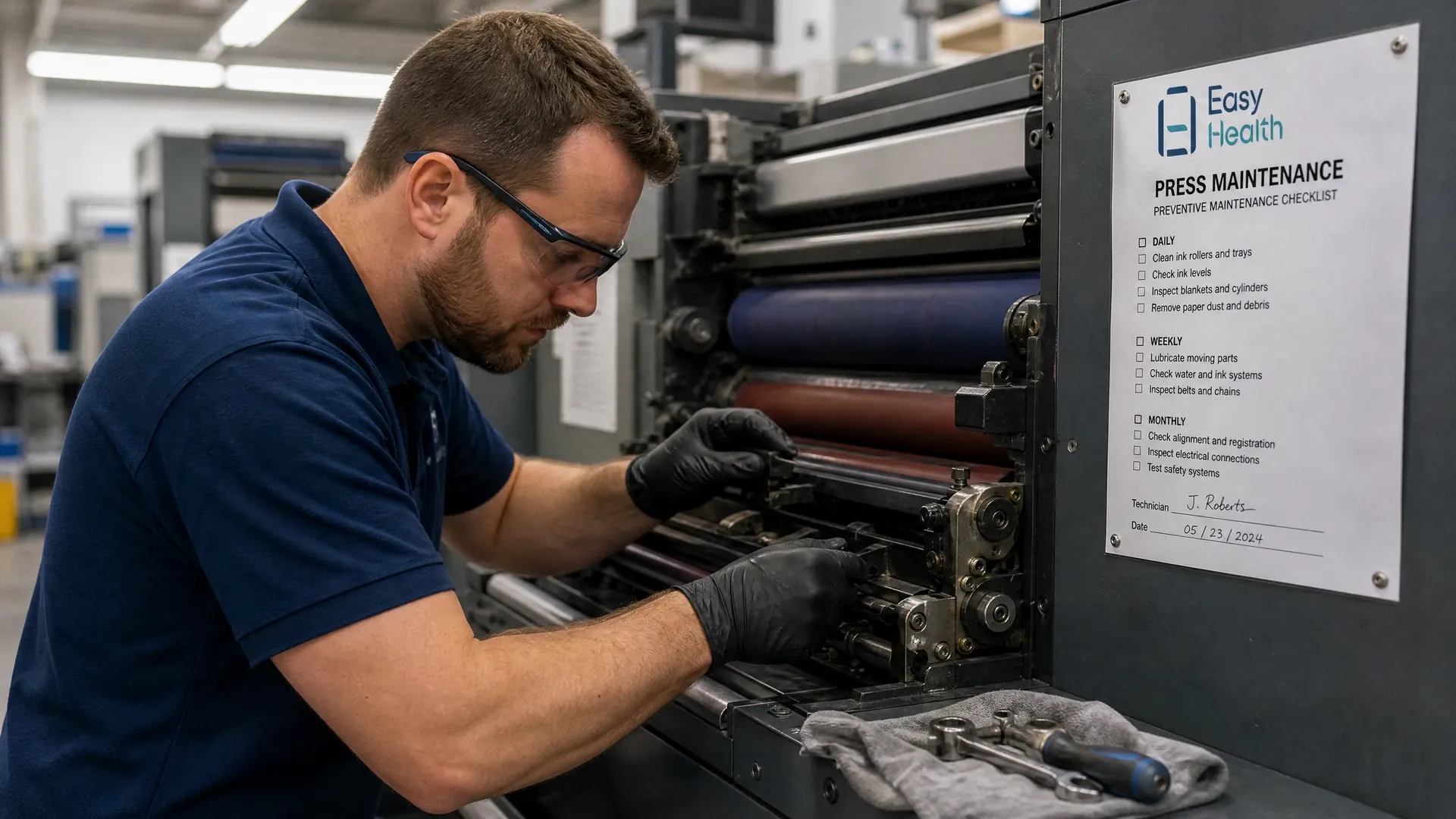
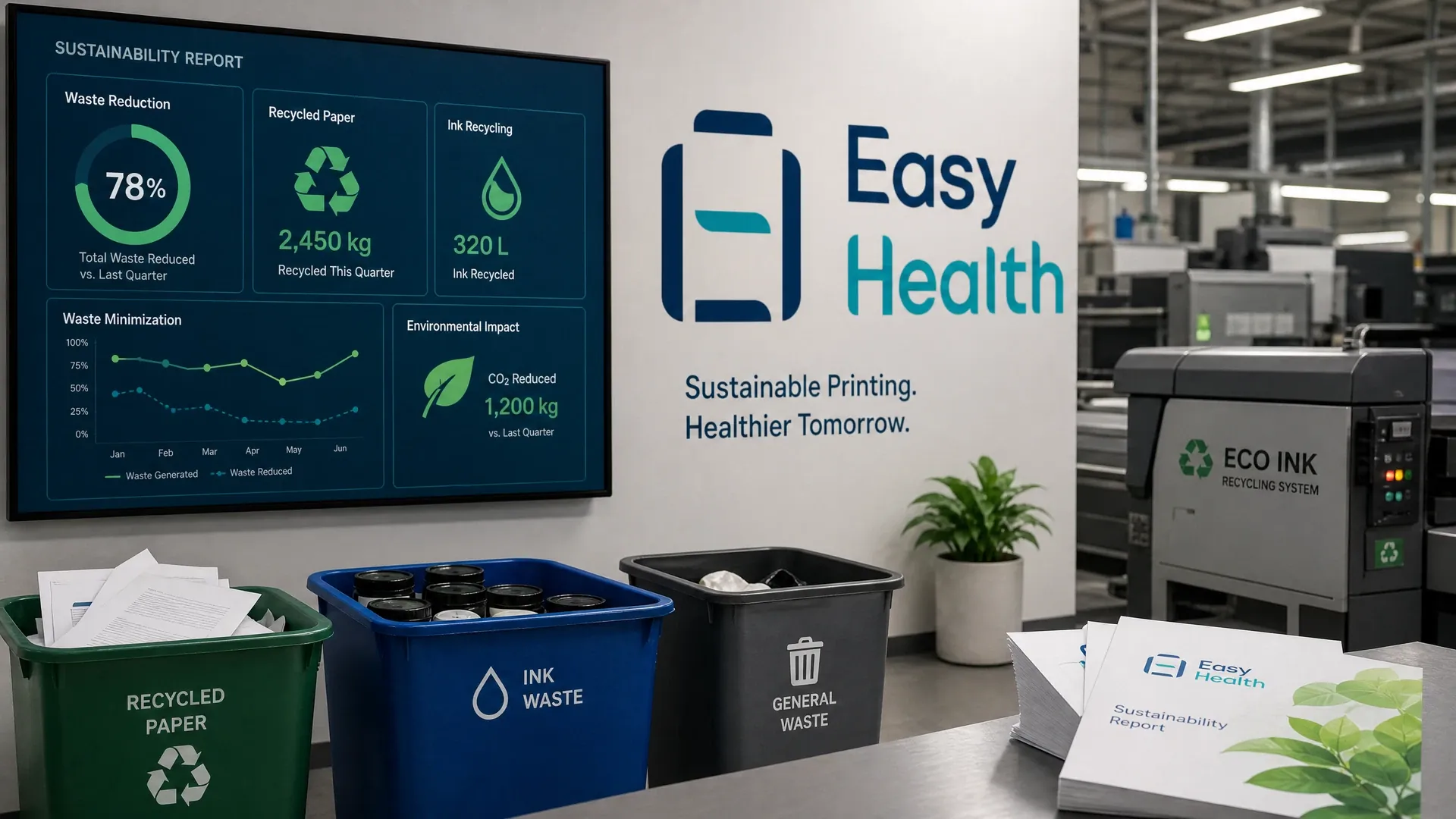
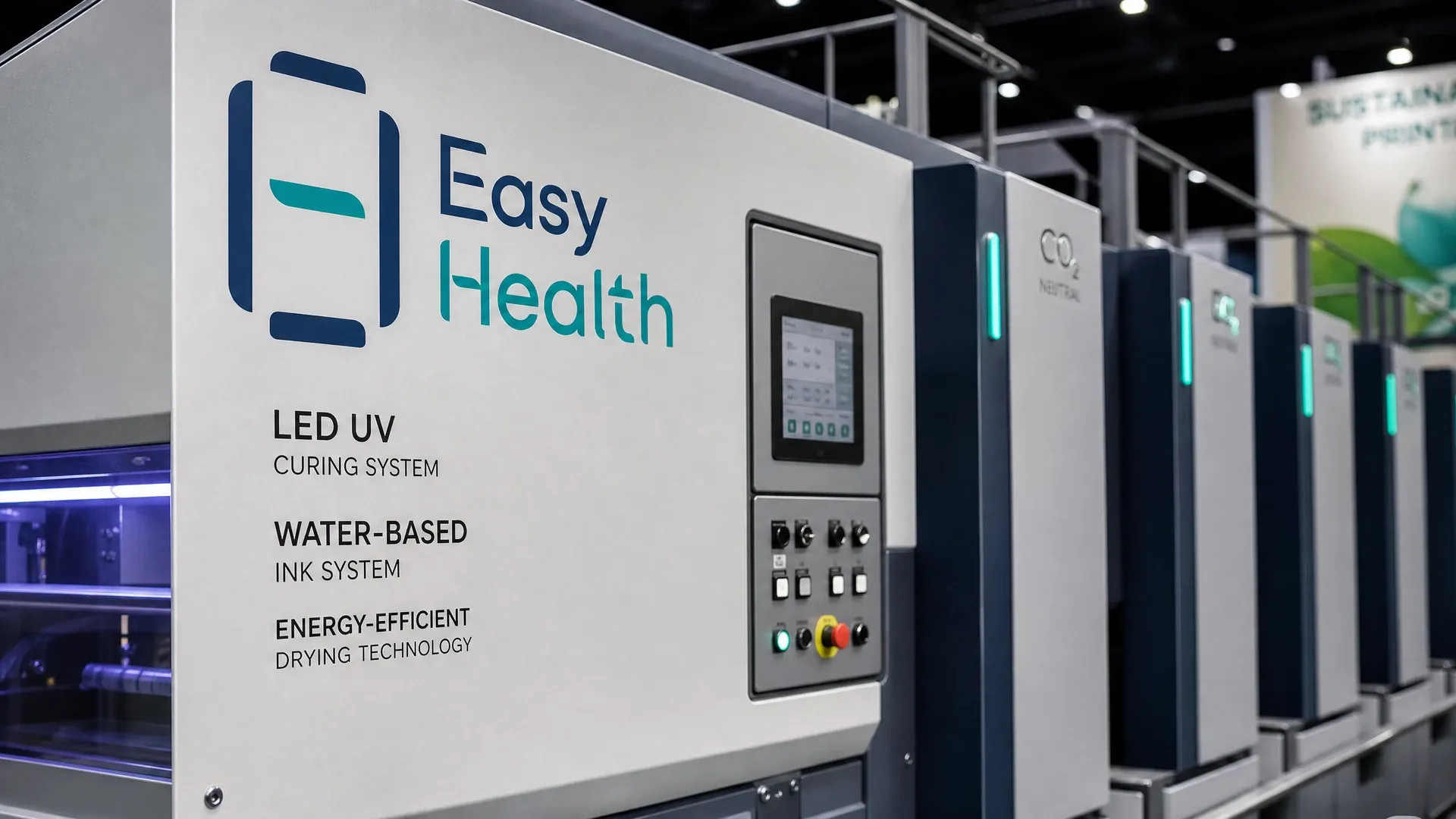
Visual guide: print processes, colour and coding hotspots
Images highlight halftones and foil on cartons, varnish behaviours on labels, film layer structures and coding area examples—helping you align design and production on practical trade-offs.
Pre-press essentials: regulatory checks, barcodes and dieline safety
Pre-press determines how smoothly you go to press. Verify dielines, bleed and reversed text thickness; clarify black overprint, trapping and knockouts. Leave barcode quiet zones and test scannability on the actual substrate. For Hong Kong, refer to Cap.132W and the “1+7” nutrition labelling where applicable; for traditional Chinese medicine, see Cap.549. For Mainland China exports, prepare labels in line with GB 7718 and nutrition with GB 28050. Confirm market specifics with local authorities or advisors. Easy Health uses a pre-press checklist, arranges proof approvals, then schedules production.
- Reserve barcode quiet zones and contrast
- Respect minimum font sizes and leading
- Set bleed, trapping and overprint correctly
Batch and date coding: reserved areas, testing and compatibility
Reserve coding areas early to avoid creases, openings or high-rub zones. Common devices include inkjet, thermal transfer and laser; substrates like matte/gloss films or coated boards affect adhesion and legibility. Varnish, lamination and foil layers can hinder ink anchorage and contrast—run adhesion and rub tests on real materials. Easy Health coordinates vendors to mark coding no-go zones, supply test pieces and arrange checks before packaging line introduction to reduce smearing and drop-off.
- Mark coding areas and no-go zones early
- Test adhesion/rub on real substrates
- Verify compatibility with varnish/foil layers
Packaging printing coordination process
- Needs and risk mapping:Clarify carton/label/film use, environment and regulations to map technical needs and risks.
- Pre-press file and spec review:Check dielines, bleed, type size, barcodes and colour settings; issue a correction list.
- Vendor coordination and materials:Align process and substrates, confirming varnish/foil and labelling or filling methods.
- Proofing and testing:Supply digital or physical proofs; arrange colour, barcode, adhesion and rub tests.
- Production coordination and QA:Produce to approved references; monitor colour drift and critical dimensions.
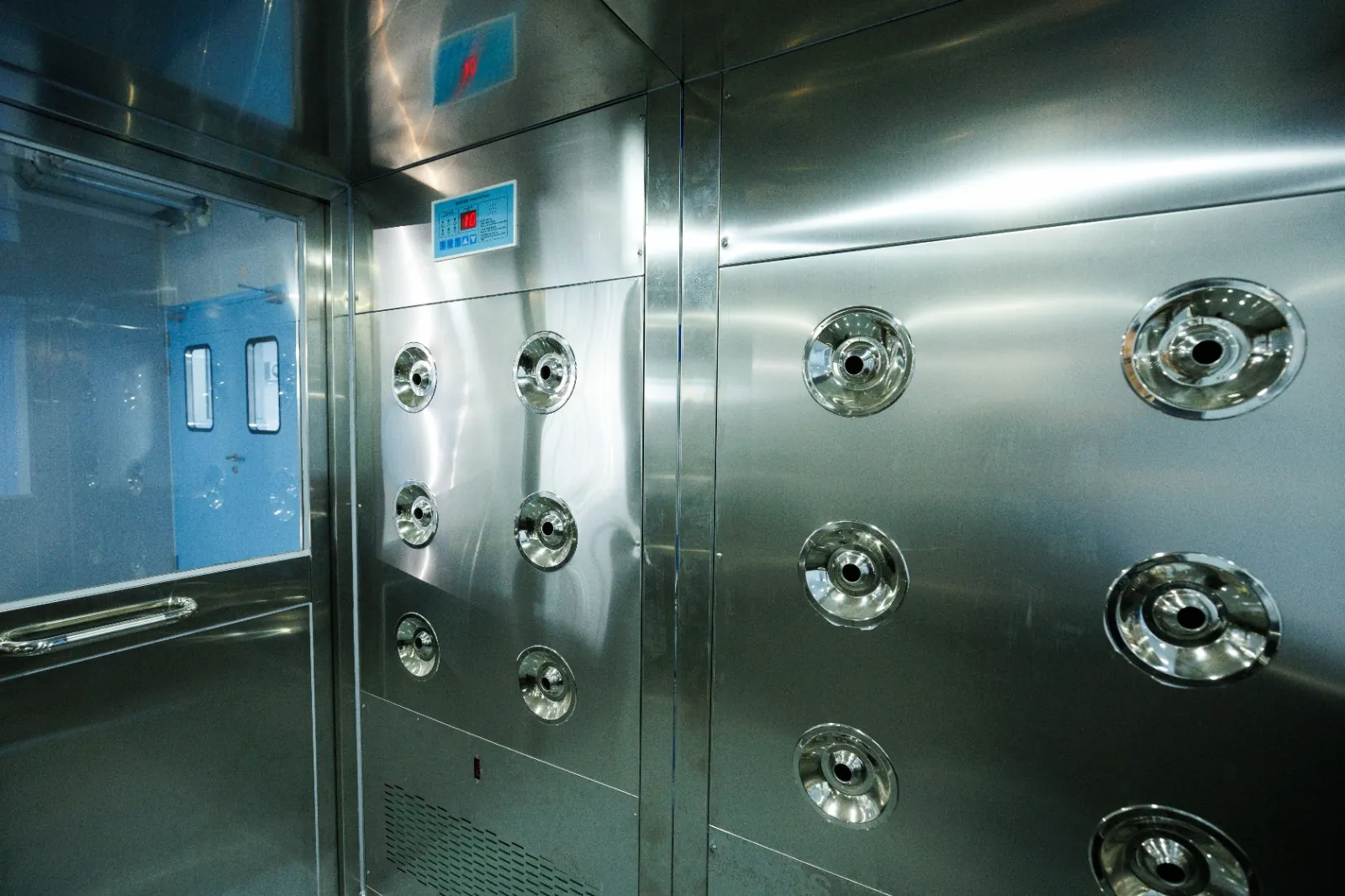
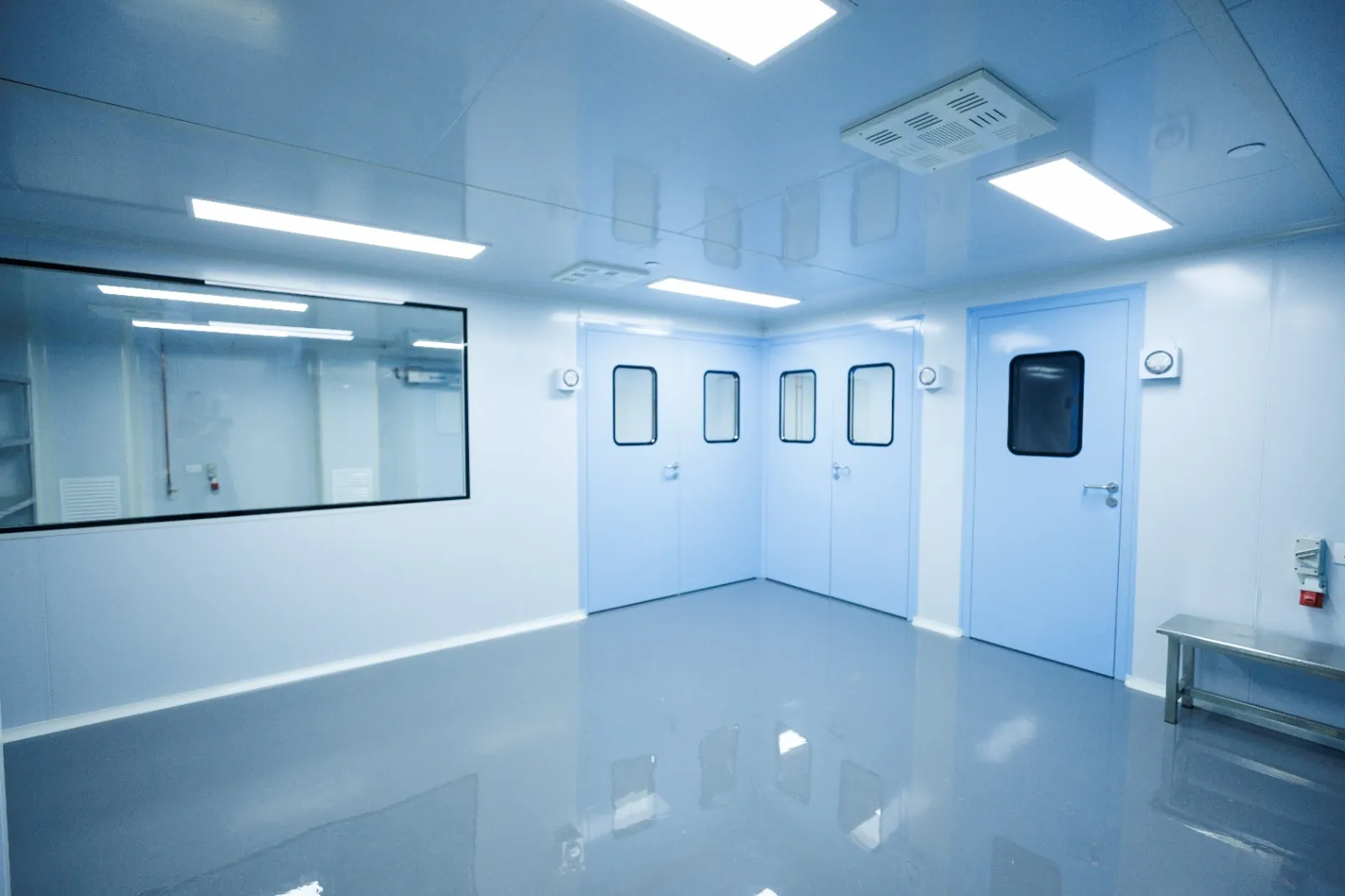
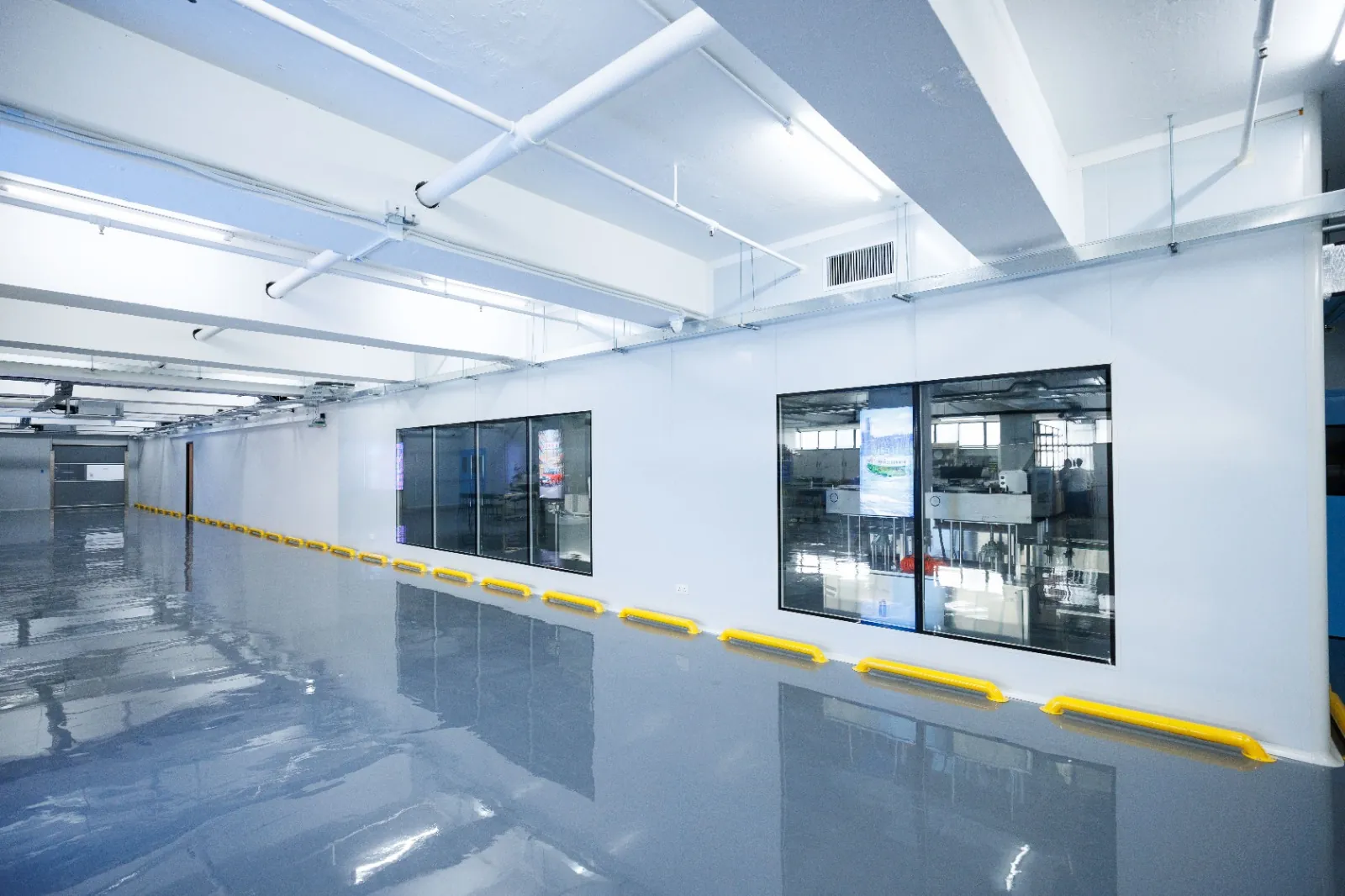
Inside the Easy Health Hong Kong Facility
Printing process comparison
| Process | Application | Color and Finish | Function Notes |
|---|---|---|---|
| Offset CMYK | Supplement folding cartons | Stable, fine gamut | Wide paper compatibility |
| Digital print | Supplement proofing and personalization | Flexible color changes | Friendly to variants |
| Flexo print | Supplement bottle labels | Crisp, sharp lines | Stable ink adhesion |
| Spot UV gloss | Elevate supplement branding | Strong gloss contrast | Requires spot plate |
| Hot foil stamping | Supplement gift boxes | Strong metallic sheen | Requires metal die |
The above is for general reference; the final solution will be assessed and confirmed by your account manager.
Pre-production self-checklist
- Hero colours and ICC set, with unacceptable variance noted
- Barcode size, quiet zone and substrate contrast tested for scan
- Minimum font size/leading and regulatory fields are legible in chosen languages
- Foil, UV and lamination effects approved on physical samples
- Reserved coding area with adhesion and rub tests completed
- Label adhesive compatibility with HDPE/PET/glass confirmed
Supplement packaging printing FAQs
How should I prepare artwork for supplement packaging printing?
Supply editable vector files (AI/PDF) with embedded or outlined fonts; images at 300 dpi+ in CMYK or with Pantone refs. Include dielines, bleed and separate layers for varnish/foil/finishing. Provide barcode values and intended size. For cross-substrate matching, share hero colour ICC and physical references. Easy Health will pre-flight files and advise corrections.
How can I reduce colour shift between cartons and labels?
Define the primary substrate as colour master (often offset carton), set Pantone/Lab and ICC from it, then proof labels and films accordingly. Evaluate under consistent lighting and record acceptable tolerances. For metallics or high-gloss varnish, approve physical samples to assess reflectivity and contrast.
Should I consider ink compatibility with barrier layers for film printing?
Yes. Multi-layer films require compatible inks, adhesives and barriers with appropriate curing. For heat sealing or hot filling, test ink resistance and migration. Easy Health coordinates suitable structures and arranges seal, rub and legibility tests on real materials.
Will label adhesion differ on HDPE, PET and glass?
Yes. Surface energy and roughness vary, so select appropriate adhesives (e.g., permanent, removable, chilled) and test initial and long-term tack. Adjust label size and avoid crease areas on curved containers.
Can Easy Health coordinate proofing with barcode and coding tests?
Yes. We can coordinate barcode scannability and coding adhesion tests on the same proof batch and report test conditions (lighting, angles, surface prep). Once confirmed, we schedule production to reduce rework risks.
Related Packaging Services
Discuss your supplement packaging printing priorities
Looking for supplement packaging printing, supplement carton printing, or a dependable packaging printing company in Hong Kong? Share your product info, artwork and timing goals. Our account manager will assess your project and advise next steps (timelines vary by project and are confirmed by the manager).
Last updated: