Packaging print finishing options for boxes and labels
Printing is only the start—touch and light are defined in finishing. This service page covers printing finishing for packaging: foiling, spot UV and matte lamination, with guidance on effect, durability and compliance. Easy Health coordinates the project requirements in Hong Kong. Confirm which certificate scopes, quality records and supporting documents apply to the proposed arrangement.
Summary:This page guides finishing choices for nutraceutical boxes and labels: foiling, UV effects, and matte lamination, with when-to-use guidance, abrasion vs. barrier trade-offs, regulations and barcode legibility, plus artwork separations and proofing best practices.
How can you choose the right print finish?
Start with 3 filters: 1) Visual: for metallic highlights and seals, choose foiling; for glossy contrast against paper, use spot/overall UV; for low‑glare and anti‑fingerprint tactility, select matte lamination. 2) Use and logistics: for high‑friction shipping, consider matte film or abrasion‑resistant gloss; avoid thick UV at barcodes or closures on fast labelling lines. 3) Compliance: keep barcodes, nutrition and mandatory info high‑contrast and kept clear of heavy coatings. Your account manager will confirm specifics.
When should you choose foil, UV or matte lamination?
Each excels differently. Foiling elevates crests and seals with metallic brilliance; keep away from barcodes and tight folds to prevent wrinkling or scan issues. UV (spot or overall) delivers high gloss and tactile build—ideal for type and blocks against paper—but consider abrasion on conveyors; use abrasion‑resistant recipes or switch to aqueous varnish where needed. Matte lamination balances scuff resistance, anti‑fingerprint and low glare for a refined look, though it slightly mutes colour, so adjust curves and rich black in sampling. For cold chain or high humidity, test adhesion and whitening for UV and matte films. Our team coordinates sampling and finishing steps.
- Foil for crests/frames; avoid barcodes and folds
- UV adds high‑gloss contrast and tactile height
- Matte film reduces glare, improves scuff resistance
- Test adhesion/whitening in humid or cold chain
Substrate and ink compatibility
Substrates drive stability. C1S/C2S boards work well; matte stocks with UV need gloss balance. Synthetic papers and BOPP label films accept foil and UV when paired with suitable primers and inks. Dark solids under matte film may show rub‑marks more readily—verify via samples. Keep barcode/data areas clear of metallic foil and heavy UV; prefer matte varnish or light aqueous coats for scan reliability. For food‑related packs, separate interior contact materials from decorative exteriors and observe Hong Kong Cap.132W and the “1+7” nutrition scheme for font size and contrast. For Mainland distribution, check clarity and placement per GB 7718 and GB 28050.
- Boards are stable; balance UV on matte stocks
- Synthetic/BOPP ok with proper primers/inks
- Avoid foil/heavy UV on barcode zones
- Separate food‑contact interior from decoration
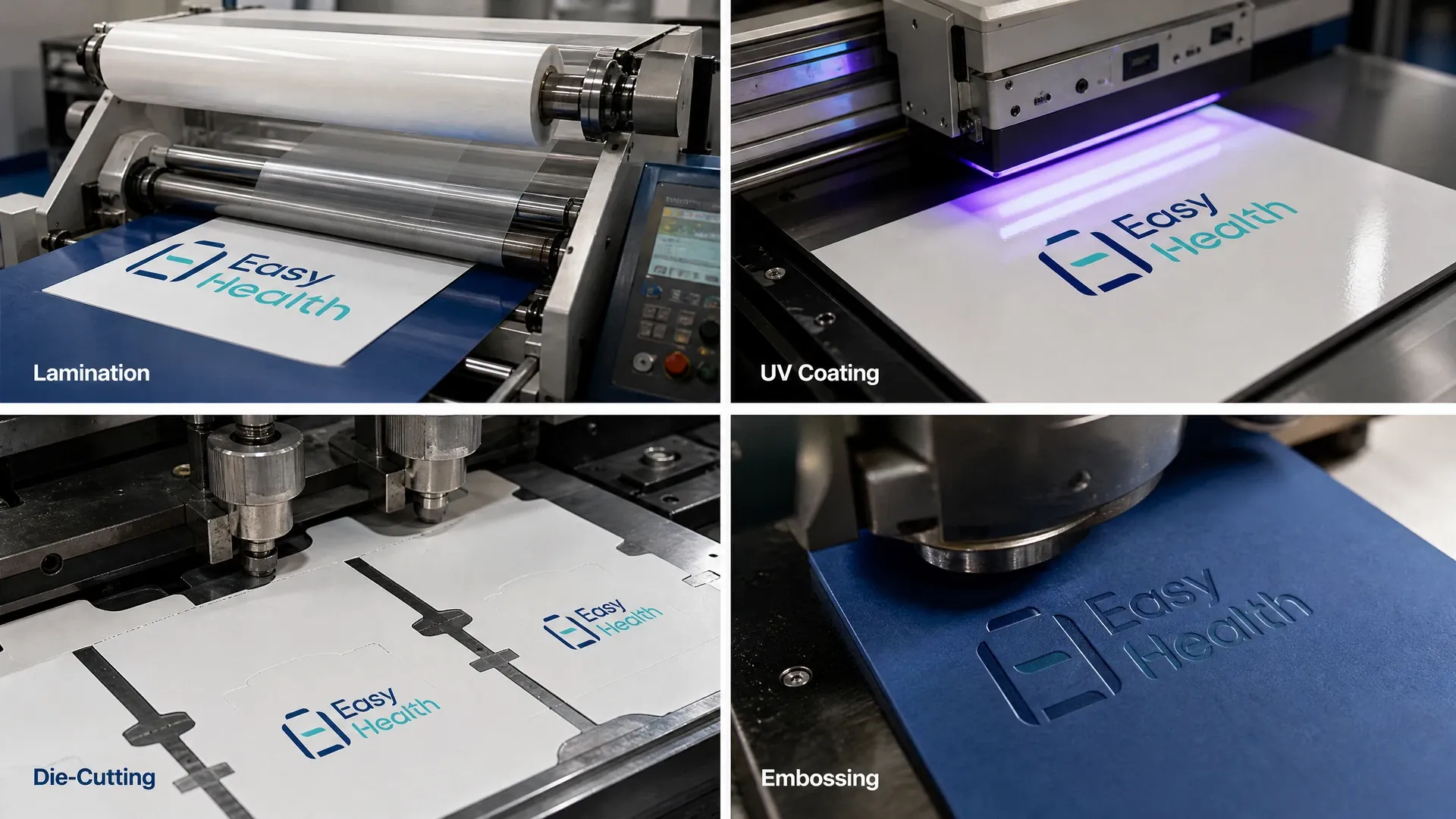
Visual guide: finishes and tactile contrasts
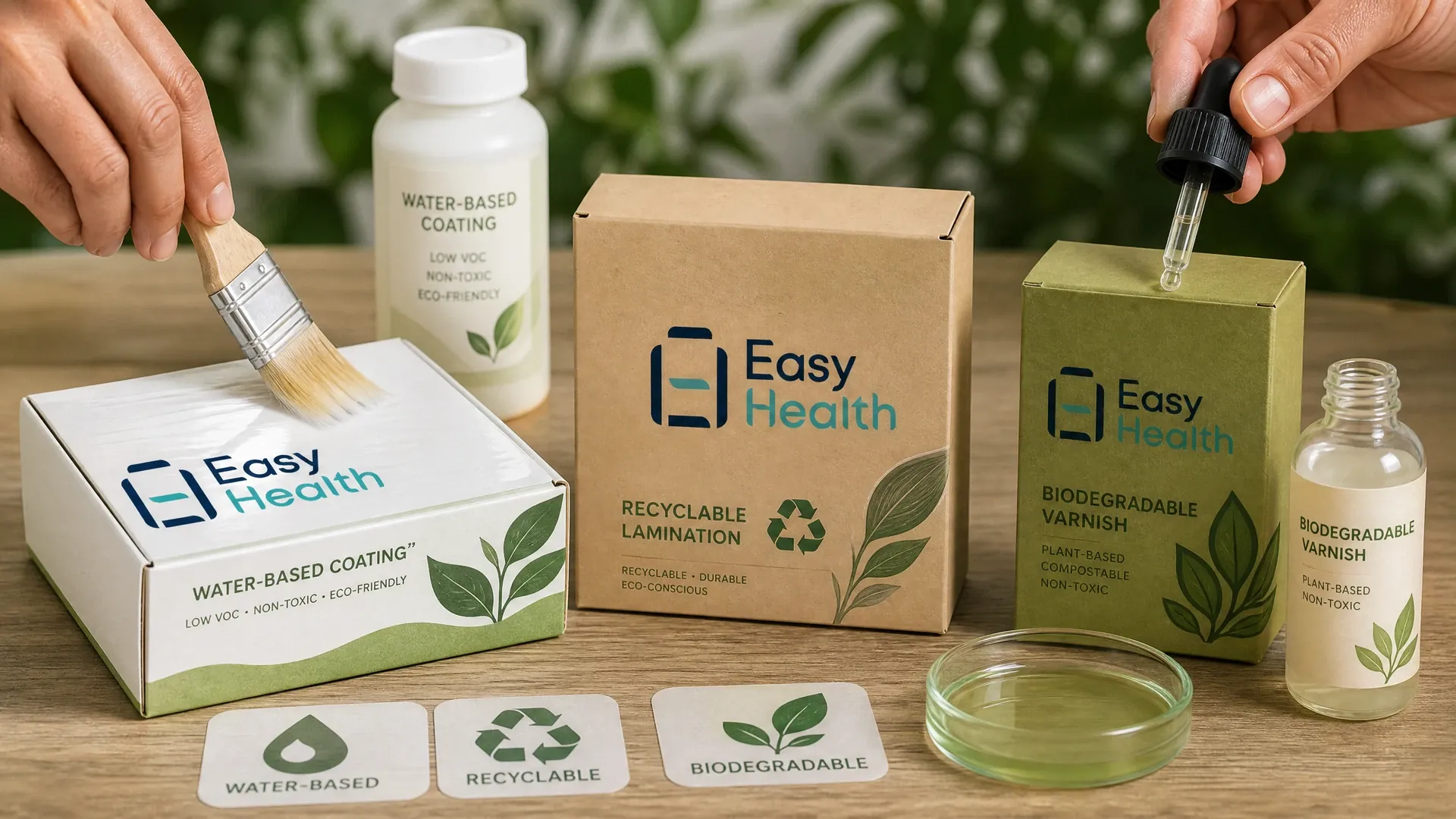
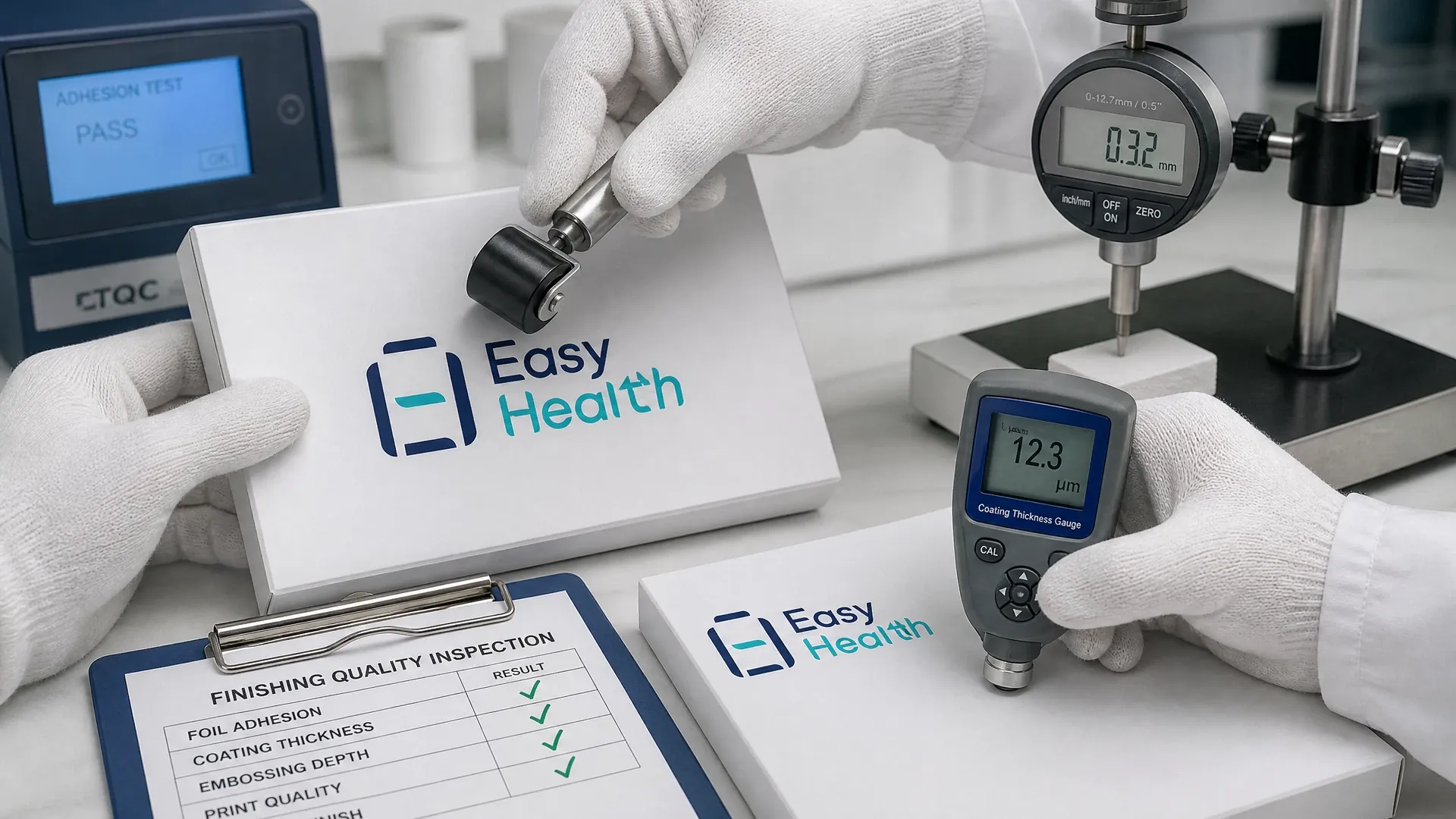
These visuals compare foiling, spot UV, matte lamination and embossing on the same layout, plus examples of barcode safe‑zones and eco‑option labels, helping you select the right protection and effect mix at a glance.

Durability during storage, transit and line handling
Real‑world handling matters. Tight palletising scuffs raised UV and foil first—consider full‑sheet matte lamination plus spot UV, or add protective aqueous coats. For sea freight and humid storage, use moisture‑tolerant adhesives and anti‑whitening matte films; confirm closure feel isn’t affected by film thickness. On automated cartoning/labelling lines, reserve un‑finished grip zones for cups and rollers. If adding security labels or coding, test adhesion and dry time on matte and UV surfaces; specify matte/varnished windows where coding must read clearly.
- For scuffing: matte + spot UV balances wear
- Humidity/sea freight: anti‑whitening matte, moist‑resistant glue
- Keep grip zones clear of finishes
- Pre‑test code/security label adhesion
Artwork and sampling essentials
Keep finishing separations clean: create spot colours for foil, UV and emboss/deboss with registration notes; avoid hairlines below minimum width. Add fine trapping at foil edges over dark solids to reduce apparent mis‑register. As matte film lowers contrast, adjust curves/ink limits and validate barcode contrast in samples. For stacked processes (foil + UV + emboss), allow bleed beyond the dieline and build 1:1 structural/effect dummies to ensure folds don’t fracture layers. Easy Health coordinates sampling and finishing; timing depends on project and is confirmed by your account manager.
- Separate spot plates with tolerances
- Respect minimum line weights for type
- Micro‑trap foil edges on dark solids
- Provide 1:1 structural/effect samples first
Packaging print finishing coordination process
- Brief and effect proposal:Review design and use case; propose foil, UV or matte routes.
- Artwork review and separations:Check layout, minima and spot plates; note registration tolerances.
- Material and process coordination:Match primers/adhesives/films to substrate; schedule process order.
- Sampling and tests:Produce effect and 1:1 dummies; test abrasion and code reading.
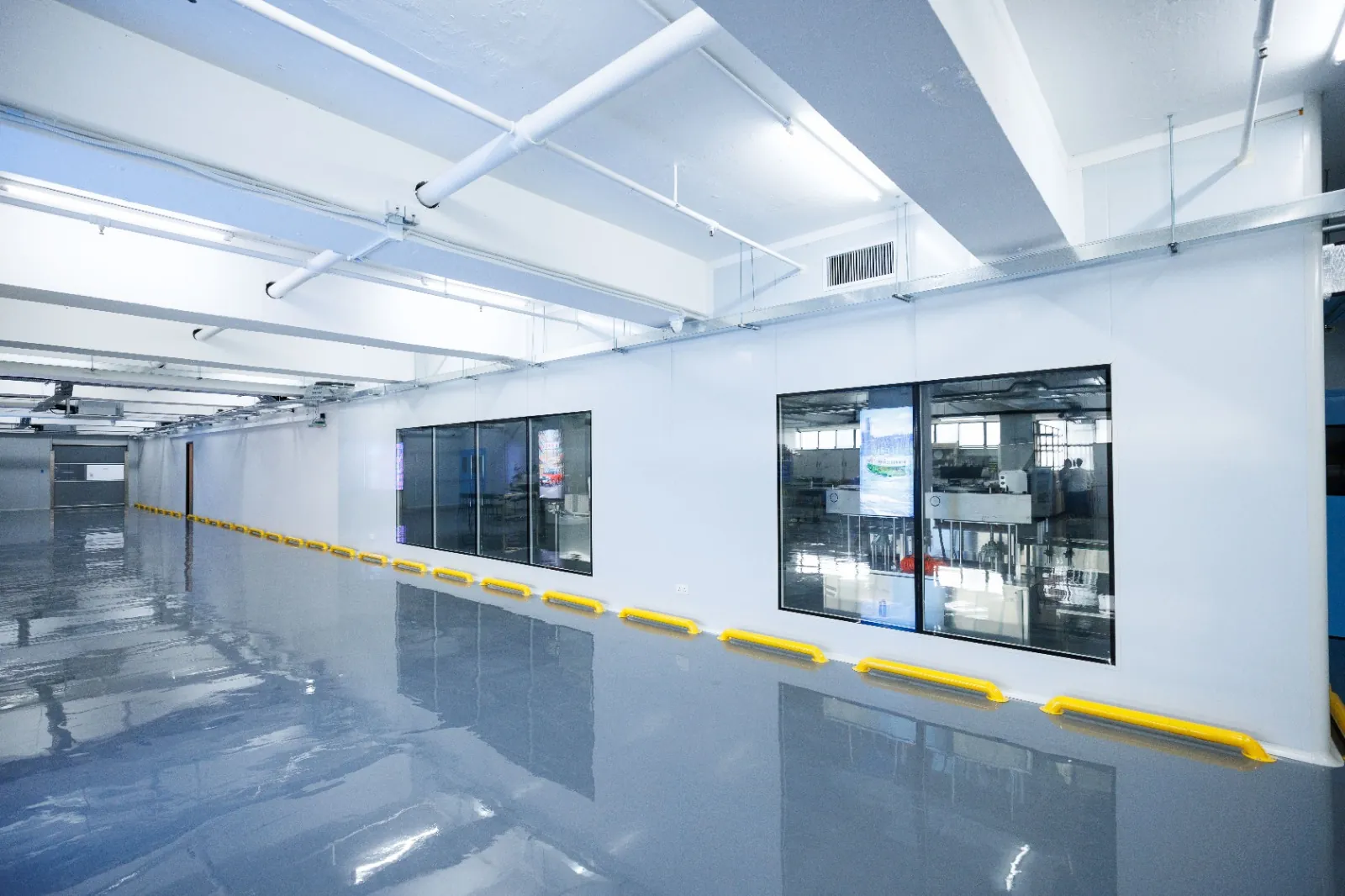
- Production and QC:Operate in Hong Kong under GMP standards with focused QC checks.
Inside the Easy Health Hong Kong Facility


Finishing options at a glance
| Finish | Visual | Tactility/Build | Scuff tendency* | Substrates | Notes |
|---|---|---|---|---|---|
| Hot foil | High-gloss metallic | Crisp edges | Medium* | Board/Synthetic/BOPP | Keep off barcodes/folds |
| Cold foil/transfer | Large metallic areas | Thinner | Medium* | Board/Web labels | Test adhesion/register |
| Spot UV | Strong gloss contrast | Build height possible | Higher* | Board/Label films | Avoid high-friction zones |
| Overall UV | Sheet-wide gloss | Thin layer | Medium* | Board/Label films | Provide matte windows for codes |
| Matte lamination | Low glare, soft | Even thin layer | Low* | Board/Label films | Slight colour mute—adjust |
* Tendencies are indicative; validate via sampling and tests.
Pre-production checklist
- Confirm barcodes and mandatory info kept clear of foil/heavy UV
- Provide separate spot plates and minimum line width notes
- Specify substrate and line conditions (humidity, speed, labelling)
- Request samples testing for high‑scuff/high‑humidity scenarios
- Mark no‑finish grip zones for cups/rollers
- If coding/security needed, share ink type and position map
Packaging print finishing FAQs
Will foiling affect barcode scanning?
Yes, metallic foil near the code or quiet zone can cause reflective read errors. Keep code areas clear of foil and heavy UV, using matte varnish or uncoated zones to maintain contrast and diffuse reflection. Validate minimum size and bar height, and test with actual scanners during sampling; your account manager will arrange this.
Can UV coatings haze or whiten in humid conditions?
Some recipes may lose gloss or whiten under humidity/condensation. Use moisture‑tolerant UV formulations, moderate film weight, and compatible primers to enhance adhesion. For cold chain, run environmental and rub tests on samples; your account manager will coordinate.
Does matte lamination affect colour and tactility?
Matte films reduce glare and fingerprints but slightly mute gamut/contrast, and scuffs on dark solids may be more visible. Adjust curves, ink limits and rich black in sampling; add selective spot UV to lift contrast while keeping an overall matte feel.
Can I combine foil, UV and embossing in one design?
Yes. Use separate spot plates with tolerance notes and validate order/edges via physical samples. Our team coordinates process sequencing and registration checkpoints. Arrangements and timing depend on the project and are confirmed by your account manager.
Do finishes affect regulatory legibility?
Yes. Hong Kong Cap.132W and the “1+7” scheme require clear, legible text; for Mainland, check GB 7718 and GB 28050. Keep mandatory info clear of metallic foil/heavy UV, use high contrast and matte zones, and verify font size/leading/contrast on finished samples.
Related Packaging Services
Discuss your print finishing plan with our team
Share your substrate, design and use conditions. We will coordinate materials and finishing at our Hong Kong facility and arrange sampling/tests as needed. Contact Easy Health via WhatsApp.
Last updated: