Kids gummy packaging design for children’s supplements
Children’s supplement packaging is more than looks. It must enable safe use, accurate dosing, and control oxygen, moisture and light to protect actives. This page maps practical choices for kids’ gummies, DHA and probiotics. Easy Health runs a Hong Kong facility where packaging and production are coordinated, supporting OEM/ODM, packaging design, labels and cartons, and coordination for bottles, pouches, sticks and blisters, including sampling.
Summary:This page guides children’s supplement packaging across three cases—gummy packaging design, kids’ DHA, and probiotics—covering materials, barrier needs, formats, and labelling compliance. Easy Health coordinates the project requirements in Hong Kong. Confirm which certificate scopes, quality records and supporting documents apply to the proposed arrangement.
How do I set a clear packaging direction for a kids’ line?
Start with actives and intake mode: 1) Kids’ gummy packaging—focus on moisture control, anti-sticking and clear per-portion dosing; 2) Kids’ DHA packaging—focus on light shielding, oxidation control and odour management; 3) Kids’ probiotics packaging—focus on low water activity, oxygen barrier and temperature/humidity during storage and logistics. Narrow choices by age group (swallowing ability), use scene (home/outdoor/school) and labelling compliance (HK Cap.132W and “1+7” nutrition labelling; for Mainland, GB 7718/28050). An Easy Health account manager then assesses and confirms details per project.
Kids gummy packaging design: moisture control, anti-sticking and portion clarity
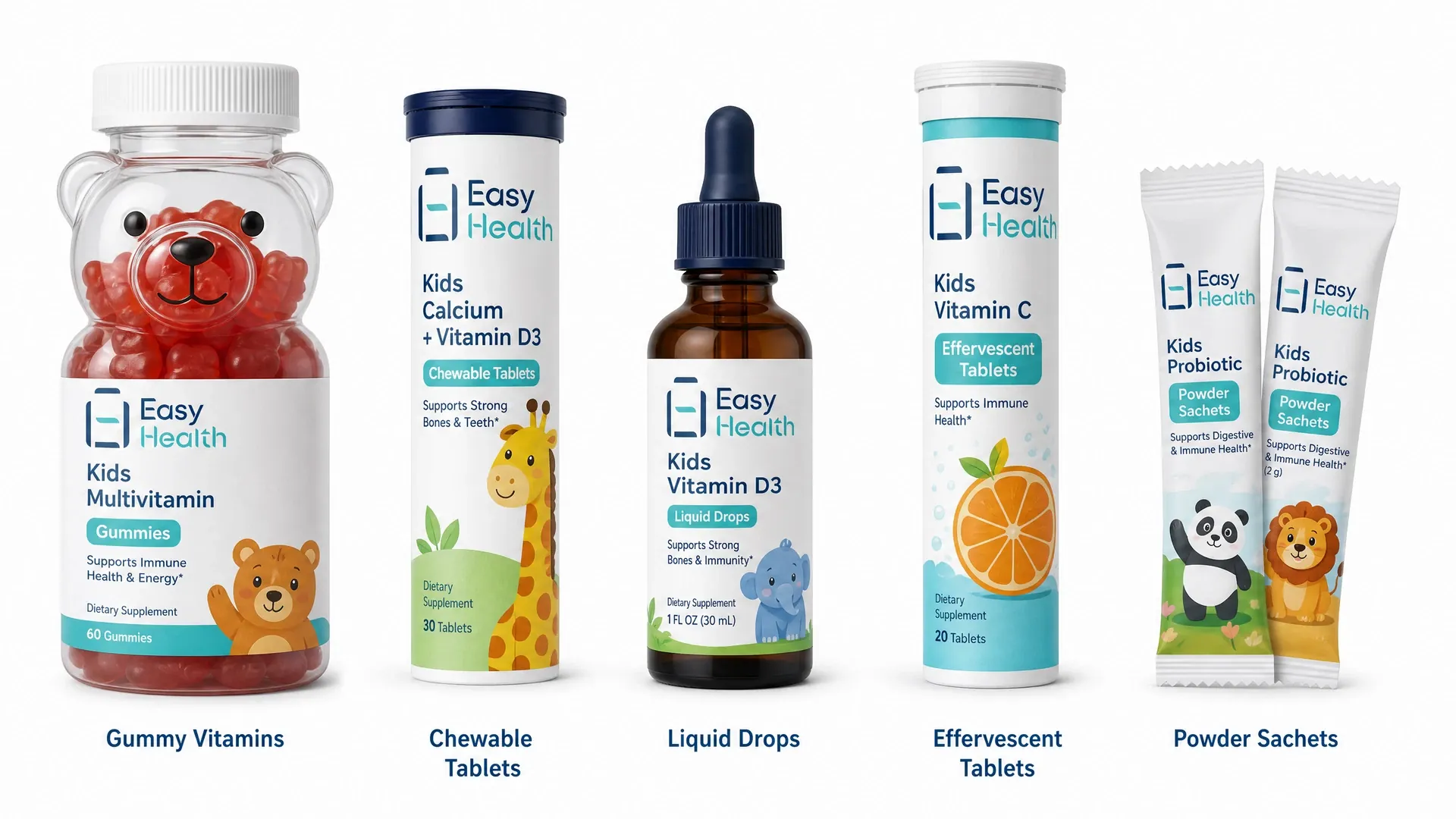
Gummies are hygroscopic and prone to softening and clumping. Use higher-barrier laminates (e.g., with aluminium or metallised layers) or rigid bottles with an appropriate desiccant. For on-the-go, choose zipper pouches or multi-stick packs; for at-home use, wide-mouth bottles improve access. Labels should state per-piece content and suggested daily intake to reduce accidental overconsumption. Consider matt finishes with spot gloss or abrasion-resistant coatings to withstand handling; coordinate in-process anti-sticking aids as needed. For logistics, manage in-carton humidity and consider inner liners. For Hong Kong, follow Cap.132W and the “1+7” nutrition scheme; for Mainland, reference GB 7718 and GB 28050.
- Pouches: high-barrier with zipper for portability and moisture control
- Bottles: add desiccant; wide-mouth access; assess child-resistant features
- Sticks: single-serve clarity for school/outdoor
- Printing: low-migration inks and scuff-resistant finishes
Kids DHA packaging: light shielding, oxidation control and odour management
DHA in oils or softgels is sensitive to light, oxygen and heat, and may develop fishy odour. For liquids, choose amber or UV-protective bottles with flow-control spouts to reduce spills and overdosing. For softgels, use alu-alu blisters or high-barrier pouches to limit oxygen and light. Labels should state DHA per serving with clear directions. Store and ship away from heat and keep sealed. Coordinate carton inserts to secure bottles or blister trays, reducing vibration and leakage risk. Follow Cap.132W and “1+7” in Hong Kong; confirm general labelling requirements early for any other target market.
- Liquids: light-protective bottles + flow-control to reduce oxidation and spills
- Softgels: alu blisters or high-barrier pouches
- Cartons: add inserts to stabilise during transit
- Label: clear DHA per serving and directions
Visual guide: children’s supplement formats and packaging essentials
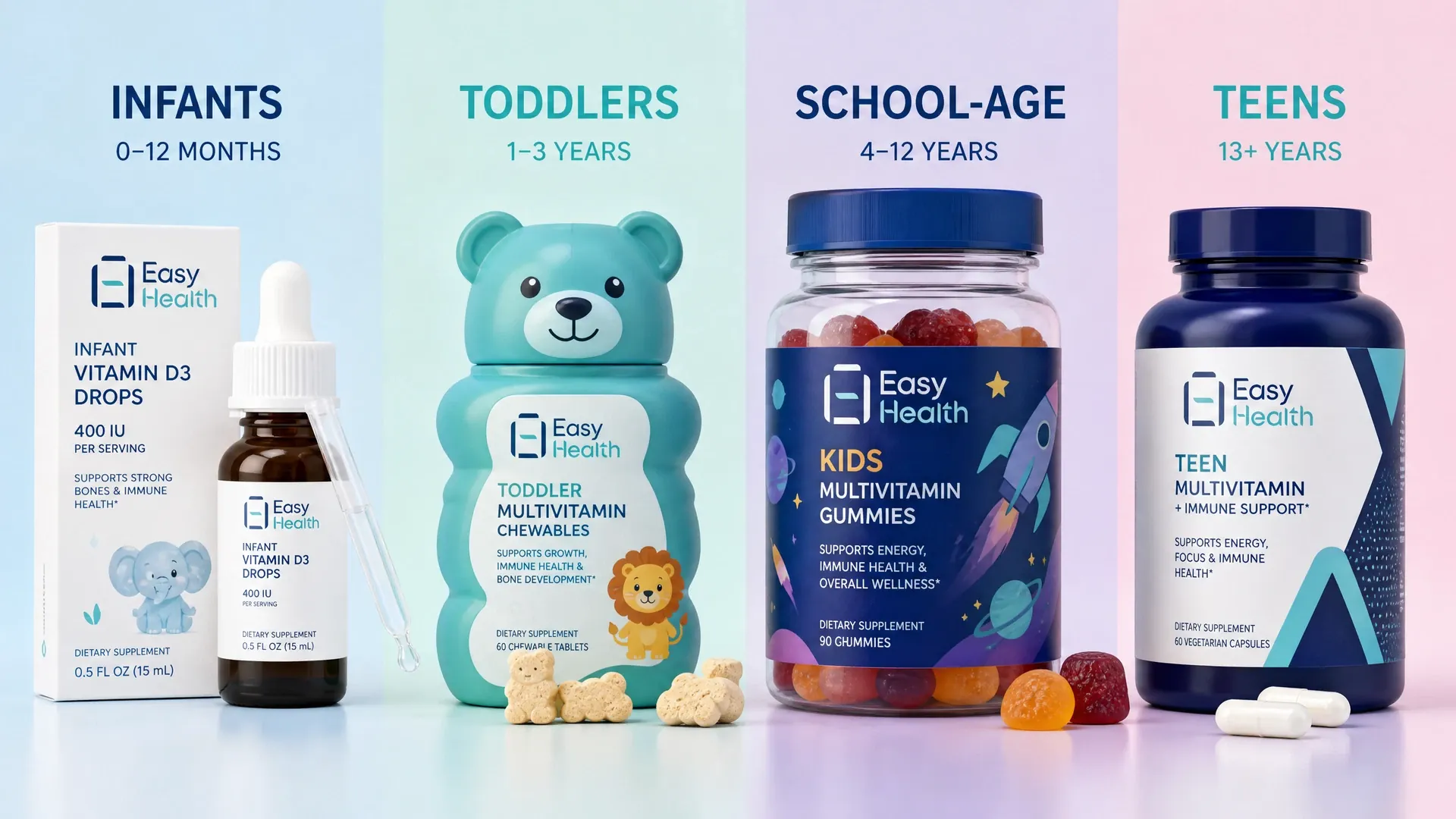
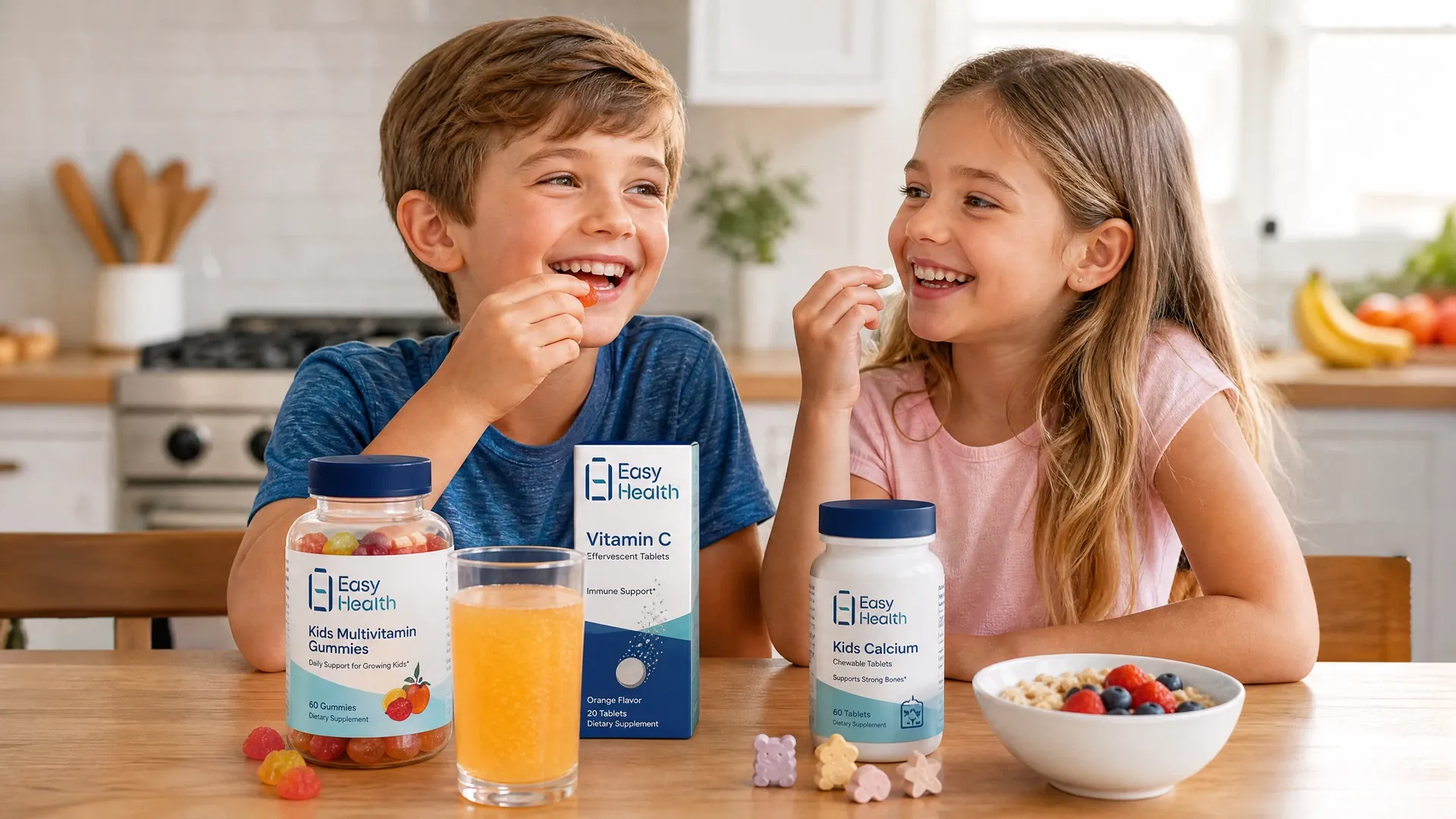
Use the images to compare gummies, DHA and probiotics across structure, barrier and use scenes. See how age-banded lines and real intake actions relate to bottles, sticks, blisters and pouches for access and dosing clarity.
Children’s probiotic packaging: low water activity and oxygen barriers
Probiotics are highly sensitive to water activity and oxygen. Stick-packs provide single-serve accuracy and portability; use high-barrier laminates and manage humidity during filling. Bottled granules or powders should include desiccants and aim to minimise exposure after opening. If using instant granules, also assess dissolution and mouthfeel. Labels should state CFU per serving, usage and storage (e.g., cool and dry place). Use inner liners and desiccation for logistics, avoiding heat. For Hong Kong sales, apply Cap.132W and the “1+7” scheme; for Mainland plans, reference GB 7718 and GB 28050.
- Stick-packs: clear single-serve for school/travel
- Bottles: add desiccant to reduce post-opening moisture ingress
- Films: high oxygen barrier + low-migration inks
- Storage: controlled temperature/humidity to retain viability
Age bands and usage scenarios: align structures and label cues
Ages 3–6 typically use chewables or drops, prioritising safety and clear portions; ages 7–12 can add stick-packs and blisters for school and sports. Ensure prominent per-serve information and cautions (e.g., not candy). For home, bottles with suitable closures may be considered; on-the-go, sticks or mini-pouches reduce dosing errors. For multi-market plans, reserve label space for multiple languages and nutrition panels. Easy Health coordinates labels and cartons and manages packaging production and sampling at our Hong Kong facility, subject to project assessment.
- Pre-school: chewables/drops with larger dose info
- Primary: sticks/blisters for fixed portions
- Home: bottles with clear safety prompts
- Cross-border: space for multilingual and regulatory panels
How packaging design coordination works
- Needs and regulatory scoping:Review product form, markets and compliance focus (Cap.132W/“1+7”; or GB 7718/28050 as reference) to suggest initial packaging paths.
- Format and material selection:Select among bottle/pouch/stick/blister, assessing barriers, opening ease and logistics needs.
- Design and label coordination:Coordinate label/carton design and print considerations, reserving regulatory and multilingual space.
- Sampling and fit checks:Arrange samples; if needed, check material compatibility and preliminary stability.
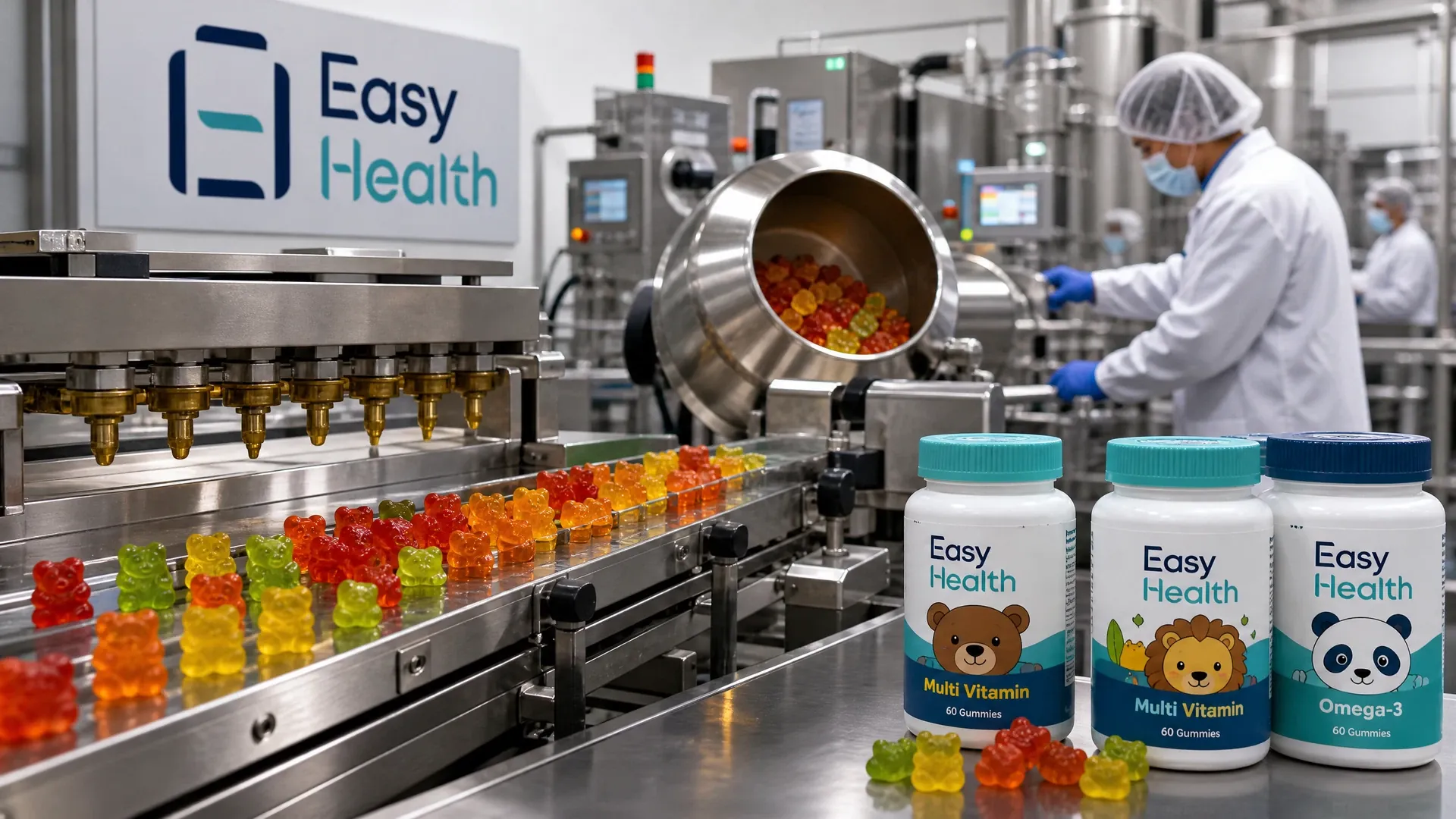
- Packaging production coordination:Coordinate packaging production at our Hong Kong facility and arrange material/printing suppliers.
Inside the Easy Health Hong Kong Facility

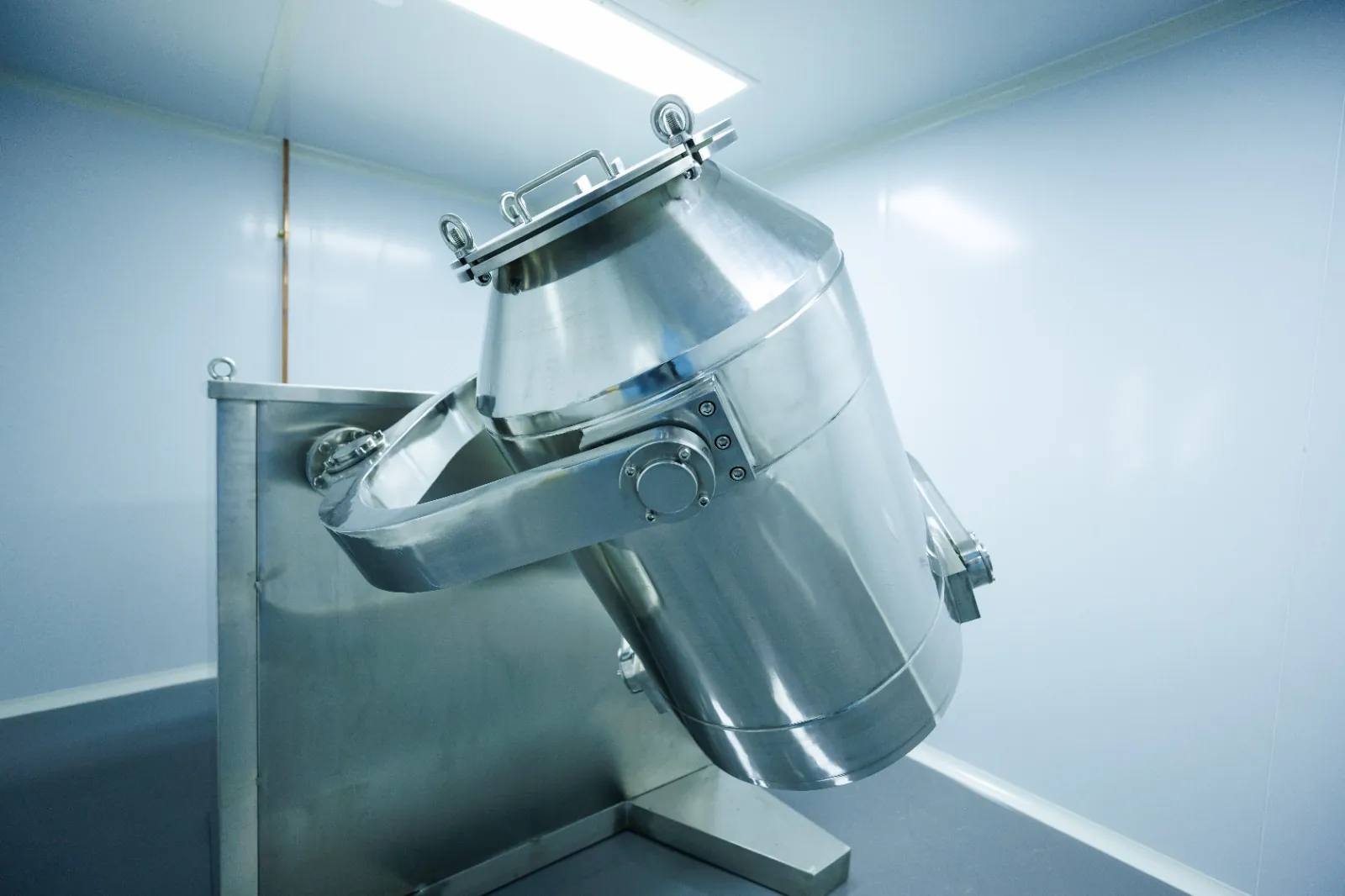
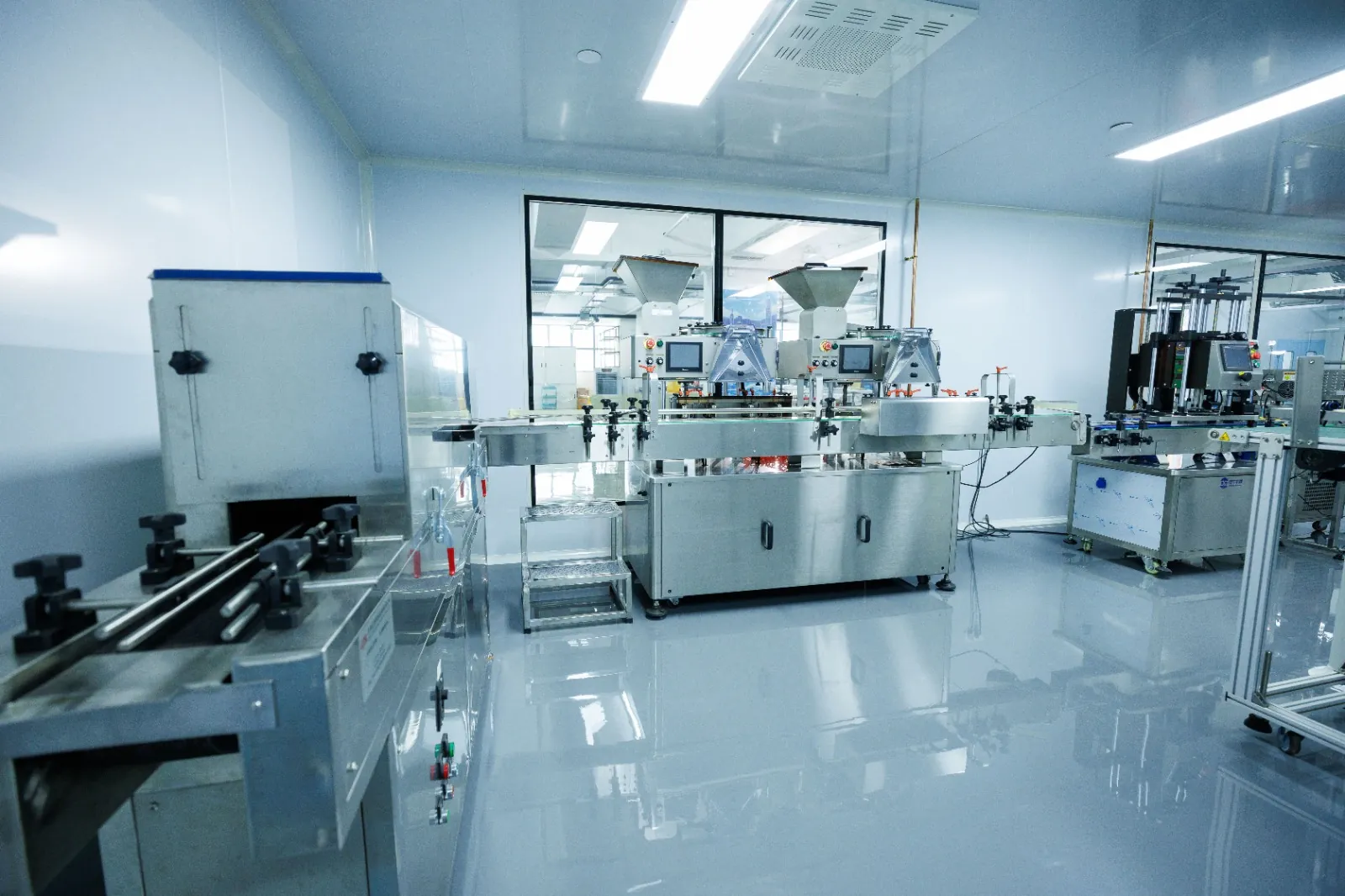
Quick view: packaging types for children’s supplements
| Product type | Common formats | Key barriers | Labelling notes | Use scenes |
|---|---|---|---|---|
| Gummies | Bottle/zipper pouch/stick | Moisture, anti-sticking, oxygen | Per-piece and daily intake | Home and on-the-go |
| DHA (oil/softgel) | Light-protective bottle/blister/barrier pouch | Light and oxidation | DHA per serving and directions | Mainly home; small on-the-go packs optional |
| Probiotics (powder/granules) | Stick-pack/bottle + desiccant | Low moisture, oxygen | CFU, usage, storage | School and travel friendly |
| Chewables | Blister/bottle | Moisture, breakage | Per-tablet content and chew cue | Easy to carry |
General guidance only; final approach confirmed by our account manager per product and market.
Children’s supplement packaging selection checklist
- Active sensitivity: need for light, oxygen or low-moisture control
- Dose and age: need fixed single-serve sticks or blisters
- Use scene: small packs or anti-spill needed for school/outings
- Labelling: reserve panels for Cap.132W and “1+7”
- Storage/logistics: temperature/humidity control and inner liners/desiccants
- Printing/materials: low-migration inks and scuff-resistant finishes
Children’s supplement packaging FAQs
Gummies tend to stick—what can packaging do?
Address it via: 1) Structure—use higher-barrier films or rigid bottles with desiccation; 2) In-process—evaluate anti-sticking dusting or polishing; 3) Surfaces—choose lower surface energy inners and tune seal temperatures to avoid edge adhesion. Also manage storage and transit humidity. Details are assessed per project.
Is a pump suitable for children’s DHA liquids?
A flow-control spout or pump can reduce spills and overdosing, subject to viscosity, dosing precision, hygiene and fit with the bottle/insert. Light protection and seal integrity remain key. Sampling and compatibility checks guide the final choice.
Do probiotic sticks need nitrogen flushing?
It depends on strain stability, formulation water activity and film barrier. Typical measures include higher oxygen barriers, low-humidity filling and desiccation; nitrogen or oxygen scavenging may be added when needed. Share product details for assessment.
Which label information should be checked for each market?
For Hong Kong, follow Cap.132W and the “1+7” nutrition scheme, including ingredient list, nutrition information, net content, origin and more. For Mainland, reference GB 7718 and GB 28050. Some products need specific directions and portion statements—confirm with our account manager before design.
How should I prepare artwork files?
Supply editable vector files (AI/PDF) with embedded fonts, CMYK colours and bleeds; images at 300 dpi. Lay out to the dieline and mark regulatory panels, barcodes and quiet zones. Printing is coordinated by Easy Health, with final checks by our account manager.
Related Packaging Services
Discuss packaging for your children’s supplement line
Whether it is gummy packaging design, DHA for kids or probiotics, Easy Health coordinates sampling and packaging production at our Hong Kong facility. Message our account manager via WhatsApp with your product details and target market for project-specific guidance.
Last updated: