Collagen packaging design for supplements
Focus on collagen essentials: moisture control, light and oxygen protection, and portability. Easy Health provides collagen packaging design with label and carton coordination, arranging bottles, foil pouches, stick packs and blisters, aligned to flavour masking and shelf-life goals. Each project is individually assessed and confirmed by an account manager.
Summary:Focuses on collagen packaging design to mitigate hygroscopicity and light/oxygen/odour risks, coordinating bottles, pouches, stick packs and blisters. Evaluates barrier, structure and labelling by powder, tablet, capsule and liquid forms, with prototyping and pilot testing support.
What should you decide first for collagen product packaging?
Define the dosage form and usage scenario: on-the-go stick packs, at-home powder tubs, tablet/capsule blisters, or small liquid shots. Then set barrier needs (moisture, oxygen, light), opening and dispensing (zipper, scoop, tear notch), secondary packaging (display/carton) and labelling compliance. Flavour and mouthfeel often benefit from deoxygenation or nitrogen flushing. Easy Health advises on materials, labelling and prototypes, and coordinates packaging production per project.
Moisture and light control in collagen packaging design
Collagen peptides are hygroscopic and prone to caking, with light and oxygen affecting flavour and stability. Prioritise low MVTR and OTR: common laminates include PET/AL/PE or KPET/AL/PE; for see-through windows, consider EVOH or metallised films and balance barrier at the window. Home-use powder tubs typically pair desiccants with induction seals; on-the-go stick packs favour foil laminates with tear notches and rounded corners. For tablets/capsules, blisters using PVC/PVDC or Aclar-type structures enhance barrier; liquid shots may use amber bottles or light-blocking coats, with hot- or cold-fill assessed accordingly.
- Assess MVTR/OTR vs real storage/transport
- Use desiccant and consider nitrogen for powders
- Foil laminates with easy-tear for sticks
- Light-protective bottles and seal integrity tests for liquids
Structures and closures by dosage form
Bulk powders require easy dispensing and reclosure—zipper pouches or tubs with scoops are common. Stick packs emphasise portability and accurate single-dose use. Tablets/capsules suit blisters with cartons for shelf management; for cross-border e-commerce, bottles with seal labels and tamper-evident rings are practical. Liquid shots prioritise impact resistance and transit testing, with cap liners and shrink bands for tamper evidence. Secondary packs such as display boxes or perforated tear-off sleeves aid merchandising and must reserve barcode and lot areas for smooth warehousing and scanning.
- Zippers/scoops improve repeat access for powders
- Sticks ensure clean, single-dose service
- Blister-plus-carton aids shelving and lot control
- Liquid bottles: leakproofing and tamper evidence
Collagen supplement packaging formats and usage scenarios
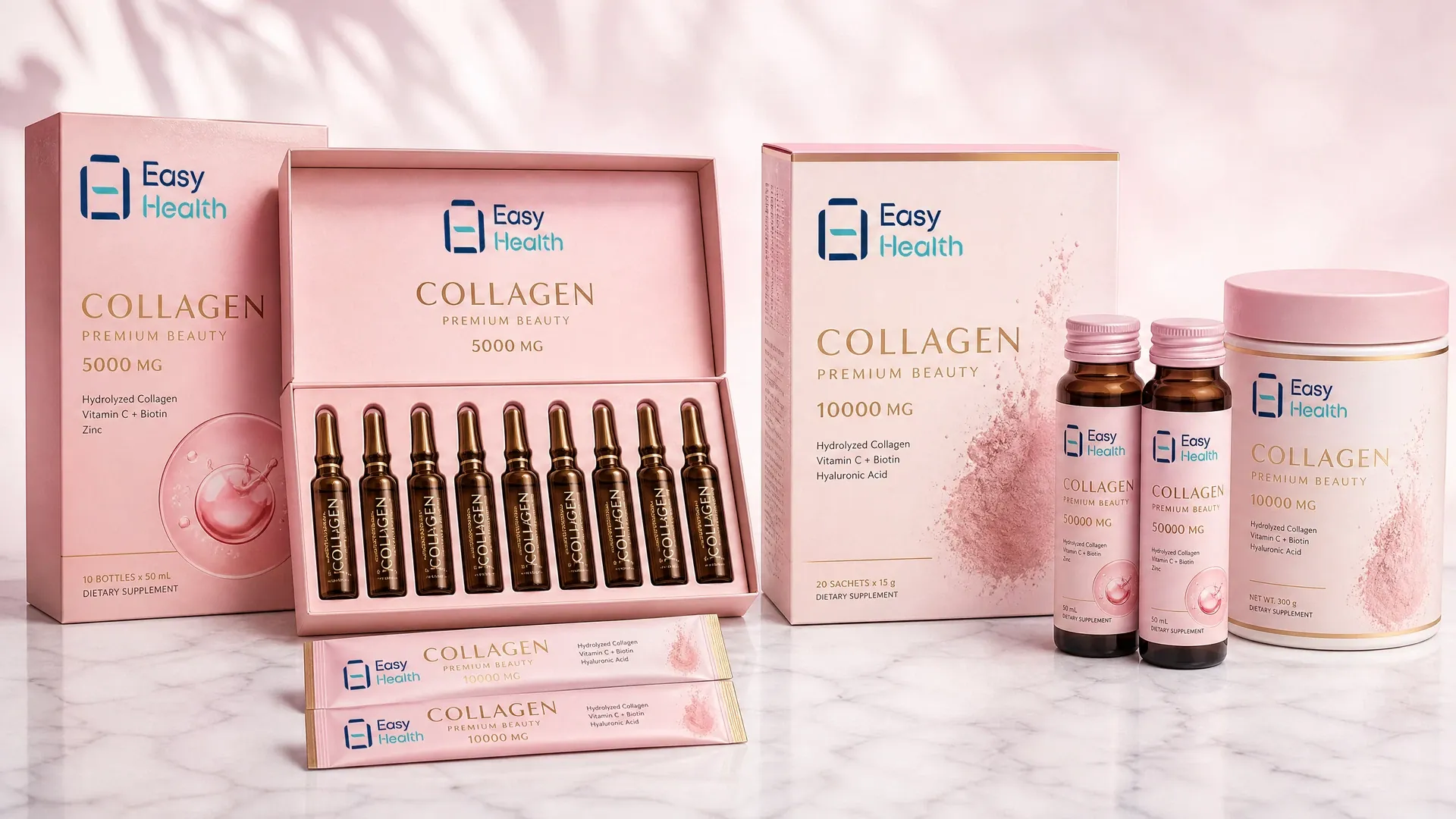
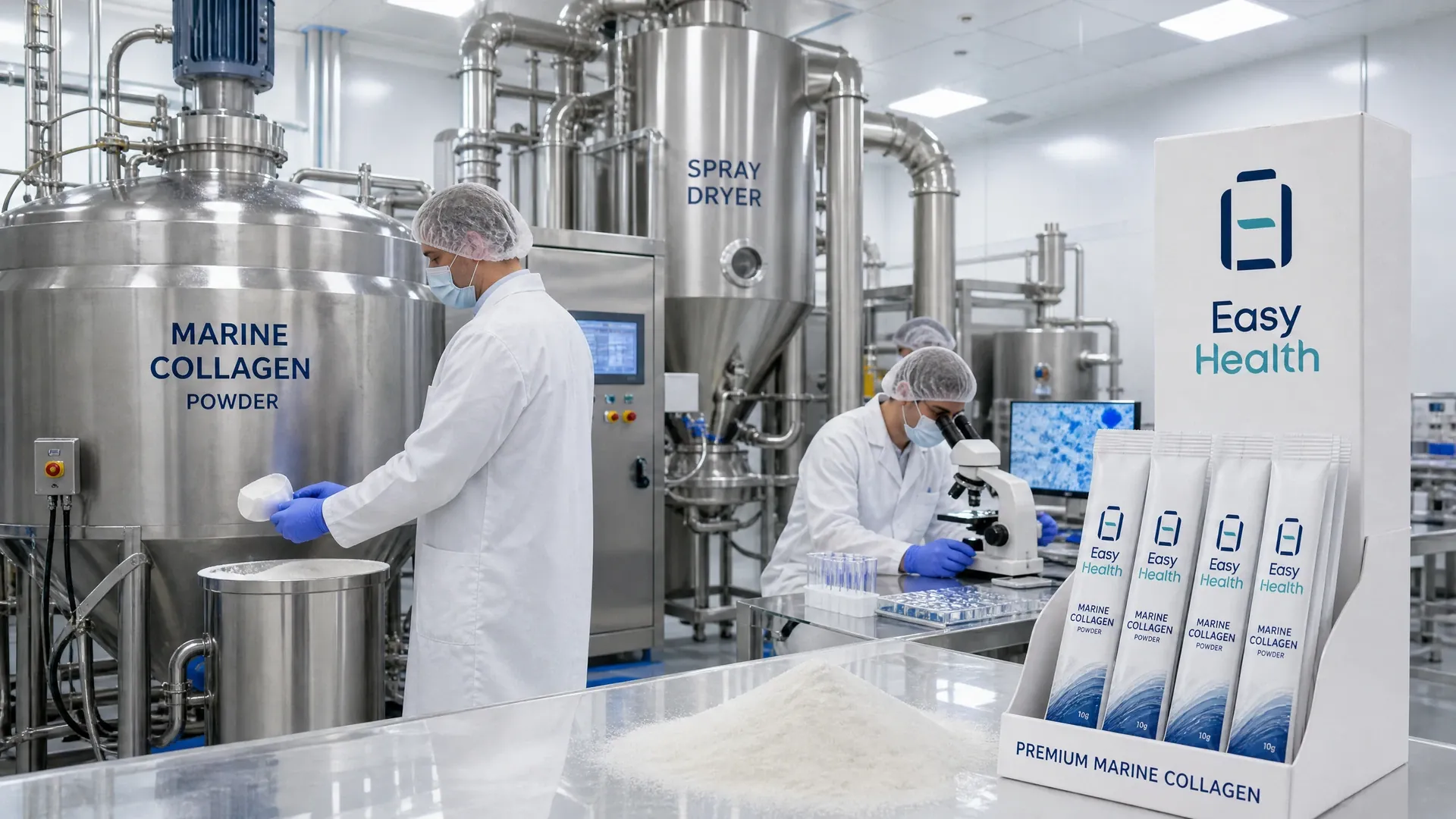
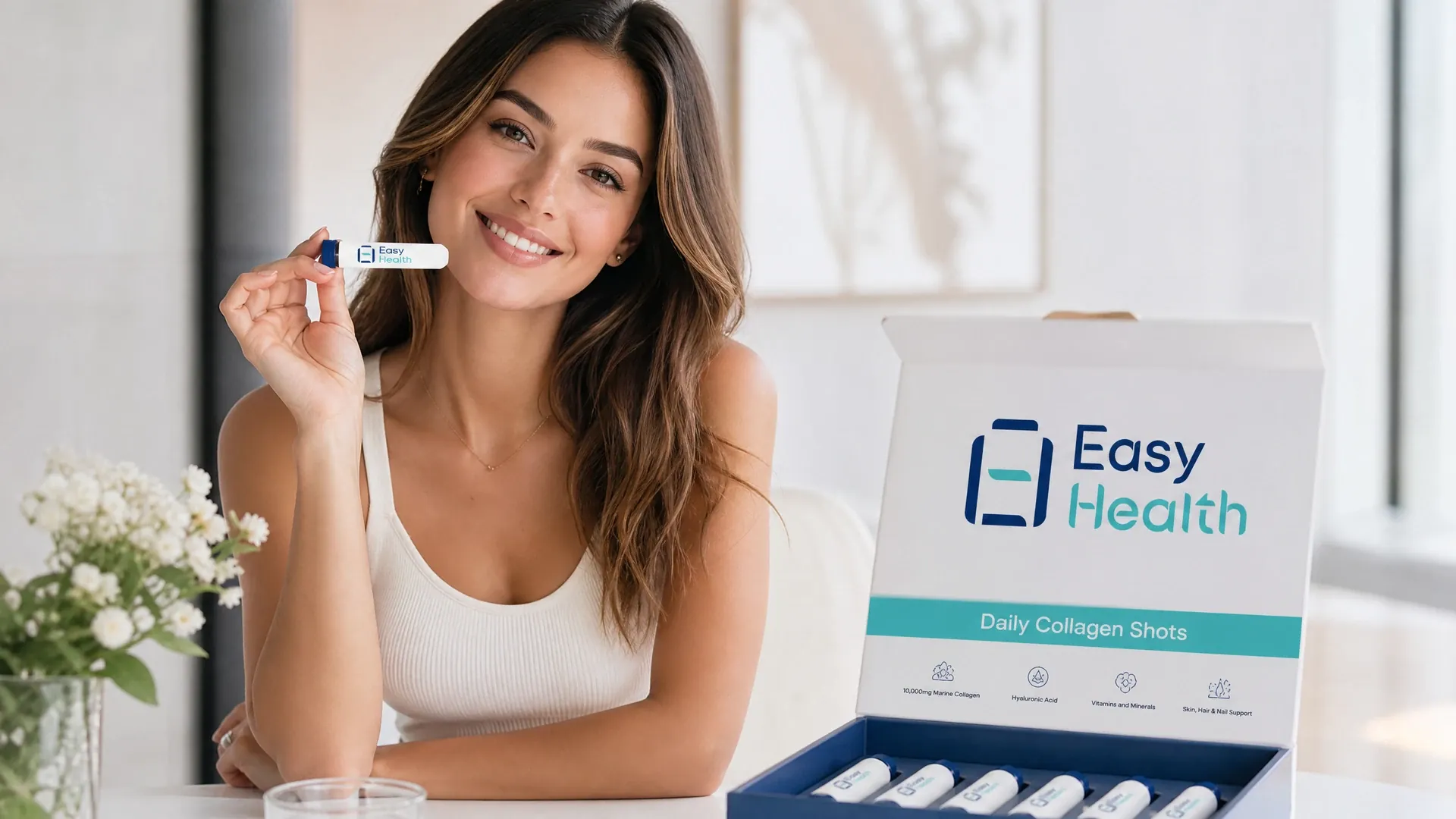
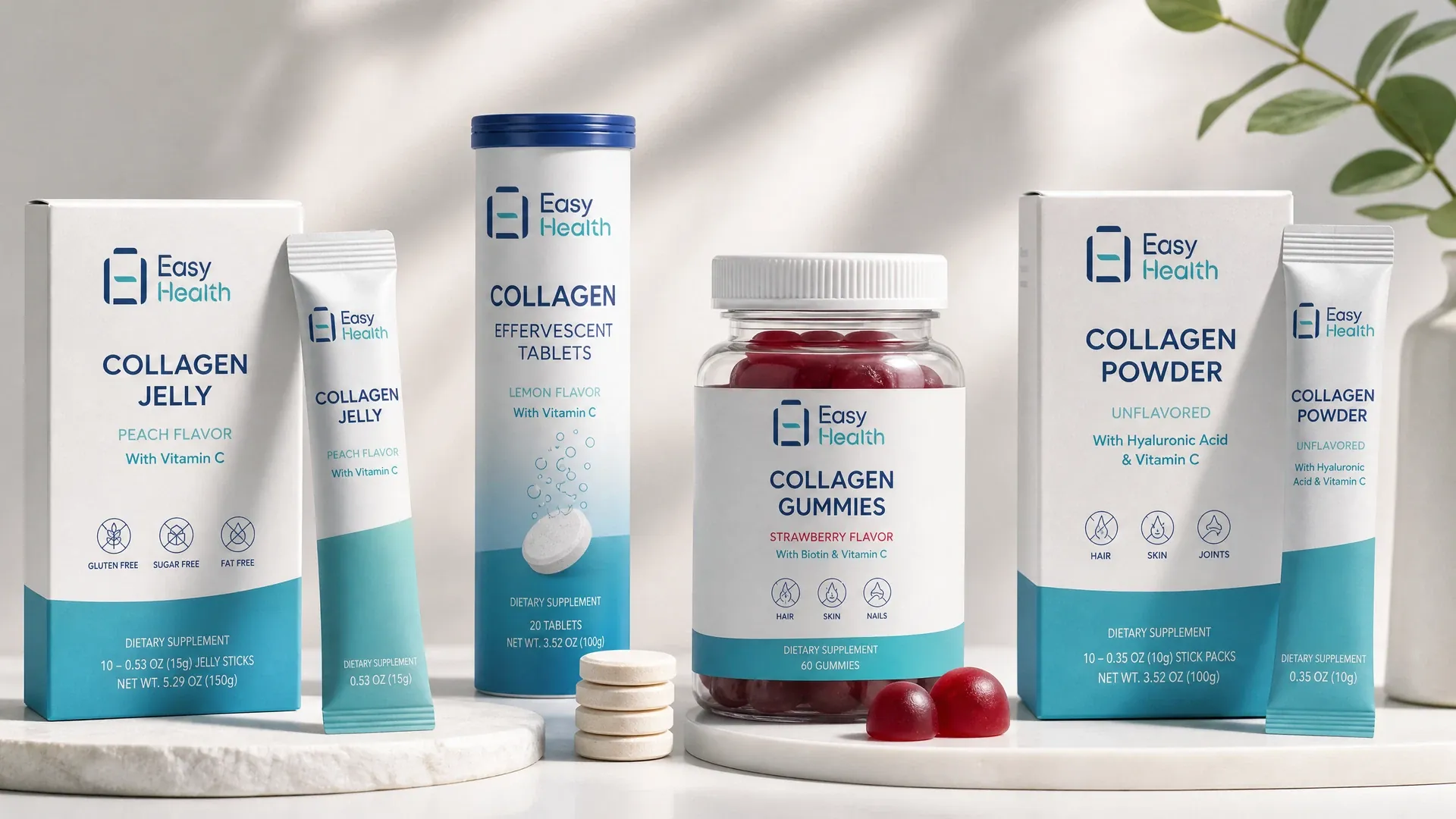
Images illustrate collagen powder tubs, stick packs, tablet blisters and liquid shots, showing barrier layer concepts and retail displays to help you assess material choices, closures and secondary packaging options quickly.
Labelling and regulatory points for Hong Kong and Mainland China
For food-type collagen supplements in Hong Kong, follow Cap.132W for ingredient list, net content, origin, allergen info and directions; apply the “1+7” nutrition labelling where relevant. Products falling under traditional Chinese medicine must consider Cap.549. For Mainland China, plan labels per GB 7718 and GB 28050. Claims and wording vary by market; consult local bodies or advisors for other regions. Easy Health coordinates label/carton layout and proofreading.
- Use Cap.132W and “1+7” in Hong Kong
- Apply GB 7718 and GB 28050 in Mainland
- Reserve clear lot/expiry/barcode areas
- Localise claims and verify wording
Print finishes and beauty-led visual design
Collagen often sits in a beauty context, balancing clean and functional cues. Matte pouches and sticks can be accented with spot gloss; bottle labels may use pearlescent or metallic inks for refinement. For a unified range, lock a master visual and differentiate flavours or dosage forms via colour bands. For display boxes, test window and tear areas to avoid damage from repeated opening. Easy Health coordinates substrates, laminations and surface finishes, and reviews colour variance and tearability during prototyping.
- Matte–gloss contrast for hierarchy
- Colour-banding by flavour/form
- Reinforce display box window areas
- Check colour and tearability in samples
Easy Health packaging development process for collagen
- Brief and compliance pre-check:Define dosage form, target markets and key label items; pre-check against HK and Mainland essentials, consolidated by the account manager.
- Material and structure proposal:Recommend films/bottles/blisters per barrier, closures and logistics, and plan secondary packaging and traceability zones.
- Prototyping and checks:Arrange white and print samples; review colour, tearability, fit and critical dimensions; advise pilot testing when needed.
- Packaging production coordination:Coordinate materials, printing, packaging operations and quality control; timeline depends on the project and is confirmed by the account manager.
- Release and dispatch:Release per client approval, verify lot/expiry/barcodes and outer-case marks, then arrange dispatch and handover.
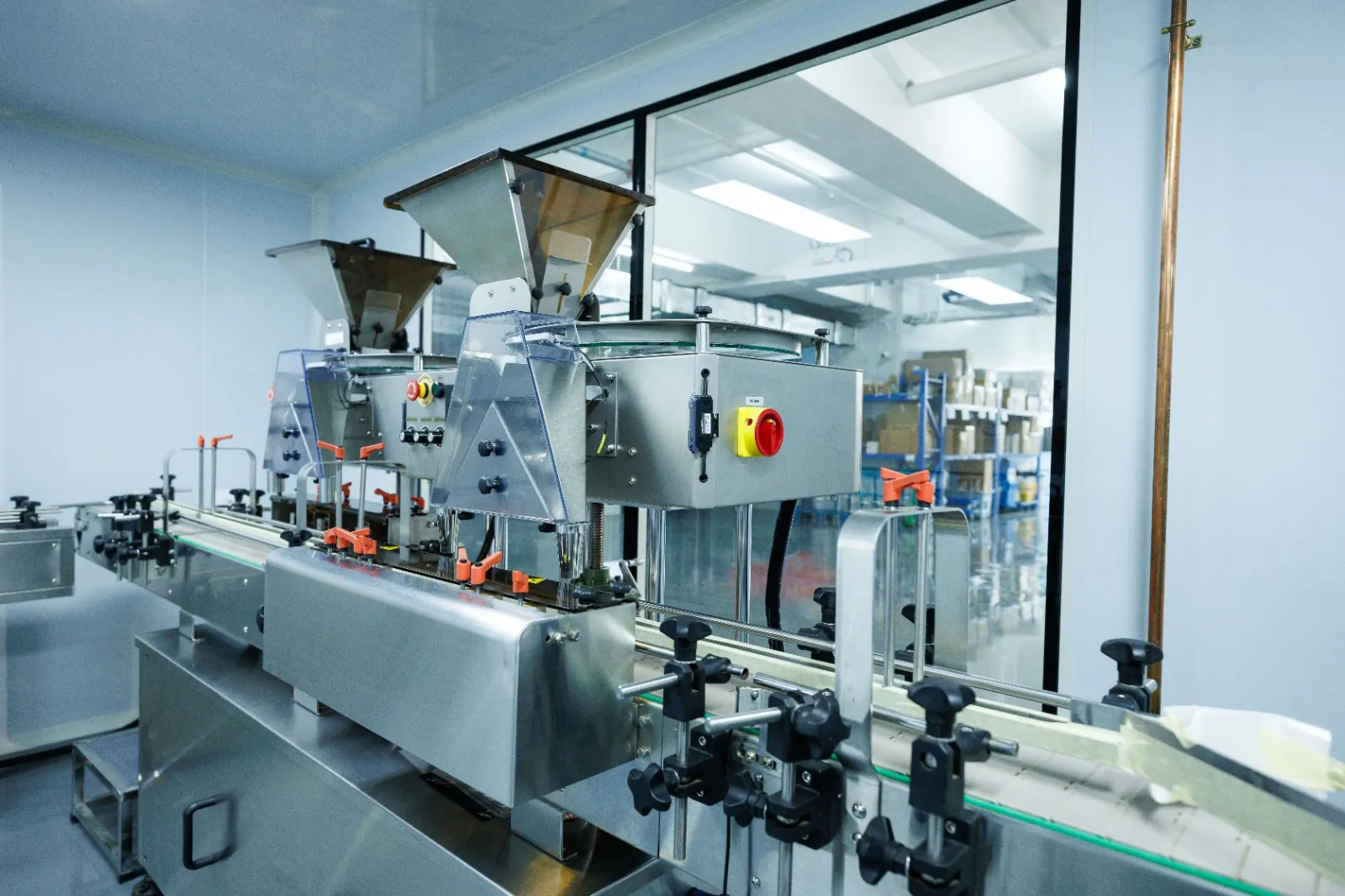
Inside the Easy Health Hong Kong Facility


Common collagen packaging formats and fit-for-purpose notes
| Format | Dosage form | Barrier focus | Closure/accessories |
|---|---|---|---|
| Foil stick | Powder single-serve | Moisture, oxygen, light | Easy-tear, rounded corners |
| Foil pouch (zip) | Powder home-use | Moisture first; add desiccant | Zipper, tear notch, scoop |
| Tubs (PET/HDPE/glass) | Powder/chewables | Moisture and seal | Screw cap, induction seal, scoop |
| Blister + carton | Tablets/capsules | Enhanced H2O/O2 barrier | Push-through, lot area |
| Small bottle (amber/coated) | Liquid shots | Light protection, seal | Tamper ring, shrink band |
General guidance only; final selection is confirmed by the account manager per project.
Collagen packaging checklist
- Dosage form and serving method confirmed (powder/stick/tablet/capsule/liquid)
- Barrier needs defined (MVTR/OTR/light) and film/bottle selected
- Closures and accessories set (zipper, scoop, tear notch, tamper-evidence)
- Label compliance checked (Cap.132W, ‘1+7’, or GB 7718/28050)
- Traceability/logistics zones reserved (lot/expiry/barcode)
- Prototypes approved for tearability, fit and colour variance
Collagen packaging design FAQs
Which film is suitable for collagen peptide stick packs?
Foil laminates such as PET/AL/PE or KPET/AL/PE are typical to reduce MVTR/OTR and block light. If a softer touch and premium print feel are desired, choose a matte outer layer. Transparent windows reduce barrier; mitigate by limiting window size and pairing with desiccants. Easy Health can prototype and test tearability and seal strength.
How can powder tubs help manage caking risk?
Use induction seals for primary sealing and include an appropriate desiccant. Choose HDPE or PET with barrier coating; specify cap liners and torque. Nitrogen flushing during filling can limit oxidation and odour uptake. Add clear storage instructions on the label to keep the cap closed and the product dry.
What tests are recommended for liquid collagen shots?
Conduct seal integrity, drop and transport simulation tests, and assess thermal cycling and light exposure if needed. Use amber or light-blocked bottles, tamper-evident caps and shrink bands. Validate outer carton stacking and barcode readability, with lot and expiry areas reserved on labels or cartons.
How should I prepare and deliver label artwork?
Supply editable vector files (AI/PDF) with embedded fonts, CMYK values and spot colour notes; images at 300 dpi or above. Indicate safe margins and tear/fold points on the dieline and define areas for lot/expiry coding. Easy Health coordinates print scheduling and proofing.
How should labels be managed for Hong Kong and Mainland China?
Create a common master with product name, ingredients, directions and warnings, then localise fields per Cap.132W and ‘1+7’ for Hong Kong, and GB 7718/28050 for Mainland. Consider dual SKUs or compliant over-labelling workflows, reserving space for barcodes and traceability. The account manager will coordinate final confirmation.
Related Packaging Services
Discuss your collagen packaging brief with Easy Health
Easy Health coordinates projects from its Hong Kong facility. We offer OEM/ODM, collagen packaging design, label/carton coordination, options across bottles/pouches/sticks/blisters, and prototyping support. Contact our account manager via WhatsApp to discuss quality and food‑safety management approaches and any document scope checks needed, and for an assessment tailored to your dosage form and target markets.
Last updated: