Probiotics packaging design for moisture-sensitive formats
Viability drives probiotics reputation. Easy Health focuses on probiotics packaging design for powders, capsules and sticks: moisture/oxygen barrier, single‑dose formats, drying and sealing. From our Hong Kong facility we coordinate bottle/bag/stick/blister options, cartons and labels, plus sampling and stability considerations for consistent shelf presentation and protection.
Summary:Probiotics are sensitive to moisture, oxygen and heat. From our Hong Kong facility, Easy Health coordinates high‑barrier materials, desiccant solutions and single‑dose formats, aligned with labelling rules and sampling, to refine probiotics packaging design.
What risks should probiotic packaging manage?
Moisture and oxygen ingress, plus repeated exposure after opening. Typical controls include aluminium‑laminated high‑barrier structures, appropriate desiccant in bottles, single‑dose sticks or blisters, optional nitrogen flushing and tight heat‑seal parameters. Labels should list strain names and storage advice, with counts referenced at end of shelf life. We coordinate material and seal checks during sampling, with specifics assessed and confirmed by an account manager.
Barrier materials and drying controls
Probiotics, often freeze‑dried powders or capsules, are highly sensitive to moisture and oxidation. Select aluminium‑laminated films (e.g. PET/AL/PE) or coated high‑barrier films to reduce WVTR/OTR; for bottles, thicker HDPE/PP with gasketed closures plus desiccants is common. Single‑dose sticks limit repeated exposure; capsules can use high‑barrier blisters (Alu‑Alu or coated films). Consider nitrogen flushing, controlled heat‑seal temperature/pressure and seal‑integrity checks. For storage and transit, avoid heat and humidity; outer cartons can carry clear icons and usage cues. During sampling, we coordinate material, structure and drying options, and adapt labels to formulation and market rules.
- Prioritise high‑barrier films/foil
- Match bottles with suitable desiccant
- Single‑dose sticks/blisters cut exposure
- Assess nitrogen and seal checks where needed
Single-dose probiotic packaging and other format choices
Formats vary by dosage form. Powders suit aluminium stick packs for single‑serve; larger family sizes can use foil pouches with a scoop, supported by clear drying and use guidance. Capsules fit HDPE bottles with desiccants, or high‑barrier blisters for per‑unit protection and portability. Balance barrier, opening experience, visual consistency and logistics efficiency; unify series design on cartons while tailoring barrier grades inside by formulation needs. For multi‑market sales, reserve label space for batch and regulatory information. We coordinate cartons, labels and inner materials, and test tear notches and seal settings during sampling.
- Powder: foil sticks or pouches
- Capsules: bottle+desiccant or blisters
- Series‑wide cartons; graded inners
- Test tear‑notch and seal set‑up
Visual guide to structures and viability checks
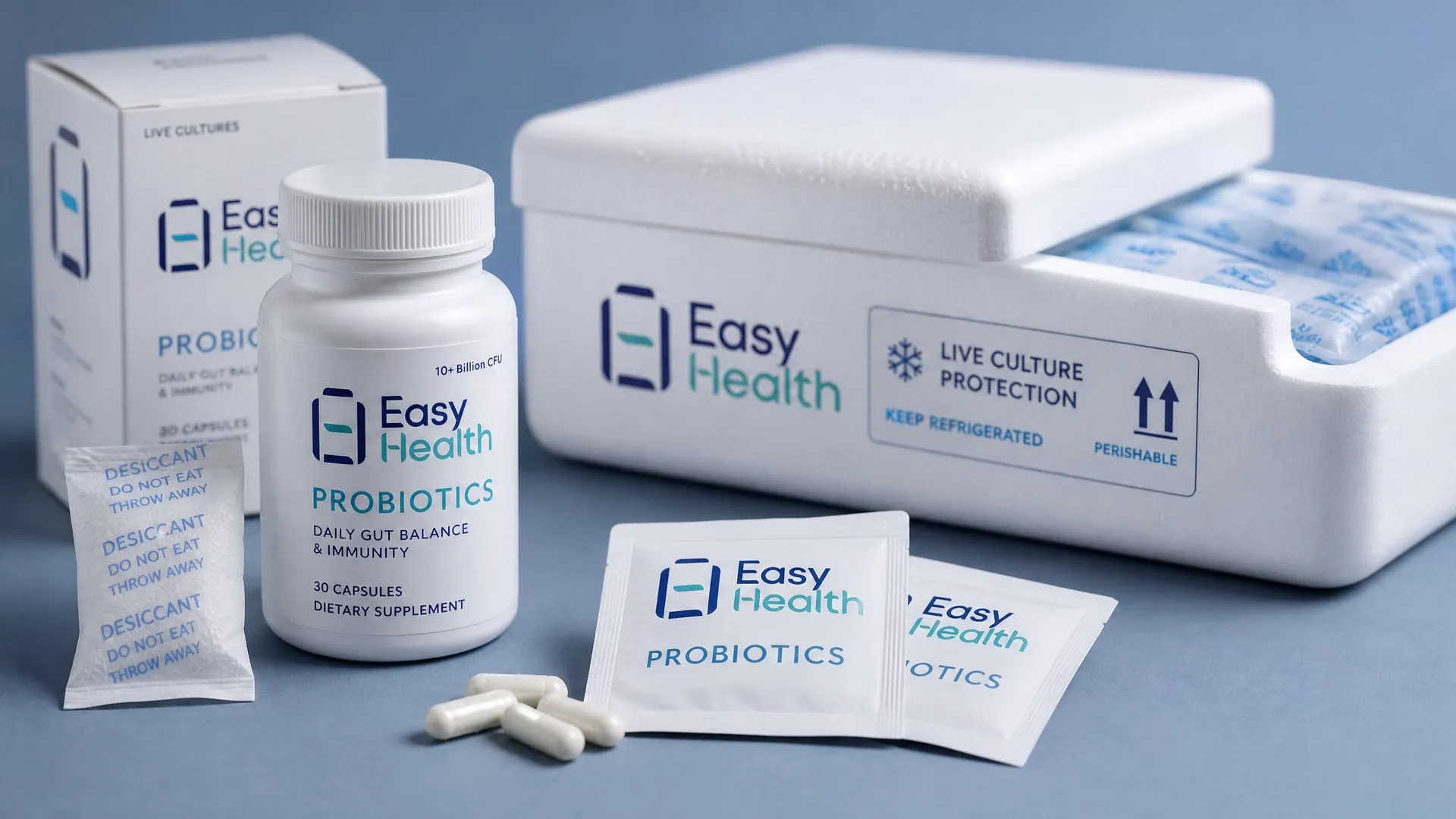
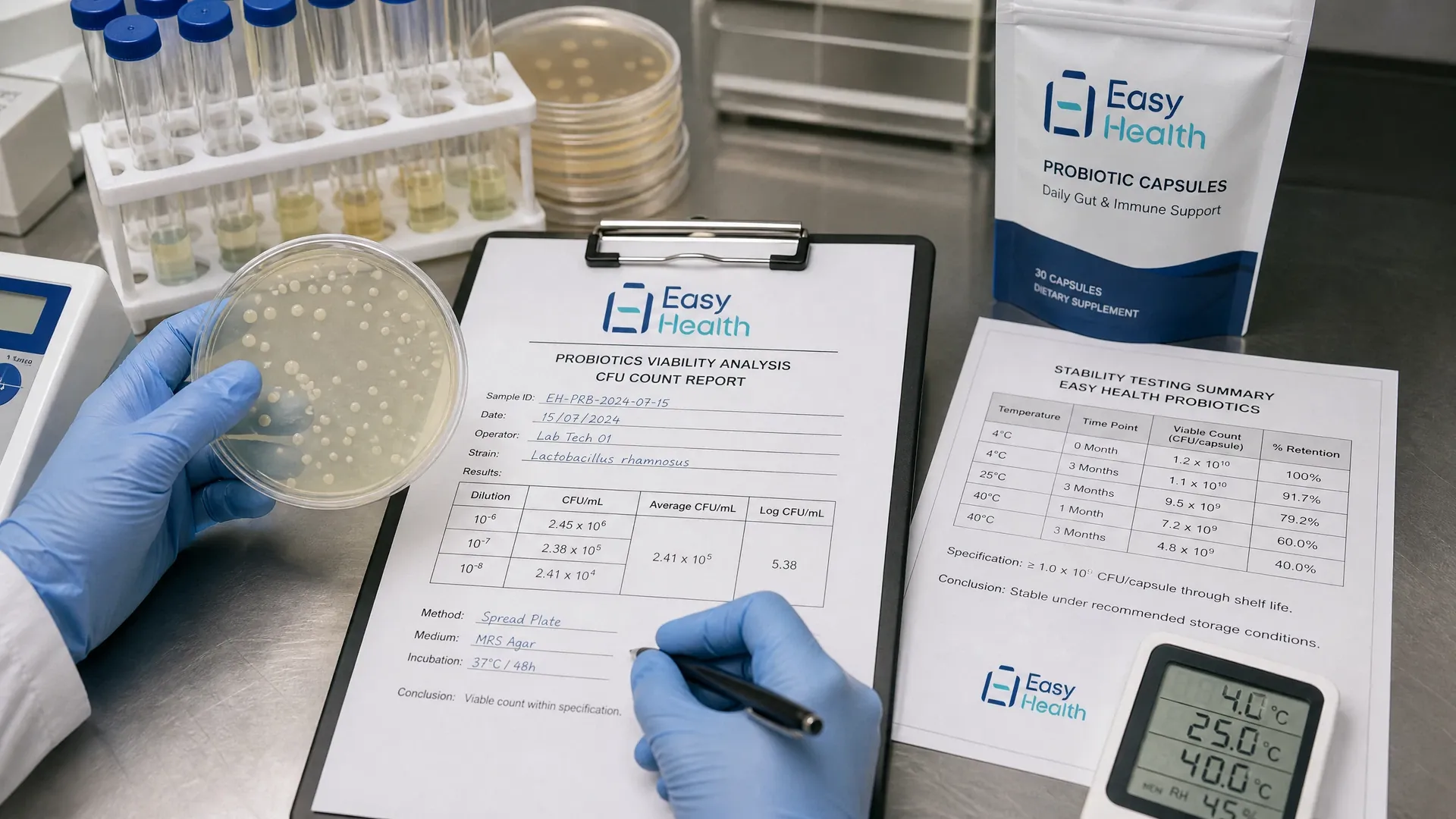
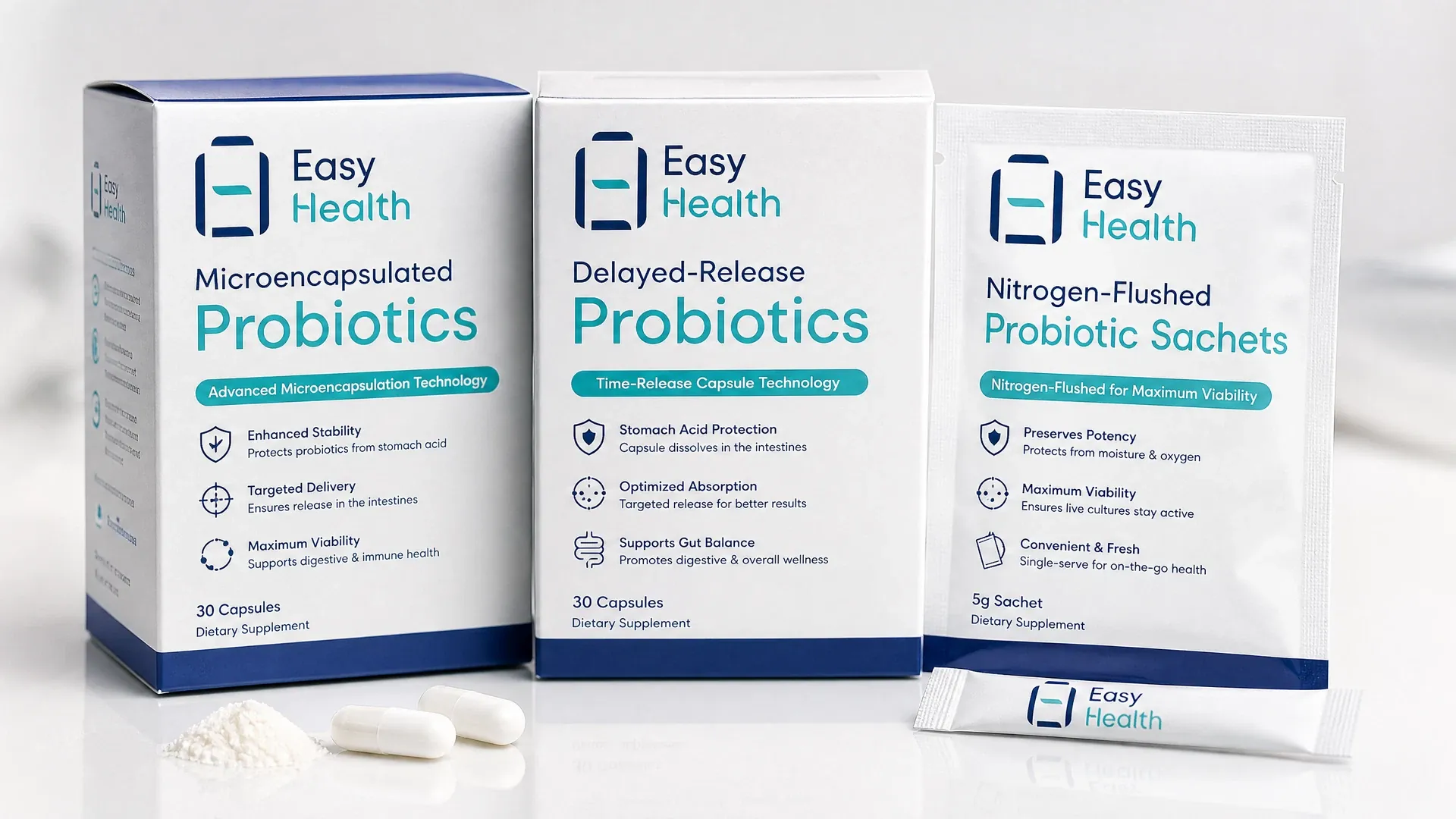
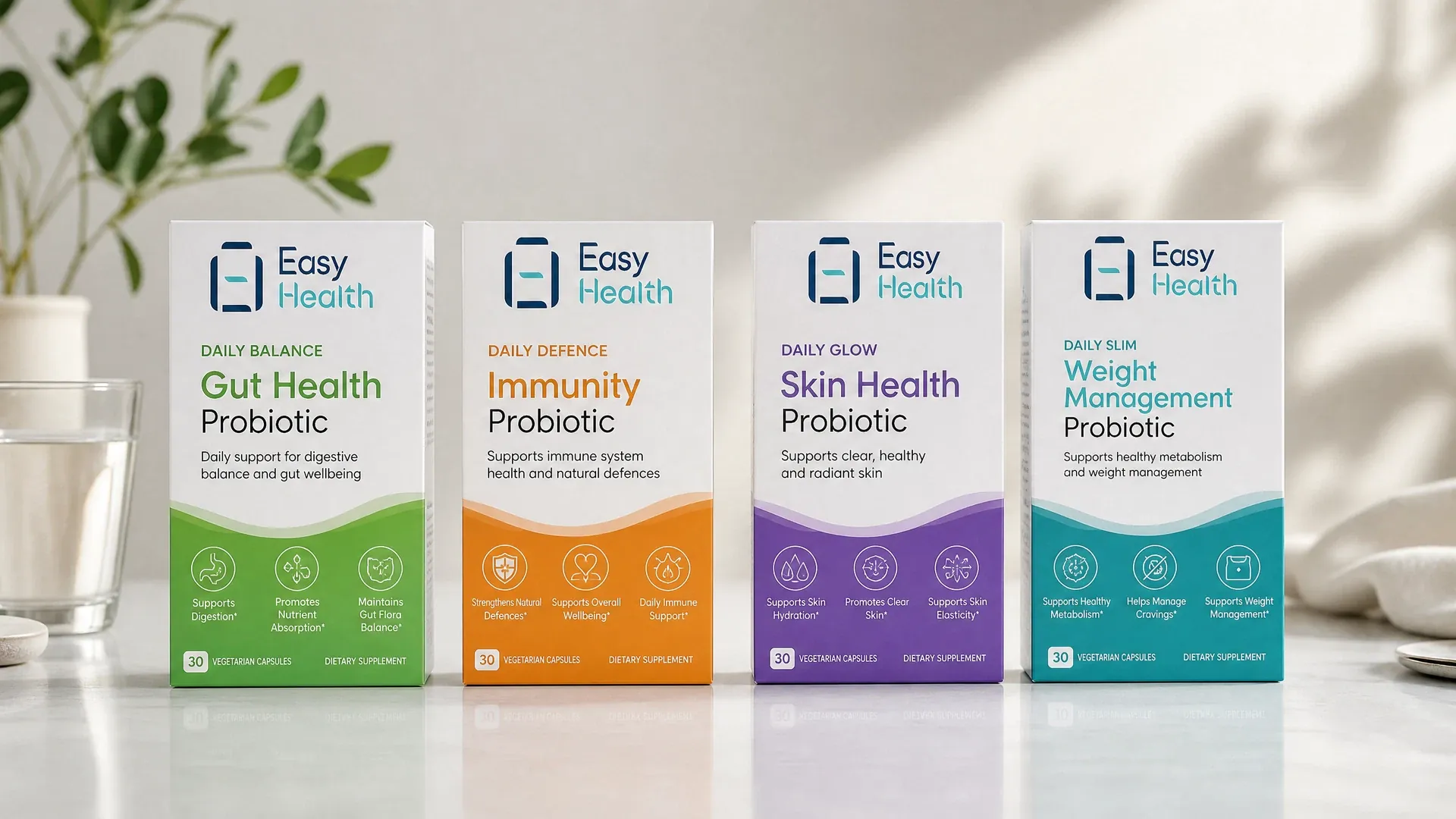
Images illustrate stick‑film layers, bottle‑desiccant options and blister structures, along with viability test flow and series design examples—helping you choose single‑dose formats, barrier levels and unified carton layouts quickly.
Labelling and regulatory essentials
Labels should state strain scientific names, suggested intake, storage and cautions, with live counts referenced at end of shelf life. In Hong Kong, apply the Food and Drugs (Composition and Labelling) Regulations (Cap.132W) and the “1+7” nutrition scheme; if traditional Chinese medicine ingredients are involved, refer to the Chinese Medicine Ordinance (Cap.549). For Mainland China, prepare to GB 7718 and GB 28050. Claims and icons may vary by market—plan adjustable zones from the first draft, with an account manager confirming needs per project.
- List strains and intake advice
- Reference end‑of‑life counts
- Reserve multi‑market zones
- Review rules early in design
Viability and stability: sampling and tests
To evidence protection, conduct accelerated humidity and seal‑integrity checks during sampling, comparing desiccant sizes, stick‑film layers and blister materials. Review logistics temperature/humidity; add secondary packs or inner pads if needed. For synbiotics, assess powder flow and caking risk. Depending on formulation, discuss nitrogen flushing, oxygen scavengers and seal widths, and verify opening experience and pourability in pilot runs. Timelines depend on the project and are confirmed by the account manager.
- Run humidity and seal tests
- Compare desiccants and films
- Assess shipping/storage climate
- Pilot runs to validate UX
Our probiotics packaging design process
- Briefing and regulatory check:Gather dosage form, strains, markets and labelling needs; the account manager summarises and proposes initial barrier/structure options.
- Material and structure selection:Compare bottle/stick/blister options for barrier, opening and logistics; plan desiccant and sealing approach.
- Sampling and functional tests:Arrange samples; test seals, tear notches and humidity exposure; discuss nitrogen or oxygen scavengers if relevant.
- Design and labelling review:Coordinate cartons and labels; adapt information zones and batch‑print spaces to the target market rules.
- Packaging production coordination:Coordinate materials and schedule; follow up on QC and seal integrity. Timelines depend on the project.
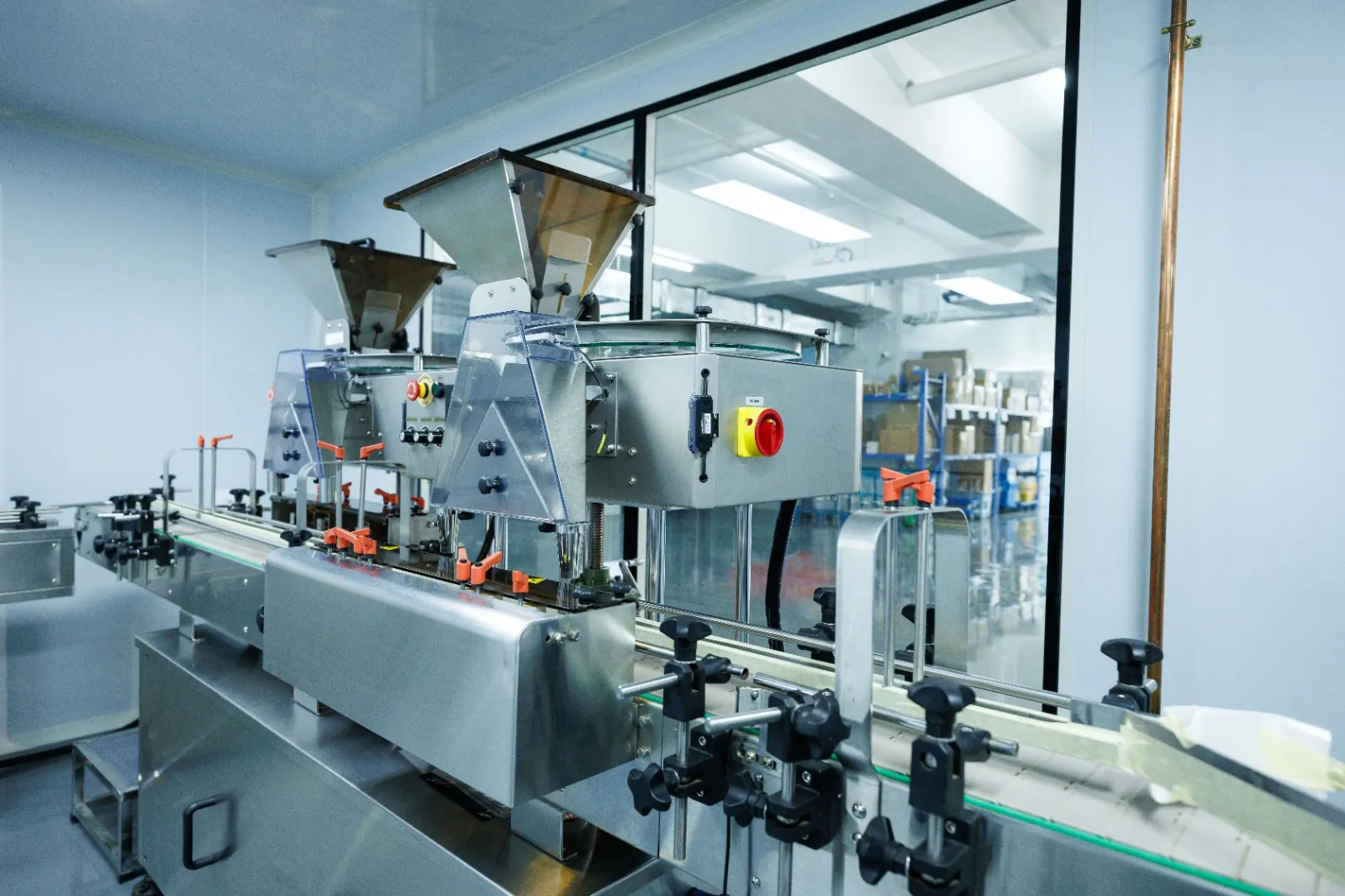
Inside the Easy Health Hong Kong Facility


Comparison of common probiotic pack formats
| Format | Suitable for | Barrier/drying notes | Opening & portability |
|---|---|---|---|
| HDPE bottle + desiccant | Capsules, granules | Mid‑high barrier; desiccant inside | Screw cap; not single‑serve |
| Aluminium stick pack | Single‑serve powder | High‑barrier film; tight sealing | Tear‑open; travel friendly |
| High‑barrier blister | Capsules | Per‑unit barrier; Alu‑Alu for light | Push‑through; easy rationing |
| Foil pouch (with scoop) | Family‑size powder | Add drying control and reclose tips | Easy first open; mind reclosing |
Guidance is general; final choice depends on formulation and market, and is confirmed by the account manager.
Probiotics packaging design checklist
- Confirm barrier and drying needs for powder/capsules
- Choose single‑dose or family pack and state usage
- Plan desiccant and optional nitrogen/oxygen control
- Assess heat‑seal temperature, pressure and width
- Design tear notches and opening experience
- Reserve batch code and multi‑market label zones
Desiccant, format and labelling FAQs
How do I choose desiccant size and placement for bottles?
Estimate moisture load from fill weight, packaging barrier and target shelf life, then choose suitable size and form (sachet or stopper). Avoid direct contact with ingestible powder—place at the base or under the closure. During sampling, run humidity simulations and cap‑open cycles to fine‑tune specs and labelling notes.
Do stick packs need nitrogen flushing or oxygen scavengers?
If the blend is oxygen‑sensitive, nitrogen can reduce headspace O2. Solid scavengers are rarely placed in single‑serve sticks due to ingestion risk. Prioritise high‑barrier films and validate seal and residual O2; nitrogen use depends on test data and viability targets, confirmed per project.
How should I choose between blisters and bottles?
Blisters provide per‑unit protection and are convenient on‑the‑go; bottles with desiccants suit larger capsule counts. For highly moisture‑sensitive strains or humid markets, prioritise high‑barrier blisters or upgrade bottle barrier and drying. Also review shelf footprint and consistency with carton design.
What key information should appear on probiotic labels?
Include scientific strain names, suggested serving, storage advice, cautions and nutrition labelling. State live counts with reference to end‑of‑life values. Follow Cap.132W and the “1+7” scheme for Hong Kong; use GB 7718 and GB 28050 for Mainland China. Reserve adjustable claim zones for market differences.
How should artwork be prepared for sticks and blisters?
Supply vector files (AI/PDF) with bleed, emboss/tear‑notch marks and clear spaces for batch/expiry. For sticks, note orientation and batch‑print panel; for blisters, provide both sides of the card and punch positions. Easy Health coordinates labels and cartons, checking registration and legibility at sampling.
Related Packaging Services
Discuss your probiotic pack structure with us
Our Hong Kong account manager will assess your dosage form, markets and viability needs, coordinating materials, structures, labels and sampling. Timelines depend on the project. Message Easy Health on WhatsApp to start planning your probiotics packaging design.
Last updated: