Essential oil packaging design for aromatherapy products
Essential oils are volatile and sensitive to light and heat, so materials, structure and labelling all need careful planning. Easy Health coordinates the project requirements in Hong Kong. Confirm which certificate scopes, quality records and supporting documents apply to the proposed arrangement. We coordinate essential oil and aromatherapy packaging, including bottle design, labels, cartons and packaging production; any filling work is arranged per project, with each item assessed and confirmed by an account manager.
Summary:Essential oil packaging requires light protection, precise dispensing, leak resistance and bilingual safety warnings. Easy Health co-ordinates aromatherapy packaging in Hong Kong—bottles with droppers/rollers/sprays, label/carton arrangements, sampling and transit protection—confirmed case-by-case by a project manager.
What should an essential oil bottle design address?
Key factors: 1) Light protection and compatibility—prefer amber/dark glass and verify closures/liners/inserts; 2) Dispensing—droppers, rollers, sprays or reducers matched to viscosity and use; 3) Leak resistance—liner compression, capping torque and tamper seals; 4) Transport—fitments to support the shoulder, shrink bands and outer carton orientation; 5) Labelling—bilingual warnings, icons and usage notes; 6) Sampling and tests—project-based co-ordination of leakage, drop and compatibility checks to refine details.
Materials and light protection for essential oils
Essential oils are volatile and photosensitive. Amber or dark glass is recommended, with wall thickness and weight tuned to fill size and drop risk. Match neck threads and liners to the formula—e.g., aluminium caps with oil-resistant liners or PP caps with PE liners; if citrus, resinous or solvent-rich, add elastomer and ink compatibility checks. For aromatherapy bases with higher diluent content, clear glass may be paired with light-shielding cartons and fitments. Select oil- and rub-resistant label adhesives/laminates to prevent edge lift and colour bleed; consider oil-resistant carton coatings. Travel and gift sets benefit from small dark vials with custom fitments. Easy Health co-ordinates sampling and material sourcing for bottles, labels and cartons.
- Amber/dark glass to reduce photodegradation
- Thread–liner pairing improves seal
- Oil- and rub-resistant label layers
- Carton/fitment for light block and cushioning
Essential oil closures: droppers, rollers and sprays
Select dispensing to fit usage: neat oils favour orifice reducers/droppers for accurate dosing; roller balls suit pulse-point and targeted application—choose stainless steel or glass; sprays are for diluted mists and room fragrances, with viscosity and atomisation validated. Check liner/elastomer compatibility (TPE, silicone, NBR) with citrus, mint and eucalyptus oils. Anti-backflow features and tamper evidence help reduce contamination. Orifice size affects drop rate and residue—tune during sampling. Easy Health co-ordinates sampling of droppers, rollers, sprays and reducers, and arranges project-based compatibility and leakage tests.
- Droppers/reducers for stable dosage
- Rollers for targeted, on-the-go use
- Sprays matched to viscosity/angle
- Verify liner/elastomer compatibility
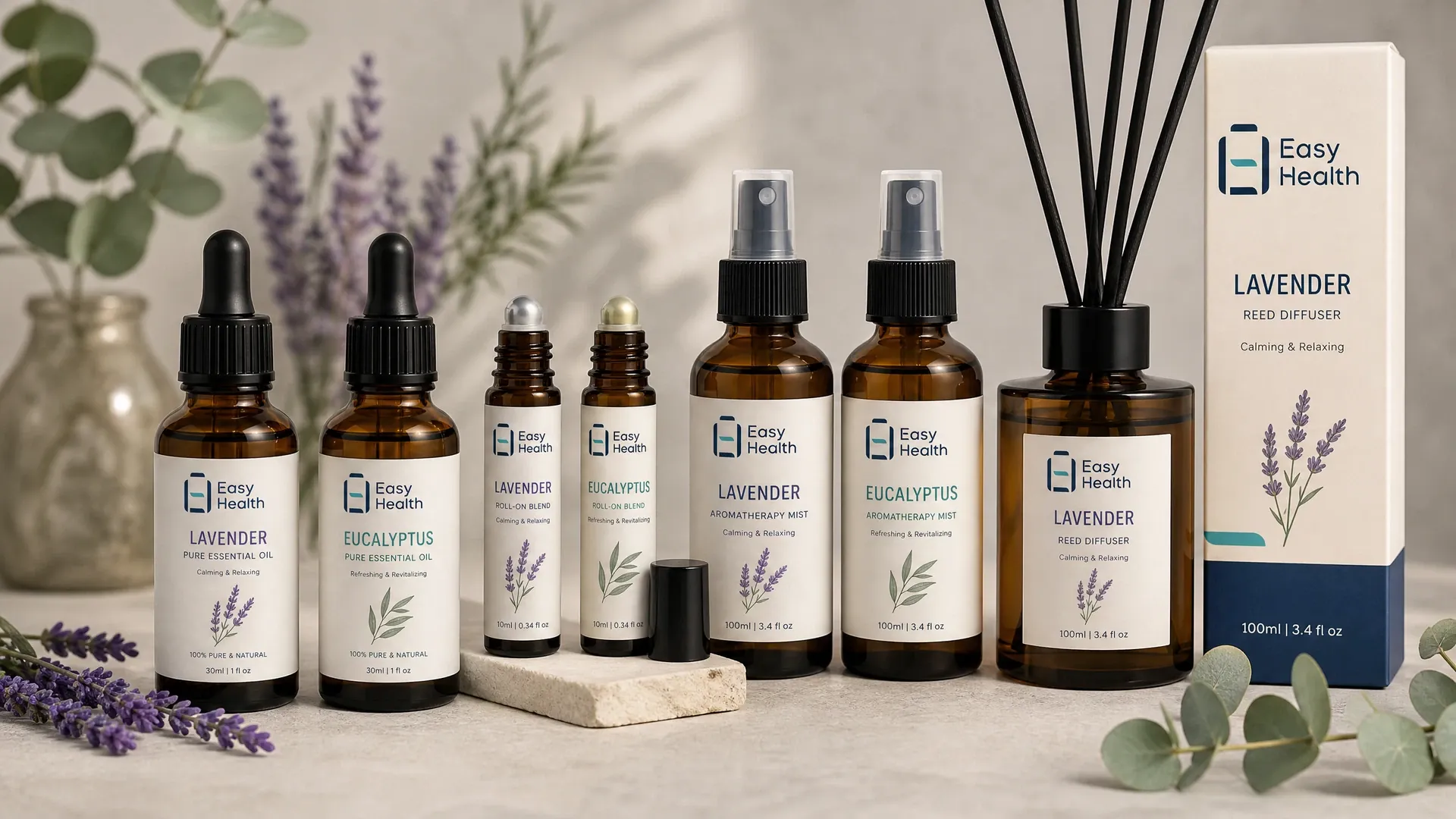
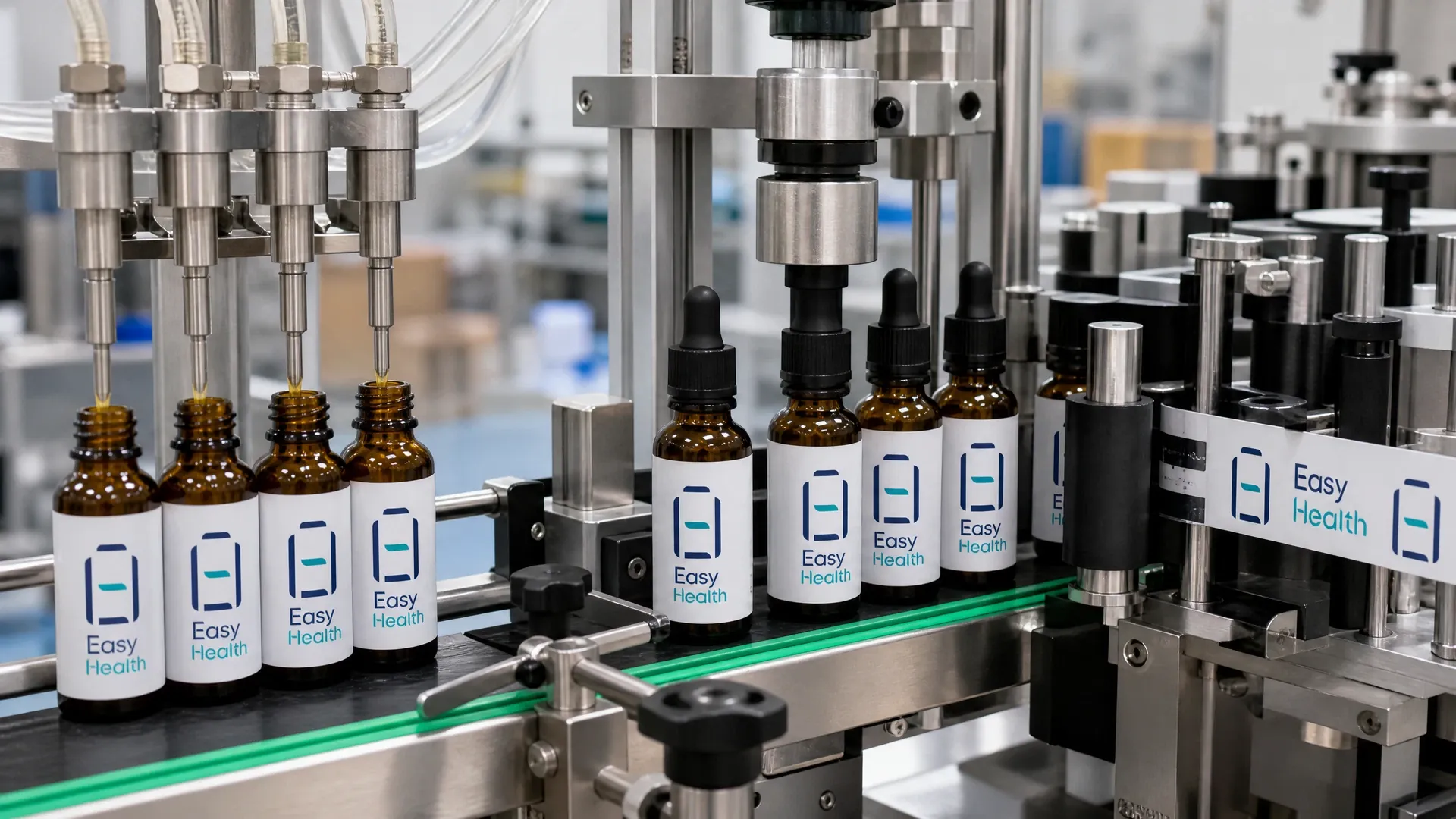
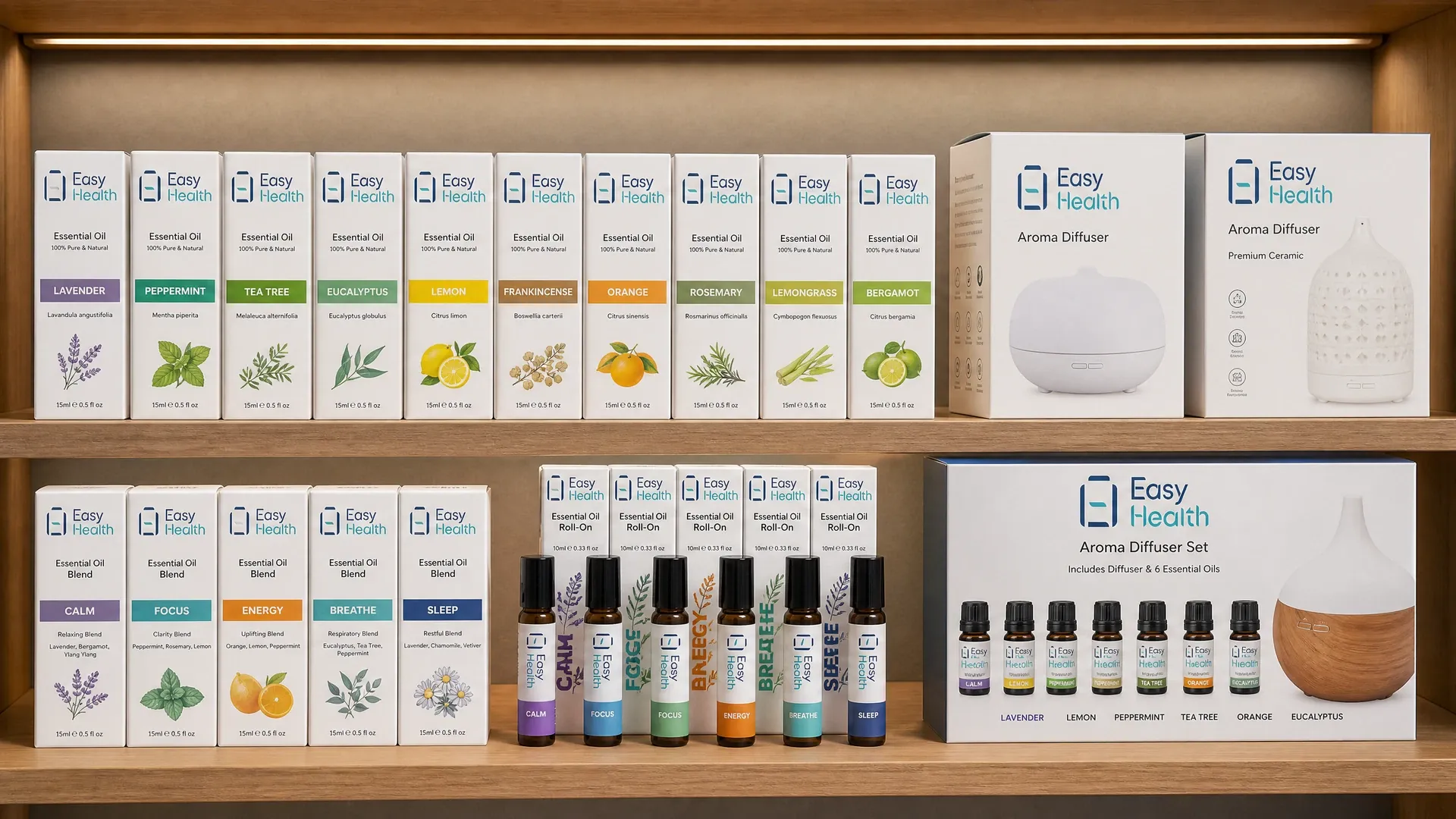
Visual guide: from bottle structure to retail display
The images show key elements of essential oil packaging: dark glass bottles and dropper structures, cap and seal details, pre-packing checkpoints, and in-store shelf display, helping you assess how structure, labelling and cushioning perform in real settings.

Transport and leak control: from seal to secondary pack
As volatile liquids, essential oils need leak control designed across the bottle neck, liner, insert and carton. Set and record a capping torque range for consistent sealing; for long-distance shipping, consider shrink bands or foil seals. Corrugated, moulded pulp or rigid board inserts should hold the body and shoulder firmly to avoid point loads and collisions. Stacking-direction and fragile marks on shipping cartons help reduce breakage. If the formula contains flammable solvents, add flammability symbols and storage reminders to labels and cartons, and confirm carriage conditions per project; brands can supply a safety data sheet (SDS) for transport documentation. Any filling work is arranged per project; Easy Health can coordinate packaging steps and arrange drop and carton tests as agreed.
- Set and record capping torque
- Use shrink bands/foil seals
- Fitments support shoulder and body
- Add flammability/orientation cues
Labelling and warnings for aromatherapy products
In Hong Kong, essential oils sold as consumer goods generally fall under the Consumer Goods Safety Ordinance (Cap. 456) and the Consumer Goods Safety Regulation (Cap. 456A); warnings or cautions on safe keeping and use must be stated in both Chinese and English. Typical items include flammability, keep out of reach of children, avoid contact with eyes and broken skin, keep away from heat and open flames, and for external use only. Products claiming therapeutic use may fall under medicines and need separate confirmation. For retail display, keep icons and warnings legible on the main panel and barcodes and lot codes scannable. Easy Health can help check bilingual label elements and icon placement and coordinate label and carton printing; labels and marketing copy should avoid therapeutic or aromatherapy efficacy claims.
- Bilingual warnings required
- Icons: flammable/irritant/external use
- Keep key info in primary view
- Avoid therapeutic claims
Essential oil and aromatherapy product packaging process
- Brief and formulation info:Define use cases, viscosity/aroma traits and target volumes; our manager assesses container options per project.
- Container and dispensing:Propose droppers/rollers/sprays/orifice reducers, confirming light protection and compatibility points.
- Label and carton design:Help review bilingual elements and icons; co-ordinate layout and print material choices.
- Sampling and test co-ordination:Arrange samples and co-ordinate leakage, drop and compatibility tests as needed to refine details.
- Packaging production:Co-ordinate packaging operations at our Hong Kong facility; timelines vary by project and are confirmed by the manager.
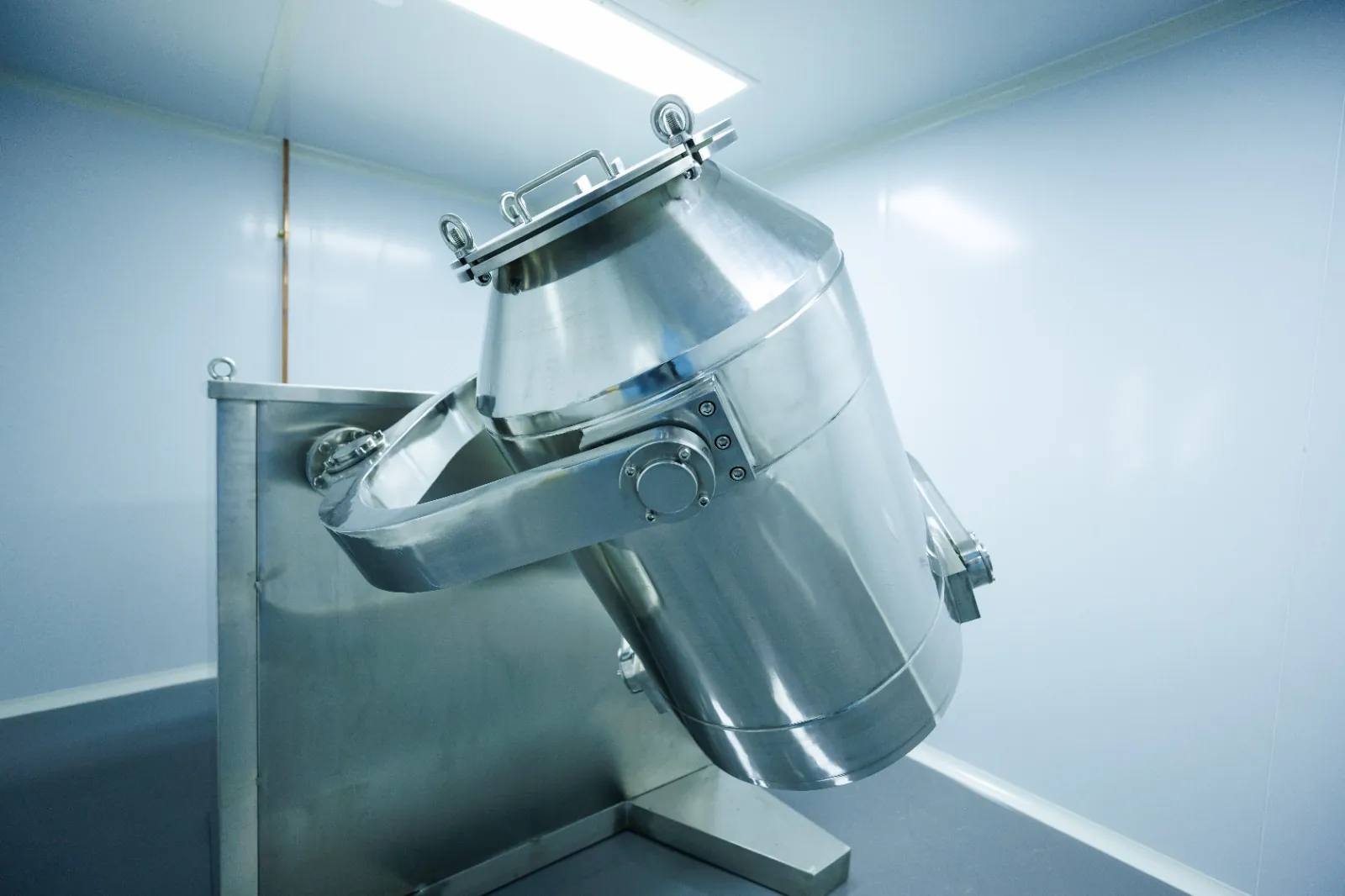
Inside the Easy Health Hong Kong Facility


Comparison of dispensing and sealing options
| Item | Dropper/Reducer | Roller Ball | Spray Pump |
|---|---|---|---|
| Suitable for | Neat/high-strength oils | Diluted roll-on oils | Low-viscosity mists |
| Dosage control | High-precision drops | Even thin-layer application | Wide, fine mist |
| Seal focus | Reducer/liner compatibility | Ball material swell resistance | Valve anti-backflow |
| Accessory note | Inversion leak risk | Use SS/glass ball | Add seals for long haul |
Typical guidance only; final choices depend on formula and use, confirmed by our project manager.
Pre-planning checklist for essential oil packs
- Does the formula require dark glass and specific liner materials?
- Is a dropper, roller, spray or orifice reducer best for use cases?
- Are label adhesive and laminate oil- and solvent-resistant?
- Do you need foil seals, shrink bands or tamper evidence?
- Will carton and fitment secure the shoulder and pass drop checks?
- Are warnings and caution statements prepared in both languages?
Essential oil packaging design FAQs
What bilingual warnings should appear on essential oil labels?
Common items include flammability icons/statements, keep out of reach of children, avoid contact with eyes/broken skin, keep away from heat/open flames, and for external use only. Under Cap. 456/456A in Hong Kong, safety storage and usage warnings should be stated in both Chinese and English. For other markets, verify local requirements.
How do I choose between dropper, roller or spray?
Match to use and formula: droppers/reducers for precise dosing of neat oils; roller balls for pulse-point application—prefer stainless steel or glass; sprays for room/body mists with suitable viscosity, atomisation and backflow control. Also check elastomer compatibility with citrus/resinous oils.
Can essential oils affect label materials?
Some oils can compromise adhesion and inks. Choose oil-resistant adhesives, suitable facestocks and laminates, and test on filled bottles for rub resistance, edge lift and colourfastness. Easy Health can co-ordinate print material sampling and compatibility checks.
How should I plan volumes and neck finishes?
Common sizes include 5/10/15/30 ml, compatible with droppers or rollers. Match neck finishes to components, and lock tolerances during sampling. Test drop rate, inversion leakage and capping torque on filled bottles. Unify cartons/fitments across sizes for shelf consistency.
What tests should be done before filling and shipping?
Project-based co-ordination is recommended for: 1) leakage/inversion checks; 2) drop and vibration with fitments/cartons; 3) material compatibility and label rub/oil resistance; 4) capping torque and seal retention; 5) for cross-border, provide an SDS if requested by carriers. Review findings after sampling and pilot runs.
Related Packaging Services
Plan your essential oil packaging design project
Message our Easy Health project manager on WhatsApp with your formula traits, volumes and use cases. We will evaluate essential oil packaging and bottle design, and co-ordinate aromatherapy labelling, cartons, sampling and packaging operations in Hong Kong for a reliable rollout.
Last updated: