Essential oil dropper bottles and aromatherapy packaging
Easy Health coordinates the project requirements in Hong Kong. Confirm which certificate scopes, quality records and supporting documents apply to the proposed arrangement. We coordinate packaging for essential oils and aromatherapy, covering containers, droppers/pumps/stoppers, labels and cartons. We arrange sampling and sealing tests, and orchestrate bottle, sachet, stick or blister formats to bring series designs into production. Where relevant, certificate scope and supporting documents (e.g. FSSC 22000 for food safety management) are checked per project.
Summary:Helps you choose essential oil and aromatherapy packaging: from essential oil dropper bottles to candle and diffuser designs. Covers barrier materials, necks and components, labeling and cartons, transport testing, compliance layout, plus how sampling and packaging orchestration work at Easy Health in Hong Kong.
Planning a unified line with droppers, diffusers and candles?
Yes—start by matching oil/wax/solvent systems to materials and standardising critical dimensions. Use dark glass and oil-resistant droppers for oils; define neck ID and reed diameter for diffusers; specify heat-resistant vessels, heat-tolerant labels and cartons with fitments for candles. During sampling, run inversion, vibration and thermal cycle tests and confirm multilingual label panels. Easy Health coordinates materials and samples; timelines are project-dependent and confirmed by your account manager.
Essential oil dropper bottles: materials and components
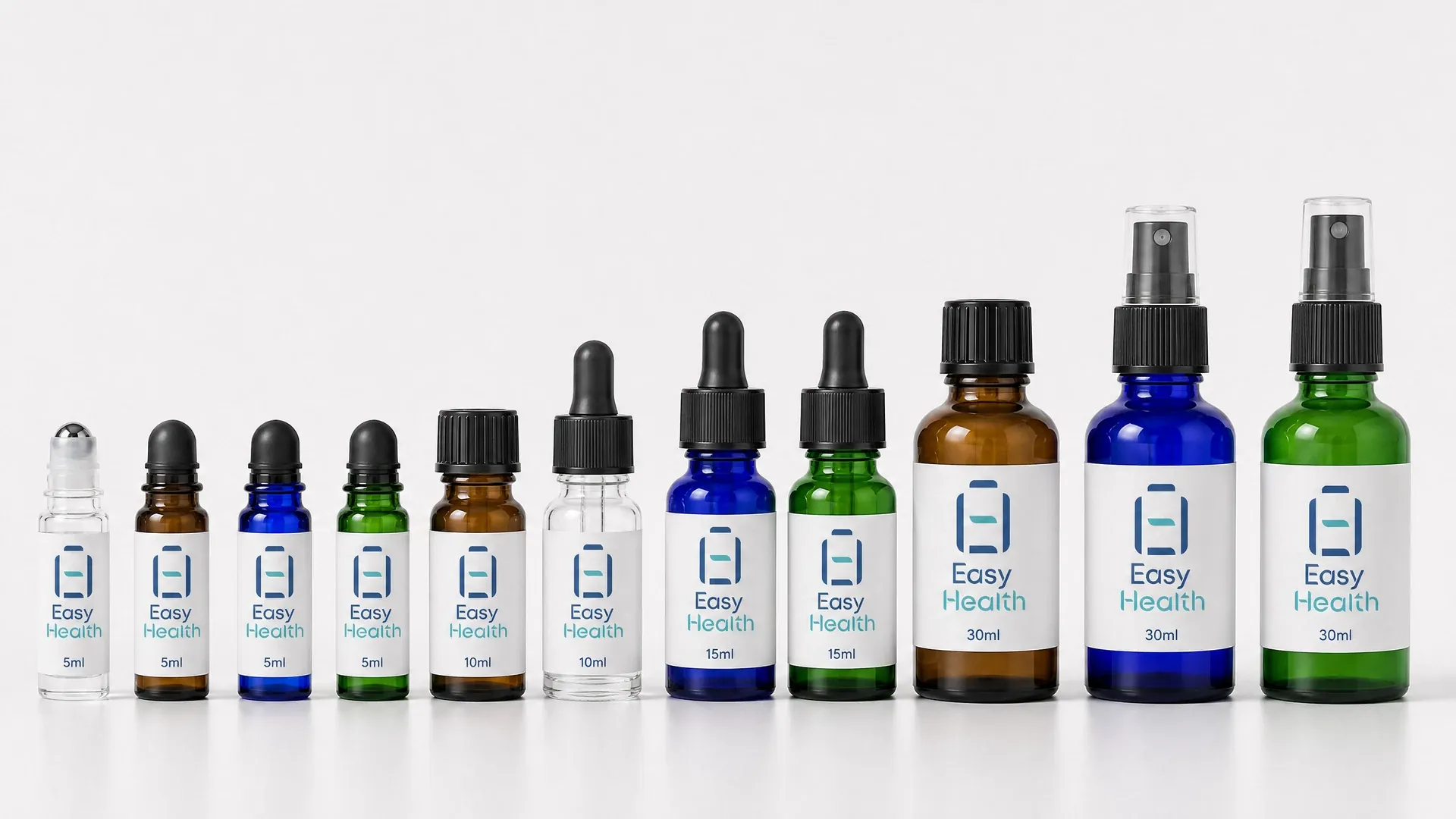
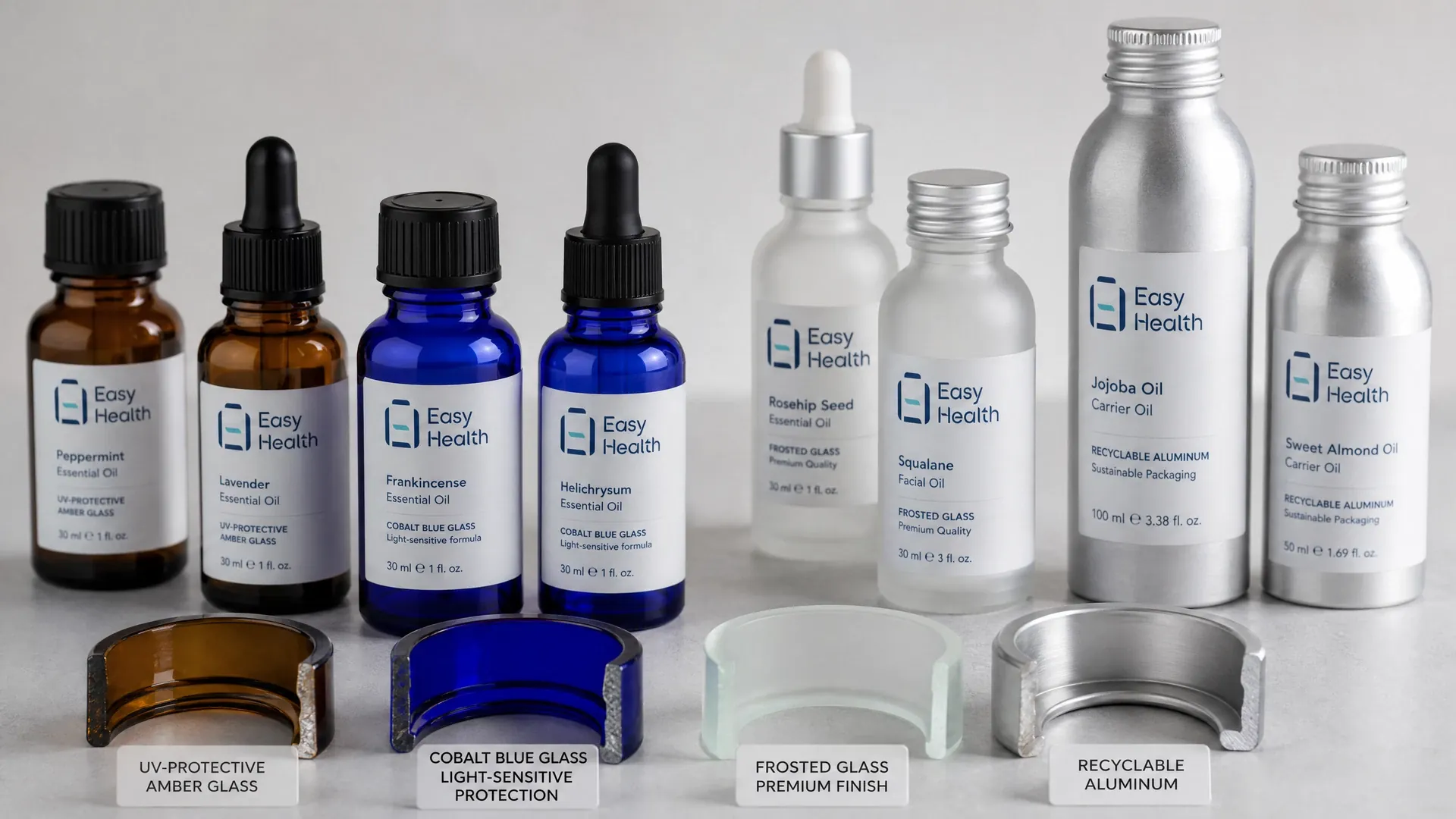
Choose amber or dark glass to improve light protection, typically 5–50 ml. Ensure bulb materials (silicone or NBR) and pipettes (glass or suitable plastics) resist oils. Neck threads (e.g., 18/410) determine liner/leak-prevention choices and affect carton/fitment sizing. Specify oil- and alcohol-resistant label stocks/adhesives; lamination enhances scuff resistance. Run inversion, drop, vibration and temperature–humidity cycling. For cross-border sales, allow space for multilingual info and batch/expiry. Easy Health coordinates sampling, closure testing and carton dielines for coherent series design.
- Amber/green glass for light stability
- Bulb must resist oils and stay elastic
- Thread standard defines liner/closure
- Oil-resistant adhesive with matte/gloss lamination
Aromatherapy candle packaging: heat, safety and unboxing
Candle packaging must manage heat, flame clearance and wax residue. Glass or ceramic vessels should be checked for thermal shock, wall thickness and rim profile. When adding wooden or metal lids, confirm liner material and fit. Labels should use heat-tolerant stocks and adhesives to prevent curling or oil stains from prolonged heating. Cartons with inner fitments and optional corrugated corner guards aid transit; retail formats may use drawer or shoulder boxes. Plan burn warnings and user guidance for legibility and languages. Easy Health arranges vessels, lids, labelling and carton sampling with series-consistency advice.
- Test vessels for thermal shock/thickness
- Use heat-tolerant adhesives/films
- Cartons with fitments and guards
- Clear, legible burn warnings
Visual guide to essential oil and aromatherapy packaging formats
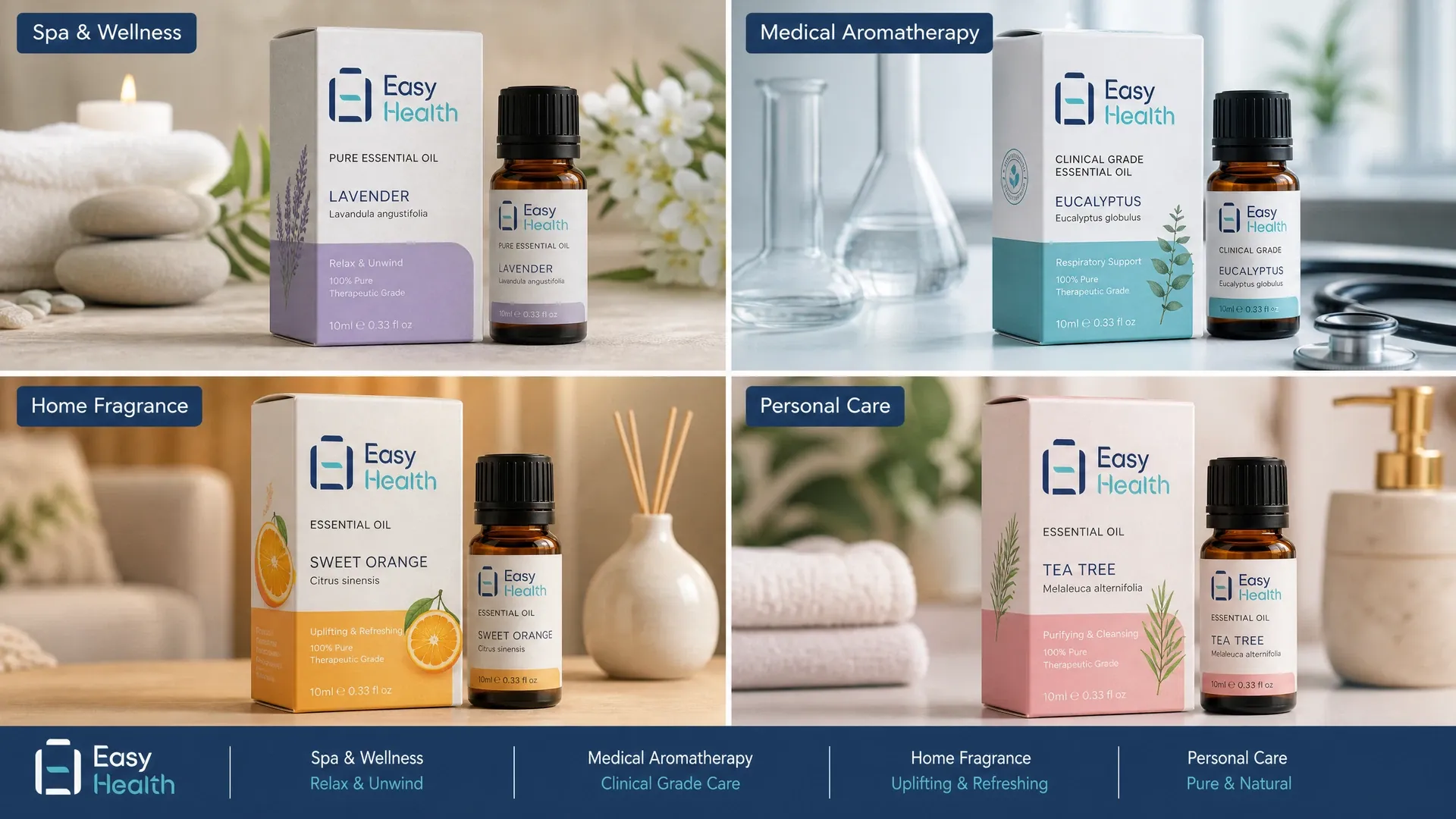
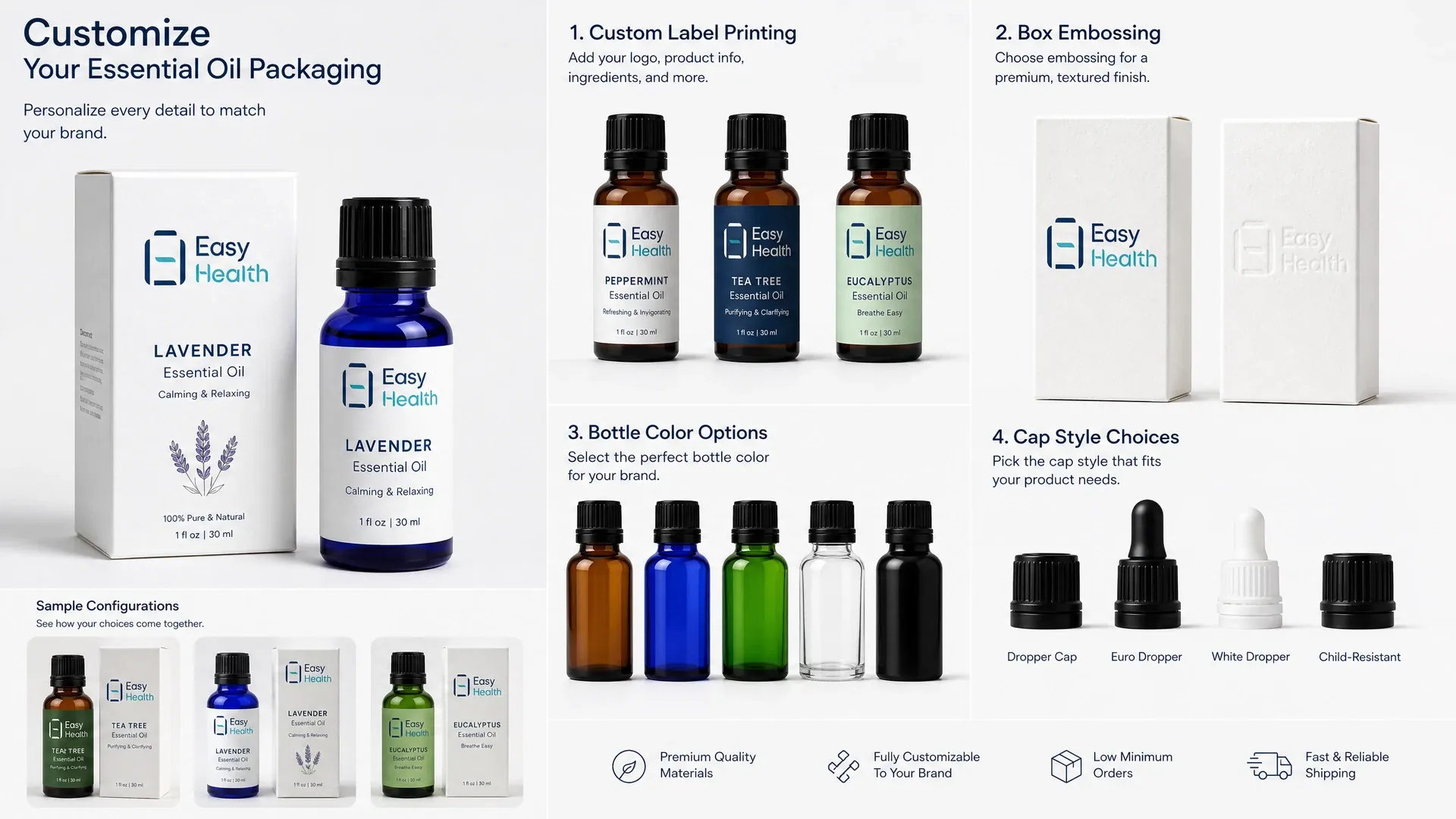
Visuals highlight structures and components: dropper necks and bulbs, candle vessels and inner fitments, diffuser stoppers and reeds, plus label zones on roll-ons and sample vials. They also compare carton formats (drawer, shoulder) for retail presence and e-commerce protection.
Diffuser bottle packaging design: evaporation and sealing
Confirm solvent system (alcohol or oil based) and reed compatibility first; neck ID versus reed diameter governs evaporation. Typical components include flow stoppers, dust caps and décor sleeves; use stoppers for transport and insert reeds at retail or use. Choose clear or tinted glass and keep label zones away from prolonged solvent contact. Cartons should support upright storage, with optional leak-containment sleeves and absorbent sheets. Consider refill minis with separate sealing. Easy Health coordinates bottle–reed specs, closure testing and carton layouts for display and safety.
- Match neck ID to reed diameter
- Stoppers improve transport sealing
- Keep labels away from solvent zones
- Upright cartons aid display and containment
Extended formats: roll-ons, sprays and samples
Complement the range with 10 ml roll-ons for on-the-go application—verify steel/glass balls for smooth dosing and seals. Room sprays require solvent-resistant pumps and consistent atomisation. Samples (1–2 ml glass vials) are ideal for trials or gifting; inner plugs with aluminium caps improve sealing and portability. Curvature varies by format, so confirm label size, placement and legibility in sampling; check contrast and scannability when using foil accents or clear stocks. Easy Health sources components and manages multi-SKU sampling with consistent visuals.
- Ball material affects dosing/sealing
- Validate pump solvent resistance/atomisation
- Inner plugs help prevent leaks
- Test labels on tight radii and clear stocks
Packaging coordination process for bottles, labels and cartons
- Briefing and material proposal:Define formula profile, volumes, channels and storage; propose bottles, components, labels and carton options.
- Sampling and fit testing:Arrange samples to validate sealing, labelling, oil/heat resistance and transport simulation; adjust specs if needed.
- Artwork and compliance review:Reserve label space per regulations; check mandatory particulars, multilingual needs and legibility hierarchy.
- Production coordination and QC:Coordinate materials and packaging production with milestone checks; timelines confirmed by your account manager.
- Despatch and storage advice:Advise on cartoning, cushioning and upright storage, with transport and retail labelling notes.
Inside the Easy Health Hong Kong Facility


Essential oil and aromatherapy packaging comparison
| Essential oil dropper | Candle packaging | Diffuser bottle | Gift set design |
|---|---|---|---|
| Leakproof dropper tip | Thick-walled jar body | Controlled-flow neck | Die-cut stabilizing insert |
| Amber borosilicate glass | Heat-resistant candle glass | Clear or frosted glass | Rigid greyboard with card |
| Butyl rubber dropper | Metal crimp safety ring | Aluminum cap with orifice | Hidden magnetic closure |
| Pharm-inspired minimal label | Matte sandblasted translucency | Fragrance-resistant inks | Layered foil and emboss |
| 0.5 ml precise dosing | Centered wick stability | Smooth reed diffusion | Shock-absorbing structure |
The above is for general reference; final solutions will be evaluated and confirmed by your account manager based on the project.
Pre-development checklist
- Have you verified oil/wax/solvent compatibility with packaging materials?
- Are neck threads defined to match droppers, pumps or stoppers?
- Are labels specified as oil/heat tolerant and sampled?
- Do cartons include fitments or leak liners for transport security?
- Is space planned for multilingual and mandatory label particulars?
- Have inversion, vibration, drop and thermal cycle tests been performed?
Essential oil and aromatherapy packaging FAQs
How do I choose the bulb material for dropper bottles?
Silicone and NBR are common. For citrus-heavy or solvent-rich blends, run oil resistance and elasticity checks, and verify pipette compatibility (glass or suitable packaging-grade plastics) and odour transfer. Easy Health can arrange sampling and sealing tests; timelines are confirmed by your account manager.
Will candle labels lift when heated?
Standard paper labels and adhesives may curl or show edge oiling under prolonged heat. Specify heat-tolerant stocks and adhesives, with lamination for stability. If the vessel surface is textured or glazed, conduct adhesion and legibility tests first.
What labelling details are common for diffuser packaging?
Common items: ingredient type, net content, usage guidance, warnings, batch/expiry, and importer/distributor details. For Hong Kong, refer to the Food and Drugs (Composition and Labelling) Regulations (Cap.132W); for Mainland China, see GB 7718 and GB 28050. Confirm applicability with local authorities or professional advisers.
What causes dropper bottle leakage?
Typical causes include mismatched threads, incompatible liners (oil-induced swelling), insufficient torque on closures, or poor transport orientation. During sampling, confirm thread standards, choose compatible liners (EPE, conical PE or barrier-equipped options), run inversion/vibration tests and use cartons/fitments to limit movement.
How should cartons differ for e-commerce versus retail?
For e-commerce, use corrugated reinforcements and fixed fitments, plus leak sleeves and absorbents. For retail, prioritise display formats like drawers or shoulders while keeping internal locators. A modular insert system under one master dieline can bridge both needs.
Related Packaging Services
Discuss dropper bottle, candle and diffuser packaging plans
Need specifics for dropper bottles, candle packaging, or diffuser bottle design? Message Easy Health on WhatsApp to speak with an account manager for material matching, sampling and packaging production coordination.
Last updated: