OEM packaging in Hong Kong for supplement brands
This page focuses on OEM packaging services in Hong Kong: end-to-end coordination from formulation handover to finished packs. Operating from our Hong Kong facility under GMP-aligned controls and food safety management referencing FSSC 22000 where relevant, Easy Health coordinates OEM projects, labels and cartons, and multiple pack formats to turn concepts into shelf-ready packs.
Summary:Seeking OEM packaging in Hong Kong? This page covers a Hong Kong facility with a GMP-standard environment and an FSSC 22000 food safety system, OEM/ODM support, label and carton coordination, formats including bottle, sachet, stick, pouch and blister, sampling, and packaging production via WhatsApp with an account manager.
Which supplement product types can be packed?
We focus on nutraceutical and food-related packs. Typical formats include: bottles (capsules, tablets, gummies, powders), pouches/sticks (powders or granules), blisters (unit doses), plus labels and cartons. Each project is assessed and confirmed by an account manager, covering structure, barrier, filling method, labelling compliance and sampling. Timelines depend on the project—contact us on WhatsApp.
OEM packaging in Hong Kong: practical coordination from brief to production
For OEM packaging in Hong Kong, clarity of specification and cross-step coordination are critical. As your partner, Easy Health focuses on material selection, label and print arrangement, filling requirements, sealing and checks, through to carton assembly and pre-dispatch inspection. Operating in our Hong Kong facility under GMP-aligned controls and food safety management referencing FSSC 22000 where relevant, we front-load risk control (cross-contamination, mislabelling, material compatibility, moisture/oxidation). Provide your formula or semi-finished product; we coordinate packaging materials and sampling, and confirm label content, key dimensions, tolerances and practical tests before scale-up.
- Define markets and languages to pin down compliance early
- Document filling conditions: flowability, moisture, static sensitivity
- Validate by samples: seal strength, barrier, opening feel
- Set QC points: appearance, weight variance, label placement tolerance
Material and structure selection: bottles, pouches, sticks and blisters
Choose materials based on formulation sensitivity and retail scenarios. Powders and granules suit aluminium-laminate pouches or sticks for portability and dosage control; tablets/capsules are often bottled for better moisture protection and repeat access; highly sensitive unit doses may go into blisters for maximal per-unit protection. We advise on barriers (moisture, oxygen, light), sealing methods (heat seal/foil induction/pressure liner), and filling steps (nitrogen flushing, desiccant/oxygen absorber placement). For labels and cartons, we coordinate finishing, ink compatibility, lot/expiry print zones, and tolerances for auto-labelling and cartoning.
- Powders: sticks/pouches for portability and dosing
- Bottles: add desiccant and foil seal for moisture control
- Blisters: per-unit dosing and mix-up prevention
- Cartons: stacking strength and protective inserts
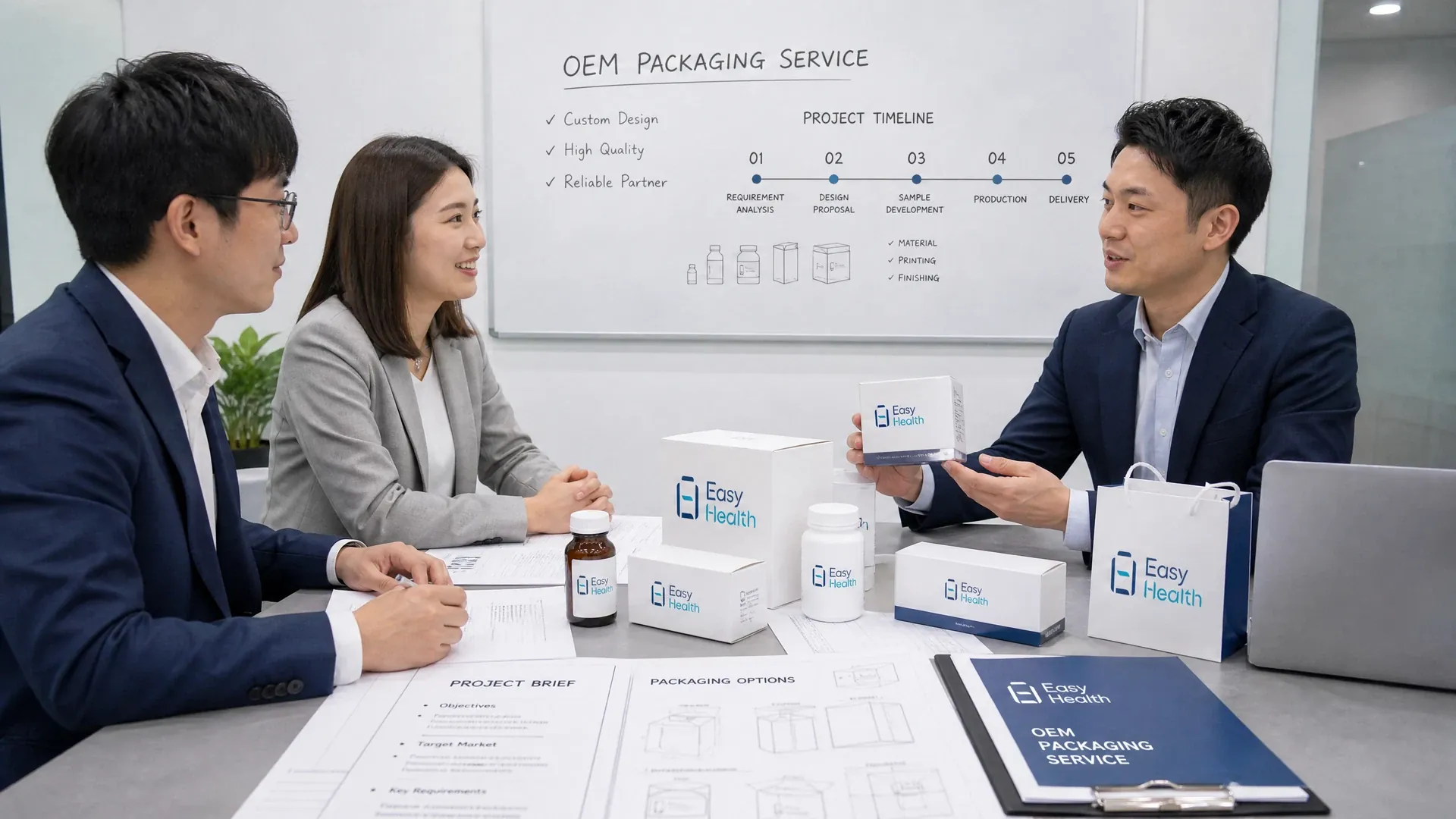
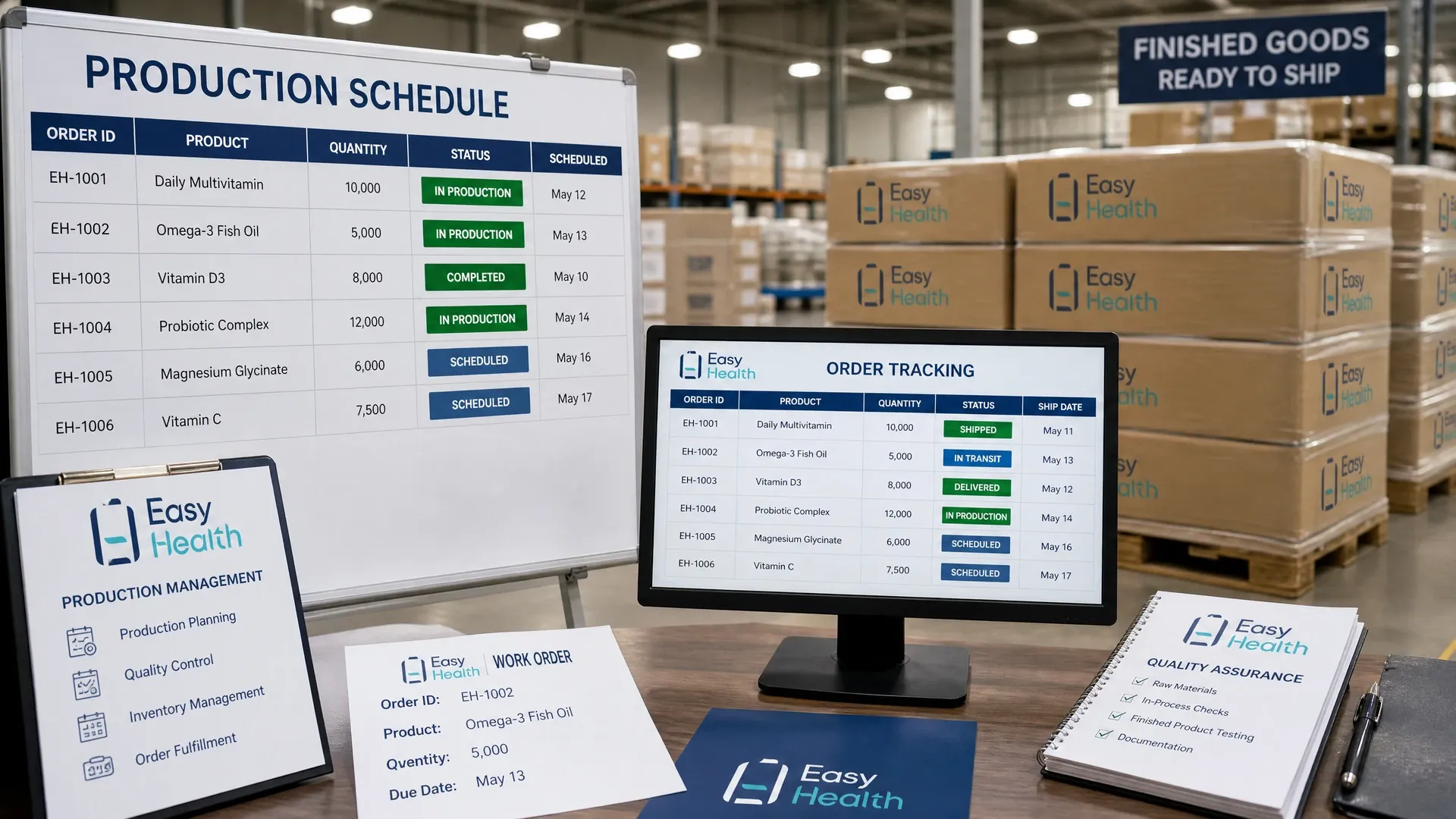
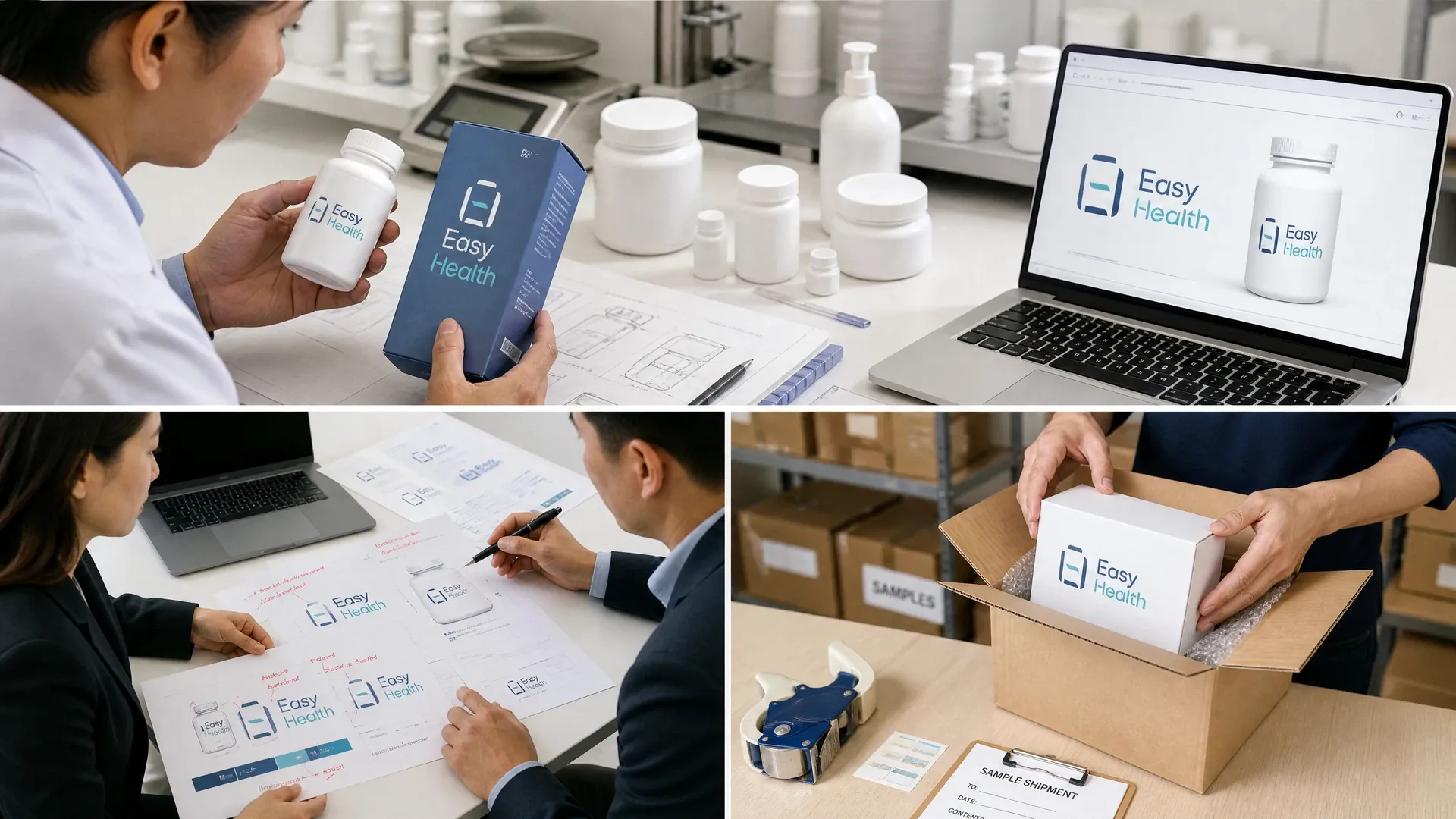
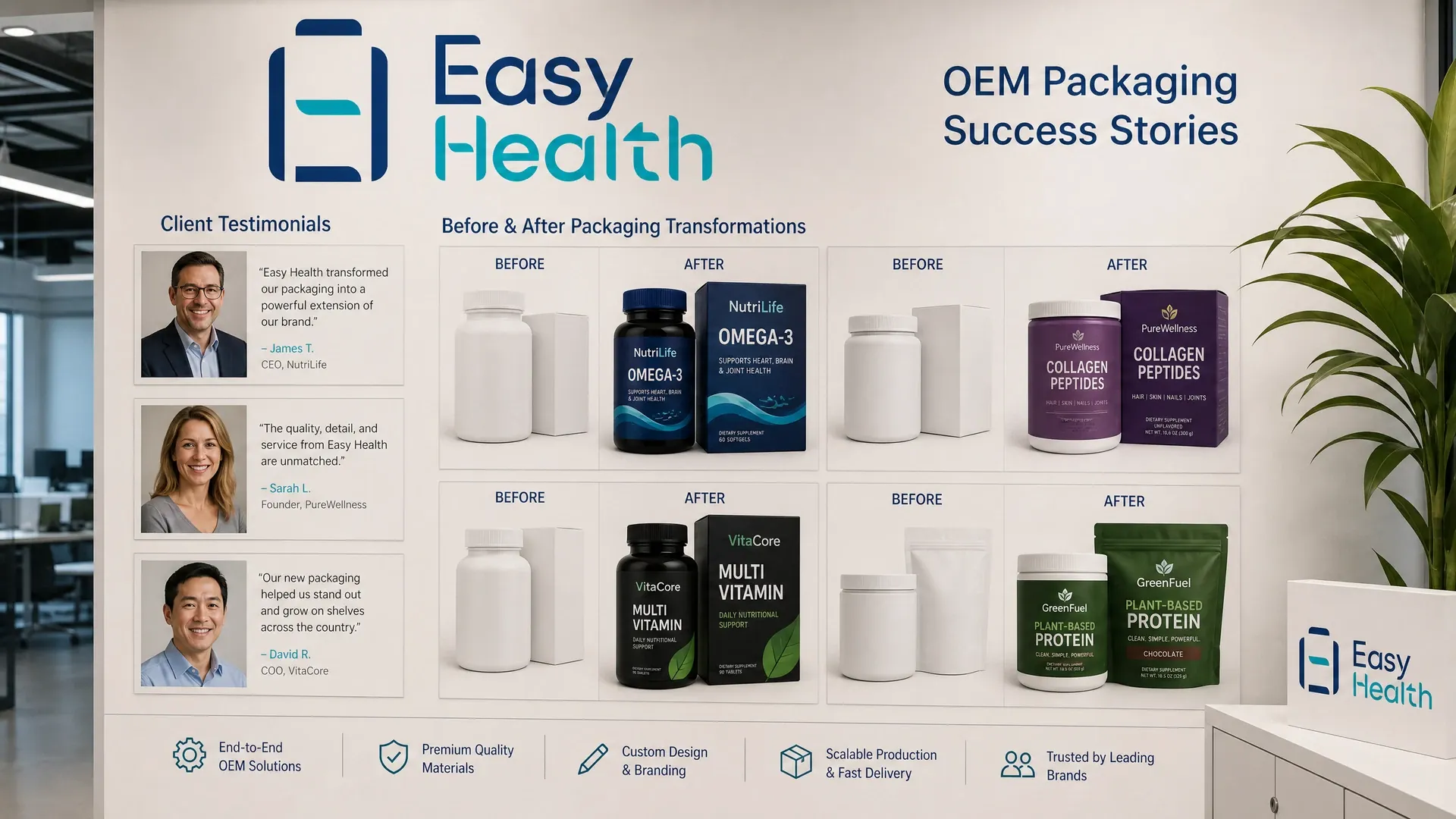
Visual guide to consulting, sampling and pre-dispatch checks
Use the images to see the cadence of an OEM packaging project in Hong Kong: from consulting, through sample development and verification, to production control in our Hong Kong facility and pre-dispatch checks. Typical finished outcomes are shown to support internal proposals and decisions.
Labelling and compliance considerations for Hong Kong and the GBA
For sales in Hong Kong, reference Cap.132W and the “1+7” nutrition labelling framework; traditional Chinese medicine-related items must consider Cap.549. For Mainland China, GB 7718 and GB 28050 are common standards; verify applicability with local authorities or professional advisors. Easy Health coordinates label and carton production, highlighting mandatory elements (ingredient list, net content, origin, directions, cautions, nutrition info) and typography legibility, and arranges lot/expiry print tests to reduce mislabelling risks.
- Hong Kong: check “1+7” rules and exemptions
- Prioritise font size, contrast and allergen clarity
- Mainland: consider GB 7718/28050
- Sample first to verify on-press legibility
Quality checks and food safety evidence for contract packaging in Hong Kong
Projects are run in our Hong Kong facility under GMP-aligned production controls; food safety management references FSSC 22000 where relevant and scope is confirmed per project. Before scale-up, we confirm parameters such as moisture/water activity, flowability, fill-weight accuracy, seal strength and appearance standards. In-process checks cover batch traceability, label placement, foil integrity and foreign-matter prevention; post-run we can coordinate drop and stacking assessments, and review transport/storage conditions. An account manager oversees the project, with specifics and timelines confirmed case by case.
- Pre-tests to help prevent filling/seal issues
- In-line checks on weight variance and defects
- Batch traceability and dual verification of materials
- Post-run review and master parameter files
How account manager-led packaging coordination works
- Brief and specification:Define formula, markets, target pack format and compliance to form a draft spec.
- Materials and sampling:Propose materials/structures, coordinate labels/cartons, arrange sample packing and tests.
- Label content check:Review mandatory info and legibility per regulations; fix lot/expiry print zones.
- Production readiness and trial:Lock process parameters and QC points; trial-run to validate fill, seal and labelling.
- Scale-up and in-line control:Produce in our Hong Kong facility; sample per plan for weight, appearance and labels.
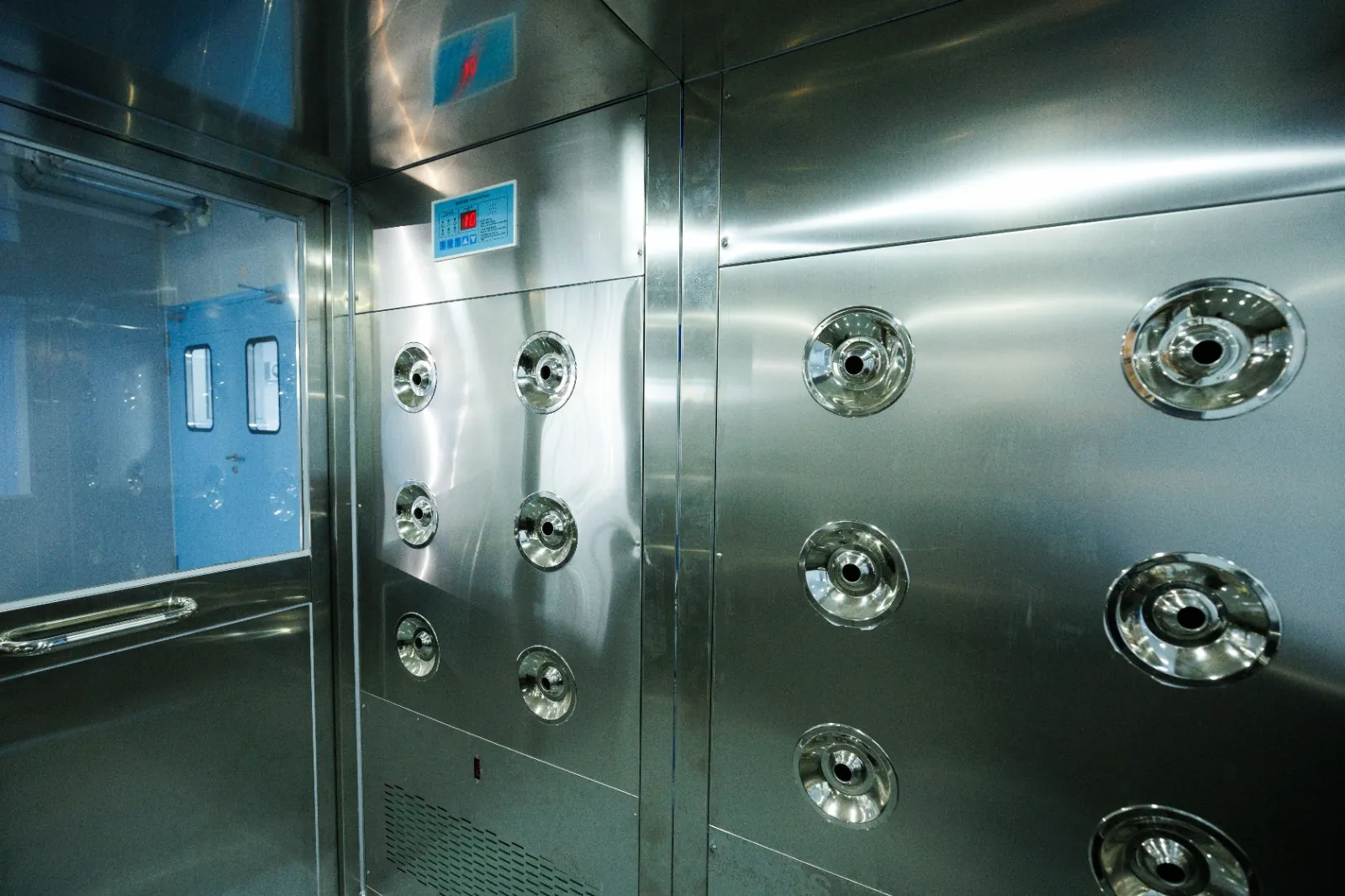
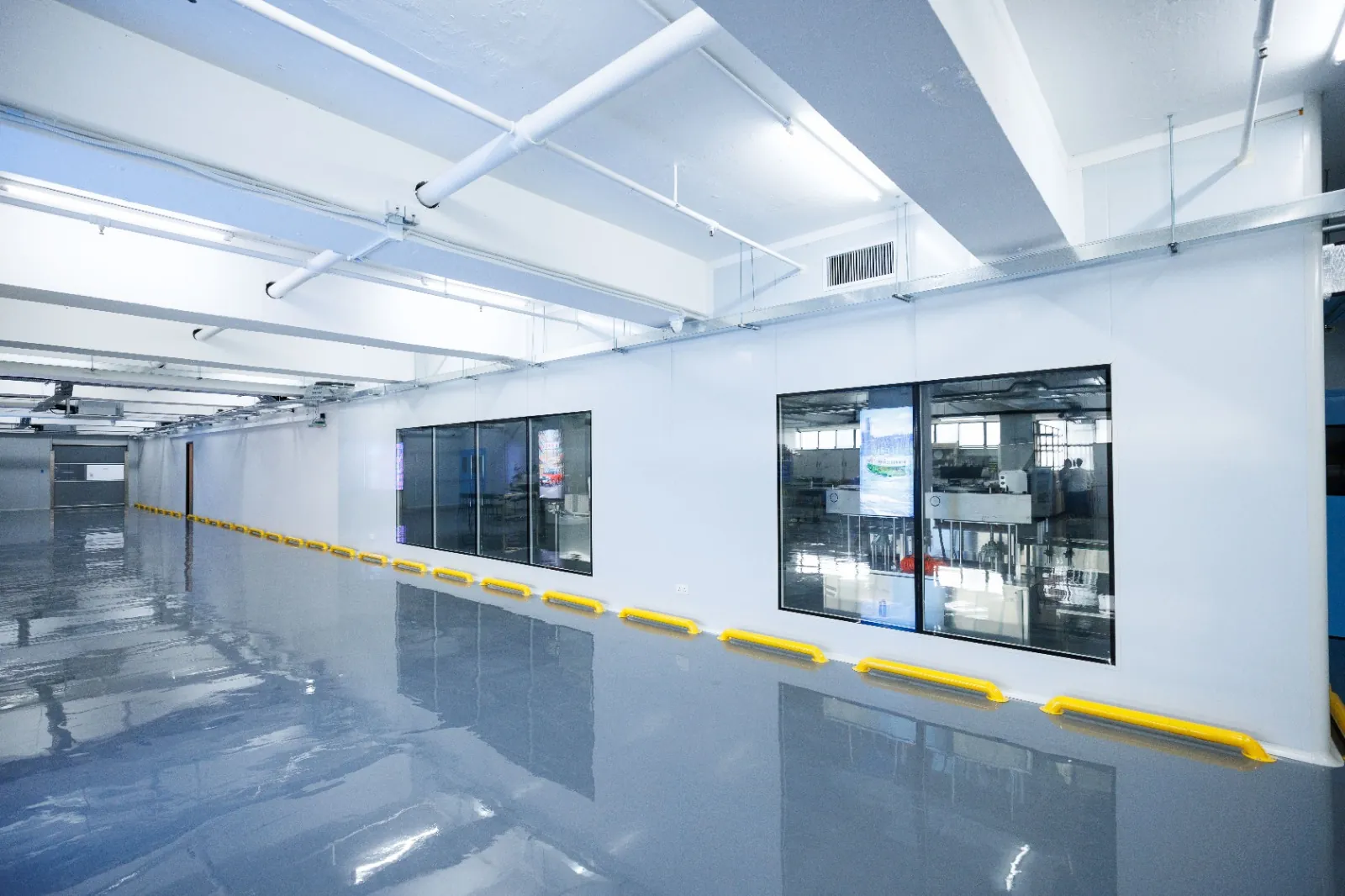
Inside the Easy Health Hong Kong Facility

Key considerations by common pack format
| Format | Structure/Material | Suitable for | Barrier focus | Labelling/Print | Storage/Handling |
|---|---|---|---|---|---|
| Bottle | PET/HDPE + foil seal/desiccant | Tablets, capsules, gummies, powders | Moisture barrier; amber/UV as needed | PSA labels; allow curvature | Avoid top load; use inserts/liners |
| Stick/Pouch | PET/AL/PE or NY/PE laminate | Powders, granules, instant mix | Moisture/oxygen barrier; seal strength | Reserve coding area off seal | Puncture protection; inner cushioning |
| Blister | PVC/Al or Alu/Al | Sensitive unit doses | Moisture/oxygen protection per cavity | Print lot on carton/leaflet | Stack carefully; control temperature |
| Stand-up pouch | Multi-layer laminate with zipper | Family-size powders/granules | Reclosure and WVTR control | Large-area print; label zone | Keep away from sharp items |
General guidance only; actual choices depend on product needs and test results.
Quick checklist before starting a packaging project
- Confirm markets and languages to avoid reworks
- Identify sensitivities: hygroscopic, light, oxygen
- Choose format and barrier level; sample first
- Prepare label copy and regulatory essentials, proofread
- Define lot/expiry print zones and font sizes
- Plan logistics/storage temperature, humidity and stacking
OEM packaging in Hong Kong FAQs
How do I decide between bottle, pouch or blister?
Start with sensitivity and usage: hygroscopic or multi-use products suit bottles; for portability and single doses choose sticks/pouches; for highly sensitive unit doses or mix-up prevention, go blister. Validate with samples for barrier, sealing and opening feel.
How should I prepare label artwork?
Supply editable files (AI/PSD/outlined fonts) with bleed, dielines and colour references; mark lot/expiry print zones. Layer Traditional Chinese and English for regulatory checks and revisions. Share an imposition proof to minimise errors.
Can we do small-batch samples to test sealing and barrier?
Sampling can be arranged; specifics and timing depend on the project and are confirmed by our account manager. We recommend key tests such as seal strength, drop, code legibility and nitrogen-flush effectiveness.
How should finished goods be stored?
Keep in a dry, cool place away from sunlight/heat. Avoid top loads and humidity. For bottles with desiccants, ensure proper closure; for pouches/sticks, prevent carton puncture and stack evenly. Tell us early about any temperature/humidity constraints.
What labelling differences apply between Hong Kong and Mainland China?
Hong Kong follows Cap.132W and the “1+7” framework; Mainland commonly references GB 7718 and GB 28050. Wording, font size and claim conditions may differ—review and sample separately. For other markets, verify with local authorities or advisors.
Related Packaging Services
Discuss your packaging project on WhatsApp
Share your product details, target markets and preferred pack formats. Easy Health coordinates the project requirements in Hong Kong. Confirm which certificate scopes, quality records and supporting documents apply to the proposed arrangement. Timelines are project-dependent—message us on WhatsApp.
Last updated: