Supplement packaging design services for print-ready files
This page focuses on the packaging design service itself—turning brand and regulatory needs into print-ready, production-feasible files. We start with the brief, build the information hierarchy, prepare dielines and prepress specs, and align with real production needs for bottles, pouches, sticks, blisters and cartons. An account manager coordinates the process; timelines are project-dependent and confirmed individually.
Summary:Easy Health offers packaging design services for health supplements and foods: from design brief, brand asset collation, information hierarchy and compliance checks, to dielines, proofing and press-ready files, with sampling and packaging production coordination. Hong Kong facility with FSSC 22000 food safety management. Each project is individually assessed by an account manager. Contact us via WhatsApp.
Can we start if I don’t have a dieline yet?
Yes. We begin from the product form (bottle, pouch, stick, blister or carton) and fill/transport method to select or develop a suitable structure and dieline. In parallel we build the label information hierarchy and compliance checklist, ensuring size, bleed, folds, creases and glue areas do not compromise readability or codes. Proofs are provided before press-ready files; you verify ingredients, nutrition, warnings and barcodes. The account manager coordinates and confirms timelines case by case.
What our supplement packaging design service covers
This service focuses on turning concepts into manufacturable files; it is not brand identity or high-level strategy. Key steps include: brief definition (positioning, channels, key messages), brand asset audit (logos, typefaces, colour codes, image rights), information hierarchy planning (front/back panels, key claims, regulatory fields), dieline/layout setup (bleed, folds, glue flaps, windows/tear notches), colour and linework settings (spot/CMYK, minimum line weights), and proofing to press-ready outputs (PDF/X, outlined fonts, image resolution). We can coordinate sampling and pre-production trials and align details with our Hong Kong facility’s assembly reality.
- Excludes naming and slogan creation
- Works with your existing brand guides
- Sets readability and code-scan distances
- Versioning and markup records provided
Information hierarchy and regulatory checks from the start
Labelling for supplements and foods must balance aesthetics, legibility and regulation. Identify key fields early (as applicable): product name, net content, ingredient list, usage or dosage, cautions, manufacturer/importer details, lot/expiry marking area, nutrition panel (per the “1+7” scheme where applicable) and barcode (per channel requirements). In Hong Kong, typical references include Cap.132W and the “1+7” nutrition scheme; for Mainland China, refer to GB 7718 and GB 28050. For other markets, confirm specifics with local authorities or advisors. We allocate coding/label zones and applicable minimum type sizes/contrast at layout stage to reduce rework.
- List markets and language versions
- Mark minimum sizes/contrast as applicable
- Reserve barcode and coding clear areas
- Keep key info coherent across panels
Visual guide: from requirements to print-ready files
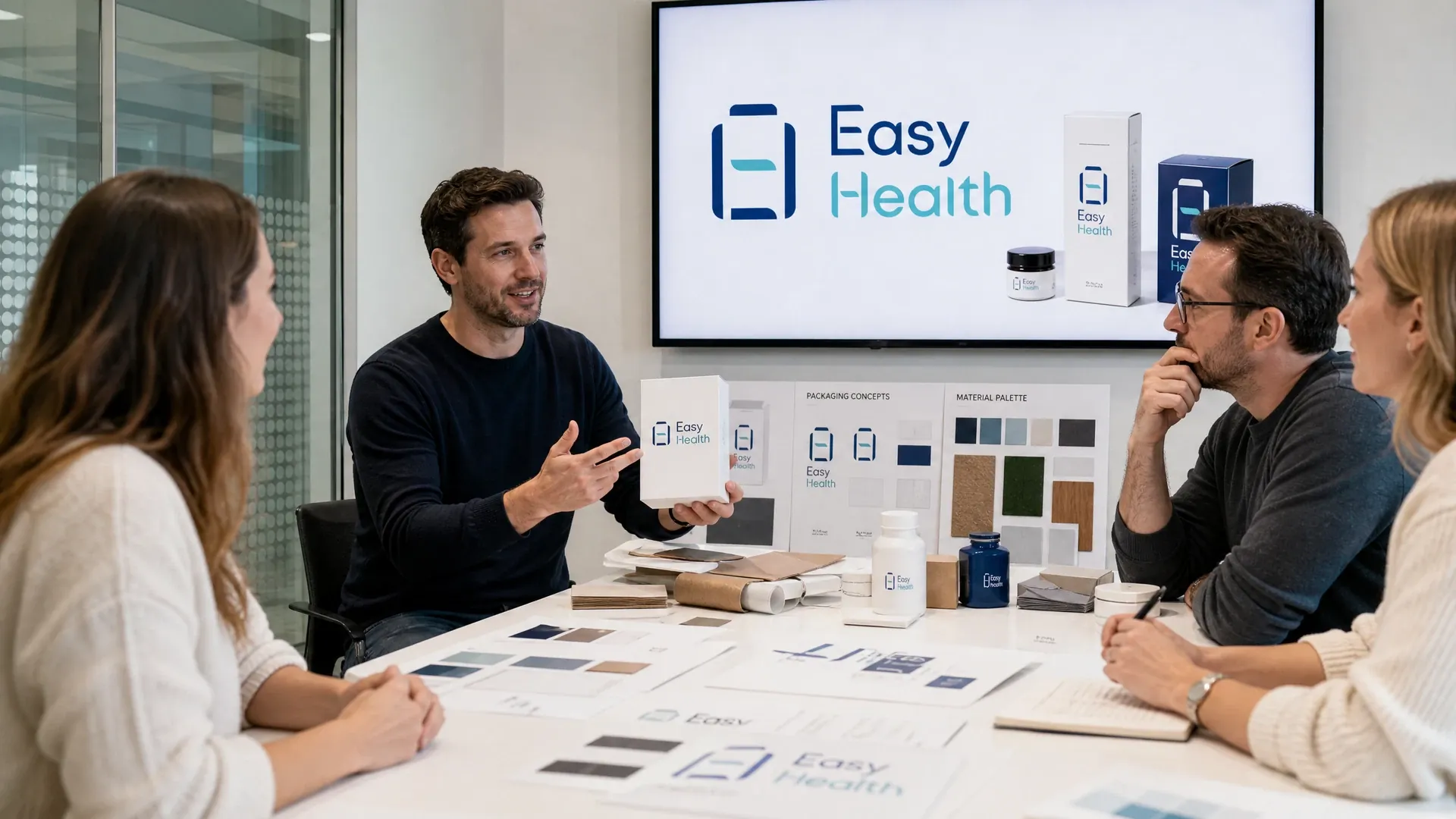
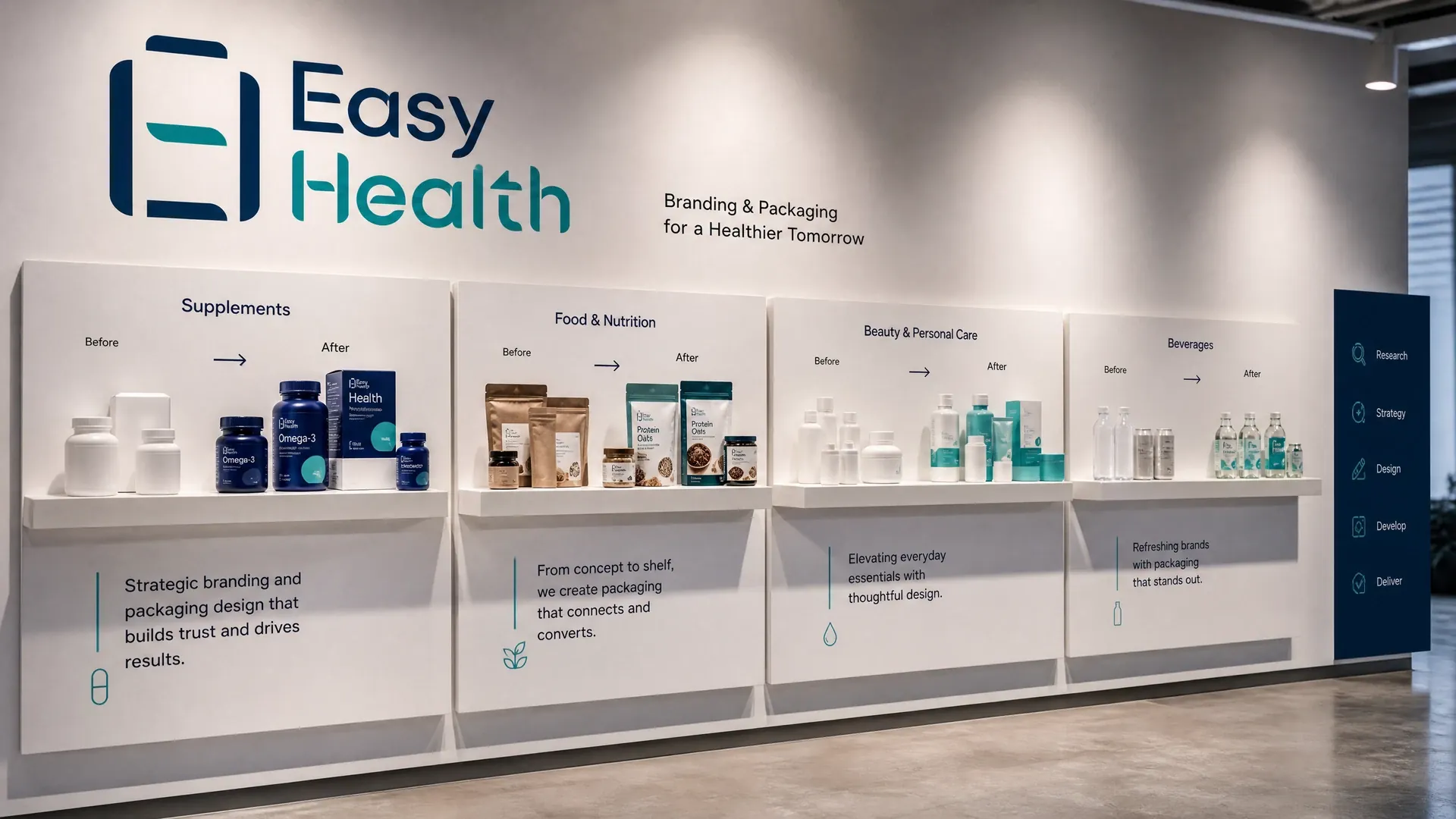
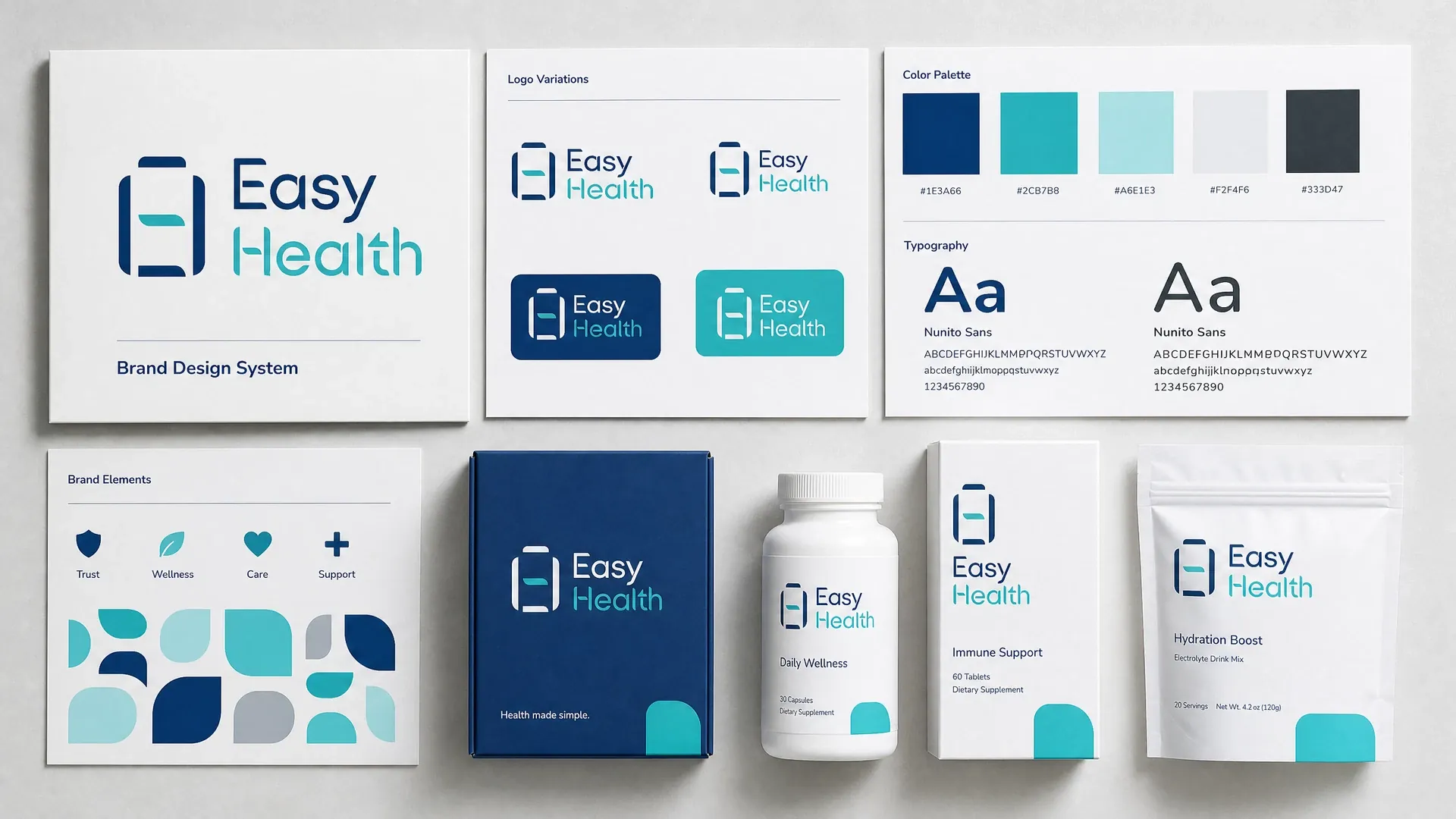
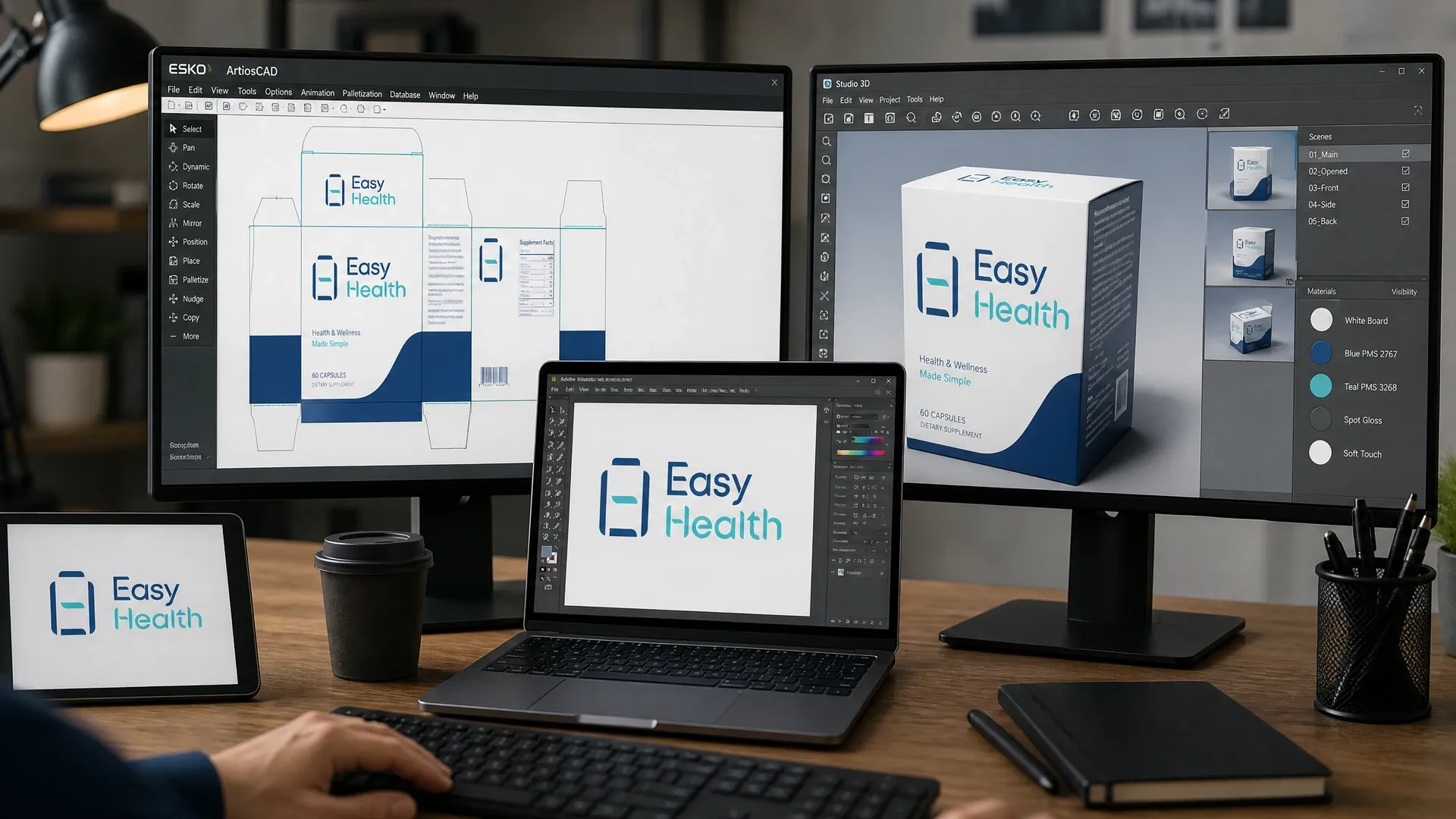
Starting with design consultation, we gather brand and regulatory data, build the information hierarchy and dielines, then output proofs and press files using professional tools. Images show portfolio excerpts, key annotations and version controls, clarifying each step’s focus.
Dielines and pack structures for print feasibility
For bottle labels, foil pouches, sticks, blisters and cartons, the dieline dictates both visual layout and assembly. Confirm before designing: surface finish (matt/gloss, coatings), barrier needs and seal widths, web vs sheet label orientation, window and tear-notch positions, and whether inserts/trays obscure content. We validate filling and labelling methods, set registration marks and baselines, and flag glue areas and no‑print zones. Sampling can be arranged to check fold cracking, corner alignment and code scan distance.
- Define opening and display front
- Label folds, cuts and crease lines
- Check obstructions and glare zones
- Test key info visibility on shelf
Colour management and prepress—mitigating press risks
To reduce colour and registration risks, we lock colour modes and screening early: spot/CMYK, ink order, lpi, minimum stroke weights and legible type sizes. For metallics, varnish, emboss or foil, production layers are cleanly separated and annotated. For roll labels and inline print, unwind direction and splice areas are defined. Press-ready PDFs follow common PDF/X practices with embedded/outlined fonts, consistent bleed and image resolution, plus a low‑res proof for internal checks. Test prints can be coordinated when needed.
- Define spot vs CMYK logic
- Separate and annotate finishes
- Mark unwind direction/splices
- Provide proofs and checksheets
Packaging design service process
- Brief and requirement alignment:Define product, channels, regulatory markets and key messages; list language versions and milestones. Timelines are project-dependent and confirmed individually.
- Asset audit and data collection:Compile logos, typefaces, colour codes, licensed images, ingredient/nutrition data, cautions and barcode info.
- Info hierarchy and compliance notes:Structure front/back panels and key blocks; mark legal fields, minimum sizes, contrast and coding areas.
- Dieline/structure confirmation:Select or develop dielines; mark folds, glue flaps, no‑print zones and window/tear‑notch positions.
- Layout design and proofing:Finalise visual layout and alignment; provide proofs for ingredient, legal and language checks.
Inside the Easy Health Hong Kong Facility



Packaging style cues and when to use them
| Style | Visual cues | Best for | Watch‑outs |
|---|---|---|---|
| Minimal | Whitespace, solid blocks, clean type | Fast recognition on standard shelves | Too sparse may reduce impact |
| Clinical | Grids, numbering, cool neutrals | Function‑led, rational messaging | Avoid medical‑like claims |
| Natural | Botanicals, soft greens/browns, illustration | Herbal/daily wellness lines | Manage colour variance/print detail |
| Functional | Icons, colour tiering, contrasts | Multi‑SKU with benefit tiers | Icons must align with rules |
Above are creative directions for reference; final choice depends on brand positioning and channels.
What to prepare before starting packaging design
- Brand assets: logos, typefaces, colour codes and image licences
- Product/formula data: ingredients, origin, net content, usage guidance
- Regulatory markets and languages: e.g., Hong Kong, Mainland and relevant rules
- Barcode plus lot/expiry method: coding or label areas
- Intended structure: bottle/pouch/stick/blister/carton and fill size
- Sales channels and display: retail shelf, e‑commerce, gifting
Supplement packaging design FAQs
What deliverables are typically included in the design handover?
Typically: print‑ready PDF/X and editable files (e.g., AI/INDD with outlined fonts or font list), dielines (with folds, bleed and glue areas), separated finish layers, low‑res proofs and version records. Sampling or line trials can be coordinated by the account manager if required.
Can we proceed without a ready dieline or confirmed material?
Yes, once the pack form and fill size are set, we can design against a provisional dieline and material direction. Risk zones (tear notch, seals, coding) are flagged. Final dieline sizes and tolerances are confirmed against the chosen material before prepress.
How do you support Hong Kong nutrition labelling checks?
We build a field checklist aligned with Cap.132W and the “1+7” nutrition scheme, mark minimum type sizes, contrast and placement, and reserve coding/barcode zones. You must provide accurate data and conduct internal reviews. For other markets, consult local authorities or professional advisors.
How do you manage colour variance and print risks?
We define colour modes, spot inks and screening early, and provide proofs to verify key colours and fine text. Special finishes are separated and annotated. Test prints or samples can be coordinated to validate registration, lamination and code scanning before press.
How do you handle multilingual labels and market variants?
We create a master hierarchy with defined variable fields, then derive market versions while keeping key elements anchored to consistent coordinates. Provide market‑specific barcodes, legal copy and warnings; the account manager coordinates version control and proofing stages.
Related Packaging Services
Discuss your supplement packaging design needs
From brief to press‑ready files—for bottles, pouches, sticks, blisters and cartons—Easy Health can coordinate sampling and packaging production. Operated in Hong Kong; food safety and quality workflows reference GMP principles and the FSSC 22000 framework where applicable to the project. Each project is individually assessed by an account manager. Talk to us on WhatsApp about your product and packaging needs.
Last updated: