Supplement packaging formats overview and comparison
Your Packaging Types Overview: start from what’s inside and compare core trade-offs among bottles, pouches, sticks, blisters and cartons. Easy Health coordinates the project requirements in Hong Kong. Confirm which certificate scopes, quality records and supporting documents apply to the proposed arrangement.
Summary:Need a quick sweep of packaging types? This guide maps key packaging forms by product type (capsules/tablets, powder, liquid, gummies, foods, cosmetics), highlighting trade-offs in barrier, dosing, portability, display and compliance—so you can shortlist options before speaking with our account manager on WhatsApp.
Should I choose the product or the packaging first?
Start with the product and use case, then pick the form. Example: aqueous liquids lean to bottles; single-dose capsules/tablets suit blisters or small bottles; moisture‑sensitive powders need high‑barrier pouches/sticks; use cartons for kitting or retail presentation. Next, weigh barrier needs, dosing accuracy, opening/portability, shelf display, and space for legal markings. Easy Health can shortlist 2–3 feasible packaging types for sampling; timing varies by project and is confirmed by our account manager.
Capsules and tablets: blisters, bottles and sticks
Common packaging types are blisters, bottles and small sachets/sticks. Blisters offer unit dosing and strong barrier, ideal for humidity‑sensitive formulas, but have limited print space and often pair with cartons. Bottles provide generous label area for multilingual and “1+7” nutrition labelling; once opened, use desiccants and clear re‑closure guidance. Sticks are portable for daily portions but require fill‑weight accuracy and user instructions. For cross‑market packs, allow swappable labels or outer carton stickers to meet the applicable requirements of Hong Kong Cap.132W or Mainland GB 7718.
- Blister: precise unit dose, good barrier
- Bottle: ample label area, shelf‑friendly
- Stick: portable single‑serve, check fill
- Consider desiccant and child‑resistant caps
Powders: balancing high‑barrier pouches, sticks and canisters
Powders are moisture‑sensitive. Prioritise high‑barrier foil laminates in pouches or sticks. For family sizes, consider canisters/bottles with inner seals and desiccants. Sticks improve single‑serve accuracy; validate tear‑open performance and dust control. Large pouches should include reclosure (press‑zip) and assess nitrogen flushing. Cartons help bundle multi‑stick sets and shelf presentation. Allocate label space for preparation instructions, measuring guidance and allergen statements, and prepare nutrition info per the applicable market (e.g., Hong Kong “1+7” or Mainland GB 28050). Control RH in storage/transport and add anti‑crush features such as gusseted bases.
- Prioritise high‑barrier + desiccant
- Sticks: easy‑tear and fill accuracy
- Large pouches: reclosure and anti‑crush
- Cartons: bundle and display
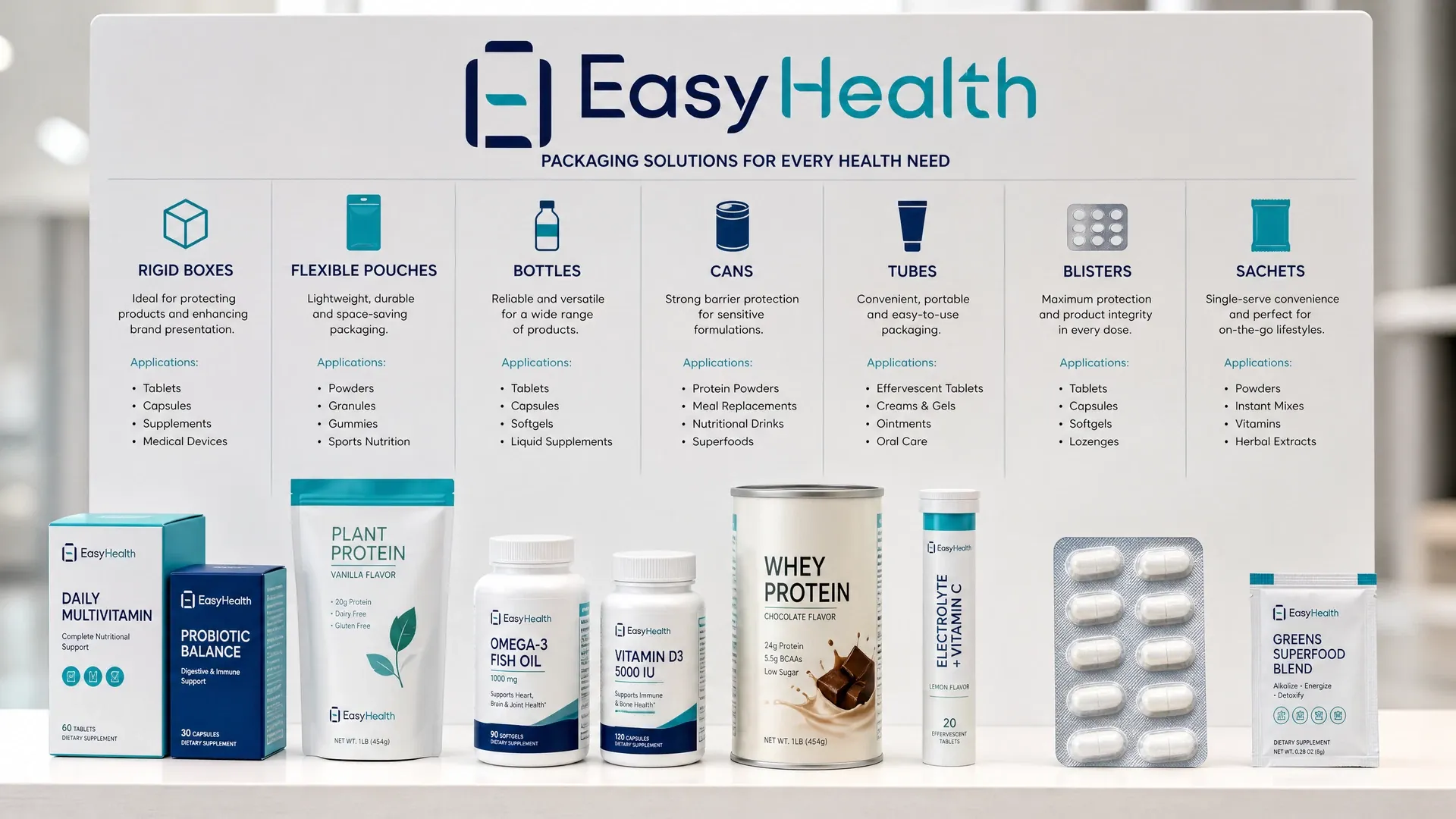
Visual guide to key supplement packaging formats
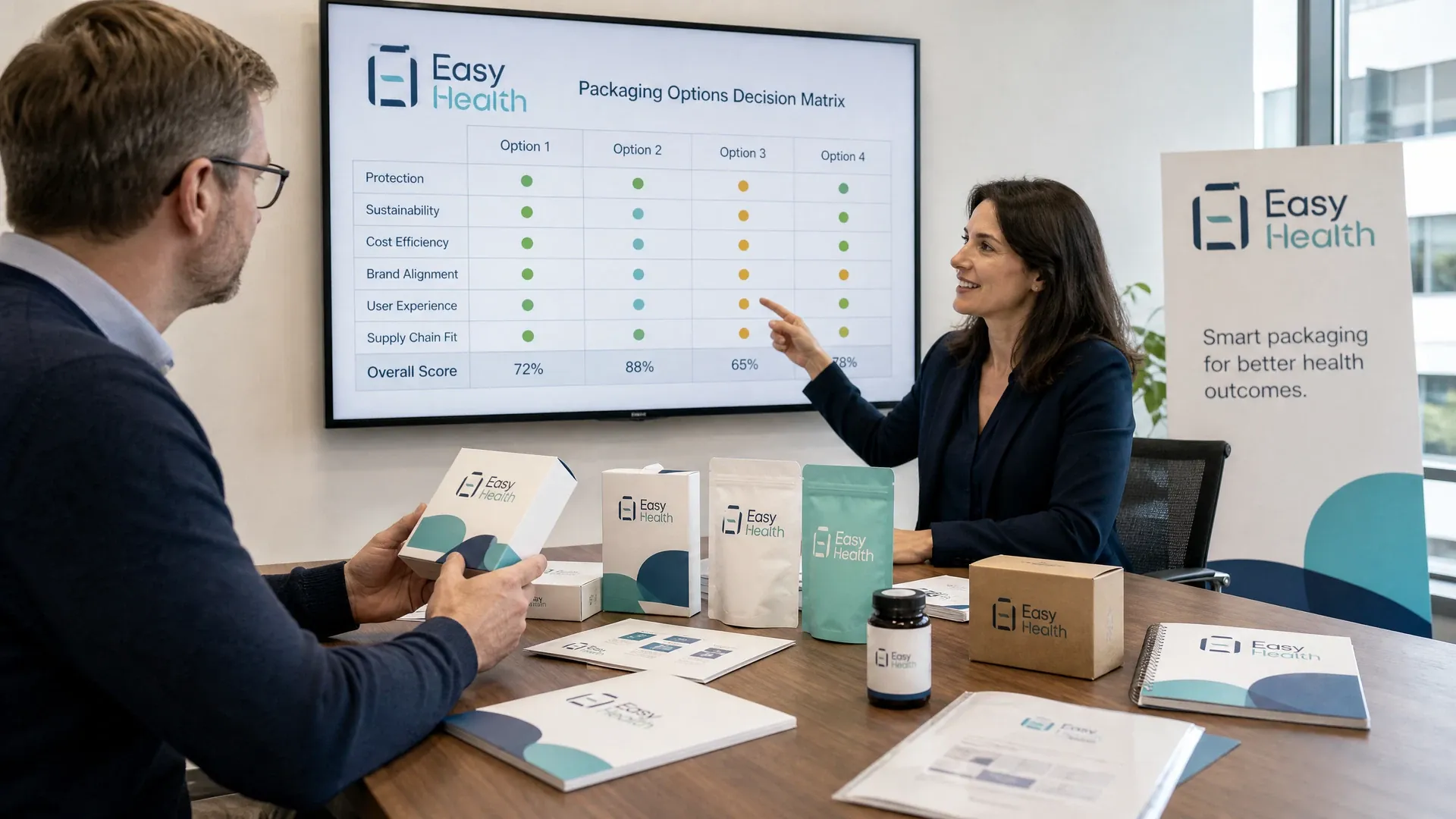
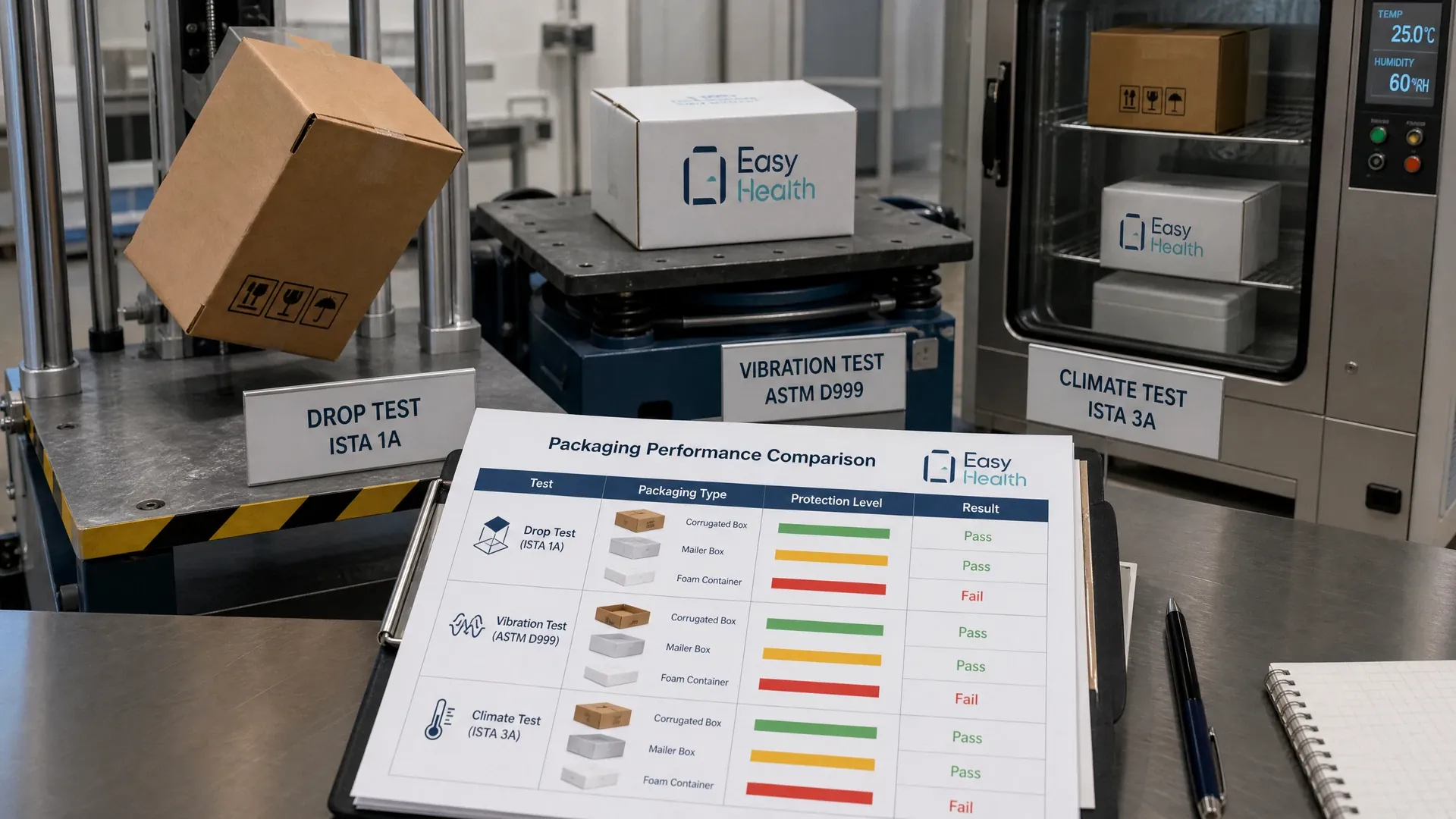
Use the visuals to compare bottles, pouches, sticks, blisters and cartons—structure, opening, shelf presentation, plus indicative label zones and barrier layers—to shortlist what fits your formula and channels before sampling.
Liquids: bottles, pouches and single-dose formats
Liquids typically use bottles; match PET, HDPE or glass to solvent and pH. For heat or higher alcohol, prefer glass or appropriate plastics. Functional shots may use mini bottles or single‑dose sticks/pouches—validate seal strength and hygienic filling. For ambient distribution with light‑weighting, assess aseptic or high‑barrier pouches with cartons. Leave space for batch/expiry and dosing directions. Verify drop tests and secondary‑pack dividers. All contact steps should follow GMP‑style practices; sampling and packaging production are coordinated at Easy Health’s Hong Kong facility, with timing confirmed case by case.
- Match bottle to solvent/pH
- Validate seals for single doses
- Consider aseptic pouches
- Ship‑test for drop/leak
Gummies: manage sticking, heat and humidity
Gummies are sensitive to heat and humidity. Typical forms are bottles and high‑barrier sachets. Bottles display well and reclose easily—assess desiccant/deoxidiser use. Sachets improve portability and portioning; balance child‑resistance with easy‑open. For premium display, add a carton and inserts to prevent deformation. Besides standard ingredients and nutrition, clearly state serving size and storage temperature. Control temperature/humidity in warehousing and avoid large transparent windows that increase light exposure risk.
- Bottles: pair with desiccant/oxygen scavenger
- Sachets: portable; consider child‑resistance
- Cartons: inserts prevent squeeze
- Avoid heat, humidity and light
How a packaging format shortlist is coordinated
- Needs and regulatory framing:Define product, dosing, channels and languages; for foods, map to Cap.132W and, if applicable, Mainland GB 7718/28050 essentials.
- Packaging form shortlist:Propose 2–3 forms by barrier, label space and logistics; check compatibility.
- Sampling and testing:Arrange structural and print samples; coordinate seal, drop, stability and easy‑tear tests as applicable, confirmed by our account manager.
- Labelling and carton coordination:Coordinate labels/cartons, nutrition and allergen info; reserve batch/expiry fields.
- Packaging production and dispatch:Coordinate production and final checks in our Hong Kong facility; timing confirmed by our manager.
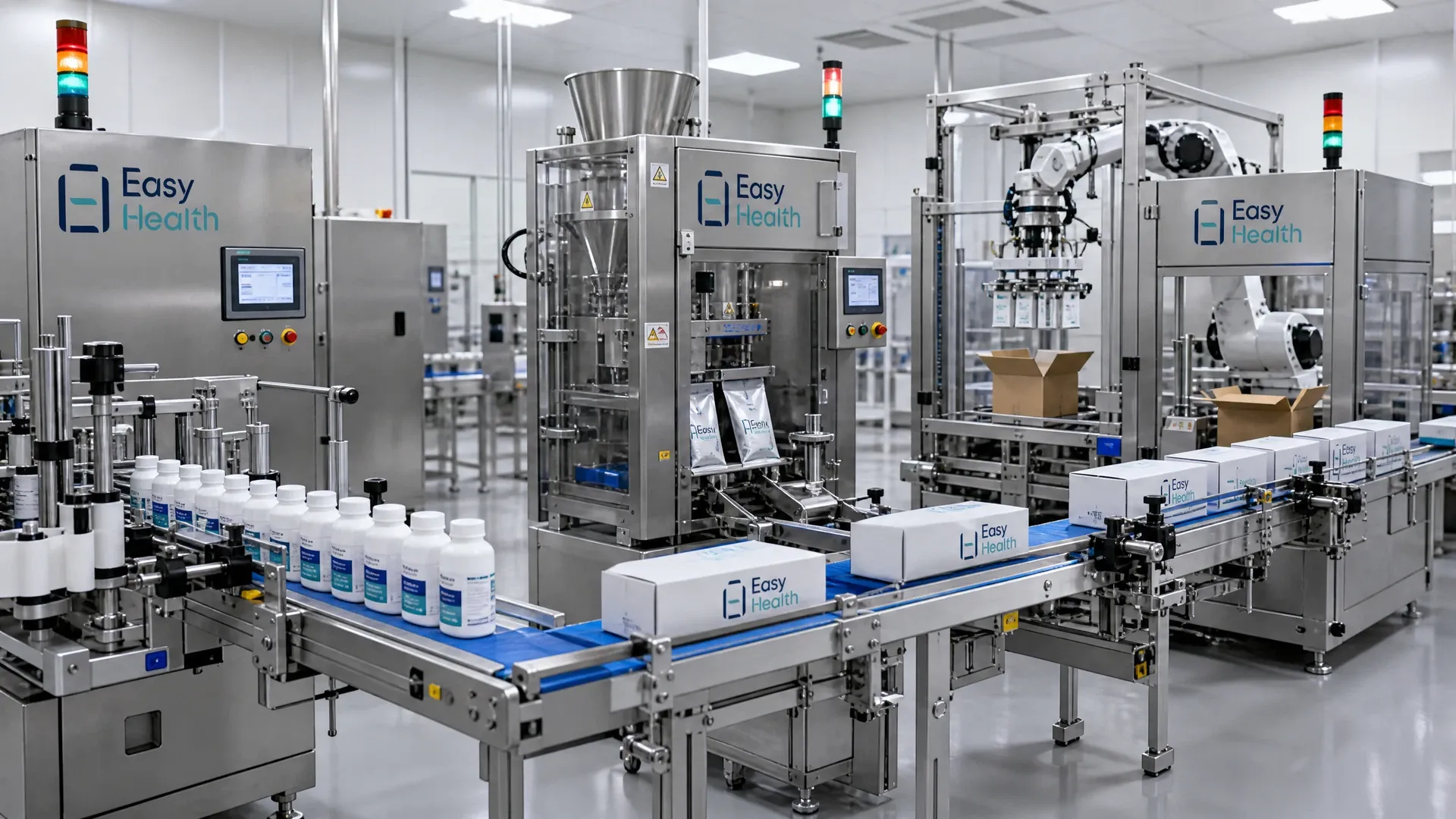
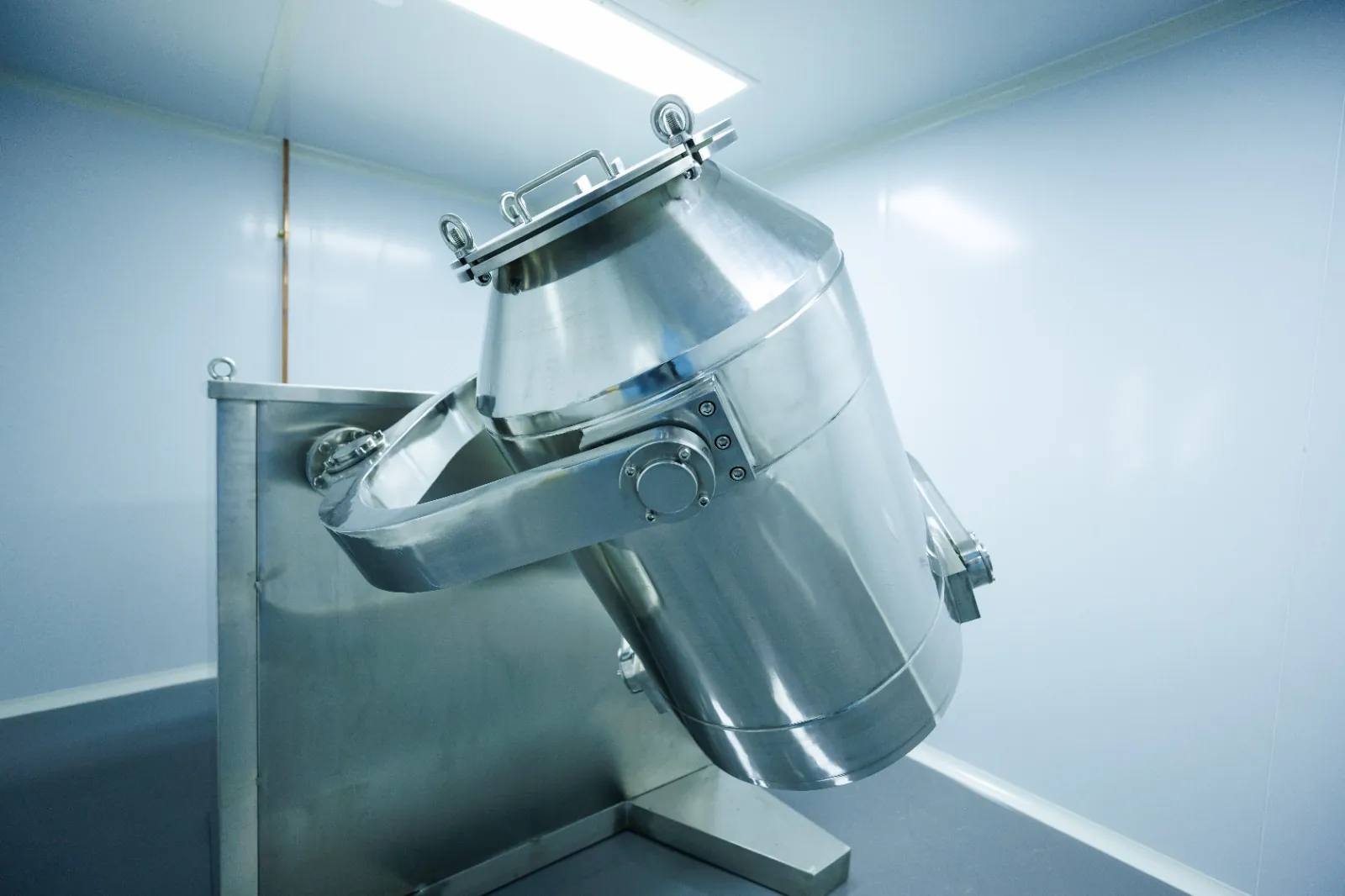
Inside the Easy Health Hong Kong Facility


Supplement packaging formats comparison table
| Format | Sealing | Barrier grade | Typical use |
|---|---|---|---|
| Stand-up pouch | Heat seal | Medium high barrier | Dried nuts |
| Three side flat pouch | Heat seal | Medium barrier | Seasoning powder |
| Pillow fin seal pack | Fin seal | Low medium barrier | Snack biscuits |
| Foil laminate pouch | Heat seal | Ultra high barrier | Roasted coffee beans |
| Plastic screw bottle | Screw cap | Medium barrier | Liquid supplements |
The above is general guidance; final solutions are assessed and confirmed by our account manager for each project.
What should you confirm before choosing a packaging form?
- Formula tolerance to light, oxygen, humidity and heat
- Single‑dose needs and user scenarios
- Label languages, text volume and legal font sizes
- Warehousing turnover, stacking and transport tests
- Need for kitting, gifting or bundles
- Sticker/label swap mechanism for multiple markets
Supplement packaging formats FAQs
How do I choose an appropriate barrier for powders?
Assess hygroscopicity and target shelf life, then select foil laminate WVTR/OTR performance. For ambient long turnover, add inner liners and desiccants, and verify seal retention after repeated reclosure. Run accelerated/real‑time stability plus vibration/drop tests, and allocate space for batch and expiry.
Bottle vs blister packaging for capsules: when to pick each
Choose blisters for unit dosing, travel and moisture control; choose bottles for richer labelling, promo stickers and shelf presence. Both may pair with cartons. Decide based on formula tolerance and channel requirements.
How do you validate seal integrity for liquid sticks and sachets?
Use peel strength, burst and drop tests plus temperature cycling and transport simulation. Confirm easy‑tear performance matches user force expectations. Test arrangements and timing vary by project and are confirmed by our account manager.
What label items should I plan space for?
For prepackaged food sold in Hong Kong, common Cap.132W items include the food name, an ingredient list (with specified allergens), a “best before” or “use by” date, special storage or usage instructions (where applicable), the name and address of the manufacturer or packer, and the count, net weight or net volume; nutrition labelling follows the “1+7” scheme unless exempted. A batch number is not a general requirement but is worth reserving space for traceability. For Mainland sales, refer to GB 7718/28050. Reserve font sizes, text volume and multilingual space early.
Can I use different packaging formats for different channels?
Yes. Typical mixes are bottle for primary retail, sticks/sachets for e‑commerce, and blisters with cartons for pharmacy. During sampling, validate barcode placement, logistics packaging and label variants, with a swap‑ready sticker and batch/expiry printing setup.
Related Packaging Services
Talk to Easy Health about supplement packaging formats
Share your product form, sales channels and label languages. We will coordinate sampling, labels/cartons, and production for bottles, pouches, sticks or blisters as needed. Timing depends on the project—contact us on WhatsApp.
Last updated: