Mainland GB Labelling Standards
This page focuses on practical essentials for Mainland China GB labelling of health supplements: when GB 7718 and GB 28050 apply, mandatory fields and font sizes, choosing embedded print vs compliant stickers, and how labelling interacts with structure, barrier, logistics and storage. Easy Health runs a Hong Kong facility with a GMP-standard environment, offering OEM/ODM, label and carton coordination, sampling and packaging production.
Summary:For brands entering China, this page clarifies GB labelling for health supplements—GB 7718, GB 28050, sticker vs integrated print, date/allergen rules, cross-border e-commerce, and packaging choices. Easy Health’s FSSC 22000-certified Hong Kong facility coordinates labelling and packaging.
How should we begin creating Mainland-compliant packaging that passes commodity inspection and platform checks?
First define the route (general trade or cross‑border e‑commerce) and product category. Check mandatory fields under GB rules: name, ingredient list, net content, operator/distributor and address, importer, country of origin, date and shelf-life, storage conditions, allergen statements. Build the GB 28050 nutrition panel (energy, protein, fat, carbohydrate, sodium) and any required statements. Decide between embedded Chinese print or compliant stickers, then verify font height, contrast and abrasion resistance. Finish with sampling to confirm layout and scannability.
GB 7718 for health supplements: scope and core fields
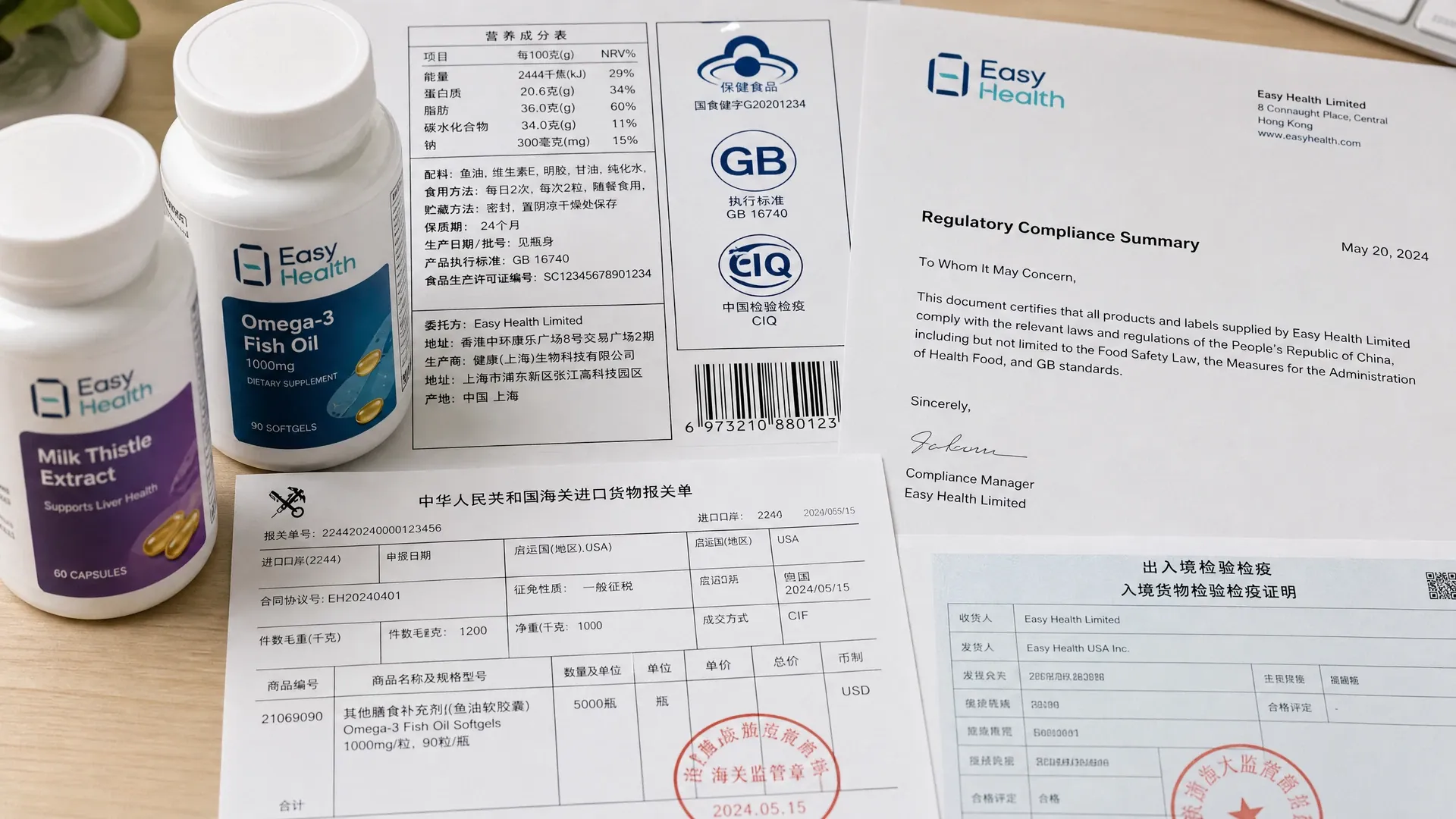
GB 7718 is the general standard for prepackaged food labelling and typically applies to health‑type foods sold in Mainland China. In practice, confirm route and product category, then implement fields: product name (use a common name), ingredient list with additives, net content (with legal units), operator/distributor name and address, importer and country of origin (if applicable), date of manufacture and shelf-life, storage conditions, directions for use (where needed), allergen and caution statements. Ensure key items appear on the principal display, with clear contrast and font height compliant with pack size. Commodity inspectors and platforms often review date formats, Chinese terminology and barcode readability—test these during sampling.
- Use a common product name, not only the brand
- List ingredients by descending order; declare additives
- Keep key items on one principal display panel
- Follow GB 7718 allergen list and phrasing
GB 28050 nutrition labels: layout, metrics and claim alignment
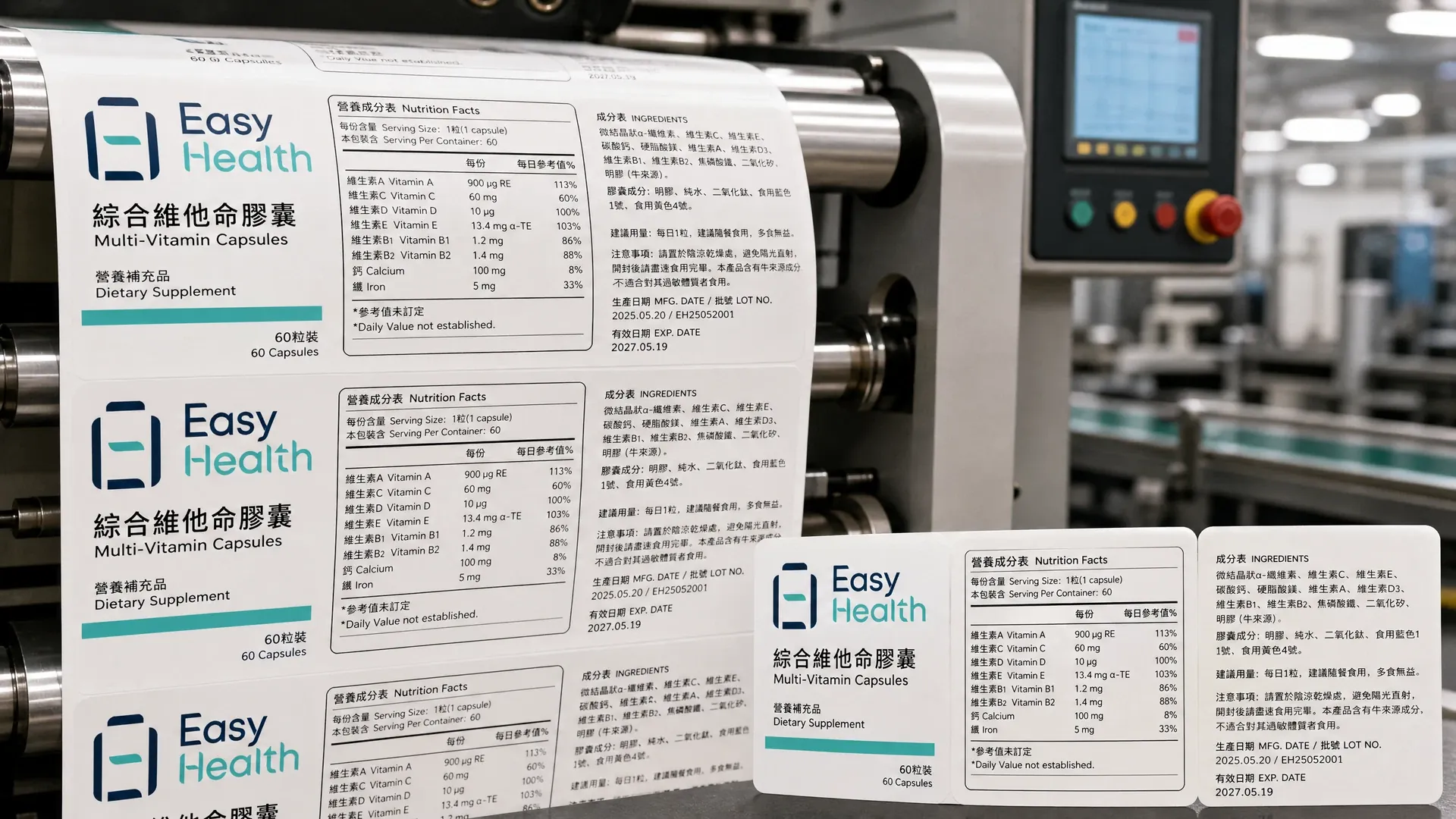
GB 28050 requires the core five metrics—energy, protein, fat, carbohydrate and sodium—with NRV% values, expressed per 100 g/mL or per serving (with serving size stated). If adding other nutrients or claims, verify they are permitted and units/conversions align. Practically, fix serving basis and measurement units first, reserve adequate panel space to maintain font size and line spacing, and keep barcodes and graphics away from the nutrition table. Use scuff‑resistant stocks and matte/gloss films to preserve legibility after long-haul logistics. During sampling, test scanning, wipe resistance and condensation scenarios.
- Show the five core metrics with NRV%
- Choose per 100 g/mL or per serving and state it
- Keep units, conversions and rounding consistent
- Reserve space for compliant font size and spacing
Visual guide: applying GB rules onto real packaging
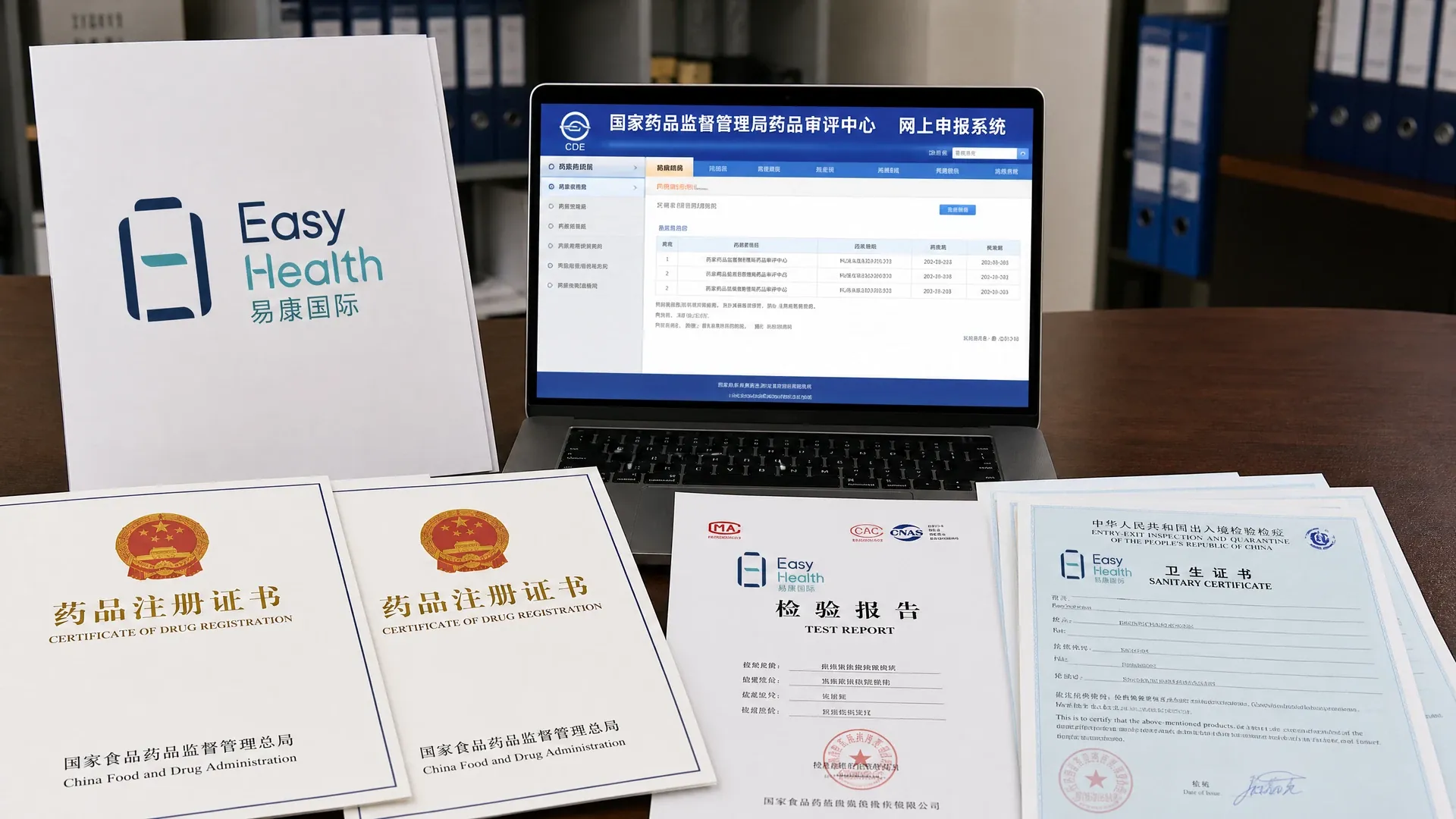
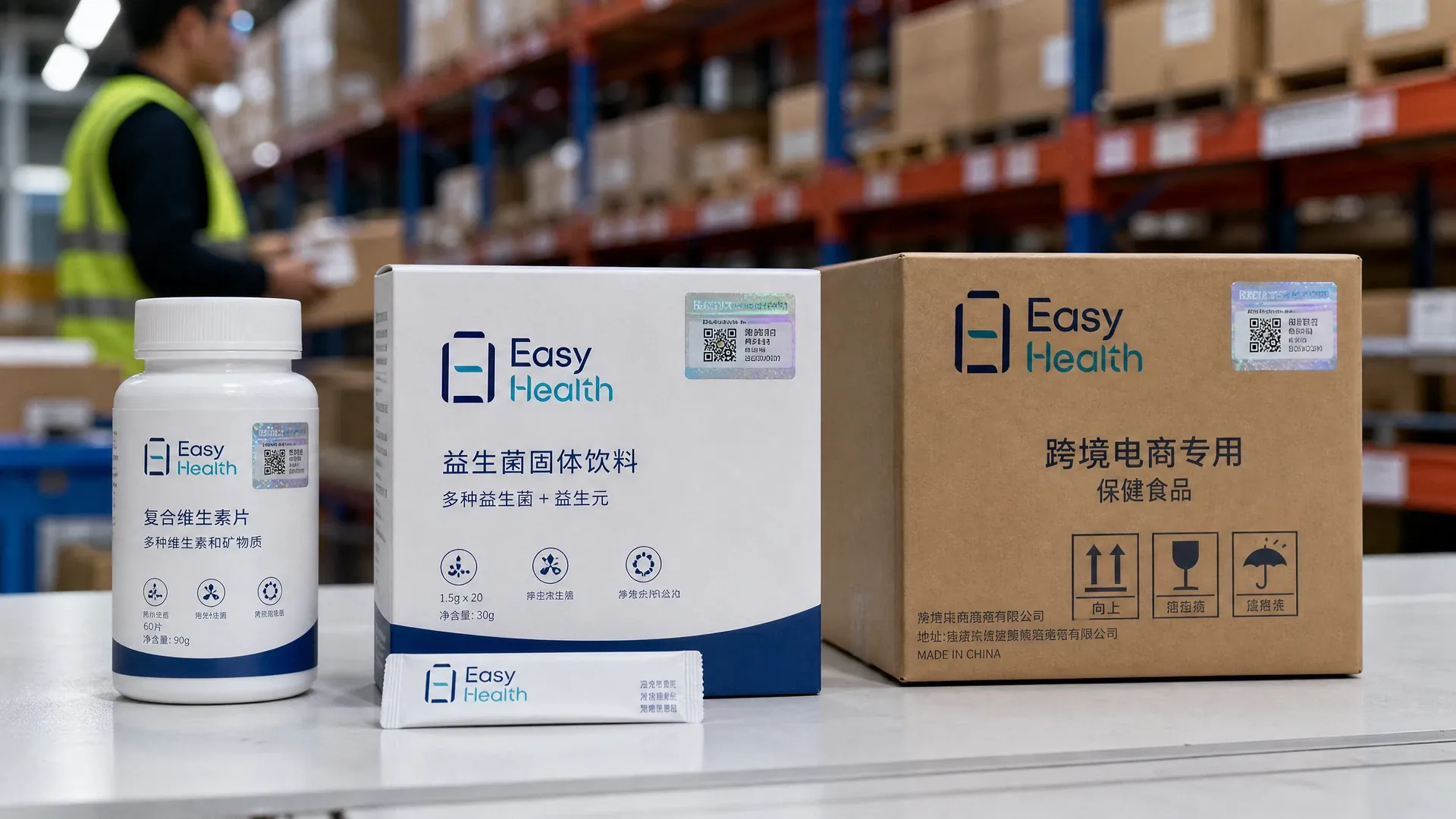
The visuals illustrate how GB 7718 and GB 28050 fields are placed on cartons, bottle labels and pouches, with sample font scales and contrast, plus sticker placement and barcode quiet zones for cross‑border e‑commerce—helping you benchmark your current packs.
Embedded print or compliant stickers: making packaging choices for Mainland
For China, you may either embed full Chinese print on cartons/bottle labels or apply GB‑compliant Chinese stickers onto a generic pack. Decide based on route to market, SKU volatility, substrate surface energy and curvature, and durability against moisture and abrasion during storage and transport. Bottles often use PP/PET films or synthetic paper; cartons can be stickered or directly printed; pouches/sticks must keep heat‑seal zones clear. Cross‑border platforms typically require the product page and physical label to match, with Chinese labels affixed before inbound. Easy Health can coordinate print and material sourcing and test adhesion and ink fastness during sampling.
- Select bottle stocks for curves and abrasion
- Keep labels off pouch heat‑seal margins
- Reserve quiet zone for barcodes, avoid creases
- Test adhesion and alcohol‑wipe resistance
Font size, dates and allergens: practical checks to avoid rejection
Rejections often stem from undersized fonts, non‑compliant date formats, missing allergen/importer details and low contrast causing scan failures. Set font height according to the principal display area; use clear date sequences and never replace date with batch code alone. Declare allergens per GB 7718 (e.g., gluten cereals, crustaceans, egg, fish, peanut, soybean, milk, tree nuts, sulphites). For cold chain or humid conditions, choose moisture‑resistant inks and facestocks and test legibility after condensation. During sampling, confirm importer legal Chinese name and address, country of origin, and unit/rounding consistency in the nutrition table.
- Check font height by display area brackets
- Use clear date formats, avoid crease zones
- Use standard allergen names per GB 7718
- Choose moisture‑resistant stocks/inks for cold chain
Working with Easy Health: Mainland labelling and packaging workflow
- Scoping and standards mapping:Confirm route and category; map GB 7718/GB 28050 items and build your labelling checklist.
- Layout and typography planning:Set font sizes by display area, place fields and barcode quiet zones to minimise rework.
- Material and print coordination:Coordinate facestocks, inks and processes to balance abrasion, moisture and logistics needs.
- Sampling and scenario tests:Produce samples and test scan, wipe, condensation and crease impacts on legibility.
- Compliance checklist review:Verify each field, units and rounding, date formats and allergen phrasing against the checklist.
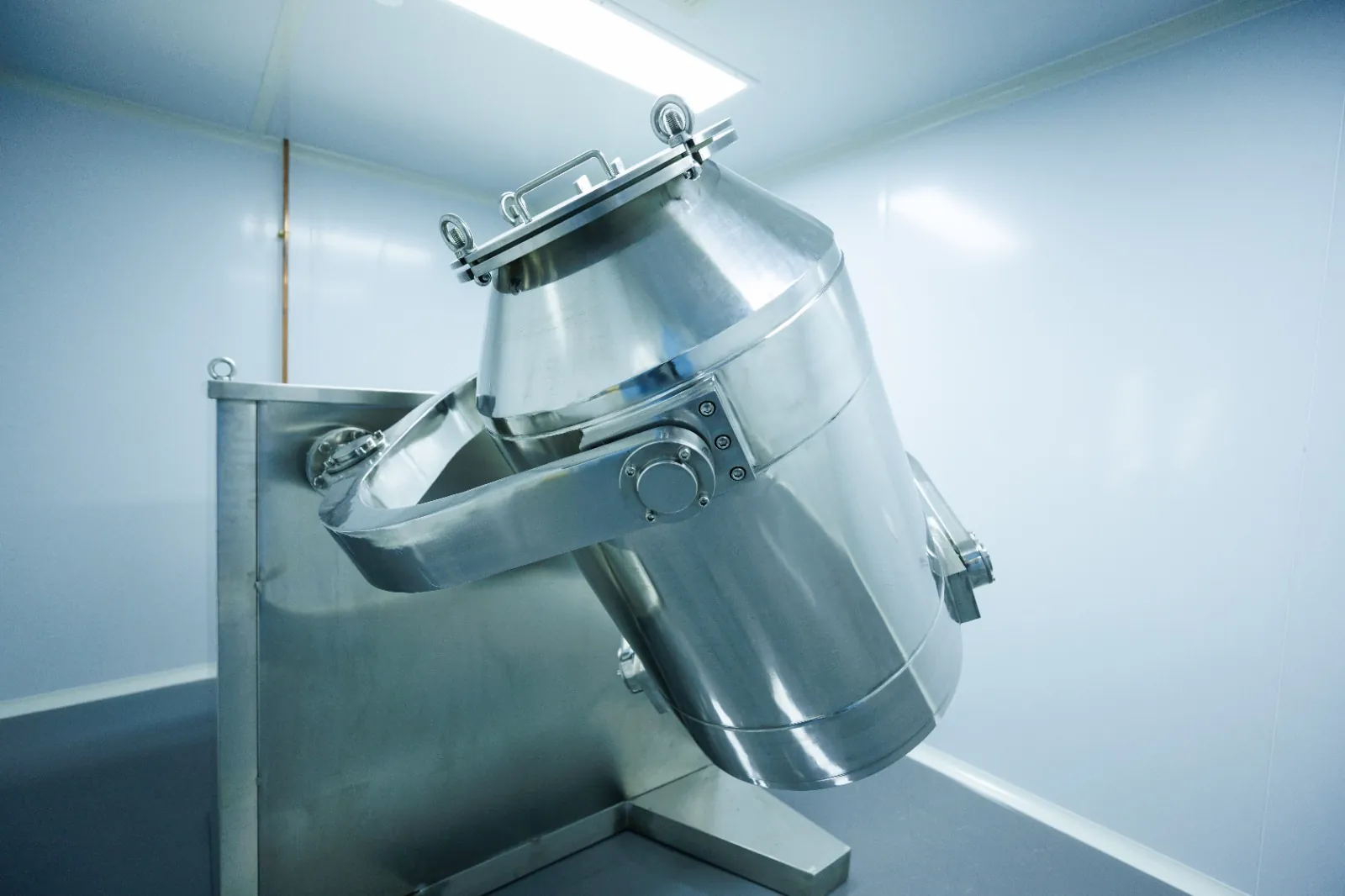
Inside the Easy Health Hong Kong Facility


Common approaches to Mainland labelling
| Approach | Best‑fit scenarios | Layout notes | Material/process notes |
|---|---|---|---|
| Full Chinese print | Stable SKUs, long‑term CN sales | Allocate full space for GB fields | Use scuff‑resistant board/films |
| Compliant Chinese sticker | Many SKUs, frequent changes, CBEC | Keep key fields on one display panel | Use PP/PET/synthetic stocks; test adhesion |
| Dual‑language universal pack | Shared across markets | Prevent font shrink from language crowding | Mind contrast and barcode quiet zones |
| Pre‑inbound relabelling | Platform warehouse or distributor | Separate barcode vs batch areas | Do not cross heat‑seal or opening areas |
The above compares packaging approaches only. For specific product classes or claims, confirm with Mainland authorities or professional advisers.
Pre‑shipment self‑check (Mainland GB labelling)
- Product name uses a common name, not only branding
- Ingredients and additives are fully and correctly listed
- GB 28050 five metrics with NRV% present; units/rounding consistent
- Importer legal Chinese name/address and country of origin shown (if applicable)
- Manufacture date and shelf-life clearly formatted; not replaced by batch code
- Allergens declared per GB 7718 with standard phrasing and terms consistency
Frequently Asked Questions
Which products must follow GB 7718?
Generally, prepackaged foods circulating in Mainland China must comply with GB 7718; health‑type foods typically follow the same framework. Some categories or claims may trigger additional requirements. Confirm your route and product category, then build a GB 7718 checklist and verify with Mainland authorities or advisers if needed.
Must GB 28050 nutrition be per 100 g/mL?
You may present per 100 g/mL or per serving, provided the serving size is stated and NRV% is included. Issues often arise from inconsistent units, rounding rules and inconsistent baselines across a range. Standardise the basis first and reserve sufficient panel space.
How do I judge compliant font size?
Use the principal display area to determine the minimum font height per bracket, ensuring key items (e.g., product name, net content) meet the requirement. Validate actual height and contrast on physical samples, as substrates or laminations may reduce perceived size.
Can a Chinese sticker replace embedded print?
Often yes—especially for cross‑border e‑commerce or volatile SKUs. Ensure all mandatory fields are present, font height and contrast comply, stickers do not cross seals or openings, and they pass wipe/condensation tests. Align the product page with the physical label before inbound.
What files and data are needed for sampling?
Provide editable vector files (AI/PDF), font files, colour references, nutrition data with units/rounding rules, barcode numbers/specs, and date/batch presentation. For stickers, include label area dimensions and substrate details.
Related Packaging Services
Ready to get your GB labelling and packaging right?
Message our Easy Health account manager on WhatsApp with your route to market, product details and pack formats. We will advise on GB 7718 and GB 28050 layouts, material options and sampling arrangements. Timelines vary by project and will be confirmed by the account manager.
Last updated: