Supplement Export Labelling Services for Multi-Language Packs
Practical support for health supplement export labelling. From our Hong Kong facility (GMP-aligned environment; food safety management referencing the FSSC 22000 framework), Easy Health coordinates label and carton production, assists with key-field checks, and arranges multilingual printing and sampling (English/Japanese/Simplified Chinese). Final content and legal positions are confirmed by the importer or local advisor; we focus on layout, terminology mapping and barcode/QR management.
Summary:Export labelling hinges on language, regulatory scope, information hierarchy and on-pack durability. Easy Health supports layout, and coordinates translation checks and printing arrangements for English, Japanese and Mainland Chinese labels. We prioritise allergens, date wording, nutrition order, importer details and barcode/QR readability and placement.
What Does Export Label Support Cover?
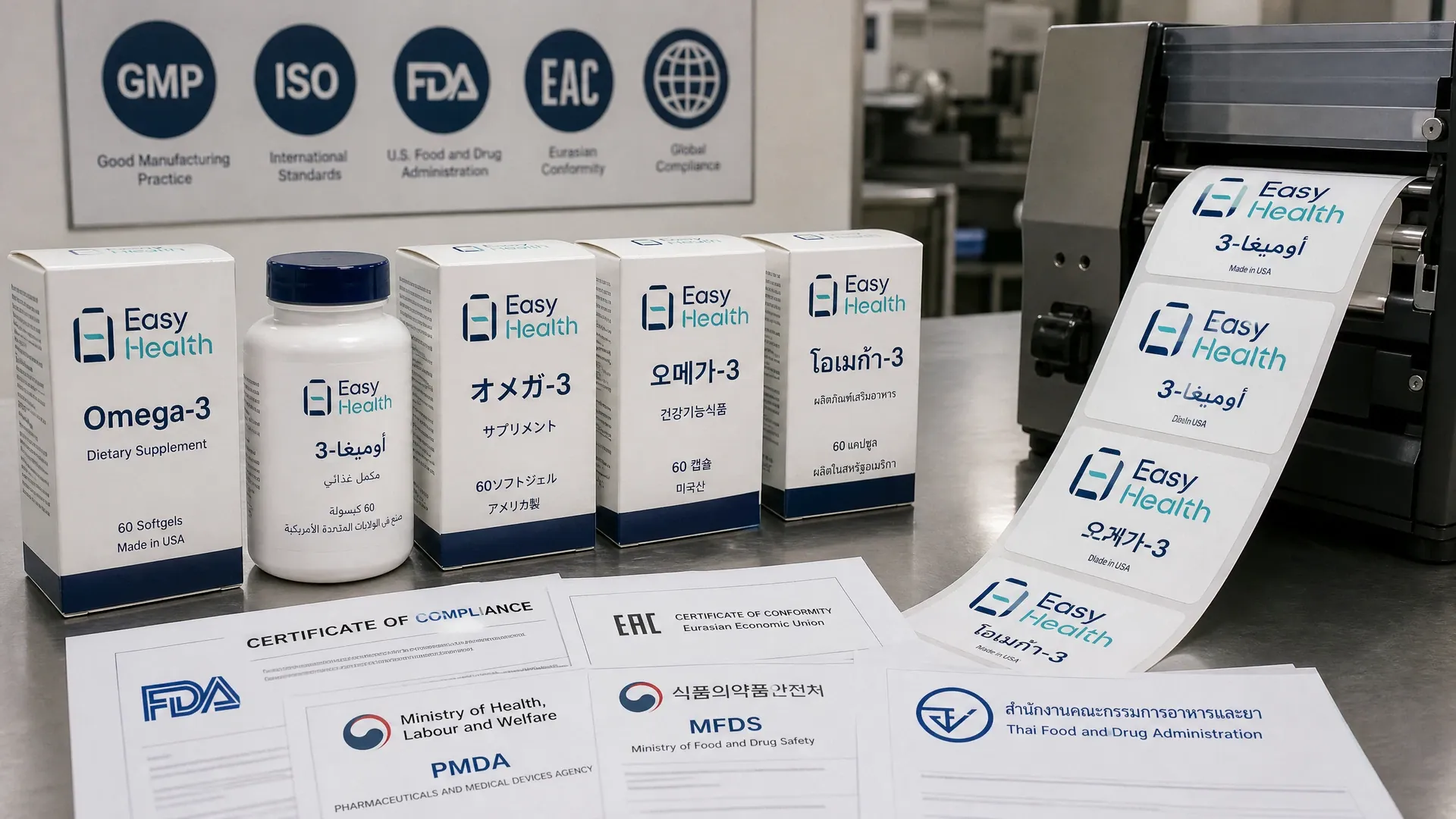
We focus on three common needs: English labels, Japanese labels and Mainland China (GB scope) re-layouts. We help with field order (ingredients, allergens, nutrition, date and storage, importer details), EN–JA–ZH terminology mapping, barcode/QR placement and readability, and coordinate sampling and printing. We also advise on substrates/adhesives for bottles, pouches, sticks and blisters, and provide colour proofing and physical tests. Regulatory review is local; the importer or advisor confirms final content. Timelines vary by project and are confirmed by our account manager.
Japanese Supplement Labels: Key Layout Points
Foods sold in Japan must be labelled in Japanese under the Food Labelling Act. Ingredients and additives are typically separated and listed in descending weight. Eight specified allergens (shrimp, crab, walnut, wheat, buckwheat, egg, milk and peanut) must be declared when present, with further items recommended. Dates must use Shōmi kigen (best-before) or Shōhi kigen (use-by) in year–month–day order with storage instructions. The nutrition panel is restated in five fixed items and order. Imported goods must show the importer. Functional claims are governed by other laws and should be confirmed by a Japanese importer or advisor. We coordinate translation checks, layout reflow and barcode placement, arrange printing and sampling, and review full-width/half-width numerals, punctuation and units for consistency.
- Japanese fields in the required order
- Separate ingredients/additives by weight
- Declare specified allergens when present
- Use correct date terms with storage info
English-Language Labels: Practical Field Checks
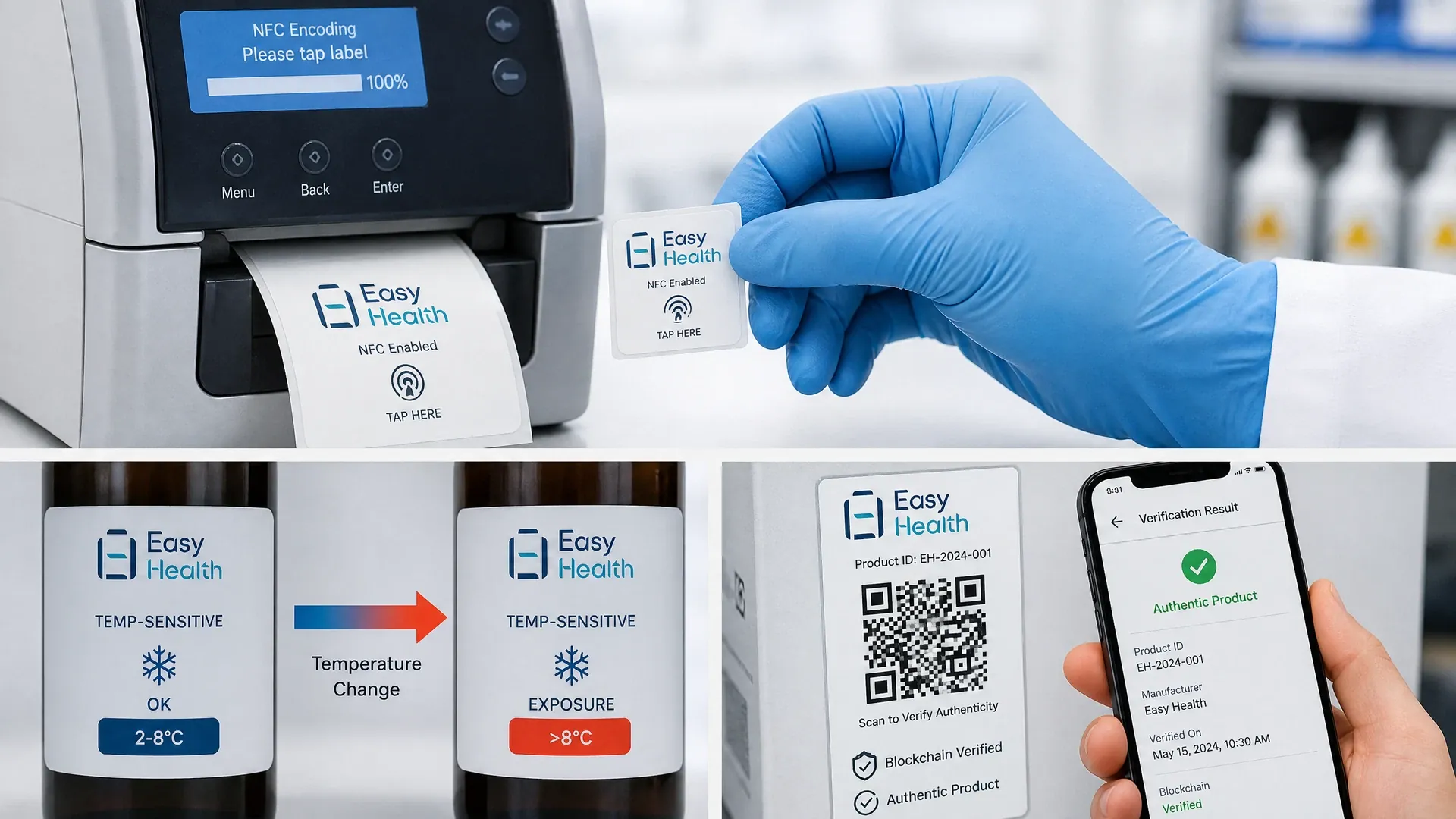
English markets vary in rules and terminology; confirm required fields and wording with your local importer first. We can structure the product name, net quantity, directions, ingredients and allergens, nutrition, best-before/use-by, storage, origin and importer into a readable hierarchy and font size, and coordinate translation checks to reduce reprints. If QR or smart tags are included, ensure they do not compromise mandatory text or scanning. For multi-language packs, use indentation, column breaks and colour hierarchy. Provide barcode symbology and issuing details and test using target-market devices.
- Align fields and terminology upfront
- Differentiate best-before vs use-by
- Keep barcode and nutrition panel clear
- Place QR/media away from mandatory info
Field Order and Visual Hierarchy Across Markets
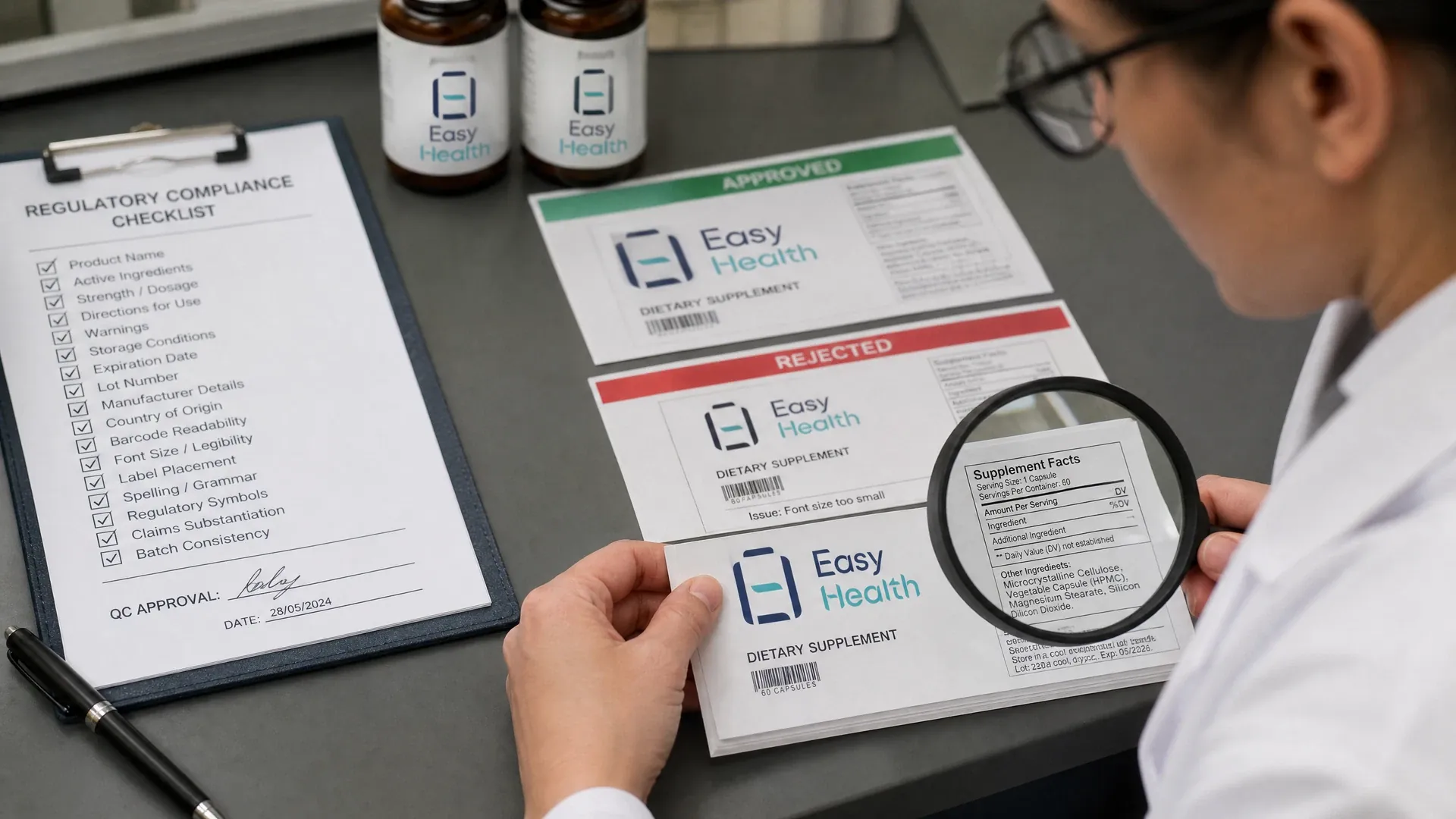
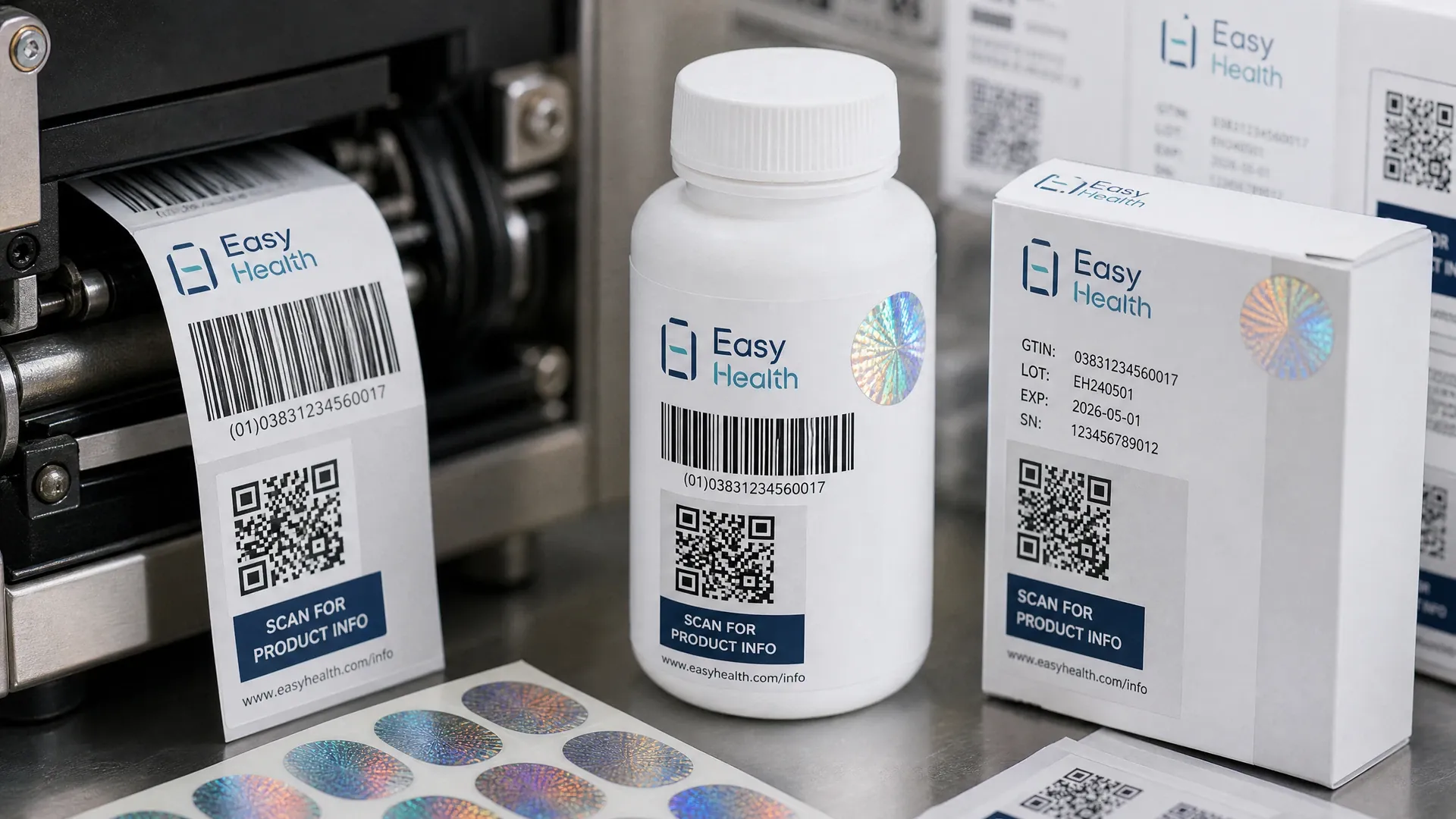
The visuals compare field order, typographic hierarchy and barcode/QR placement for English, Japanese and Mainland Chinese labels. We also illustrate readable boundaries for curved bottle labels and flexible films, improving scanning and facilitating importer reviews.
Mainland China GB Scope: Re-Layout Notes
For pre-packaged foods in Mainland China, labels typically follow GB 7718 and GB 28050 formats. We can reflow to Simplified Chinese, align field names, nutrition table format and date wording, and zone the layout for clarity to facilitate importer confirmation. Define Traditional-to-Simplified terms and ingredient naming in advance, and prepare per 100 g/ml and per serving data for conversion. All legal interpretations and final content are confirmed by the Mainland importer or local professionals. We handle layout and printing coordination. Timelines vary by project and are confirmed by our account manager.
- Applies to Mainland pre-packaged foods
- Nutrition per GB 28050 format
- Unify date and storage wording in Simplified
- Importer confirms final wording
Barcode, QR and Smart Tag Readability and Placement
Export labels often include barcodes, QR and NFC/RFID. Test scannability with target-market devices, keep distance from nutrition and mandatory texts, maintain quiet zones and contrast, and adjust line width and screens by substrate (coated paper, PP, PET, foil) and print method. For curved bottles or flexible pouches, allow for bending and crease areas to avoid distortion. Easy Health coordinates materials and printers, arranges sampling and trial scans, and manages labelling and packaging coordination at our Hong Kong site. Final content and positions are confirmed by the importer or local advisor.
- Maintain barcode quiet zones and contrast
- Device tests in target markets first
- Keep clear of nutrition/mandatory panels
- Match line width/ink to substrate
Supplement Export Labelling Services Process
- Scope and market definition:Confirm destination markets and languages; list required fields and contacts for the importer/advisor.
- Content collation and terminology:Coordinate translation checks and glossary; align allergens, date terms and nutrition wording.
- Layout and readability checks:Reflow fields and sizes; prelim tests for barcode quiet zones and contrast.
- Prototyping and physical review:Arrange samples; review colour, line width, lamination and adhesion on real substrates.
- Importer/advisor confirmation:Submit samples and field lists for confirmation by local importer or advisor.
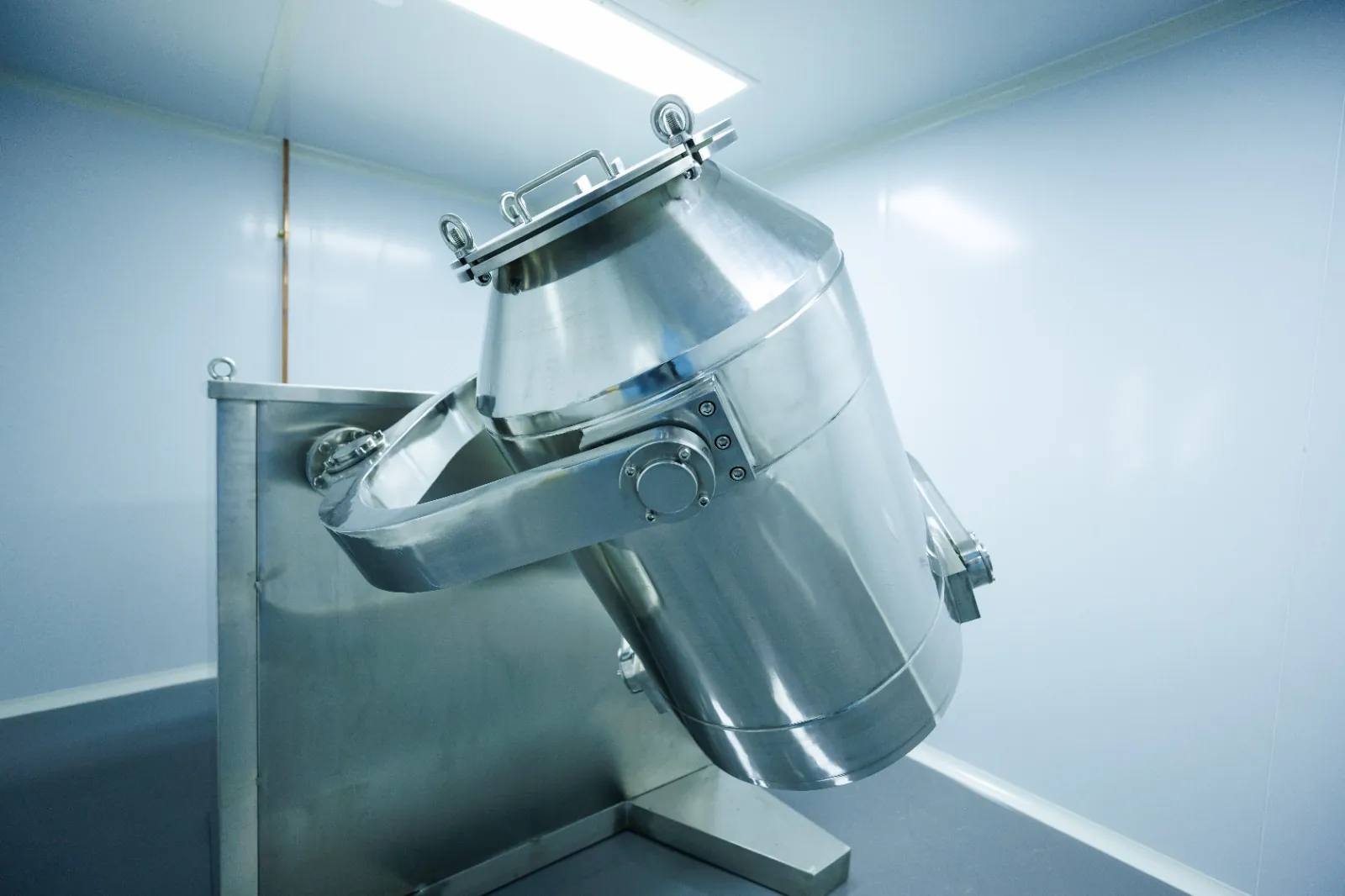
Inside the Easy Health Hong Kong Facility

Label Materials and Print Coordination for Export Packs
| Criteria | Coated paper + offset | Synthetic PP + UV | Silver PET + UV/screen |
|---|---|---|---|
| Scratch resistance | Moderate | Good | High |
| Water/oil resistance | Moderate | Good | Good |
| Use cases | Cartons, bottle labels | Plastic bottles, pouches | Foil pouches, metallic look |
| Barcode readability | Good | Good | Watch mirror glare |
| Visual finish | Matt/gloss lamination | Fine, durable | Strong metallic sheen |
Guidance only; validate with samples and device tests.
Recommended Files for Label Submission
- Final formula name and ingredients (ordered)
- Suggested serving size and frequency
- Allergen info and cross-contact notes
- Nutrition data (core five plus others)
- Date wording and storage phrasing
- Place of manufacture, importer and contact details
Supplement Export Labelling Services FAQs
Can English and Japanese Appear on the Same Pack?
Technically yes, provided hierarchy and white space are maintained and barcodes/mandatory info remain clear. Japanese fields (e.g., allergens and the five-item nutrition panel) must be clearly in Japanese, with consistent full-width characters, units and date order. Obtain confirmation from your Japanese importer or advisor before printing.
Which Date Wording Should Be Used?
English markets distinguish best before and use by. In Japan, use Shōmi kigen or Shōhi kigen in year–month–day order, ideally shown with storage instructions. For multi-language packs, avoid mixing different date terms in one field. Have the importer confirm the final wording.
How Should Nutrition Data Be Supplied?
Provide values per 100 g/ml and per serving, plus calculation basis and rounding rules. Japan’s five items follow a fixed order; Mainland GB 28050 applies where relevant. For any additional nutrition or functional descriptions, include local advisor guidance to place them on-pack or via QR without crowding mandatory panels.
How Should Barcode and QR Size and Placement Be Planned?
Reserve quiet zones and contrast based on substrate/print method. Avoid seams on curved bottles and heat seals/folds on pouches. Share symbology and issuer, then test with retail scanners and phones on samples. Adjust line width/screens if needed. Final placement should be confirmed by the importer.
How Should Artwork Files Be Supplied?
Send editable AI/INDD/PDF files with fonts and linked images, including dielines, bleed and colour references. Mark variable data zones (batch, best-before/use-by) and labelling positions. Provide separate layers or pages for language versions for scheduling and checks.
Related Packaging Services
Discuss Multilingual Label Layout and Print Coordination
Message Easy Health on WhatsApp. Share your target markets and current files—our account manager will coordinate translation checks, layout and label printing, and advise on substrates and application for bottles, pouches, sticks or blisters. Timelines are project-dependent and will be confirmed.
Last updated: