Hong Kong supplement regulations: classify before labelling
To navigate Hong Kong health supplement labelling regulations, first classify your product and claims, then map to the correct regime. This page explains when to treat as food (Cap.132W with the “1+7” scheme), when it is a proprietary Chinese medicine (Cap.549) or a pharmaceutical product (Cap.138), plus restrictions affecting claims and descriptions. We also outline layout, material and durability choices for label execution.
Summary:An overview of Hong Kong health supplement labelling regulations: there is no single “health food” law. Depending on product nature, composition and claims, items may fall under food (Cap.132W and the “1+7” nutrition scheme), proprietary Chinese medicines (Cap.549) or pharmaceutical products (Cap.138), and are also subject to the Undesirable Medical Advertisements Ordinance and Trade Descriptions Ordinance. We summarise must‑have label items and practical packaging considerations.
Where should you start with classification?
Begin with classification: 1) If it qualifies as “food” and only makes general nutrition/functional descriptions, Cap.132W and the “1+7” nutrition scheme typically apply; 2) If it is a proprietary Chinese medicine, registration and labelling under Cap.549 apply; 3) If it is a pharmaceutical product, registration and labelling under Cap.138 apply. Also review restrictions under the Undesirable Medical Advertisements Ordinance (Cap.231) and the Trade Descriptions Ordinance (Cap.362). Then coordinate content, artwork and material/print execution.
Supplement classification in Hong Kong: decision path
There is no single “health food” law in Hong Kong. In practice, classify by composition, dosage form and claims. Prepackaged items that are “food” fall under the Food and Drugs (Composition and Labelling) Regulations (Cap.132W) and the “1+7” nutrition scheme. Proprietary Chinese medicines require registration and labelling under the Chinese Medicine Ordinance (Cap.549); pharmaceutical products under the Pharmacy and Poisons Ordinance (Cap.138). All claims and depictions are also subject to the Undesirable Medical Advertisements Ordinance (Cap.231) and the Trade Descriptions Ordinance (Cap.362). For Mainland China sales, assess applicability of GB 7718 and GB 28050. If unsure, compile formula and intended claims and consult the Centre for Food Safety, the Department of Health or a professional advisor.
- Define food vs. PCM vs. pharmaceutical
- Review if claims imply medical treatment
- Decide sales markets and languages early
- Plan packaging structure and label panels together
Food-type supplement labelling requirements in Hong Kong
Prepackaged health products that are “food” must meet Schedule 3 of Cap.132W, and a Hong Kong “1+7” nutrition label is generally required unless exempt. Labels may be in Chinese or English; if both are used, the food name and ingredient list must appear in both languages, and so must the nutrition label. Items generally required are: the name of the food; the ingredient list in descending order; a “best before” or “use by” date; any special storage or usage instructions; the numerical count or net weight/volume; and the manufacturer or packer name and address (or, where exemption conditions are met, the country of origin and the Hong Kong distributor or brand owner). A lot number is not a general legal requirement, but reserving space for one helps traceability. For the detailed checklist and formats, see “Supplement Label Detailed Requirements”.
- If bilingual, mirror name, ingredients and nutrition panel
- Show energy and specified nutrients per ‘1+7’
- Use best before/use by as applicable
- Plan info layout for curved or small panels
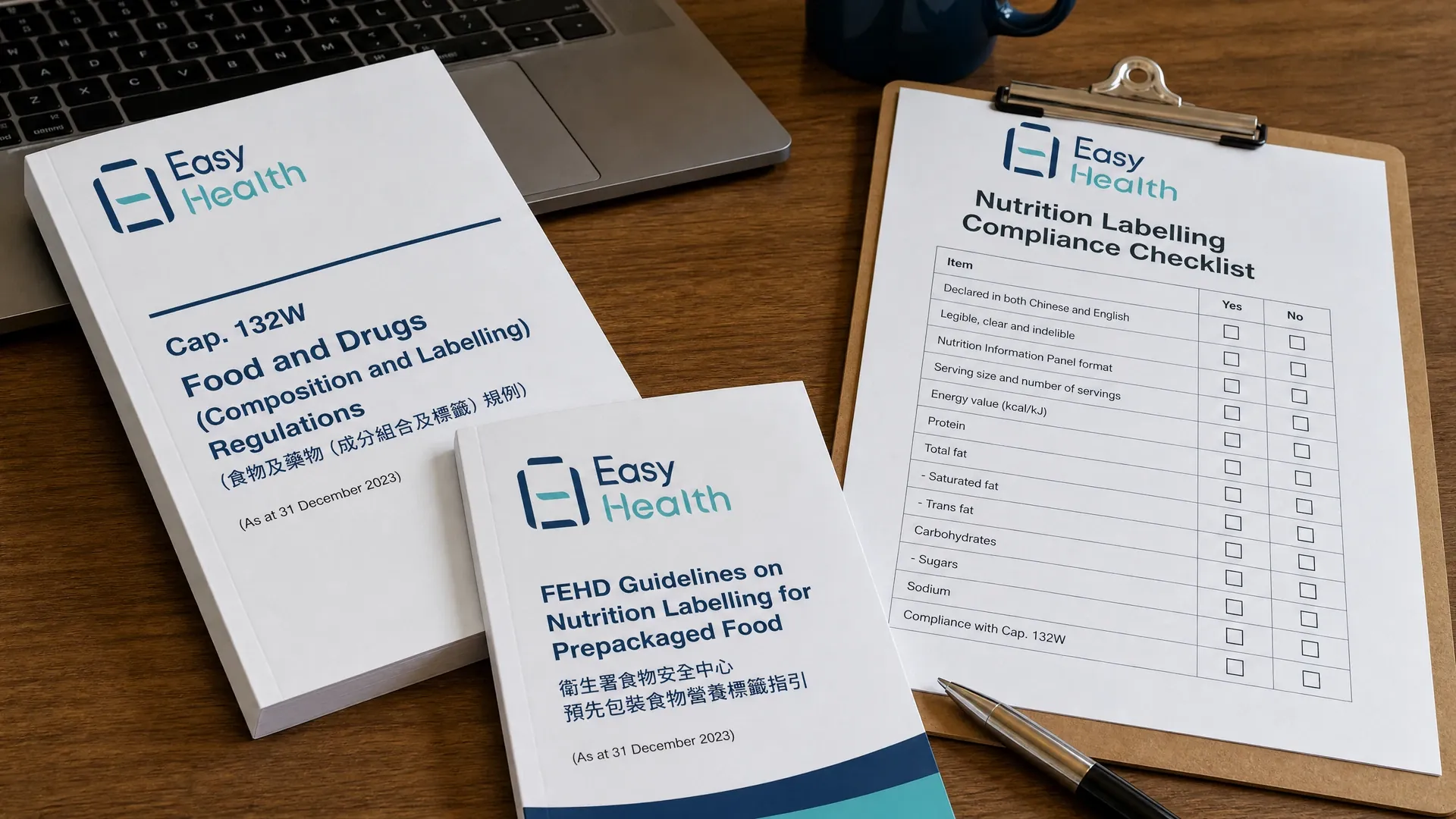
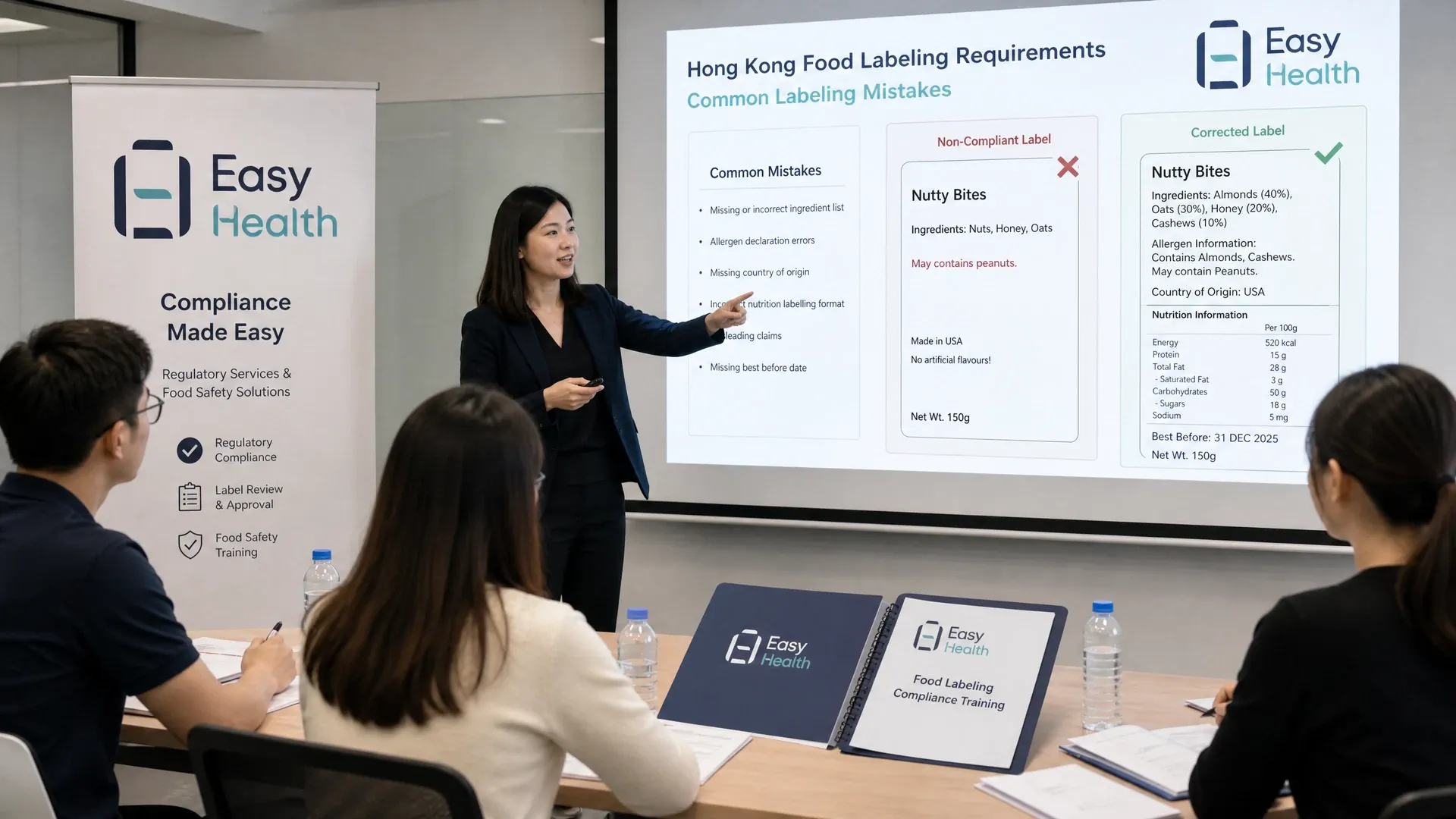
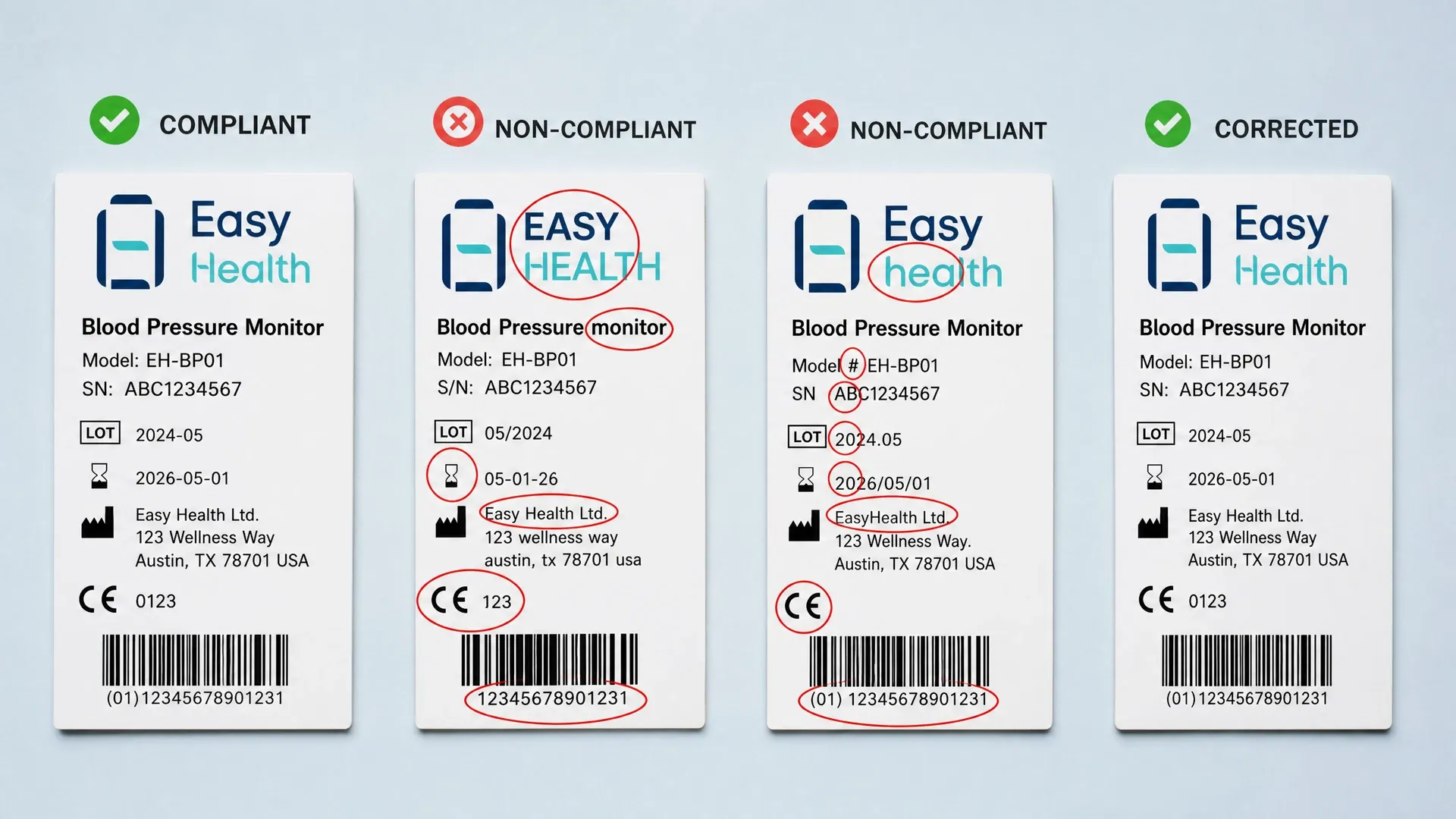
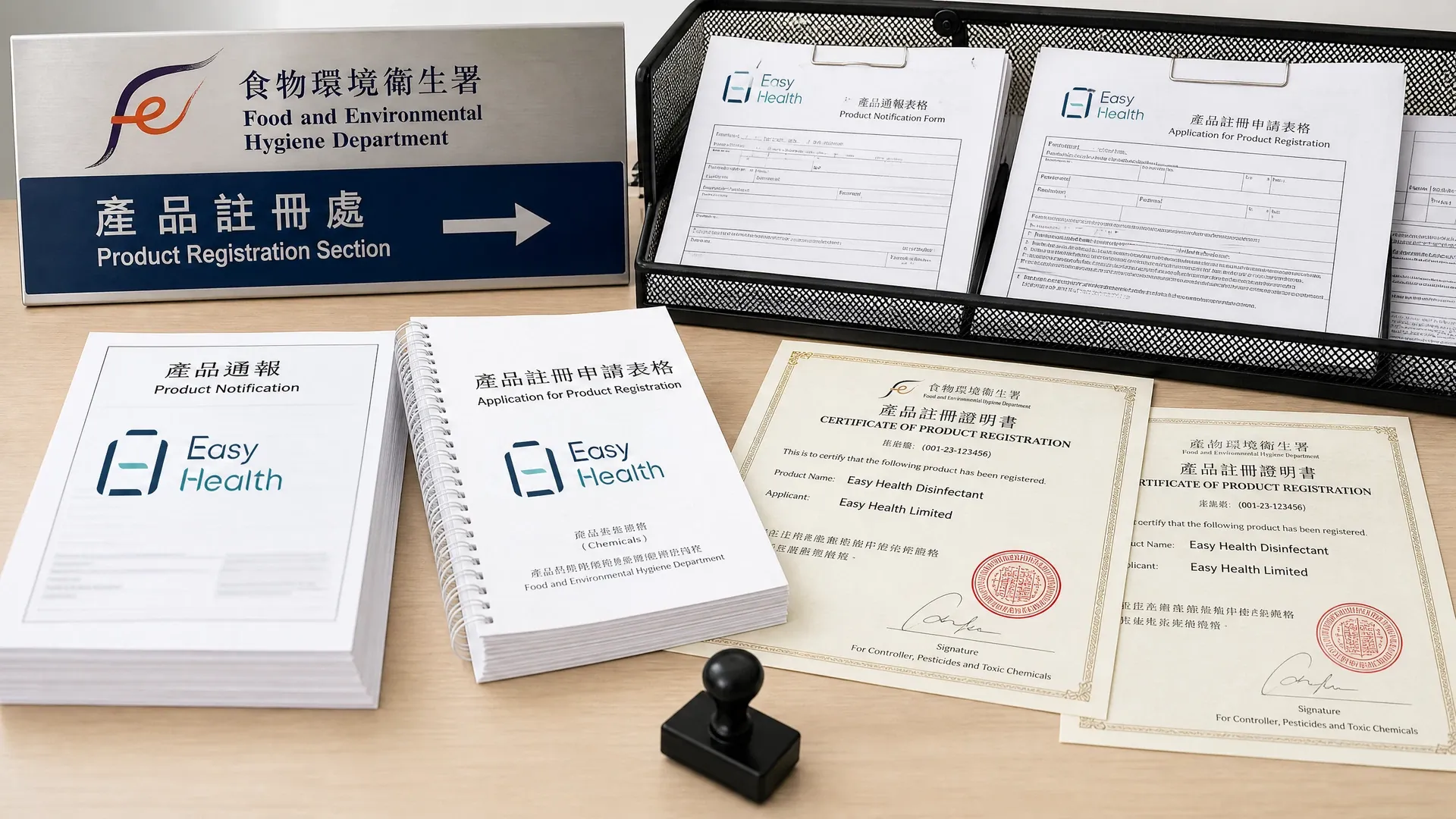
Visual guide: labelling plan and review workflow
The visuals outline the flow from regulatory classification and content gathering to label design, compliance review and verification, plus typical panel layouts showing date and lot mark placement for smoother design-to-production handover.
Proprietary Chinese medicines and pharmaceutical products
If the product is a proprietary Chinese medicine, registration and labelling under Cap.549 apply; if a pharmaceutical product, registration and labelling under Cap.138 apply. Their labelling focus and format differ from food, often involving registration particulars, dosage forms and directions for use. Verify formula provenance, active ingredients and dosage form, then plan packaging panels to accommodate mandatory information. Claims implying treatment or prevention of disease should also be reviewed under Cap.231. When classification is unclear, compile formula, rationale and intended claims, and confirm with the authorities or a professional advisor.
- Determine if registration is required
- Labelling differs from food rules
- Review claims against Cap.231
- Prepare formula and dosage details first
Label information overview and panel planning
At a high level, the items a supplement label must show fall into three groups: 1) identification — name of the food, numerical count or net weight/volume, and manufacturer or packer name and address (or, under the exemption route, country of origin and Hong Kong distributor details); 2) composition and nutrition — ingredient list, allergenic substances declared in the ingredient list, and the “1+7” nutrition label where applicable; 3) dates and use — “best before” or “use by” date and any special storage or usage instructions. A lot number is recommended for traceability rather than generally required. Sketch primary and secondary panels and base labels early to avoid crowding or language inconsistencies; for Mainland sales, assess GB 7718/GB 28050 separately. See “Supplement Label Detailed Requirements” for details.
- Storyboard panels before typesetting
- Allocate core info to principal panels
- Make date/lot marks clear and durable
- Align terminology across markets
Easy Health packaging and labelling coordination
- Project assessment and initial classification:Our account manager reviews formula, dosage form and claims to indicate likely category: food/PCM/pharmaceutical (timelines vary by project).
- Label content collation and panel planning:Compile required fields and languages, sketch panel structures, and reserve areas for date and lot marks to streamline artwork and print coordination.
- Artwork prototyping and legibility check:Create prototypes to review font size, contrast and material adhesion; the need for further tests or third‑party verification will be confirmed case by case.
- Print and material coordination:Coordinate labels, cartons and container materials and printing, confirming the method and placement of date/lot marks.
- Final confirmation and production handover:After item-by-item confirmation by the account manager, we hand over to production; packaging is coordinated in our Hong Kong facility under documented procedures appropriate to the project.
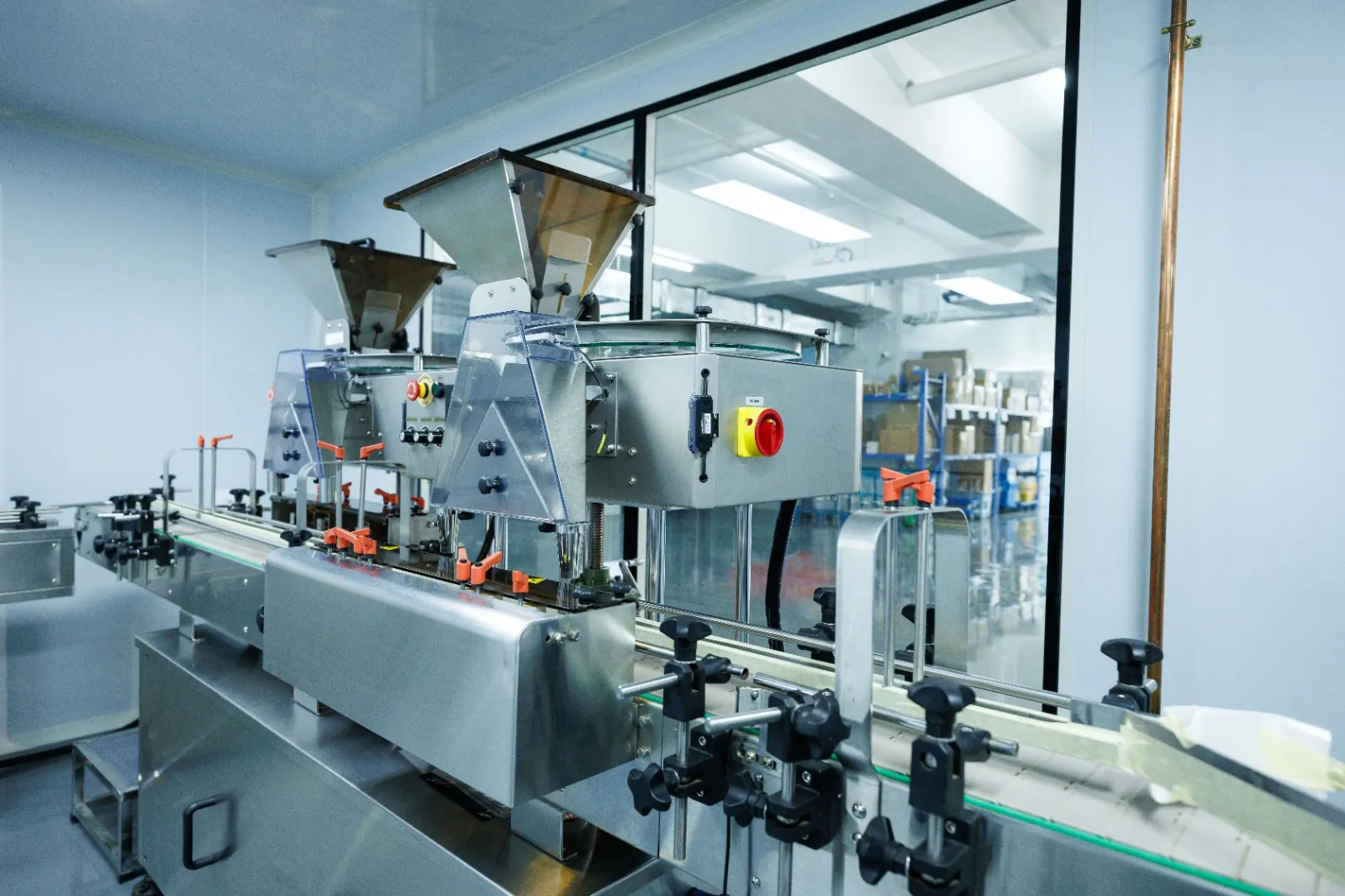
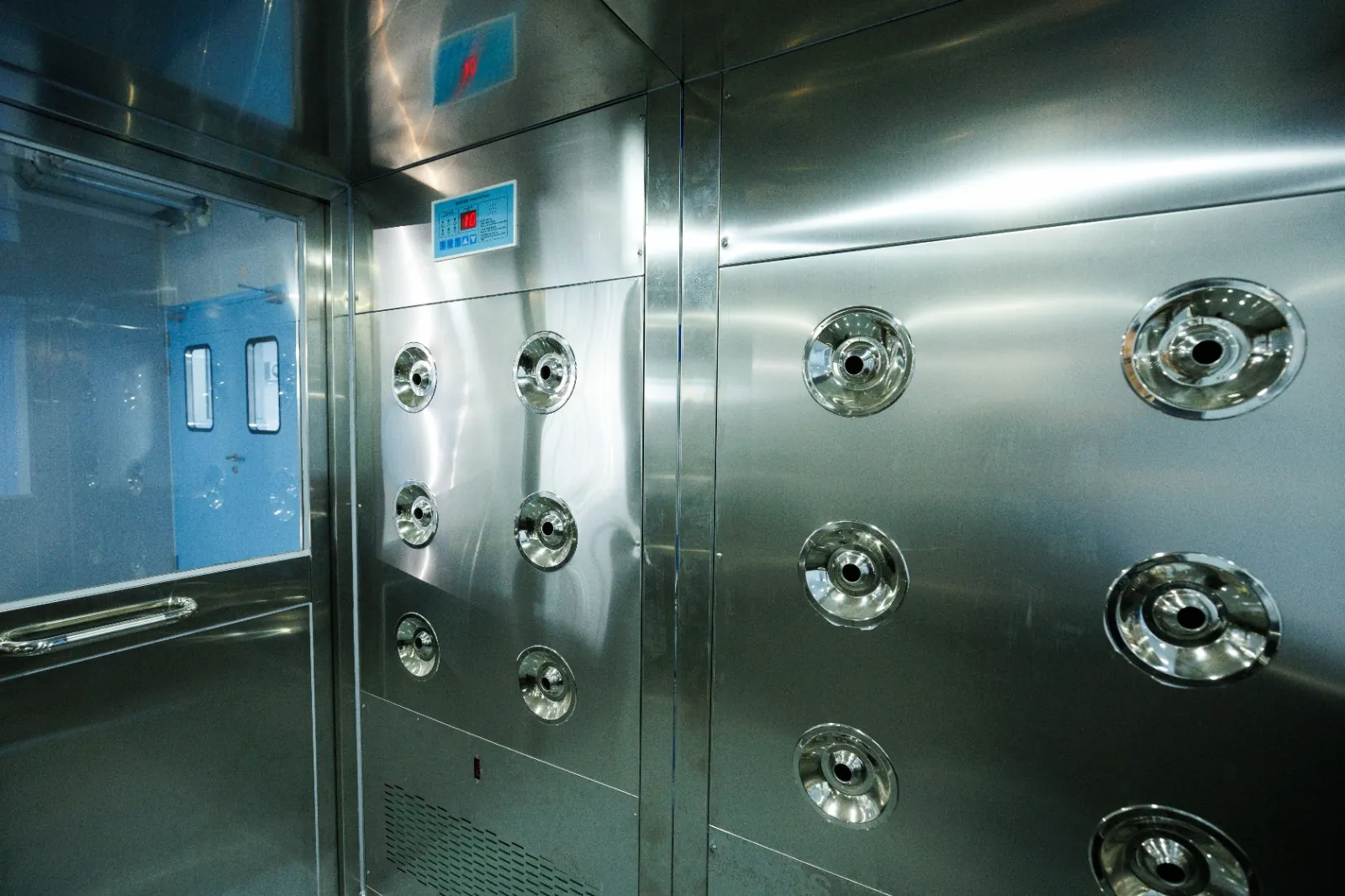
Inside the Easy Health Hong Kong Facility

Common product categories and labelling focus
| Aspect | Food-type supplements | Proprietary Chinese medicine | Pharmaceutical product |
|---|---|---|---|
| Applicable law | Cap.132W + ‘1+7’ | Cap.549 | Cap.138 |
| Key focus | Food name, ingredients, nutrition | Registration info, dosage form | Registration info, directions |
| Language | Chinese or English; mirror if bilingual | Per registration | Per registration |
| Nutrition panel | ‘1+7’ where applicable | Not a food scheme | Not a food scheme |
| Date wording | best before/use by | As applicable | As applicable |
For Mainland sales, additionally assess applicability and terminology under GB 7718/GB 28050.
Pre-artwork label checks
- Product category and applicable laws confirmed (132W/549/138/231/362)
- Check if ‘1+7’ applies and panel space accommodates it
- Bilingual consistency: food name, ingredients and nutrition panel mirrored
- Date and lot marks: planned placement, format and legibility
- Storage, directions and allergen statements covered (where applicable)
- Font size and contrast are readable on small/curved packs
Hong Kong supplement regulations FAQs
Must supplement labels be bilingual in Hong Kong?
For prepackaged products that are “food”, either Chinese or English may be used; if both are used, the food name, ingredient list and nutrition label should appear in both languages. For PCMs or pharmaceuticals, follow the respective registration and labelling requirements. Decide markets and languages early and allocate sufficient panel space.
Who needs nutrition labelling in Hong Kong?
It refers to energy plus seven specified nutrients on nutrition labelling, applicable to prepackaged products that are “food”. Whether it is required and how to present it should be assessed under Cap.132W and related guidance. For small panels, plan principal/secondary displays and choose suitable presentation and units.
Does a capsule or tablet format mean a product is not food?
Dosage form alone is not decisive. Composition and claims determine the regime. If it is “food” and does not make treatment/prevention claims, Cap.132W typically applies. If the formula and claims meet PCM or pharmaceutical definitions, follow those regimes. Compile formula and claims to confirm classification.
Which date mark should a label use?
They serve different purposes. ‘Best before’ usually indicates quality for most foods, while ‘use by’ is used for more perishable items. Judge based on product characteristics and guidance, and reserve a clear, legible area and coding method.
How can extensive information fit on a small pack?
Prioritise mandatory items and allocate content across principal and auxiliary panels. Consider fold-out labels, peel-and-reseal stickers or cartons. During prototyping, check font size, contrast and ink/thermal transfer adhesion, and arrange tests where needed.
Related Packaging Services
Discuss label and packaging planning with Easy Health
Easy Health operates in Hong Kong with a local plant, coordinating production and packaging. We offer supplement OEM/ODM, packaging design, labels and cartons, multiple pack formats, prototyping and packaging production coordination. Where specific quality or food safety frameworks are relevant (e.g., GMP practices or FSSC 22000 scope), we arrange document and scope reviews with clients. Each project is individually assessed and confirmed by an account manager; timelines vary by project. Message us on WhatsApp to discuss your product data and labelling needs.
Last updated: