Hong Kong food date labelling for prepackaged foods
Under Cap.132W in Hong Kong, prepackaged foods must clearly display a 'best before' or 'use by' date. Shelf life should be determined by the brand based on testing and scientific data; we support the implementation of date markings, labels and packaging structures consistent with the regulation, and coordinate sampling and production in our Hong Kong facility within a controlled environment.
Summary:This page focuses on food shelf-life marking: choosing “best before” or “use by”, date format, placement and legibility, and how this works with prepackaged food packaging, barrier choices and storage/transport cues. Includes compliance pointers and a practical checklist.
How can Easy Health coordinate food shelf life labelling?
The duration must be determined by the brand based on testing and data; we do not set shelf life. Easy Health can arrange label/carton layouts to clearly present “best before/use by” with lot codes, storage conditions and post-date handling; plan bottle, sachet, stick or blister structures for coding/labels; advise on barrier trade-offs, and coordinate sampling and packaging production in our Hong Kong facility. Timelines vary by project and are confirmed by your account manager.
Quality date vs use-by date in Hong Kong: wording basics
Under Schedule 3 of Cap.132W, prepackaged food generally needs a “best before” or “use by” date, introduced with the prescribed wording in both Chinese and English, together with any storage conditions needed to keep the food’s qualities. When the date is shown in Arabic numerals, day, month and year may appear in any order, but each must be identified with “DD/MM/YY” (or d/m/y) and the Chinese characters for day, month and year. Broadly, “best before” signals the period of best quality, while “use by” suits more perishable products. Brands should decide using product characteristics, microbiological risk, processing, packaging barrier, storage conditions and test data. Reserve space for a lot or production code for traceability. See the Cap.132W schedules and Centre for Food Safety guidance for formats and exemptions; the shelf-life duration itself must be established by scientific testing. We coordinate design and layout so the date is easy to find and read.
- Mark day, month and year in both languages
- Different purposes: best before vs use by
- Add lot code for traceability
- Check Cap.132W schedule format rules
Date visibility on prepackaged food packaging
Place date codes on the principal display panel or a readily visible area, avoiding seams, closures, tear notches or security seals. Ensure legibility under retail lighting; avoid light inks on transparent or pale substrates. Align language with your markets (bilingual in Hong Kong is common) and keep date order consistent with the language. For labels or cartons, reserve a coding window; for heat-sealed sachets, verify heat resistance and ink adhesion. For chilled/frozen items, confirm readability under condensation or frost. When changing artworks, enforce layout rules to reduce miscoding or omissions.
- Use a principal or clearly visible panel
- High contrast, adequate type size/spacing
- Match language/date order consistently
- Reserve coding windows on robust substrates
How do testing, barriers and markings connect?
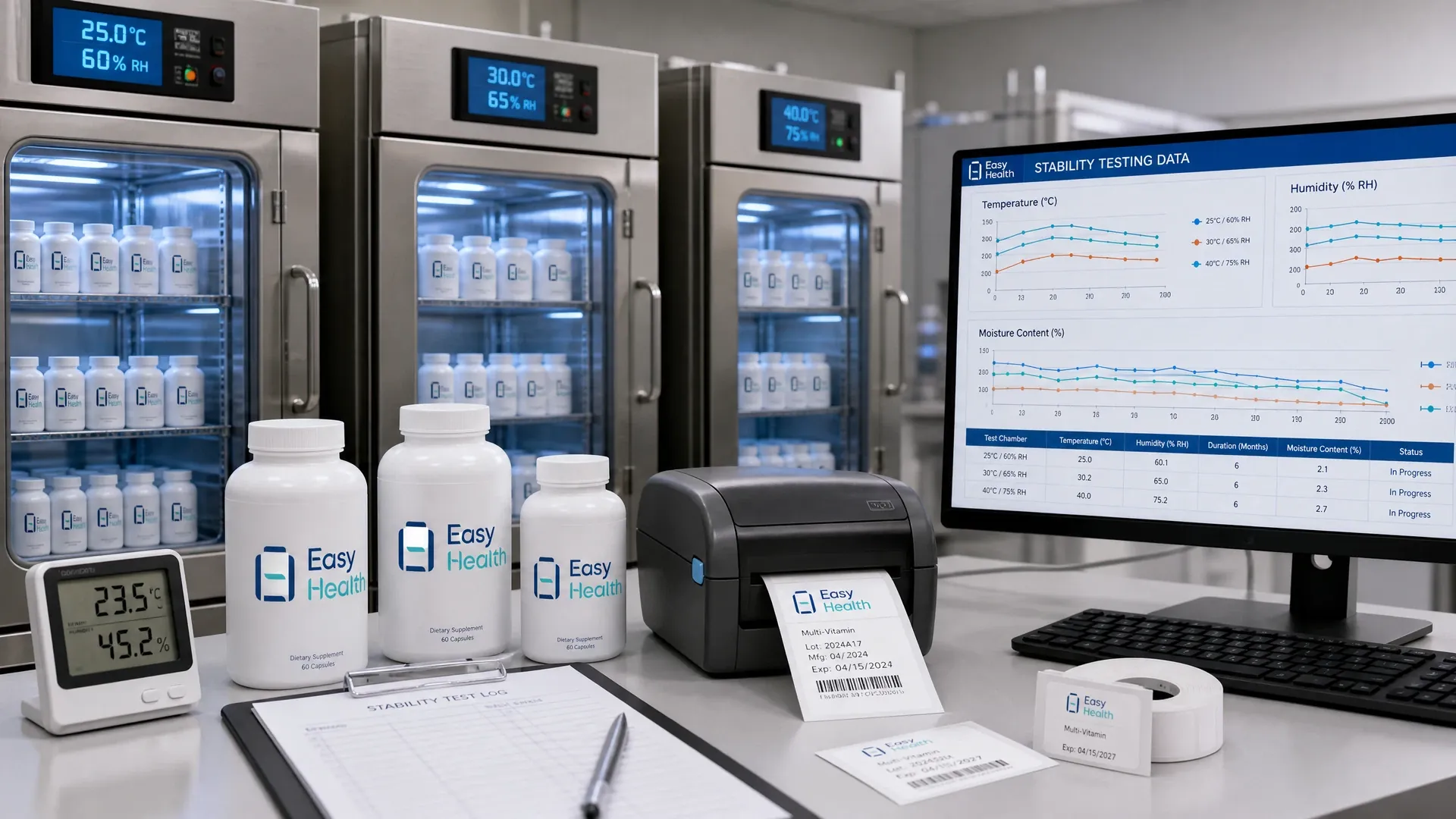
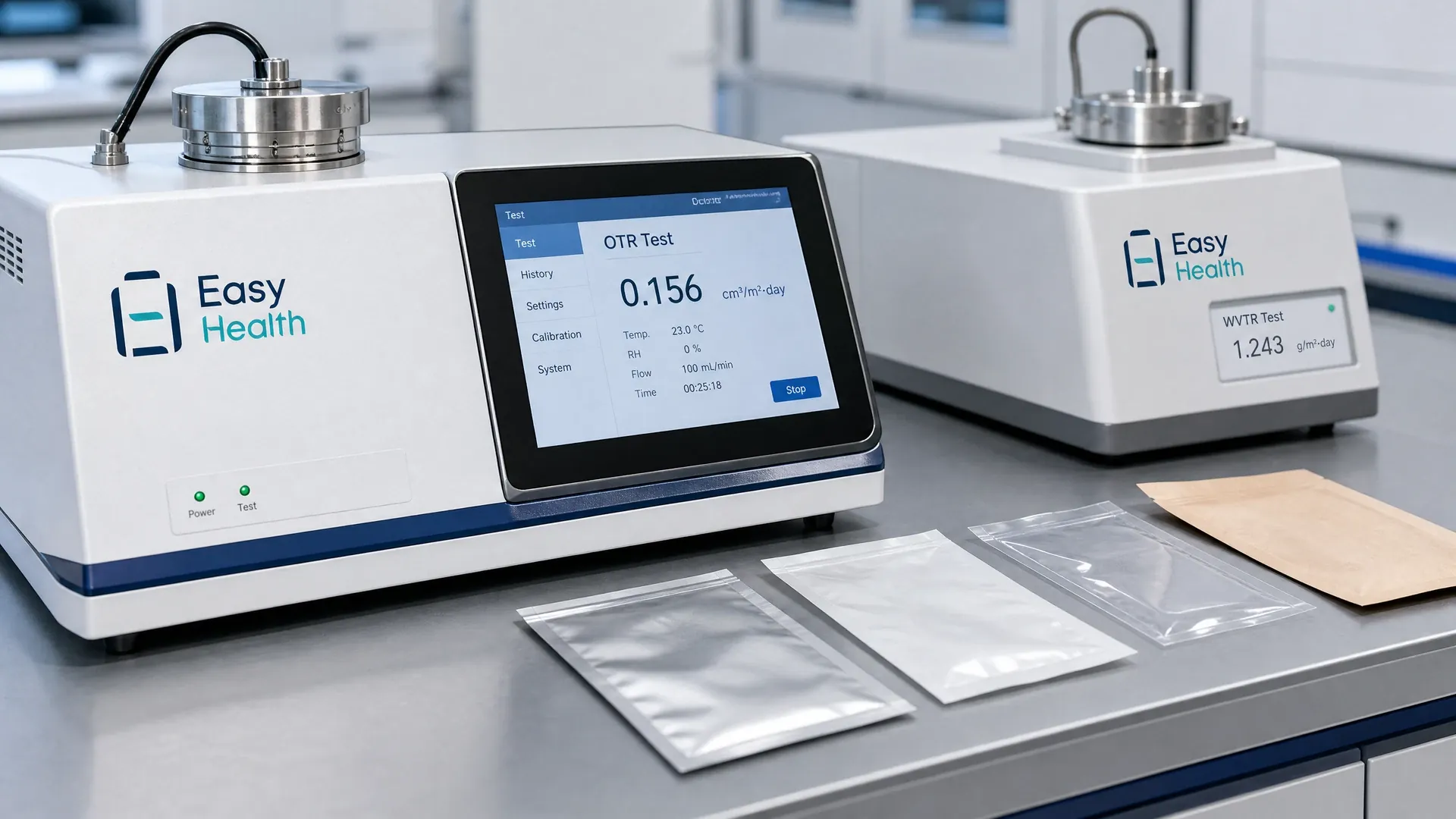
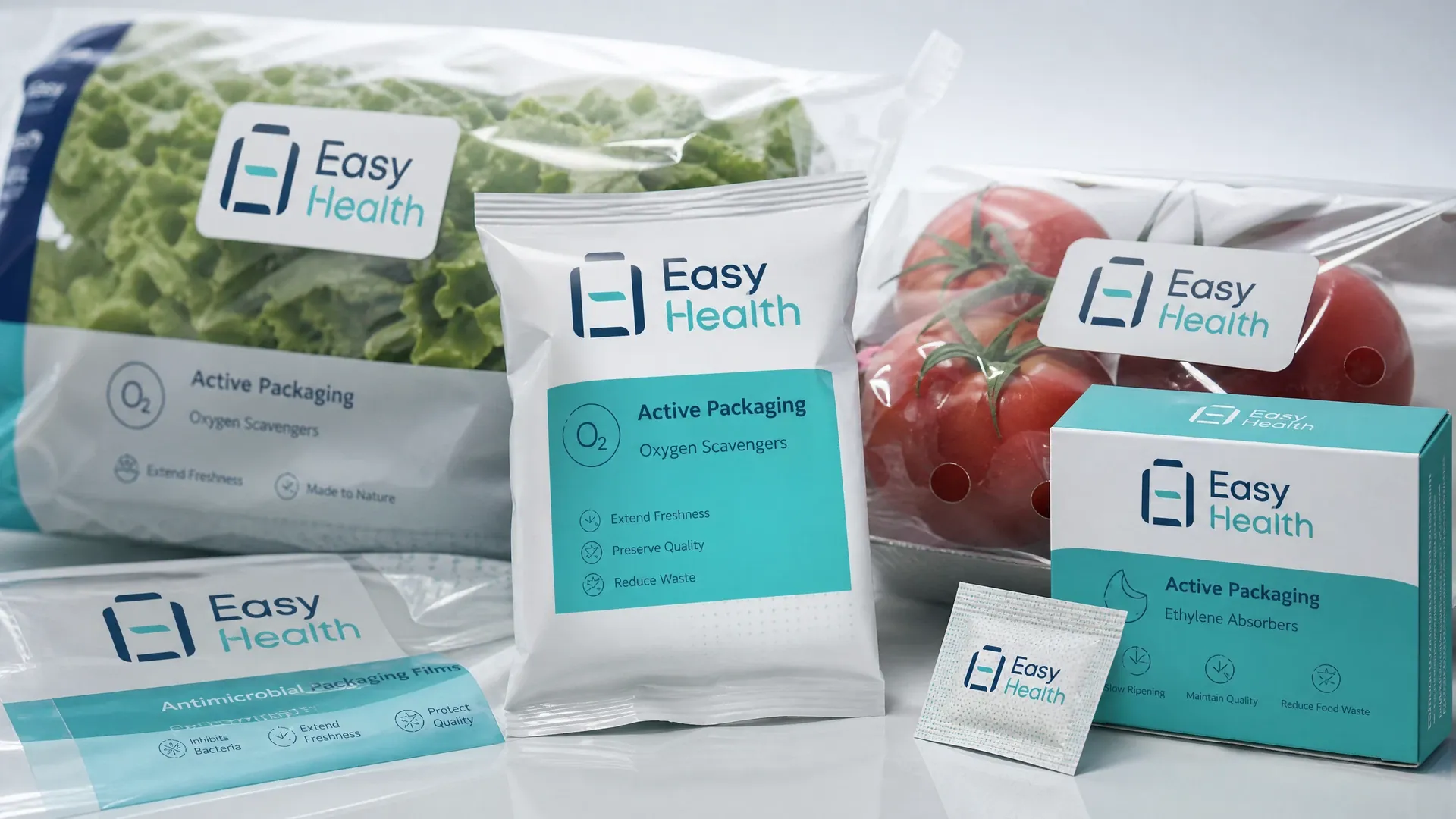
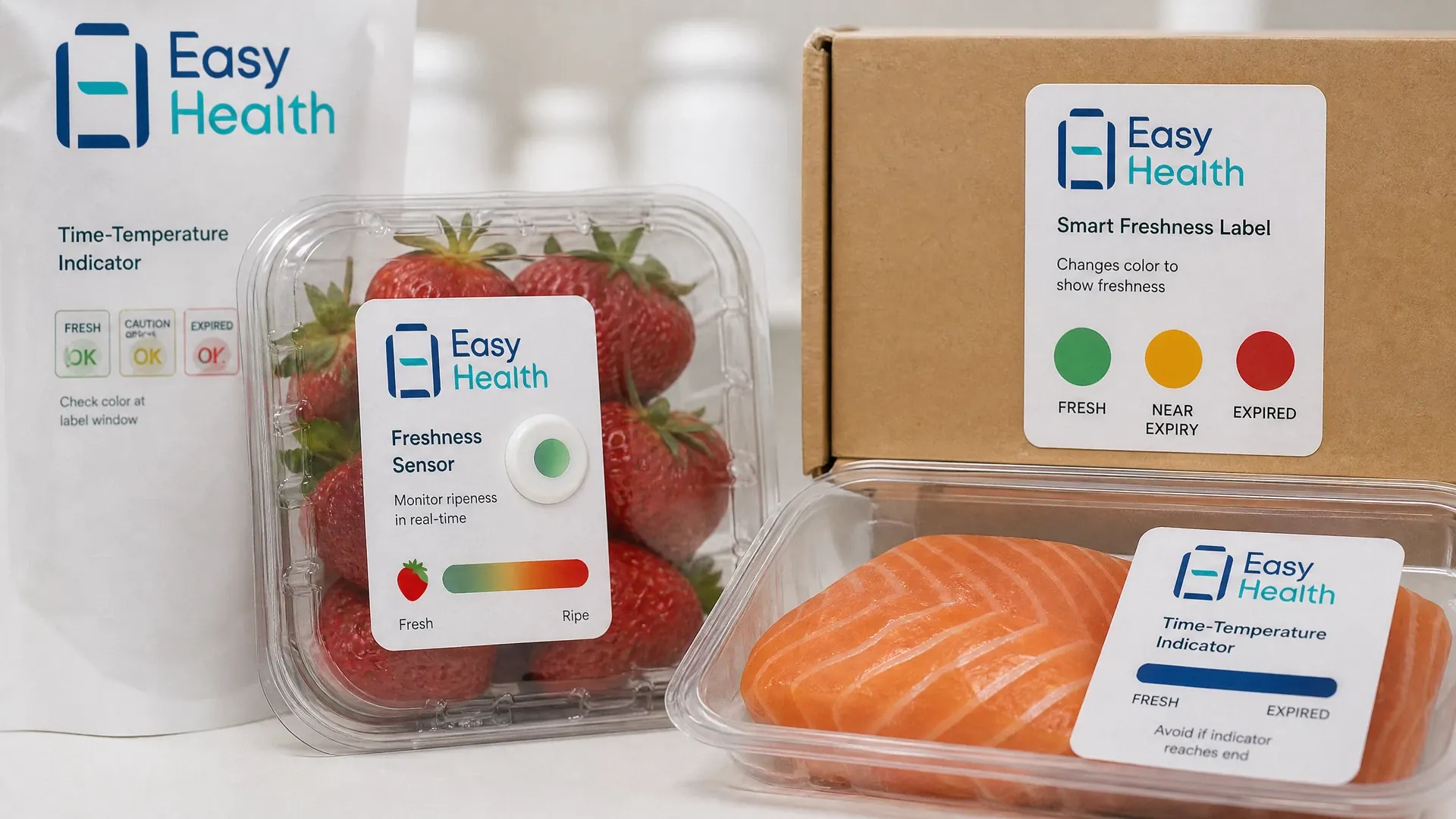
These visuals illustrate how shelf-life testing, barrier testing, active packaging and smart indicators affect shelf-life wording and presentation, with examples of coding positions and label layouts.
Packaging materials and barrier considerations
Shelf-life marking is inseparable from packaging performance. Moisture and oxygen barriers, light protection, seal integrity, and active components such as oxygen absorbers or desiccants affect stability and storage statements. Determine shelf life via testing, then select structures accordingly—or co-develop materials and formula tests. Typical trade-offs: multilayer high barriers versus recyclability, glass versus PET for weight and breakage risk, and foil layers versus metal detection needs. Easy Health coordinates the project requirements in Hong Kong. Confirm which certificate scopes, quality records and supporting documents apply to the proposed arrangement.
- Assess sensitivity to moisture/oxygen/light
- Seal integrity and secondary closures
- Active packaging requires clear usage notes
- Balance barrier with recyclability
Storage, after-opening, lot and traceability statements
Beyond the date, include clear storage conditions (e.g., cool and dry, chilled), after-opening guidance and handling notes (“close tightly after opening”). If temperature-controlled logistics are required, provide on-pack cues. Present lot and line codes adjacent to but distinguishable from the date. For items sensitive to temperature excursions, consider smart indicators, ensuring they are not confused with statutory dates. Keep wording consistent with test data and separate legal dates from advisory text in layout to avoid consumer confusion.
- State ambient/chilled/frozen conditions
- After-opening guidance and timeframe
- Fix relative positions of date and lot code
- Separate smart indicators from legal dates
How we coordinate date marking and packaging layouts
- Scope and regulatory review:Understand product traits, markets and applicable Cap.132W clauses; your account manager documents and confirms details.
- Packaging structure and layout:Select bottle/pouch/stick/blister structures, reserve coding windows and marking zones, plan bilingual text and date order.
- Materials and print coordination:Coordinate materials and print suppliers, verify substrate adhesion/contrast, arrange label and carton production.
- Sampling and readability checks:Produce samples in our Hong Kong facility; test legibility under retail light, low temperature and handling.
- Packaging production and final checks:Coordinate packaging in a GMP-standard environment; retain key samples and verify marking placement and content.
Inside the Easy Health Hong Kong Facility



Comparison: date and lot marking options
| Marking type | Typical use | Common wording | Placement tip |
|---|---|---|---|
| Best before | Quality optimisation cue | Best before | Principal panel, near nutrition/ingredients |
| Use by | Safe consumption limit | Use by | Principal panel, away from seams/closures |
| Lot/Production code | Traceability and internal control | Lot/Batch/Prod. | Adjacent to date; distinct styling to avoid confusion |
| Smart indicator | Temperature exposure cue | Time–Temp/Indicator | Separate from legal date with a clear note |
The above wording and placement are general suggestions. Refer to Cap.132W and CFS guidance for exact formats and exemptions.
Practical checklist for Hong Kong food shelf life labelling
- Chosen “best before” or “use by”, aligned with test data
- Date wording in Chinese and English; day/month/year marked as DD/MM/YY with Chinese characters
- Coding window on principal panel with high contrast and adequate size
- Lot code adjacent to but distinct from date for traceability
- Marking aligned with storage and after-opening guidance
- Packaging barrier, sealing and ink adhesion verified by tests
Hong Kong food date labelling FAQs
Should I use a quality date or a use-by date?
It depends on product risk and your test data. “Best before” generally reflects quality, while “use by” is often for higher-risk items indicating the last safe date. Decide based on your scientific evidence and product category. We can help with layout and placement but do not determine shelf life or the wording choice.
What date format is required in Hong Kong?
According to Centre for Food Safety guidance, a date in Arabic numerals no longer needs a strict day-month-year order; any order is acceptable as long as day, month and year are identified with DD, MM, YY (or d, m, y) and the Chinese characters for day, month and year. The date must be introduced with the prescribed “best before” or “use by” wording in both Chinese and English. Avoid confusing Chinese and English sequences in the layout, and keep the date legible under retail lighting. Refer to the Cap.132W schedules and CFS guidance for formats and exemptions.
What if the pack is also sold in Mainland China?
If selling in Mainland China, consider GB 7718 and GB 28050, especially date expression and language requirements. Differences exist between markets, so allow sufficient space and consider separate coding zones. Confirm details with local authorities or professional advisers.
Date codes rub off in frozen or humid conditions—what can I do?
Match ink to substrate, reserve a coding area with suitable surface energy, and use a high-contrast background. During sampling, test adhesion and clarity in real low-temperature/high-humidity conditions. Consider label appliqués or a dedicated batch window if needed.
Can Easy Health determine the shelf-life duration for us?
The duration must be set by your brand based on product testing and scientific data; we do not determine it. Easy Health helps implement the decided marking via label/carton design, coding placement, materials/print coordination, and sampling/packaging in our Hong Kong facility.
Related Packaging Services
Coordinate date marking with your packaging layouts
Message our Easy Health account manager on WhatsApp. Share product details, testing direction and markets; we will coordinate labels, structures, coding positions and material/print suppliers, and manage sampling and production in our Hong Kong facility. Timelines vary by project and are confirmed by your account manager.
Last updated: