Vacuum vs nitrogen flushing for food packaging
Vacuum and nitrogen flushing are not interchangeable. Oxygen sensitivity, product fragility and logistics conditions determine whether vacuum, nitrogen, or a hybrid is appropriate. In Hong Kong we coordinate materials, structures, labels and packing flows. Each project is assessed by a dedicated account manager for target residual oxygen, barrier and sealing, presentation, and leak checks to build a reproducible food seal packaging operation. Timelines vary by project and will be confirmed by the account manager.
Summary:For food vacuum packing and nitrogen flushing, our Hong Kong in-house facility plans and coordinates projects with reference to GMP principles and the FSSC 22000 scheme; certificate scope and supporting documents are checked for the relevant process steps. We assess barrier, structure and seal integrity, coordinate pouches, trays, cartons and labels, provide prototyping, and oversee production to deliver reliable sealed food packaging solutions.
When should I choose vacuum or nitrogen flushing?
As a rule, compact, pressure-tolerant items (e.g. many cooked or cured foods, some frozen goods) suit vacuum. Fragile, crisp products (chips, biscuits, nuts) generally require nitrogen flushing. Oil-rich, oxygen-sensitive items benefit from high-barrier structures with nitrogen. Products with sharp edges or liquids call for puncture-resistant films and clean sealing. Where form display or impact cushioning is needed, partial vacuum followed by nitrogen is an option. Final selection should be validated by sampling and transport simulations.
Vacuum vs nitrogen flushing: how to decide
The core difference is internal pressure and residual oxygen. Vacuum reduces headspace, enhancing oxygen control and cubic efficiency, but may crush fragile or sharp-edged products. Nitrogen flushing replaces air with an inert gas while preserving a cushioning headspace, ideal for crisp textures; it must be paired with sufficient barrier to limit permeation. High water activity or oil content increases oxygen and light sensitivity, calling for high-barrier (e.g. foil or EVOH-based) and potentially opaque films. In logistics, vacuum improves case efficiency, while nitrogen-filled packs require stronger outer cartons and pallet stacking checks.
- Define residual O2 target and pressure tolerance
- Fragile/crisp → nitrogen; pressure-tolerant → vacuum
- Oil-rich/oxygen-sensitive → high barrier and light protection
- Check cube efficiency vs stacking compression for cross-border moves
Food packaging materials and barrier structures
Typical structures include PA/PE (puncture-resistant, tough, suited to vacuumed cooked or frozen foods), PET/AL/PE or PET/EVOH-PE (high barrier for oxygen-sensitive, oil-containing items in nitrogen packs), and PET/PE (medium barrier for short distribution). For windows, place them outside critical barrier areas or use partial metallisation/matt finishes. For sharp edges or bones, thicken PA or select puncture-resistant films. Match the seal layer to filling equipment and thermal profile to prevent seal contamination by oil or moisture. For longer shelf targets, consider oxygen absorbers where food-safe and properly labelled.
- PA/PE for vacuum and puncture resistance; PET/AL/PE for high barrier
- EVOH boosts O2 barrier but needs moisture protection
- Seal layer must match heat profile and line speed
- Windows trade aesthetics for barrier — position carefully
Visual guide: vacuum flow and seal checks
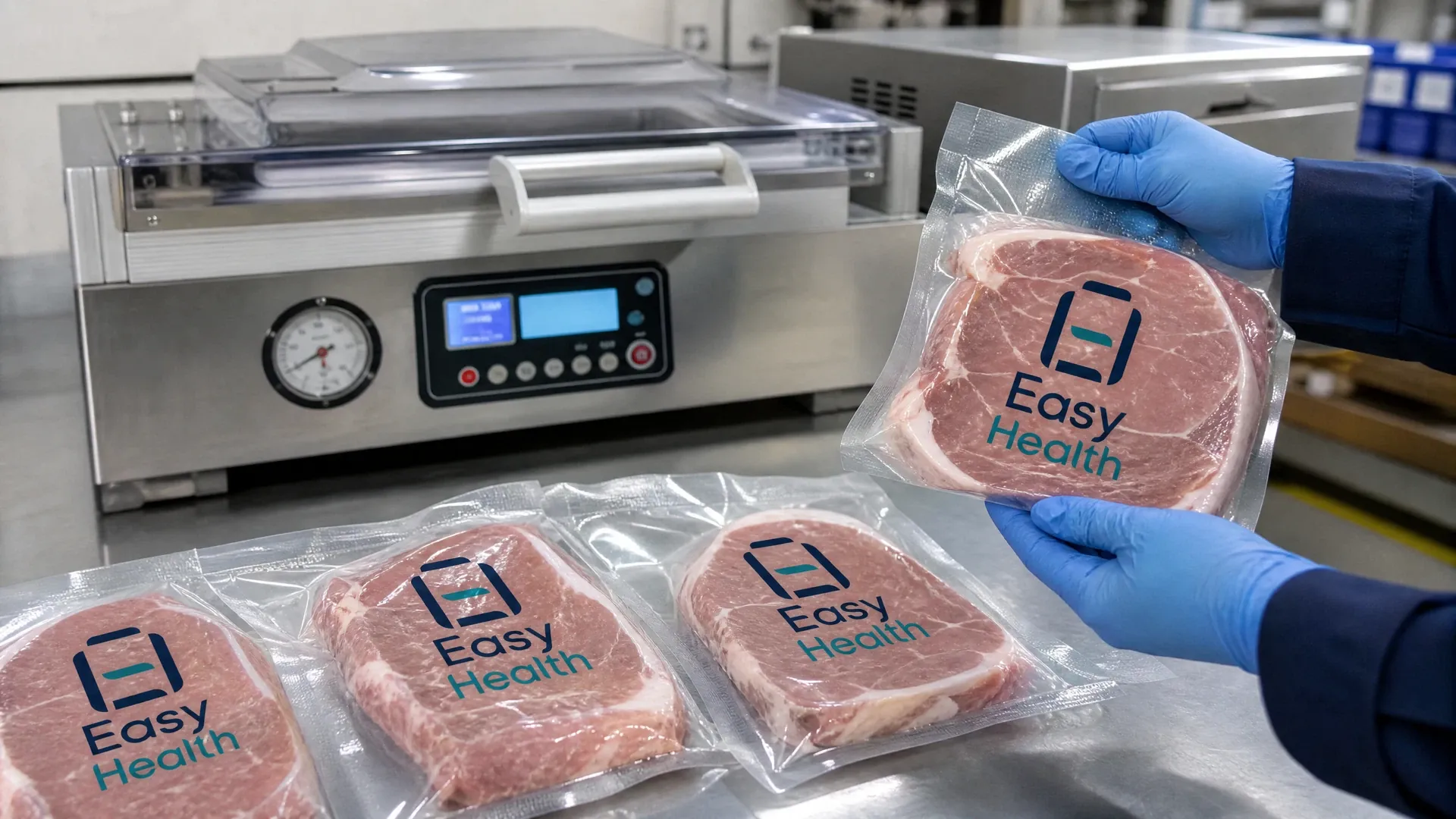
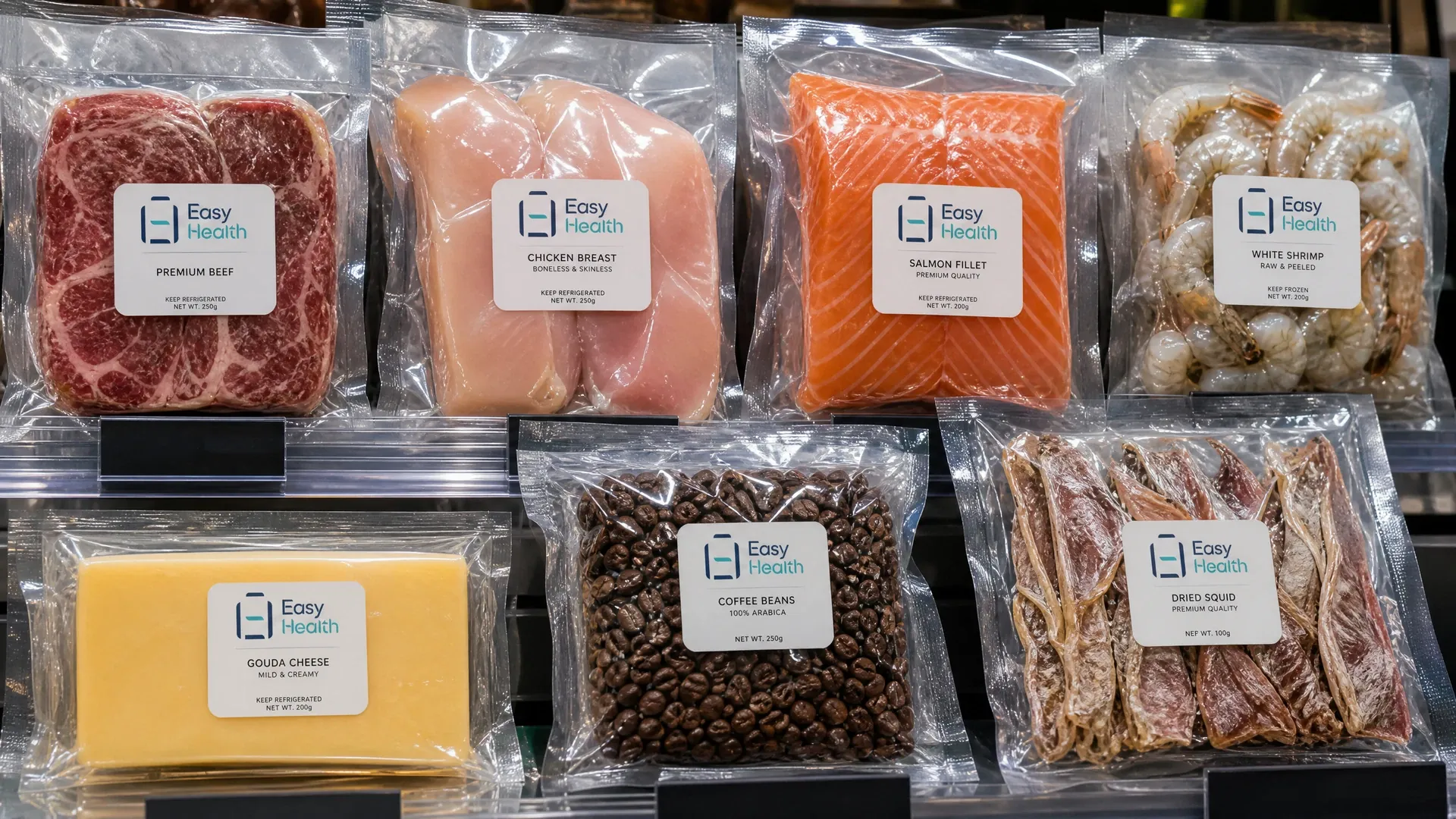
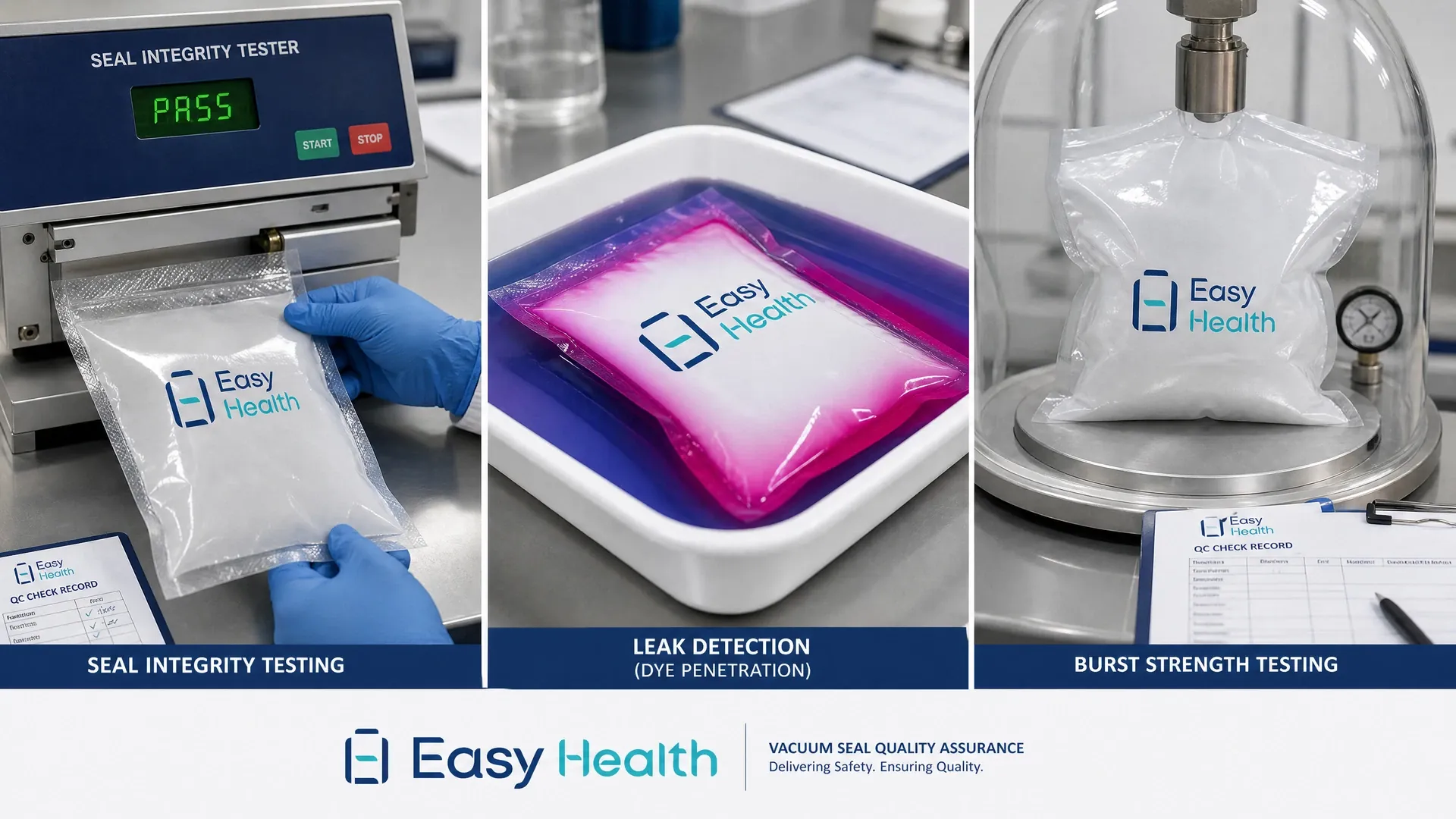
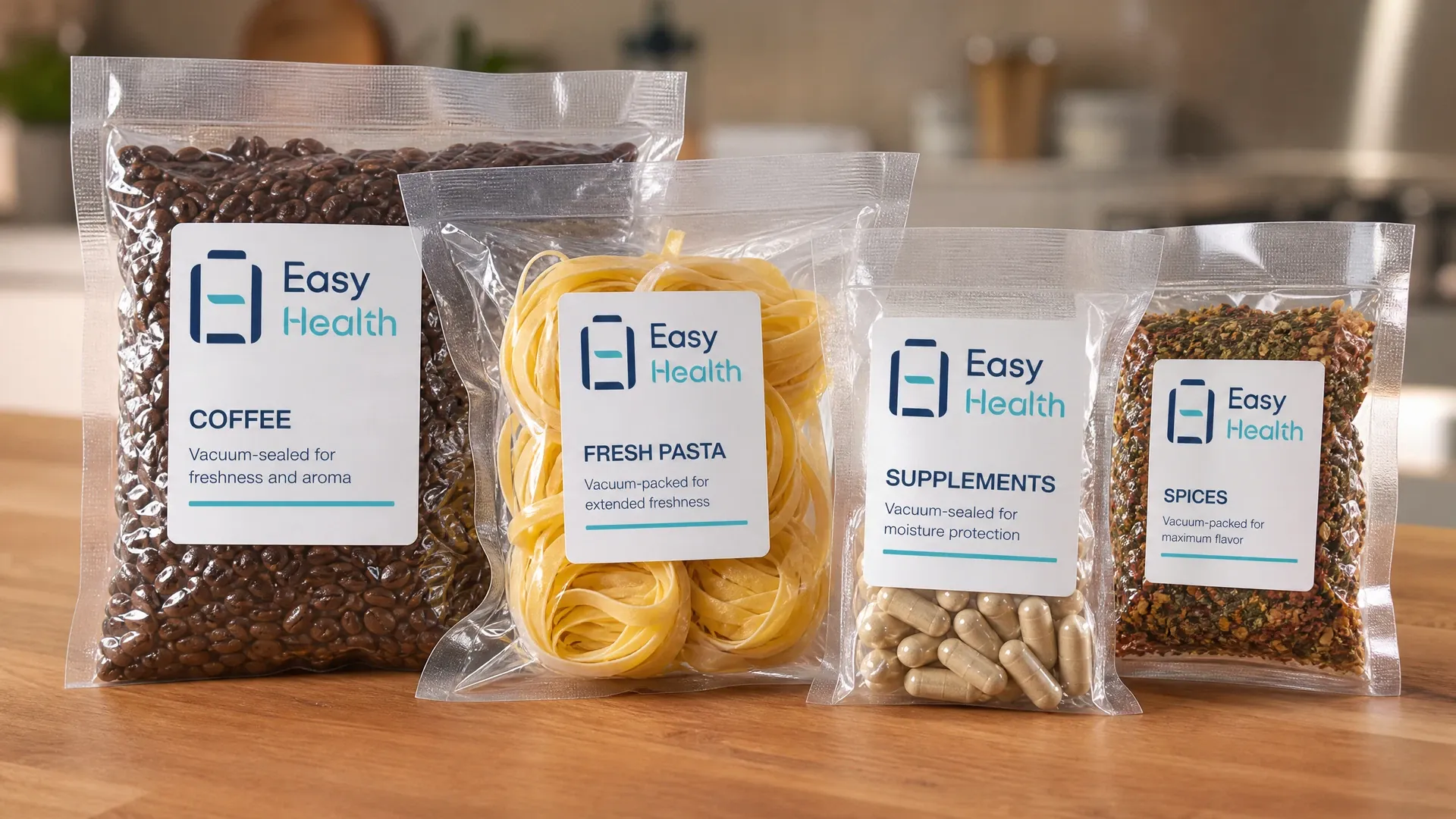
The visuals outline the step-by-step differences between vacuuming and nitrogen flushing, retail appearance considerations for vacuum-packed goods, common seal integrity checks, and how to group multiple SKUs on the same line. You will also see how pouch styles, seal widths and hang holes affect retail and logistics.
Seal integrity and leak checks
Seal quality underpins vacuum and nitrogen performance. At design stage, consider double tracks or wider seals, easy-tear notches and rounded corners. In production, control heat, pressure and dwell time and maintain hygienic filling to avoid inclusions, wrinkles and contamination. Typical checks include visual inspection, drop and compression tests, water immersion under vacuum, and residual oxygen sampling for nitrogen-flushed packs. For diverse product lines, group by density and oil content to set parameters. Easy Health coordinates materials and packaging production, with test plans and frequencies assessed and confirmed by an account manager.
- Wider/double seals increase tolerance
- Control seal heat/pressure/time and hygiene
- Group SKUs by density/oil for parameter sets
- Use RO2 sampling and vacuum water tests
Usage and logistics: vacuum level, headspace and palletising
Vacuum level and headspace shape appearance and protection. For fragile items, use partial vacuum plus nitrogen as cushioning; rigid, regular products can take higher vacuum to improve case efficiency. Altitude and temperature shifts affect pressure differentials: check film elongation and carton compression for nitrogen-filled packs; for vacuumed packs, prevent point loading from sharp edges. Store with controlled light, temperature and humidity and apply FIFO. When using sticks, pouches or blisters, align hang holes, tear notches and barcode placement for retail display and scanning.
- Fragile items: partial vacuum + nitrogen
- Account for altitude-related bulging/pressure
- Co-design carton compression and dividers
- Plan hang holes and barcode positions
How Easy Health coordinates packaging reviews in Hong Kong
- Brief and product review:Assess product form, oil/water content, fragility and channels to set residual O2 and appearance targets.
- Material and structure proposal:Account manager coordinates film choice (barrier, thickness, puncture resistance) and pouch/tray structure.
- Prototyping and tests:Produce samples and run seal, compression/drop, residual oxygen and appearance stability checks.
- Artwork and labelling:Coordinate labels and cartons; cross-check key information and font sizes against applicable rules.
- Packaging production coordination:Arrange materials and production, monitor seal parameters and sampling frequencies.
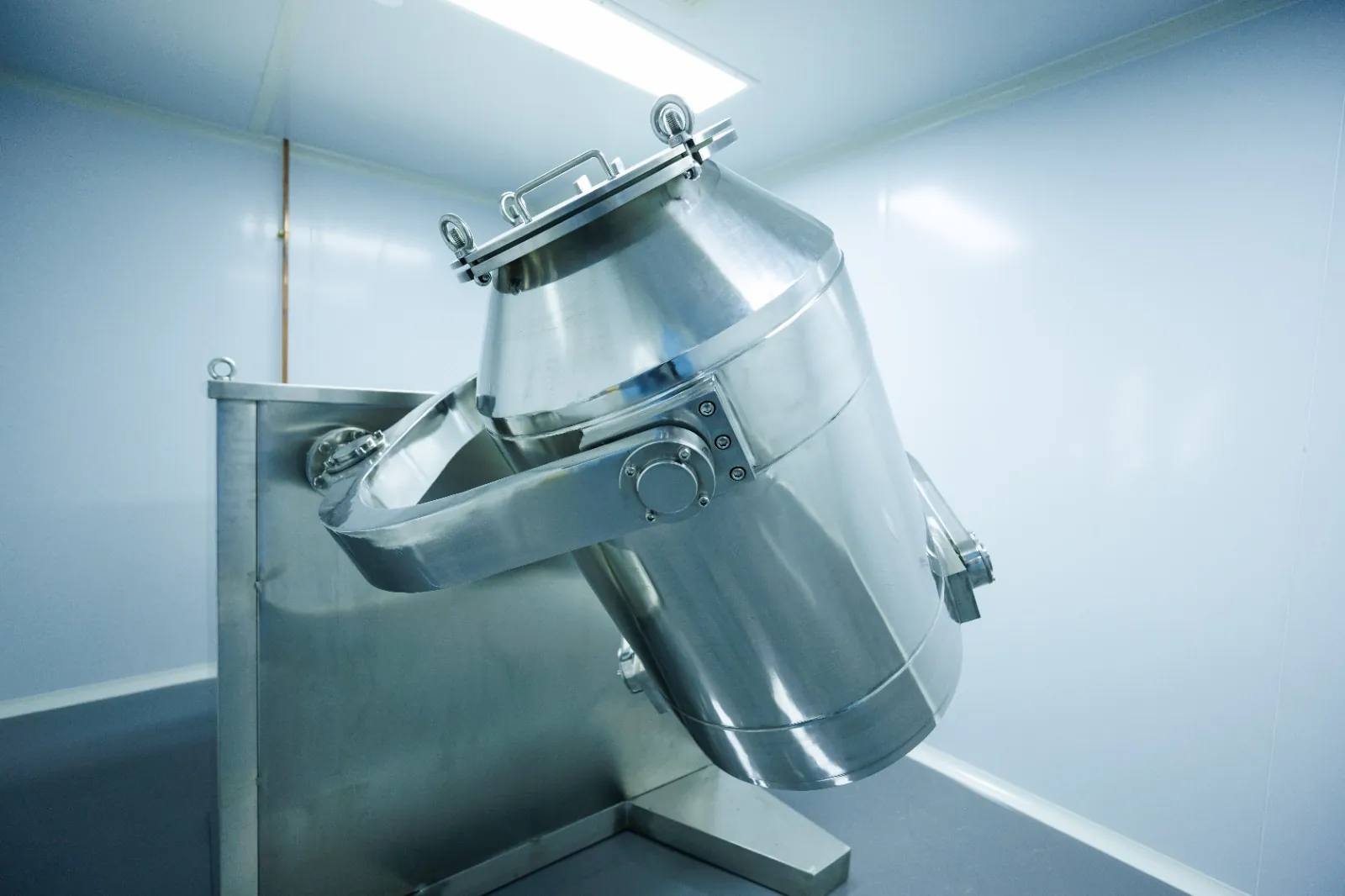
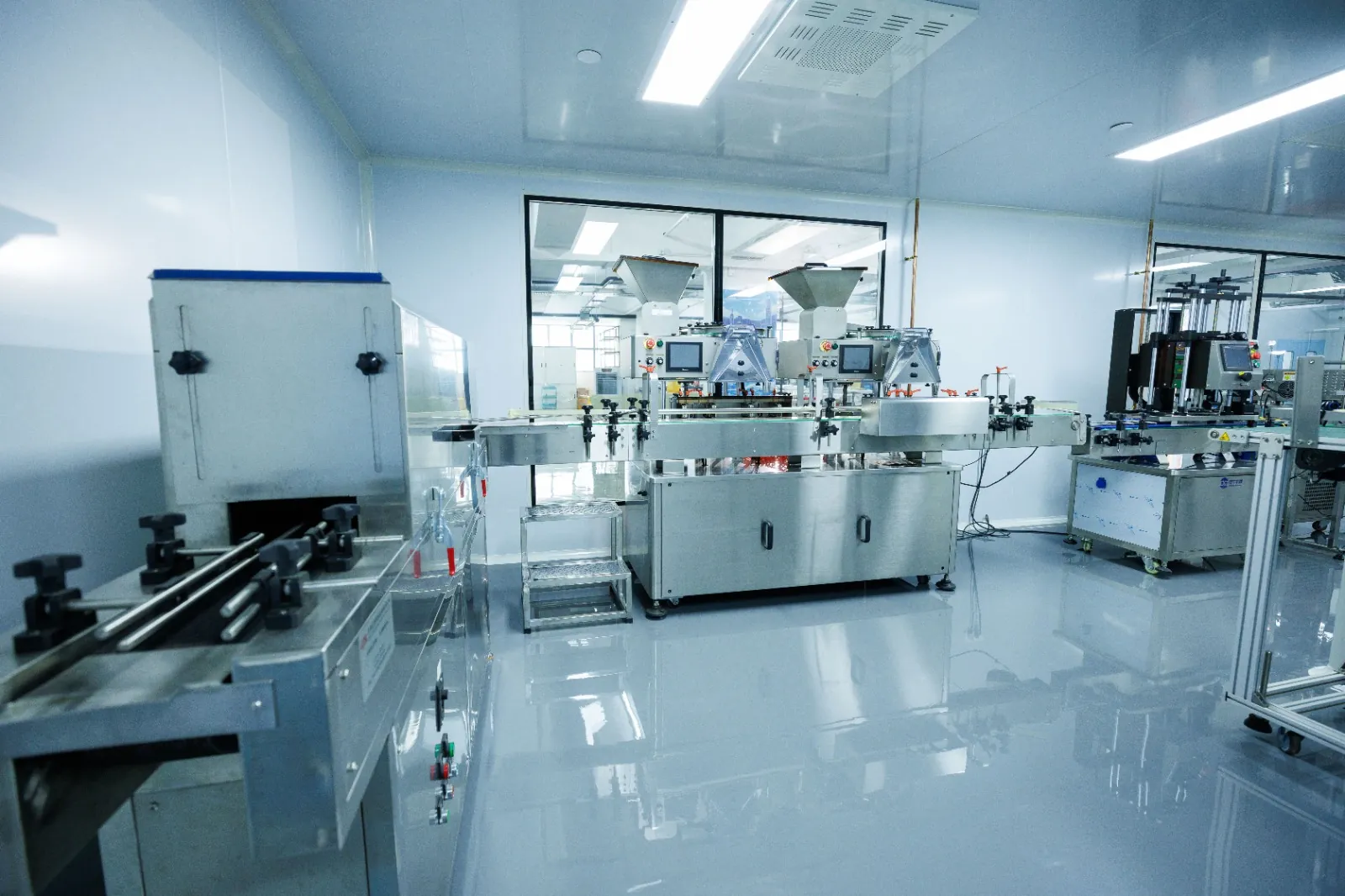
Inside the Easy Health Hong Kong Facility

Typical structures for vacuum and nitrogen-flushed food packaging
| Method | Typical structure | Suitable products | Display notes |
|---|---|---|---|
| Vacuum | PA/PE; thicker PA | Cooked foods, frozen goods, rigid items | Tight fit, low volume, case efficient |
| Nitrogen | PET/AL/PE; PET/EVOH-PE | Chips, biscuits, nuts, oil-rich items | Headspace required; stiffness and anti-wrinkle |
| Partial vacuum + N2 | Puncture-resistant outer + high barrier inner | Fragile items needing cushioning | Balances crispness with shipping cube |
| With O2 absorber (if used) | High-barrier structures | Oxygen-sensitive with longer shelf targets | Clear labelling and proper placement |
Guidance is indicative. Final setups depend on samples and actual line conditions.
Pre-sampling checklist
- Target shelf life and residual O2 (if applicable)
- Fragility/sharp edges and pressure tolerance
- Need for window, light block or print masking
- Logistics profile: altitude, climate and stacking
- Label languages and mandatory items confirmed
- Filler model, sealing conditions and test methods
Vacuum and nitrogen packaging FAQs
Can I run both vacuum and nitrogen on the same pouch style?
Often yes for stand-up or flat pouches, but you must set separate vacuum levels, nitrogen flow and seal parameters. If stiffness is low, nitrogen-filled packs may wrinkle or topple; adjust film rigidity or pouch geometry (e.g. add gussets/trays). Your account manager will assess feasibility by product and line setup.
What labelling and regulatory checks are needed?
In Hong Kong, refer to the Food and Drugs (Composition and Labelling) Regulations (Cap. 132W) and the “1+7” nutrition scheme; for traditional Chinese medicine elements, see the Chinese Medicine Ordinance (Cap. 549). For Mainland China, check GB 7718 and GB 28050. Other markets may impose additional rules; consult local bodies. We coordinate label and carton content checks.
How should I prepare artwork for vacuum or nitrogen pouches?
Supply editable vector files (fonts outlined/embedded), mark seal areas, tear notches, hang holes and window positions, and keep key info away from seals. For metallised/foil layers, specify white underprint and blocking layers; reserve quiet zones for barcodes and validate scannability on material samples.
What functional tests should samples undergo?
We recommend seal strength, appearance/wrinkling checks, vacuum water immersion, drop/compression tests, and residual oxygen sampling for nitrogen packs. For puncture-prone products, include puncture resistance and stacking simulations. Your account manager will confirm test frequency and methods per project.
What structures suit frozen foods?
PA/PE or PE-based seal layers with low-temperature performance are common to balance puncture resistance and flexibility. Add high barrier if light exclusion or oxidation control is needed. Note that thawing moisture can affect seals and label adhesion, so test peel and water resistance during sampling.
Related Packaging Services
Discuss your vacuum or nitrogen pouch plan
Send your product samples and packaging needs via WhatsApp. An Easy Health account manager in Hong Kong will review materials, structures, labelling and test plans, then arrange prototyping and coordinate packaging production. Timelines vary by project.
Last updated: