Food Packaging Types for Different Product Formats
Food packaging types are more than looks. Layer structure, sealing, barrier, logistics stacking and labelling affect product stability and shelf presentation. With a Hong Kong facility, Easy Health offers coordination across bottles, pouches, stick packs and blisters to align healthy food packaging design with supply chain needs.
Summary:Choosing the right food packaging type? This guide maps materials and structures to real use cases—dry vs moist, ambient storage, oxygen/moisture barriers—plus food packaging design, printing and labelling essentials.
How to Balance Appearance, Protection and Regulatory Checks
Start with product traits: oxidation, moisture uptake, light sensitivity. Then assess channel and storage: ambient, chilled or cross-border shipping. Define printing and labels: Chinese text, nutrition facts and batch data. Food packaging design typically fixes material first (glass, PET, foil laminate, paper laminate), then structure (stand-up pouch, blister, wide-mouth jar, stick pack). Food packaging printing and finishes follow run size and artwork detail; reserve space for mandatory text and QR codes to avoid late rework.
Common Food Packaging Types and Use Cases
Map type to product traits. Dry powders or crispy snacks: foil or high-barrier pouches; oil-rich nuts: nitrogen-flushed and light-shielding; liquids or viscous products: bottles or cups with lidding films. For local retail, shelf presence and opening experience matter; for cross-border e‑commerce, compression resistance, sealing and shipper fit are critical. Healthy food packaging design should reflect dosage and frequency: stick packs for single-serve accuracy, blisters for compartmentalised protection, wide‑mouth jars for refill formats. Easy Health coordinates bottles, pouches, stick packs and blisters, with sampling and production orchestration at our Hong Kong facility.
- Stand-up pouch: strong facing for shelves
- Foil laminate: high O2/light barrier
- Wide-mouth jar: easy access + desiccant
- Stick pack: single-serve portability
Materials and Barriers: Matching Oxygen, Moisture and Light
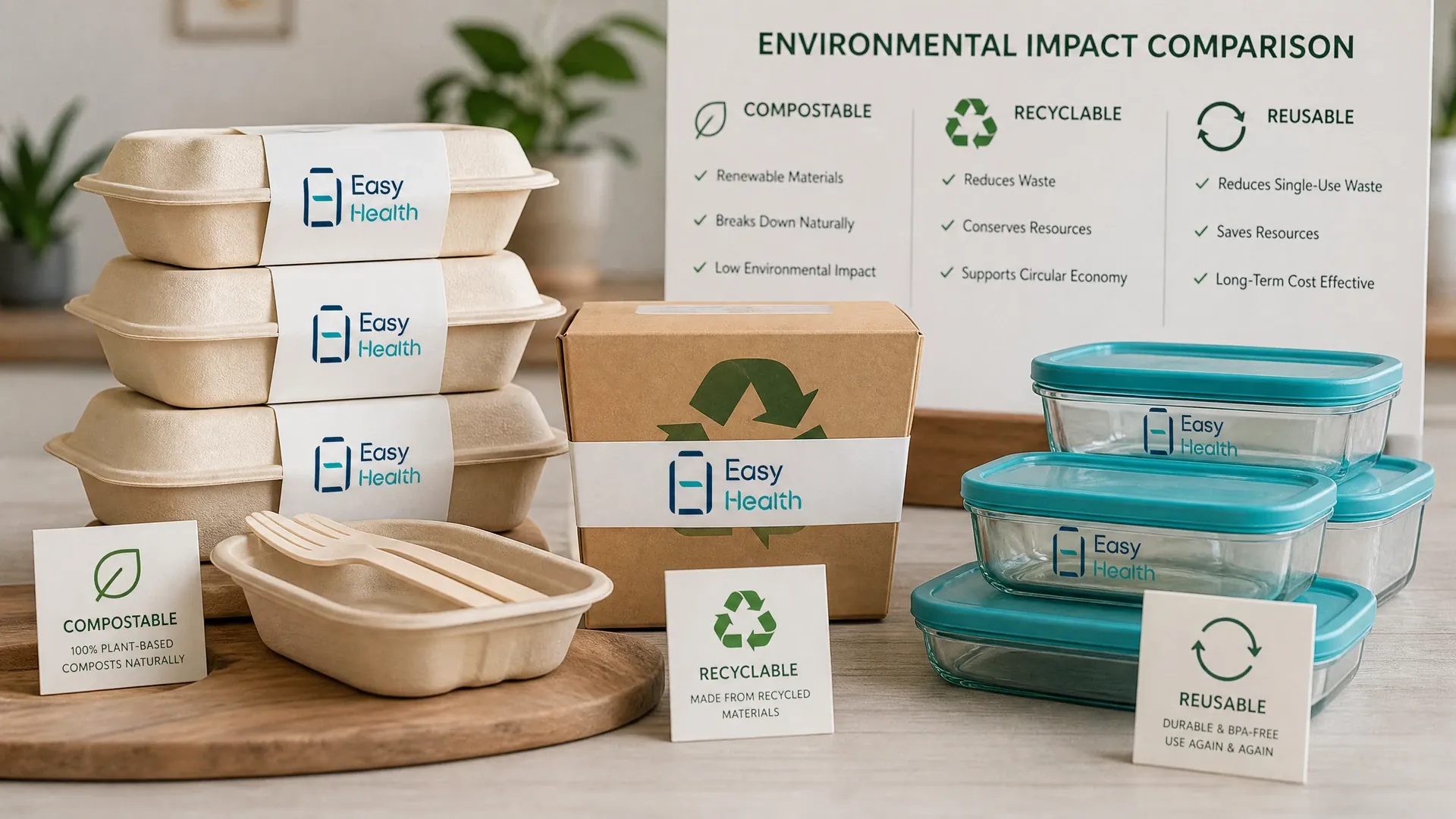
Barrier depends on material and thickness. Glass provides strong gas barrier and heat tolerance for liquids or products needing high cleanliness. PET/HDPE are lightweight and shatter‑resistant for beverages and granules. Foil laminates (e.g., PET/AL/PE) block oxygen, moisture and light for oils or actives. Paper laminates add tactility and eco‑perception but require oil/moisture validation. For hygroscopic goods, add desiccants and pick high MVTR barriers; for oxidation risks, consider vacuum or nitrogen and minimise headspace. Reserve heat‑seal zones and tear notches without cutting through barrier layers.
- Glass: inert and high barrier
- PET/HDPE: light, robust, optional clarity
- Foil laminate: O2/H2O/light shield
- Paper laminate: tactile; verify grease/wet
How Packaging Formats Affect Shelf Display and Storage
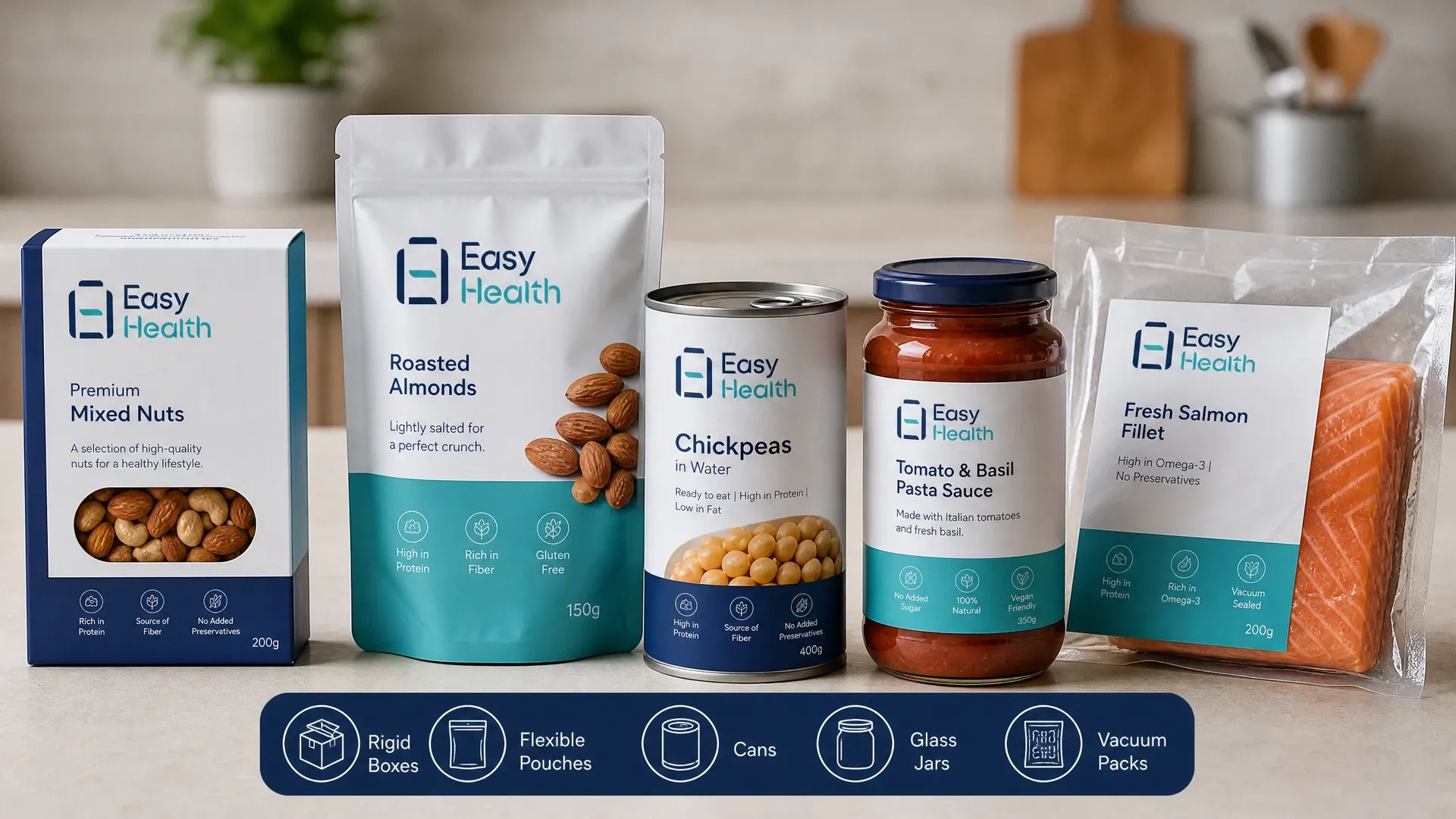
See how bottles, stand-up pouches, stick packs and blisters differ in facing area, case density, tear notch and seal zones, plus stacking and single‑unit pick efficiency.
Food Packaging Artwork, Printing and Labelling Checks
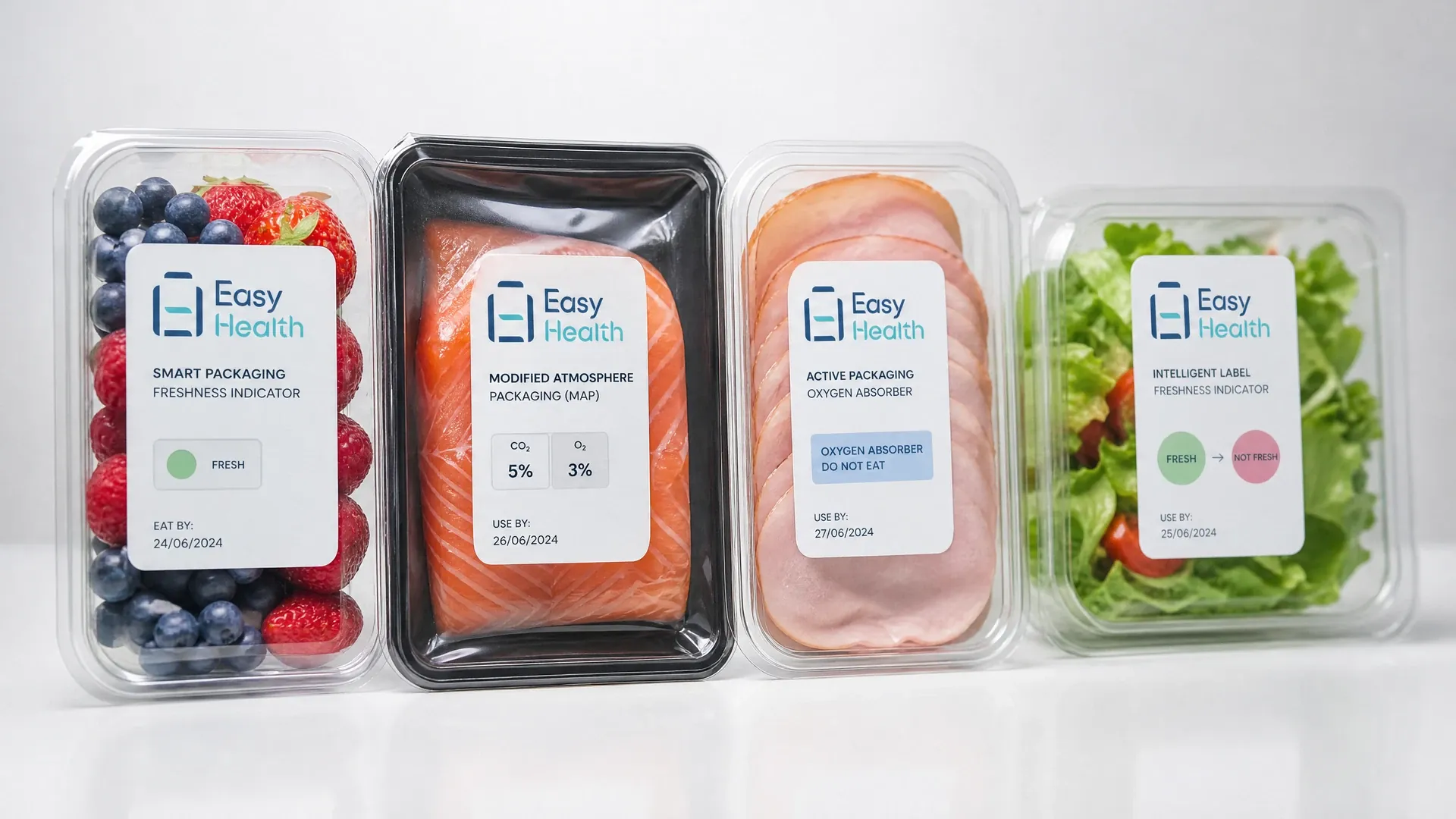
Food packaging printing must balance brand visuals and regulation. In Hong Kong, observe Cap.132W and the “1+7” nutrition scheme; for products involving Chinese medicines, see the Chinese Medicine Ordinance (Cap.549). For Mainland China, review GB 7718 and GB 28050. Plan early for mandatory fields: ingredient list, net quantity, instructions, storage, origin, batch and date marks, and space for QR/traceability. Keep critical text away from tear or seal areas; ensure legible contrast and type size. Choose matte/gloss finishes that remain scannable.
- Place legal text before key visuals
- Ensure net quantity legibility
- Keep seals from overlapping text
- Reserve batch/date coding area
Practical Supply-Chain Checks Before Artwork Sign-Off
Before artwork sign-off, confirm pack dimensions and filling method to avoid rework from neck or seal mismatch. For logistics, validate shipper fit, carton weight and stacking, and run drop/vibration checks per channel. For multi‑flavour ranges, use a universal carton plus variant labels to reduce plate changes. For healthy food packaging design, add serials or QR for anti‑tamper/interaction and link with warehouse scans. Easy Health coordinates label/carton sourcing, sampling and packaging production in Hong Kong; details and timing are assessed and confirmed by an account manager per project.
- Fix neck/seal width/web direction first
- Validate carton–pallet compatibility
- Use master box + variant labels
- Reserve trace/warehouse scan zones
Packaging Coordination Process
- Needs and regulatory scoping:Review product traits, target markets and compliance list; outline material and structure options.
- Sampling and testing advice:Arrange sampling in Hong Kong and advise on barrier, seal and logistics checks.
- Artwork and printing planning:Map printing and labelling needs; reserve legal text and coding zones.
- Material sourcing and production:Coordinate labels, cartons and packaging materials, and orchestrate production and QC.
- Final confirmation and dispatch:Account manager assesses and confirms details as needed; timing is project‑dependent.
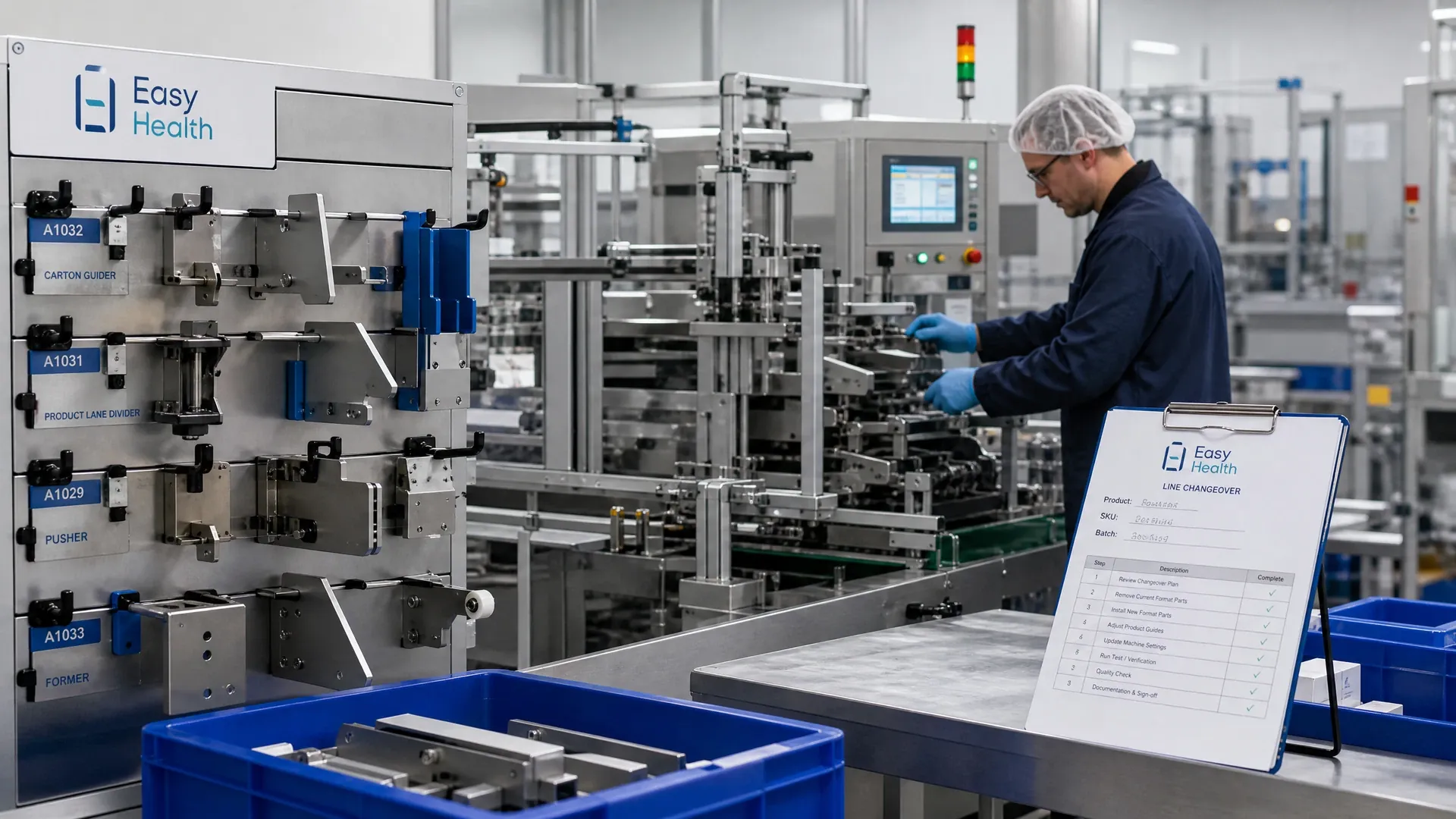
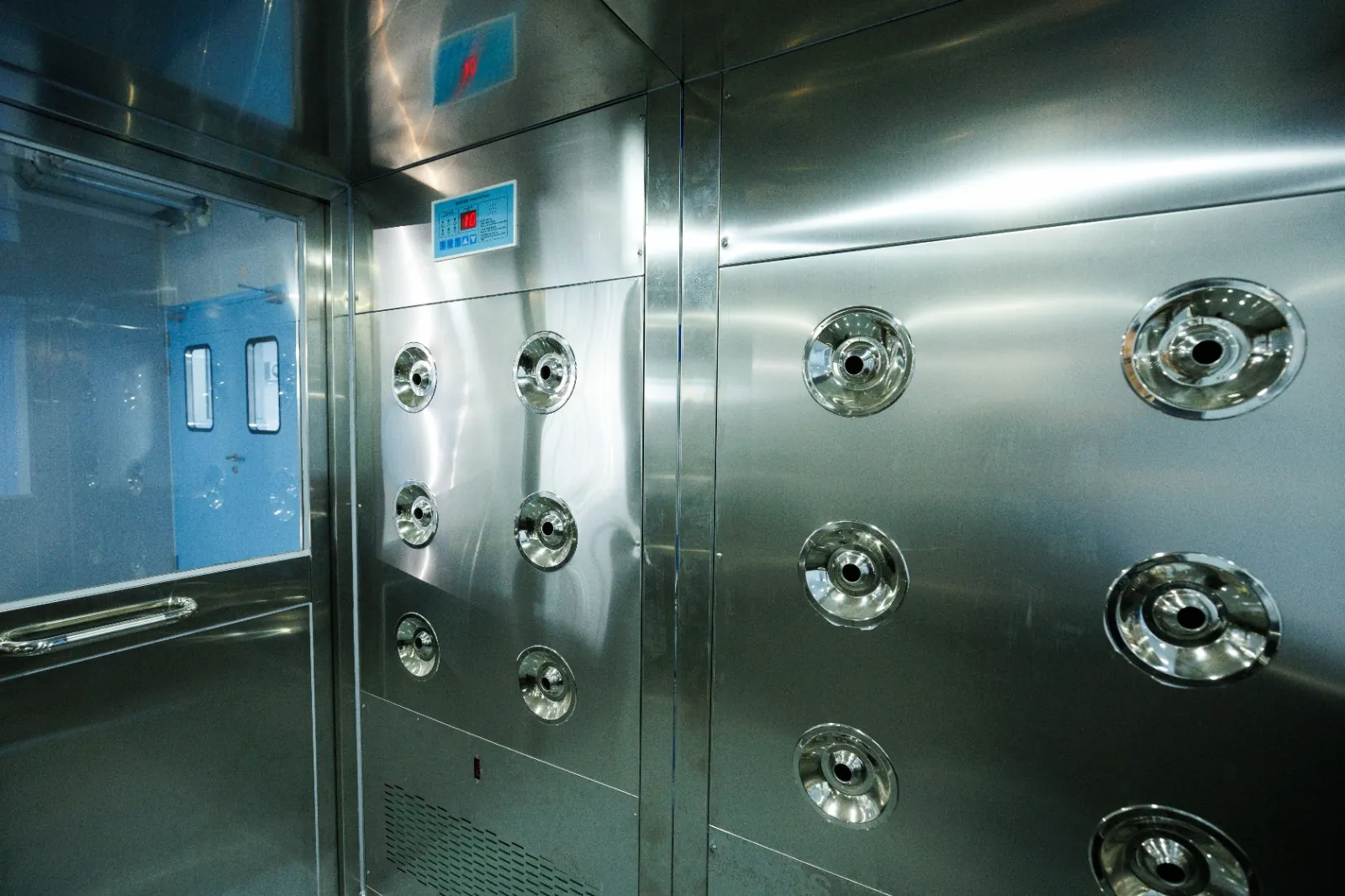
Inside the Easy Health Hong Kong Facility


Food Packaging Materials and Structures Compared
| Type | Typical structure | Suitable products | Barrier/notes |
|---|---|---|---|
| Glass bottle/jar | Glass + metal cap | Liquids, sauces, honey | High barrier; heat tolerant; light-shielding optional |
| PET/HDPE bottle | Mono or multi‑layer | Beverages, granules, tablets | Light, robust; check OTR |
| Stand-up/flat pouch | PET/AL/PE or paper laminate | Snacks, powders, nuts | High barrier; shelf‑friendly; seal integrity |
| Stick pack | PET/AL/PE or BOPP/PE | Instant drinks, powders | Single‑serve; portable; easy tear |
| Blister | PVC/PVDC or PET + foil | Tablets, gummies, films | Compartmental protection |
Typical options only; final material and thickness require testing per product and market needs.
Packaging Sign-Off Checklist
- Confirm fill volume, tolerance and headspace to prevent bulging or leaks
- Seal/cap specs match the filling process
- Net quantity, ingredients, batch and date marks are legible
- Barcodes/QRs scan reliably; finishes do not hinder reading
- Logistics tests and shipper stacking strength validated
- Variant labelling plan for shared packaging confirmed
Food Packaging Types FAQs
How Should I Choose Between a Stand-Up Pouch and a Glass Jar?
Base it on contents and channel. Glass suits liquids and products needing cleanliness or heat tolerance. Pouches suit lightweight retail items with larger facing. For oxidation/moisture risks, use foil laminates and robust seals; for repeated scooping, pick a wide‑mouth jar.
How Should I Prepare Artwork for Food Packaging Printing?
Supply editable vectors with fonts/links, including bleed, trim and fold lines. Reserve legal text and coding zones early. Indicate colour mode and spot colours. If lamination or embossing is planned, mark it to validate scanability and legibility during sampling.
What Should I Note for Health Food Packaging Design?
Beyond basics, ensure clear dosage, directions and storage. Stick packs and blisters aid convenience and traceability; reserve QR space for interaction if needed. Avoid therapeutic claims and review Hong Kong Cap.132W and “1+7”, or Mainland GB 7718/28050 as applicable.
Can I Arrange Packaging Sampling Before Sign-Off?
Sampling can be arranged to validate barrier, sealing, filling fit and logistics readiness. Specifications and timing are assessed and confirmed by an account manager, with coordination at our Hong Kong facility.
How Can I Strengthen Packaging for Shipping?
Secure primary seals and compression strength, add dividers/cushioning, validate shipper–pallet fit, and run drop/vibration checks by channel. Keep critical labels away from scuff‑prone edges and protect scan zones with selective lamination.
Related Packaging Services
Discuss Food Packaging Types with Our Hong Kong Team
Need tailored advice for your product and channel? Contact Easy Health on WhatsApp. We coordinate sampling, labels and cartons, and options across bottles, pouches, stick packs and blisters in Hong Kong. Details and timing are assessed and confirmed by an account manager.
Last updated: