Flexible food packaging for food pouches
This page focuses on food pouch packaging, covering stand-up pouches, three-side seal, spouted formats and vacuum/nitrogen applications. Easy Health offers OEM/ODM, packaging design, labels and cartons, and coordinates materials and printing. Projects are coordinated in our Hong Kong facility under controlled conditions referencing GMP principles and the FSSC 22000 framework; applicable standard/certificate scope can be confirmed per project, and we work with brands in Hong Kong and the Greater Bay Area.
Summary:End-to-end food pouch support: material and barrier selection, openings and zippers, labels and print coordination. Production coordinated in Hong Kong under GMP with FSSC 22000. Sampling and pilot runs help de-risk future filling and scale-up.
How do I choose the right pouch structure and barrier for my food?
Define product properties (oil, moisture, acidity, odour), heat treatment (pasteurisation, retort, ambient fill), shelf-life goals, and sales/fulfilment scenarios (e-commerce, shelf display, hanging). Then match materials and structures: for high barrier, consider PET/AL/PE or NY/AL/PE; for transparency, PET/NY/PE; for seal strength and stiffness, use CPP or thicker PE as the seal layer. Finalise opening style, tear notch, zip and hang hole, and plan labels per regulations.
Stand-up pouch food packaging: balancing display and stability
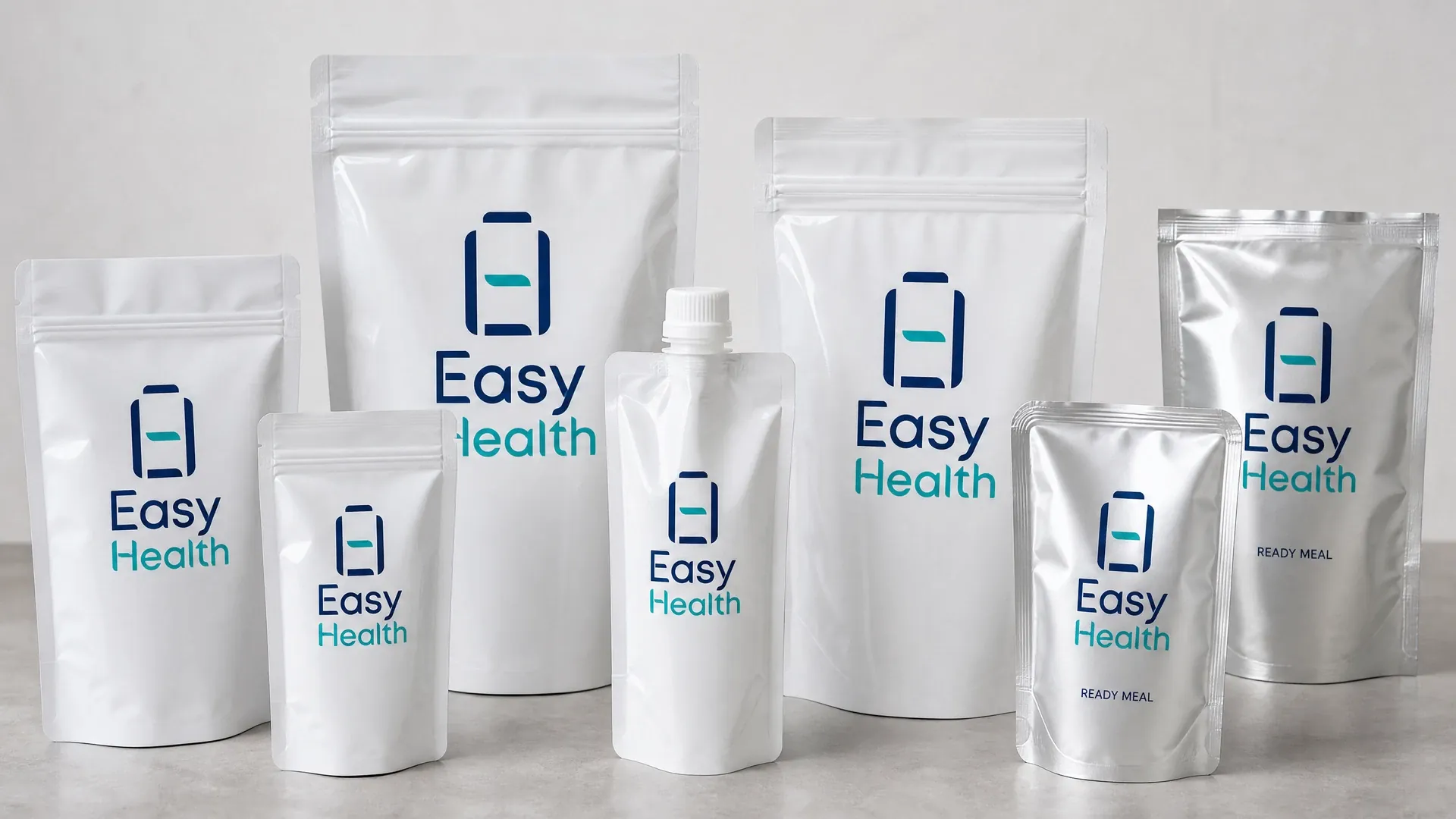
Stand-up pouches suit cereals, dried fruits, powders, pet treats and ready-to-use mixes. Stability depends on the bottom construction and seal strength. Common bases include Doyen (rounded bottom seal) and K-Seal (corner-reinforced); the latter handles heavier fills and stands more firmly. For high light and aroma barrier, consider PET/AL/PE; for visibility, use PET/NY/PE or all-PE with barrier coating. Add a zip for reclosure; position tear notches and rounded corners for better handling. Reserve Euro or sombrero holes for peg displays. Align spout/zip specs, product flow properties and sealing window, and plan drop and transport tests early.
- Choose Doyen or K-Seal per weight and look
- Use PET/AL/PE for high barrier; PET/NY/PE for clarity
- Match zip spec and notch to filling line needs
- Provide hang holes for retail pegs
Aluminium foil food pouches: barrier choices for oxygen, light and odour
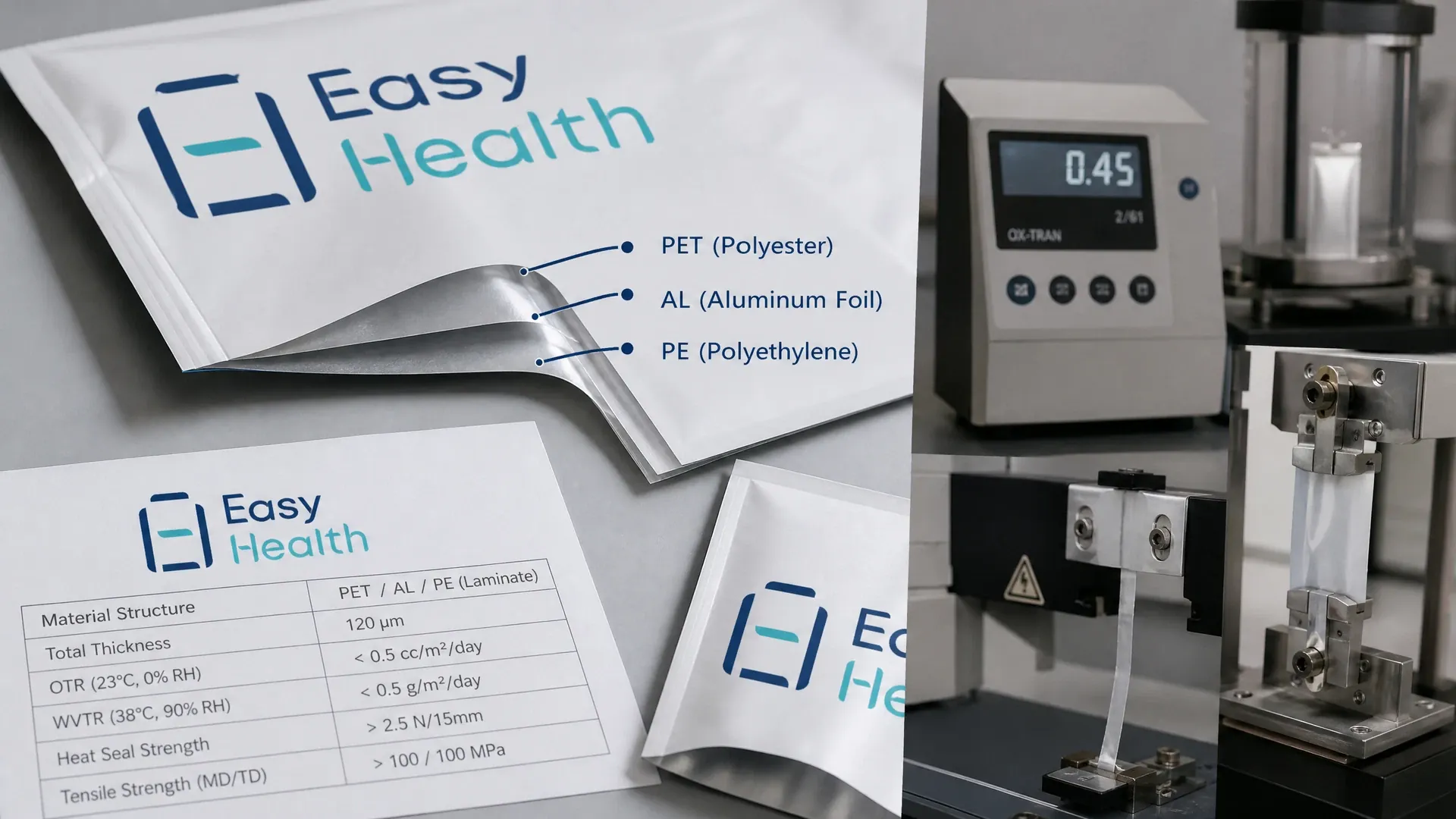
Aluminium-foil pouches are ideal for coffee beans, tea, seasonings, oil-rich nuts and spices requiring high barrier. Typical laminations are PET/AL/PE or NY/AL/PE: printable stiff outer, foil as light/oxygen barrier, and PE as the seal layer. For nitrogen flushing, allocate a degassing valve and rounded corners, and tune sealing pressure to avoid puncture. To minimise pinholes, define foil thickness benchmarks and inspection criteria; for salty/acidic recipes, verify inner layer compatibility and migration. Labelling should comply with Hong Kong Cap.132W and the “1+7” nutrition scheme; for Mainland China, reference GB 7718 and GB 28050.
- Common builds: PET/AL/PE, NY/AL/PE
- Add valves for nitrogen and roasted coffee
- Specify foil thickness and pinhole checks
- Label per Cap.132W and the 1+7 scheme
Visual guide: structures, materials and filling
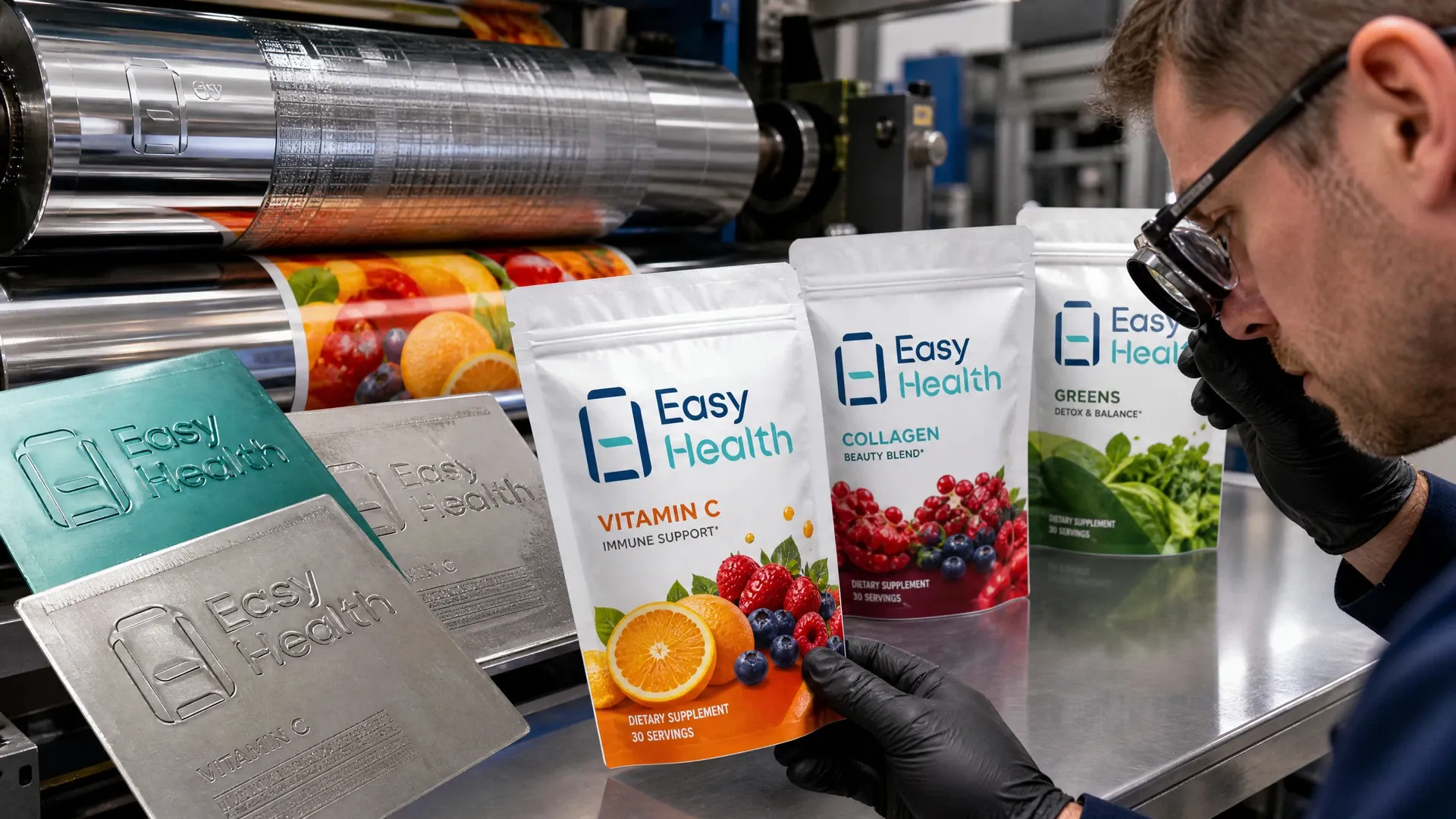
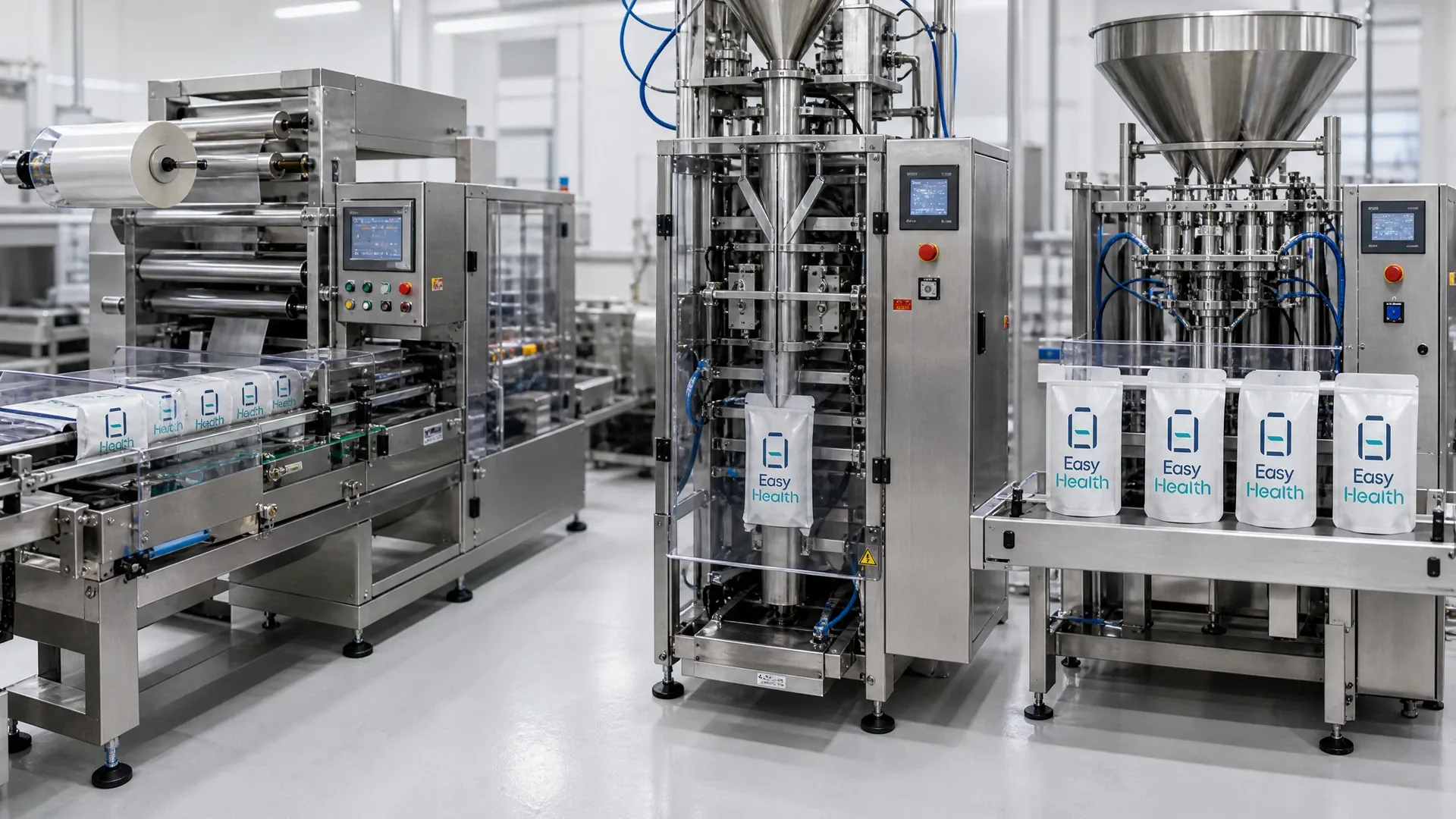
Use the visuals to review common pouch formats (stand-up, three-side seal, spouted), material stacks (PET, NY, AL, PE, CPP), and positions for zips/tear notches. Printing diagrams and filler infeed compatibility are also illustrated. We recommend pairing this with physical samples and seal tests.
Filling, sealing and testing checks for flexible food packaging
For flexible food packaging, align heat treatment, filling method and sealing parameters. Powders/granules suit three-side seal or stand-up pouches; viscous products benefit from side/top spouts; for pasteurisation/retort, consider NY/CPP, PET/NY/CPP or heat-resistant PE as the seal layer. Validate seals via dye ingress, vacuum decay/impact and drop tests; oil-rich recipes need seal-through-contamination resistance. In logistics, reinforce corners and shipper cushioning for e-commerce; for in-store stacks, prioritise stiffness and facing area. Easy Health coordinates materials, printing and sampling, and arranges trials and packaging production at our Hong Kong facility.
- Match 3-side, stand-up or spout to rheology
- Heat needs define seal layer and laminate
- Use dye and vacuum methods for seal checks
- Reinforce corners for e-commerce shipping
Printing and labelling: colour control and compliant placement
Choose gravure for long runs with rich colours, or digital for variant-heavy or flexible prepress needs. Reserve unprinted zones near windows, zips and tear notches to reduce misregister; confirm matte/gloss varnish areas and crease behaviour. Labels should include name, ingredients, net quantity, origin, directions, allergens and nutrition per Hong Kong Cap.132W and the “1+7” scheme; for Mainland, reference GB 7718 and GB 28050. If TCM-related ingredients are involved, check Cap.549 applicability. Easy Health coordinates labels and cartons, with an account manager evaluating and confirming each project.
- Gravure for colour-rich long runs; digital for variants
- Keep unprinted zones near zips/notches/windows
- Show allergens and the 1+7 nutrition panel
- AM evaluates and confirms each project
Food pouch packaging workflow
- Brief and regulatory check:Define product, shelf-life goals, markets and applicable regulations; gather formulation and filling conditions for initial assessment.
- Material and structure proposal:Propose laminations, thickness, base type and openings per product and process, and plan test items.
- Dieline and artwork alignment:Provide dielines and safe areas; align label, barcode and window placement; pre-check regulatory elements.
- Sampling and functional tests:Arrange pouch and print proofs; run seal, drop and leak tests; refine parameters if needed.
- Filling fit and pilot run:Match spout/opening and process with the filler; coordinate a pilot run to verify continuity when required.
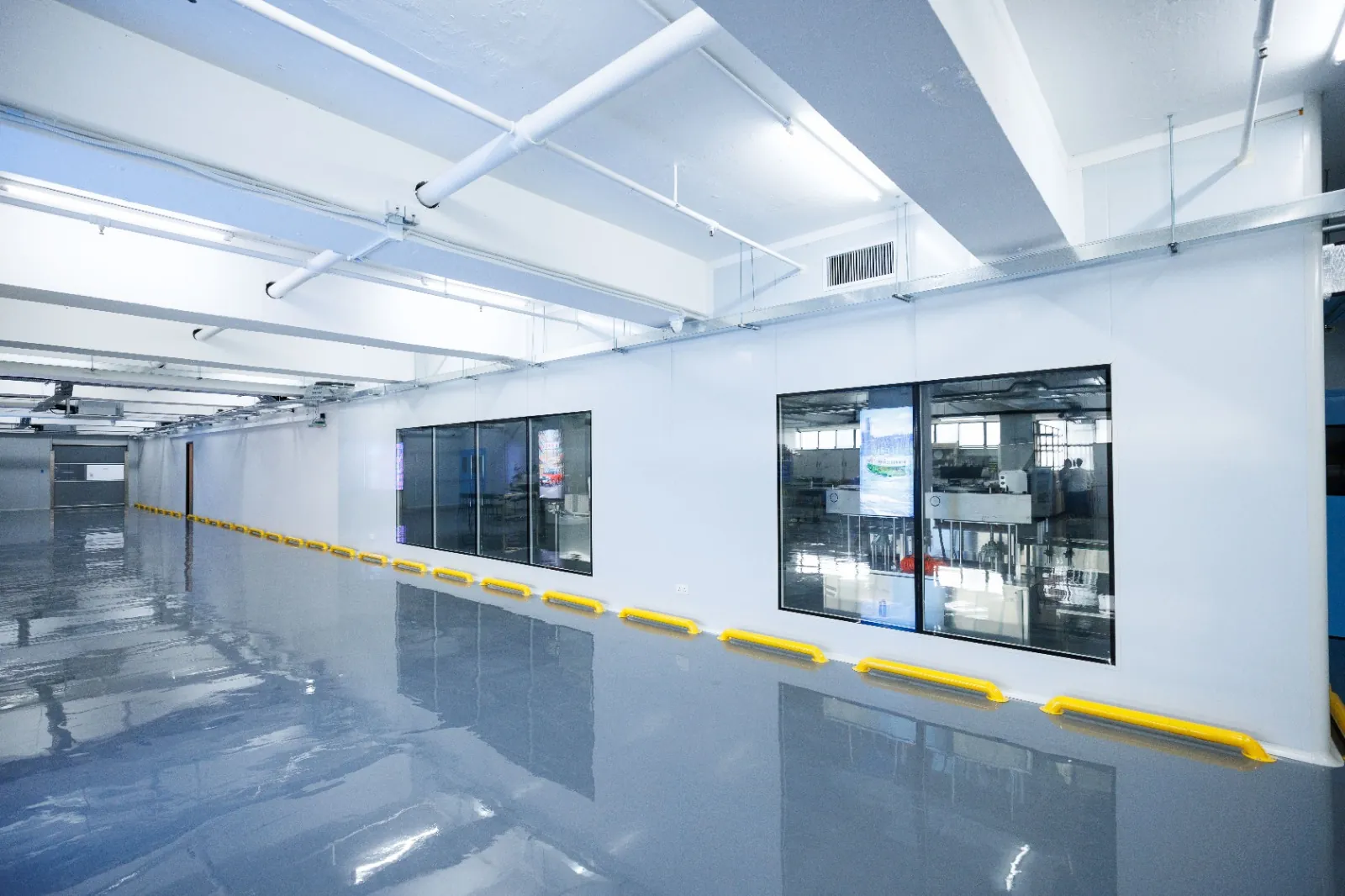
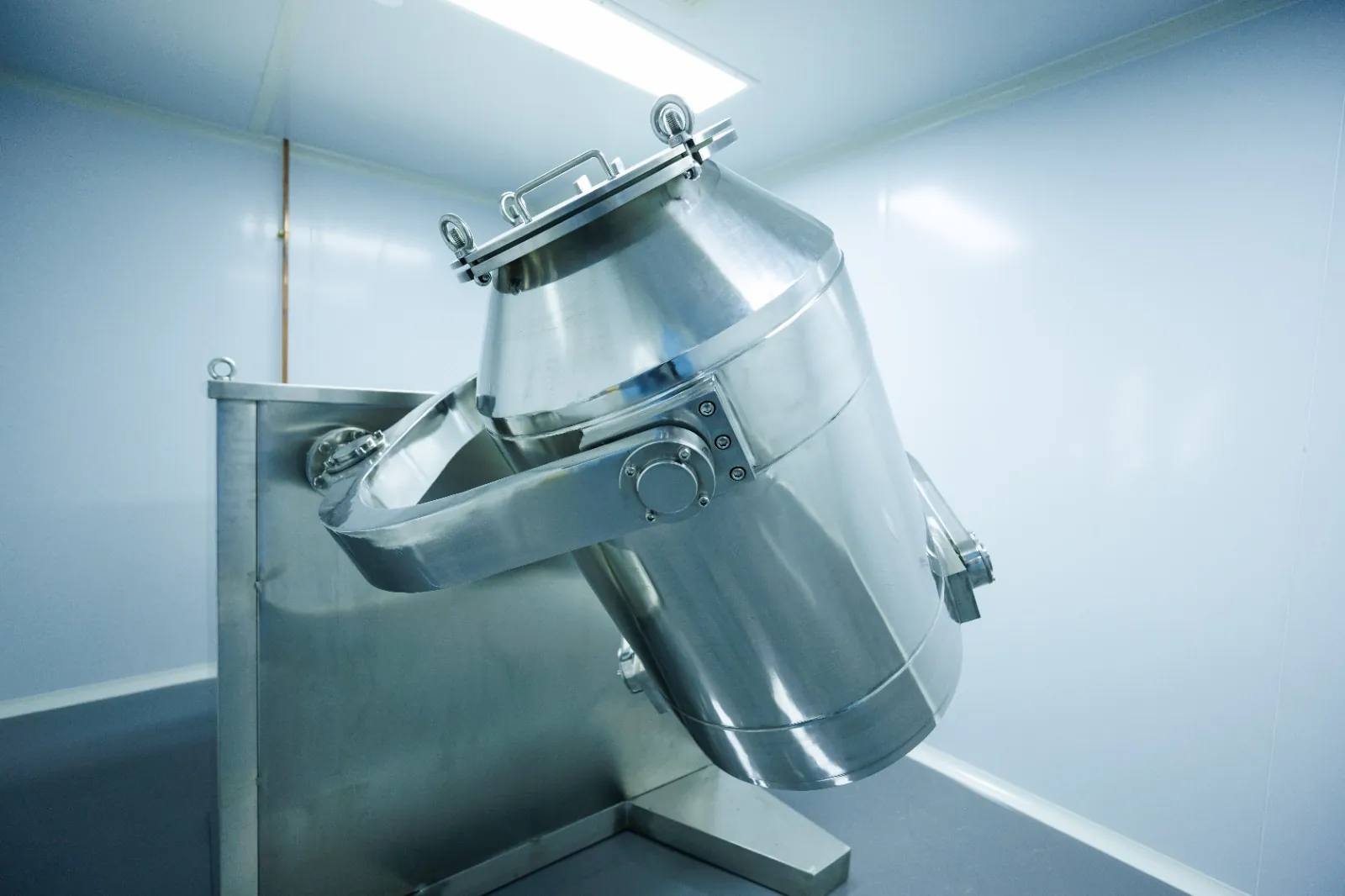
Inside the Easy Health Hong Kong Facility

Common food pouch types and material notes
| Pouch type | Typical lamination | Suitable products | Barrier & key notes |
|---|---|---|---|
| Stand-up | PET/NY/PE or PET/AL/PE | Cereals, dried fruits, snacks | Large facing; K-Seal for heavier fills |
| 3-side seal | PET/PE, NY/PE | Powders, small seasoning packs | Simple build; good for flat packs |
| Spout pouch | PET/NY/PE or PET/NY/CPP | Sauces, concentrates, purees | Controlled dispensing; match spout to filler |
| Vacuum | NY/PE, PET/NY/PE | Cooked foods, meats (secondary) | Reduces oxidation; seal cleanliness critical |
| Heat-resistant | PET/NY/CPP | Pasteurised/heat-treated foods | High-temp capable; verify shrink and seal |
For reference only. Final structures/thicknesses will be evaluated and confirmed by our account manager per project.
Food pouch packaging checklist before confirmation
- Minimum opening size matches granule/powder flow
- Seal layer tolerates oil and moisture contamination
- Drop and compression tests for retail/e-commerce passed
- Labels compliant; visibility/obscuration areas defined
- Zip, tear notch and hang hole align with dieline
- Sealer temperature and pressure windows agreed with filler
Flexible food packaging FAQs
For small powder sachets, should I choose three-side seal or stand-up?
Choose stand-up with a zip if shelf display and reclosure matter; for on-the-go or trial sizes, three-side seal is lighter and suited to strip/intermittent filling. Verify powder flow, minimum opening, and sealing window, and confirm performance with drop and leak tests.
Are aluminium foil pouches always opaque? Can I add a window?
Foil laminates are typically opaque. If a window is required, design an area without foil or use transparent high-barrier materials (e.g., coated PET/PE). Assess reduced barrier at the window and its shelf-life impact, and validate via oxygen transmission and vacuum-impact tests.
How do I choose a zip profile?
Match product granularity/viscosity to single- or double-track zips, then validate opening force for your target users. If metal detection is required, keep dense ink away from critical areas. Avoid placing zips near rounded corners or hang holes, and define seal margins on the dieline for post-fill sealing.
How do I confirm materials for heat-treated products?
Share time/temperature and medium (steam or hot water). NY/CPP or PET/NY/CPP are common heat-resistant builds. Test post-process seal strength and appearance (shrink, wrinkling), and verify ink and varnish heat resistance and adhesion.
What are the essential labelling items?
Per Hong Kong Cap.132W and the '1+7' nutrition scheme: product name, ingredients list, net quantity, origin, directions/storage, allergen declaration and nutrition information. For Mainland shipments, reference GB 7718 and GB 28050, and seek confirmation with local bodies or professional advisors.
Related Packaging Services
Discuss your flexible food packaging needs via WhatsApp
Share your product profile, target markets and shelf-life goals. Easy Health will evaluate materials and structures per project, and arrange sampling and packaging production coordination. Timelines vary by project and will be confirmed by our account manager.
Last updated: