Hong Kong Food Labelling Checklist for Pre-Artwork Review
This page focuses on the retail-facing essentials of Hong Kong food labelling regulations: what must be displayed, how to place it on pack, and how it ties in with the 1+7 nutrition scheme. We provide actionable design and review steps to help managers avoid common pitfalls early; a dedicated account manager will assess and confirm details as needed before launch.
Summary:For Hong Kong and Greater Bay Area food brands, this page distils Hong Kong food labelling regulations: mandatory particulars, prepackaged rules, nutrition labelling (1+7), and cross-border notes. It adds actionable layout guidance and shows how Easy Health coordinates checks, label/carton production, and sampling to support a compliant launch.
What Mandatory Particulars Go on a Food Label?
In general, Hong Kong’s Food and Drugs (Composition and Labelling) Regulations (Cap. 132W) govern the core particulars for prepackaged foods, such as: name of the food, list of ingredients (typically in descending order), net quantity, durability marking (e.g. “best before” or “use by”), storage or usage instructions where applicable, and the name and address of the manufacturer/packer/distributor; and compliance with the Hong Kong 1+7 nutrition labelling scheme where applicable (or when not exempt). Always verify details against Cap. 132W before artwork and printing.
Hong Kong Food Labelling Checklist: Mandatory Fields and Common Pitfalls
When applying Hong Kong food labelling regulations, list out retail-mandatory fields early and assign on-pack space to minimise rework. Typical essentials include: name of food, ingredients list, net quantity, durability marking, storage/usage instructions where needed, name and address of manufacturer/packer/distributor, and (where applicable) the Hong Kong 1+7 nutrition label. In practice, bilingual (Chinese and English) labelling helps serve local and visiting consumers; confirm language specifics against Cap. 132W. Ensure legibility and durability of text; for curved packs like tubes/pouches, keep critical data away from seams. Batch/trace codes are good supply-chain practice—reserve print zones. For claims or origin statements, verify applicable clauses and keep them consistent with the actual formulation and product form.
- Define fields first, then allocate space and font sizes
- Keep key data away from seams or curved edges
- Verify language and wording against Cap. 132W
- Reserve code area for batch/expiry printing
Prepackaged Food Label Checklist: Structure, Ingredients and Date Marking
For prepackaged food label rules, plan by structure, content and presentation. Structure: display product name and net quantity on the principal display panel; place ingredients, durability date, and contact details on another panel. Content: list ingredients typically in descending order; when additives are present, use clear class names plus specific names or codes (verify with Cap. 132W); include storage/heating/handling instructions where applicable. Presentation: standardise punctuation and measurement units; align durability wording (e.g. “best before”/“use by”) with product nature. Allergen declarations are required in many markets; Hong Kong has specific provisions—confirm line-by-line with Cap. 132W and your formula.
- Principal panel: product name and net quantity
- Ingredients in descending order
- Consistent date wording and storage cues
- Check allergen declarations per Cap. 132W
Visual Guide to Panel Zoning and Label Review Cues
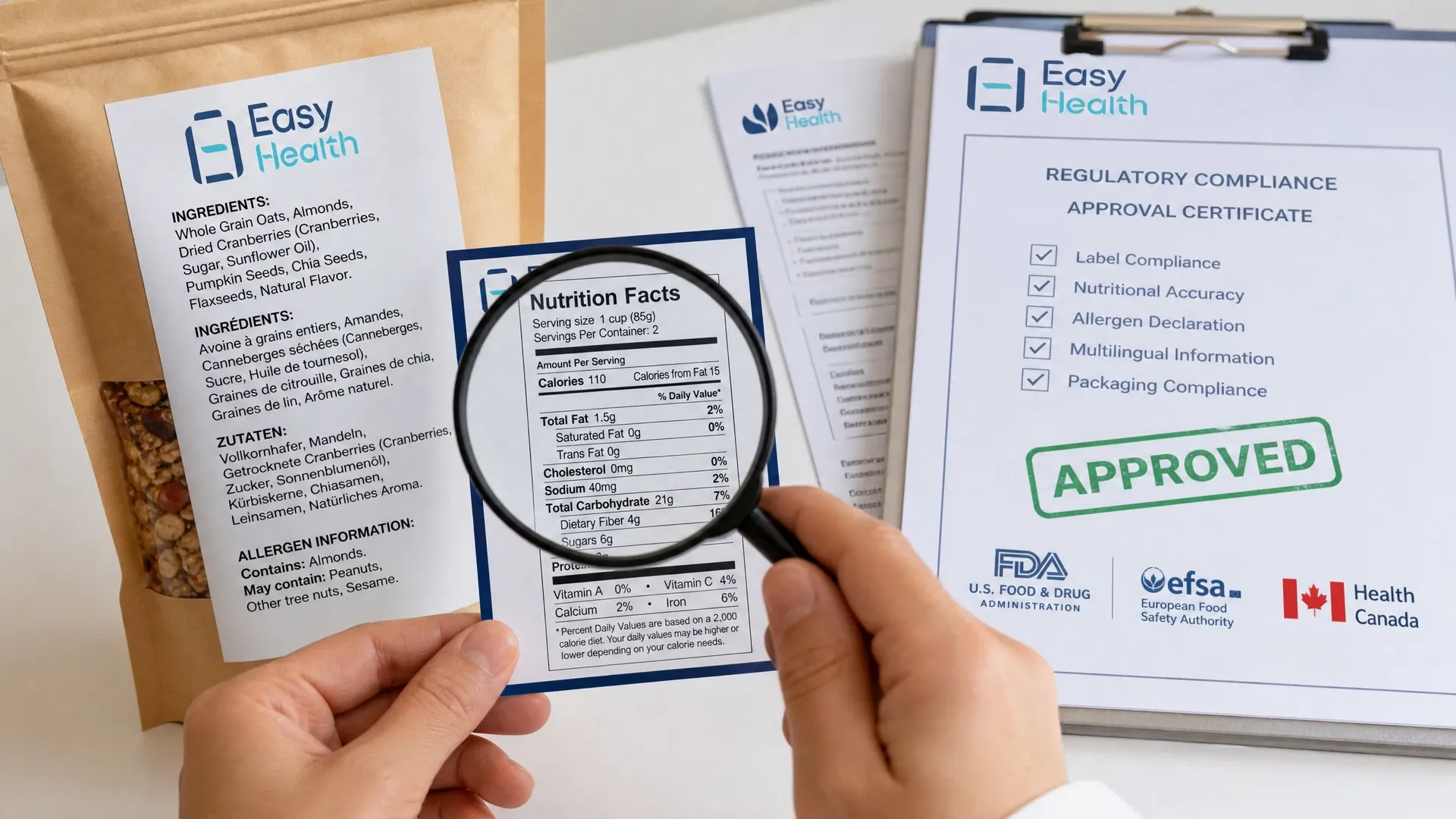
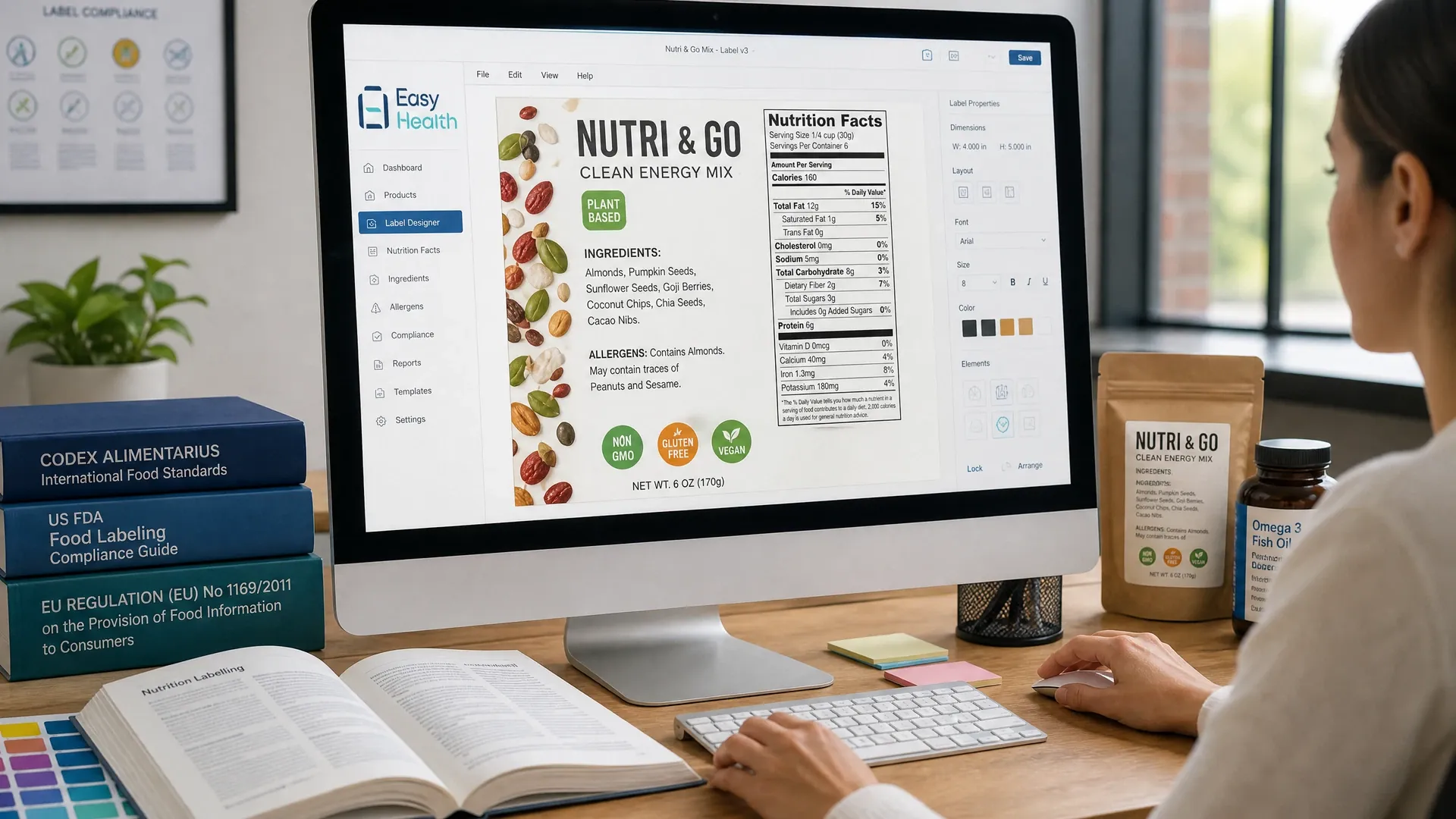
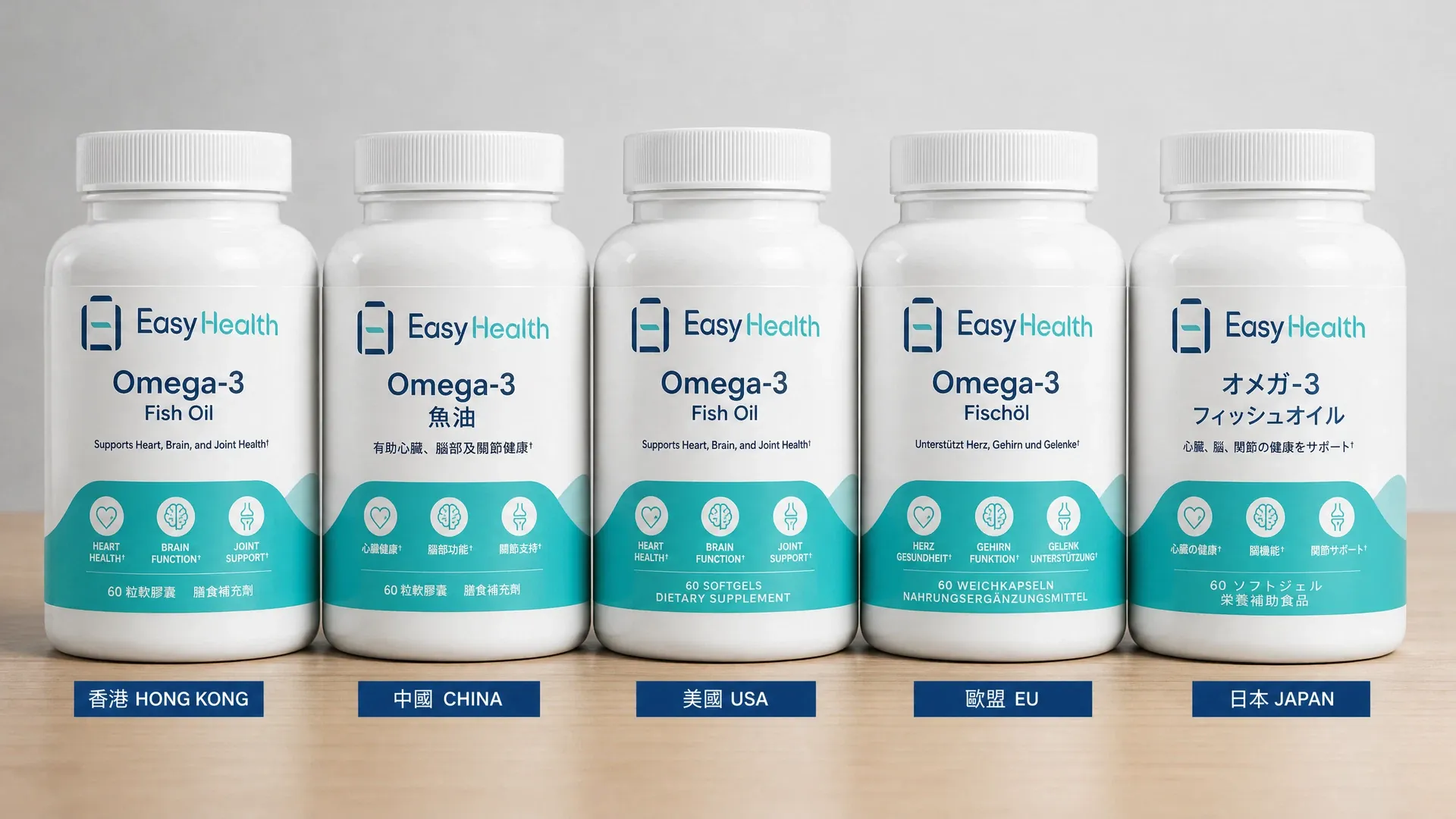
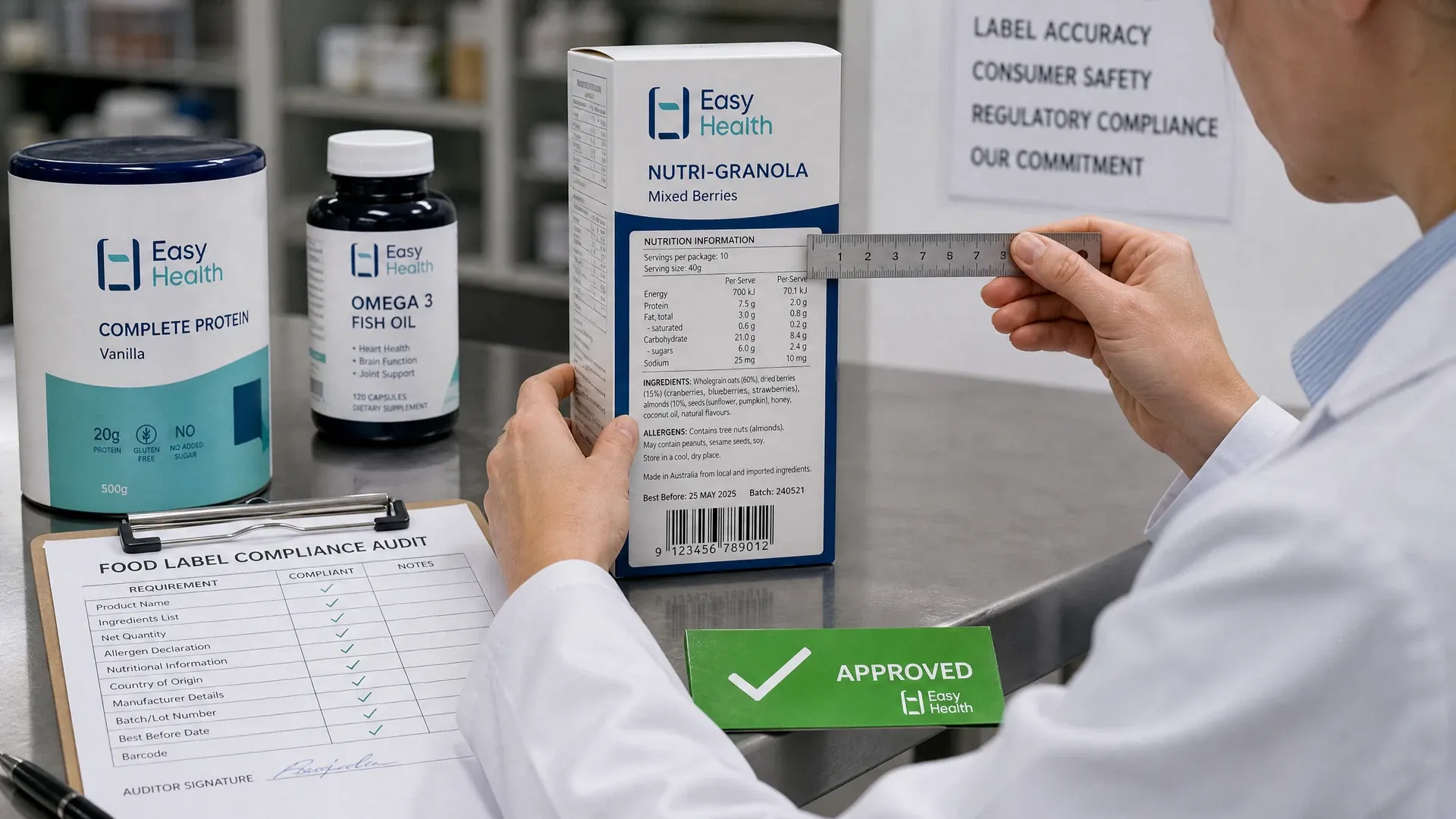
The visuals illustrate division of principal and information panels, field order and units in a nutrition box, common allergen cue placement, and a split layout for Hong Kong vs Mainland labels—plus a flowchart of regulatory checks for quick team alignment.
How Does Hong Kong Nutrition Labelling Fit the Pack?
Hong Kong’s nutrition labelling centres on the “1+7” format: energy plus seven nutrients. When laying out, assess pack area and place a complete nutrition box on the back panel with consistent field names, units and numeric formats. If your product falls under an exemption, consider reserving space for future line extensions. For sachets or multipacks, distribute information between the outer carton and individual units with consistent wording. If selling across regions, avoid mixing formats—keep one nutrition table per jurisdiction. Finally, cross-check against Cap. 132W and the Hong Kong 1+7 scheme.
- Design a complete nutrition box by pack area
- Unify field names, units and numeric formats
- Align wording across multipack and units
- One jurisdiction per table—do not mix formats
How Should Hong Kong and Mainland China Label Panels Be Separated?
If the same product targets both Hong Kong and Mainland China, use distinct panel zones for each jurisdiction. Refer to GB 7718 (general labelling) and GB 28050 (nutrition labelling) for Mainland, and avoid mixing nutrition tables or jurisdiction-specific terms. Measures, allergen wordings and durability statements may differ; allocate sufficient space for both sets. For other markets, seek local authority or professional advice. Archive final versions after clause-by-clause checks against each jurisdiction’s text.
- Separate zones by market—no mixed layouts
- Map HK vs GB 7718/GB 28050 requirements
- Standardise measurement units and language scope
- Archive clause-checked final artworks
How Easy Health Supports Label Content and Artwork Checks
- Scope and applicable regulations:Your account manager confirms sales markets, category and pack format, then maps applicable fields and wordings against Cap. 132W and relevant rules.
- Content drafting and layout:We compile field lists, Chinese/English wordings, units and date formats, and plan the split between principal and information panels.
- Artwork checks and sampling:We review legibility, placement and code areas; coordinate label/carton sampling and refine as needed.
- Production coordination and final checks:We coordinate materials and printing; before launch we run line-by-line checks. Timelines depend on the project and are confirmed by your account manager.
- Post-launch archiving and updates:We archive final artworks and check records to support quick iterations when formulas or regulations update.
Inside the Easy Health Hong Kong Facility



Hong Kong Food Label Layout: Common Fields and Suggested Placement Tips
| Field | HK note | Suggested placement/practice | Note |
|---|---|---|---|
| Name of food | Match actual product | Top/centre of principal panel | Avoid fanciful names only |
| Ingredients list | Typically descending order | Information panel block | Additives per Cap. 132W |
| Net quantity | Consistent units | Near product name (PDP) | Do not mix with count/specs |
| Durability date | Wording fits product type | Clear block on info panel | Separate from lot code |
| Nutrition (1+7) | Show fully if applicable | Dedicated box on info panel | One jurisdiction per table |
For planning and internal review only. Always verify against Cap. 132W and actual pack constraints.
Pre-Artwork Prepackaged Food Label Checklist
- All mandatory fields and wordings per Cap. 132W are listed
- Ingredients order, additive notation and units are consistent
- Durability wording fits product nature; batch/expiry code area reserved
- 1+7 nutrition fields are complete or confirmed exempt
- Chinese/English texts align; no cross-jurisdiction terms mixed
- Seams/curves avoid key data; scannable areas are readable
Food Label Preparation FAQs
Should Ingredients Be Listed in Descending Order?
The common practice is descending order to aid consumer understanding. Always confirm specifics with Hong Kong’s Cap. 132W. For compound ingredients or additives, check naming conventions and clarity to avoid confusion with marketing terms.
Is Hong Kong Nutrition Labelling Required for All Products?
Not for all products; Hong Kong provides specific exemptions. If you plan line extensions or cross-market sales, reserving space for a nutrition box is advisable. Verify case-by-case against Cap. 132W and the 1+7 scheme.
How Should Allergens Be Declared Clearly?
Use consistent wording within the ingredients list and add a clear advisory on the info panel where applicable. Terminology varies by market; Hong Kong has specific provisions—confirm with Cap. 132W. For multi-market packs, avoid mixing jurisdiction-specific terms in one box.
How Should I Choose Durability Date Wording?
Use wording that fits the product nature and keep it consistent across the pack. Align early with operations on lot and coding positions so date and lot codes are distinct and readable.
Should I Split the Label for Hong Kong and Mainland China?
Yes—use separate panel zones for each jurisdiction. Map Mainland formats to GB 7718 and GB 28050. Do not mix nutrition tables or jurisdiction-specific terms; also separate units of measure and languages by market.
Related Packaging Services
Prepare Your Food Label Artwork for Review
Discuss your product data, required fields and pack format with an Easy Health account manager via WhatsApp. Based in Hong Kong with our own local facility and GMP-aligned operating practices, and working to the FSSC 22000 framework for food safety management, we coordinate label/carton design, bottle/pouch/sachet/blister options, sampling, and packaging production. Timelines are project-based and will be outlined by your account manager.
Last updated: