Hong Kong nutrition label 1+7 practical guide
This page covers Hong Kong’s “1+7” scheme in depth: display rules for energy plus seven core nutrients, common unit conversions and rounding, ingredient list order and wording, and when exemptions may apply. We translate compliance into actionable layout and data steps, with tips for small labels, product ranges, and cross‑market distribution while maintaining legibility, printability and records.
Summary:Explains Hong Kong nutrition label 1+7: definitions, required fields and units, rounding and zero values, ingredient list wording, and exemption assessment. Adds layout and proofing checklists, HK/GB alignment, and record-keeping guidance to turn regulations into printable, scalable artwork.
Why plan the 1+7 label together with formulation and packaging?
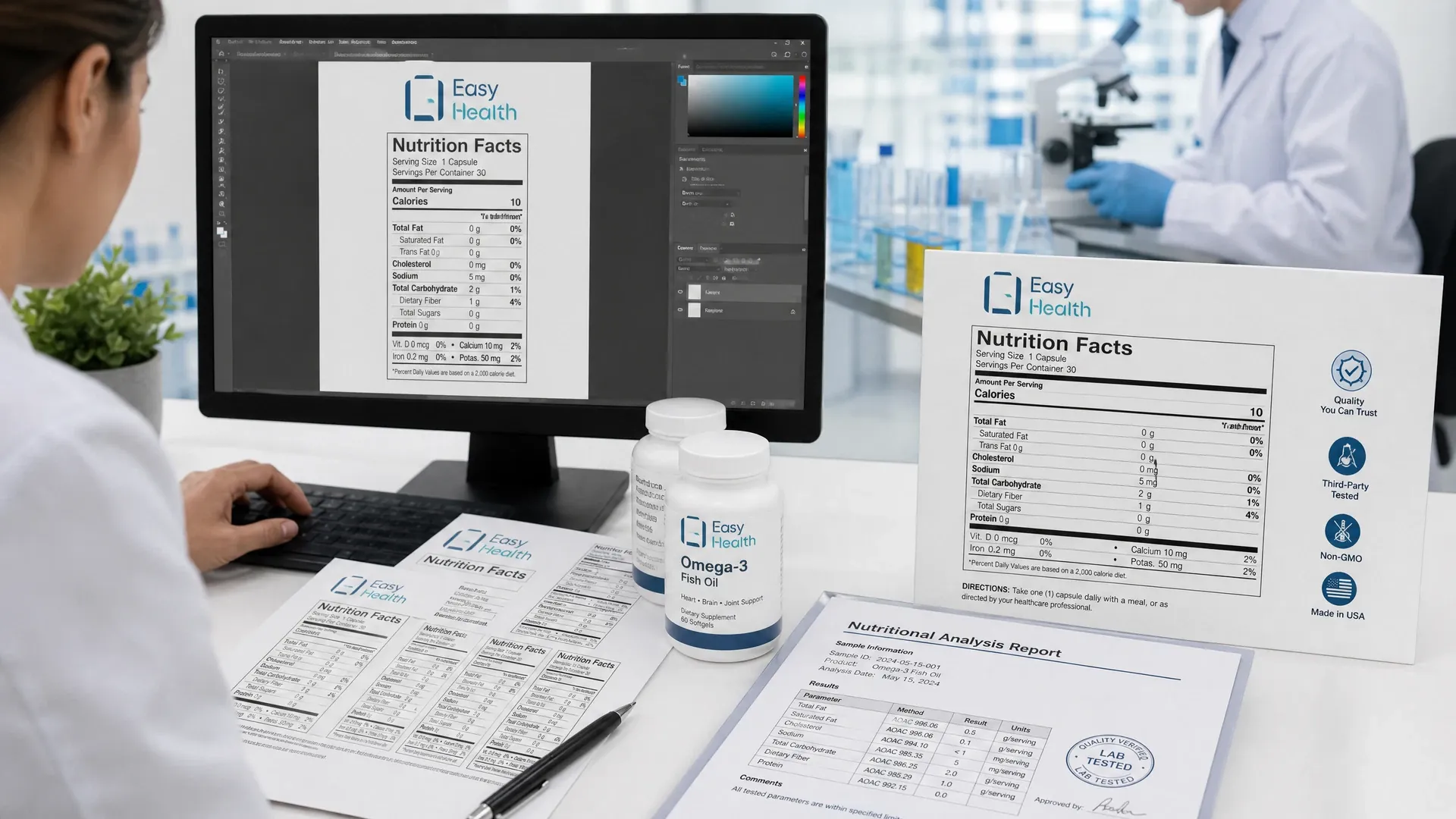
The nutrition panel and ingredient list affect serving definition, minor formulation tweaks, font sizing, column density, and claims/footnotes. Locking per 100 g/ml vs per serving display, rounding rules, allergen placement and any reference notes early reduces rework. Validate minimum font size with scalable layouts before proofing. Easy Health coordinates proofing and print; timelines are project‑dependent and confirmed by our account manager.
What does Hong Kong's 1+7 nutrition label require?
Under Cap. 132W, most prepackaged foods must declare energy plus seven core nutrients (“1+7”). The standard display is per 100 g/ml; per‑serving may be added if servings are defined clearly. In implementation, fix field order, unit consistency, rounding rules, and bilingual alignment; nutrition claims, if used, must meet conditions and footnote requirements. Draft a panel matrix (per 100 and per serving, servings per pack, handling of zeros) before choosing a layout that fits the printable area to avoid redesign and print disruptions.
- Declare energy plus seven nutrients
- Per 100 g/ml as baseline; add per serving
- Consistent order, units and rounding
- Bilingual alignment with legible fonts
Ingredient list essentials
List ingredients in descending order of added weight; handle compound ingredients per rules and exceptions. Use permitted generic or class names and avoid ambiguity. Keep logic aligned with the nutrition panel (e.g., added fats, sugars or sweeteners). For long lists, validate minimum font sizes and leading with scalable layouts; consider columns or line breaks for readability. If Mainland distribution is planned, cross‑check GB 7718 order and punctuation conventions to minimise conflicts when sharing artworks.
- Descending order by added weight
- Handle compound ingredients correctly
- Use permitted naming terms
- Align logic with nutrition panel
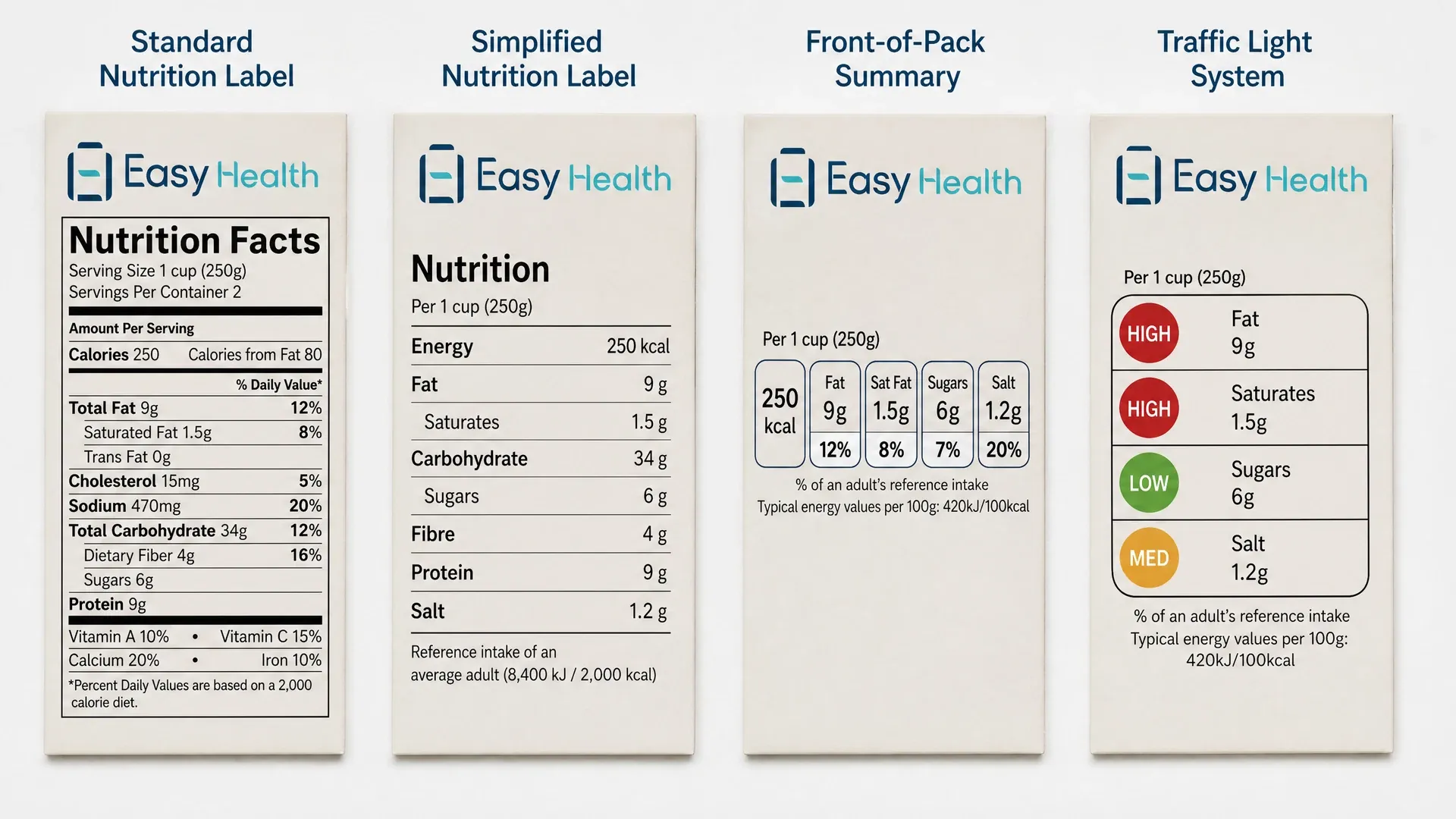
Visual guide: common nutrition panel layouts
Examples compare vertical, horizontal and linear layouts; readability of dual columns (per 100 g/ml and per serving); the impact of serving definitions on fields and footnotes; and techniques to maintain font size, contrast and whitespace on small labels.
Hong Kong nutrition labelling exemptions: how to assess
Some prepackaged foods may qualify for exemption or simplified presentation, such as certain unprocessed categories, limited label area, or small‑volume situations. Applicability depends on definitions and procedures under Cap. 132W, with possible application and record‑keeping. Before artwork, confirm channels, estimated volume, pack dimensions and product attributes, and prepare full and simplified layouts for quick switching. If Mainland sales are planned, align with GB 7718 and GB 28050 for naming and units.
- Confirm channels and forecast volume
- Check available label area limits
- Map to exemption definitions/procedures
- Prepare full and simplified layouts
1+7 nutrition label format: layout, units and data
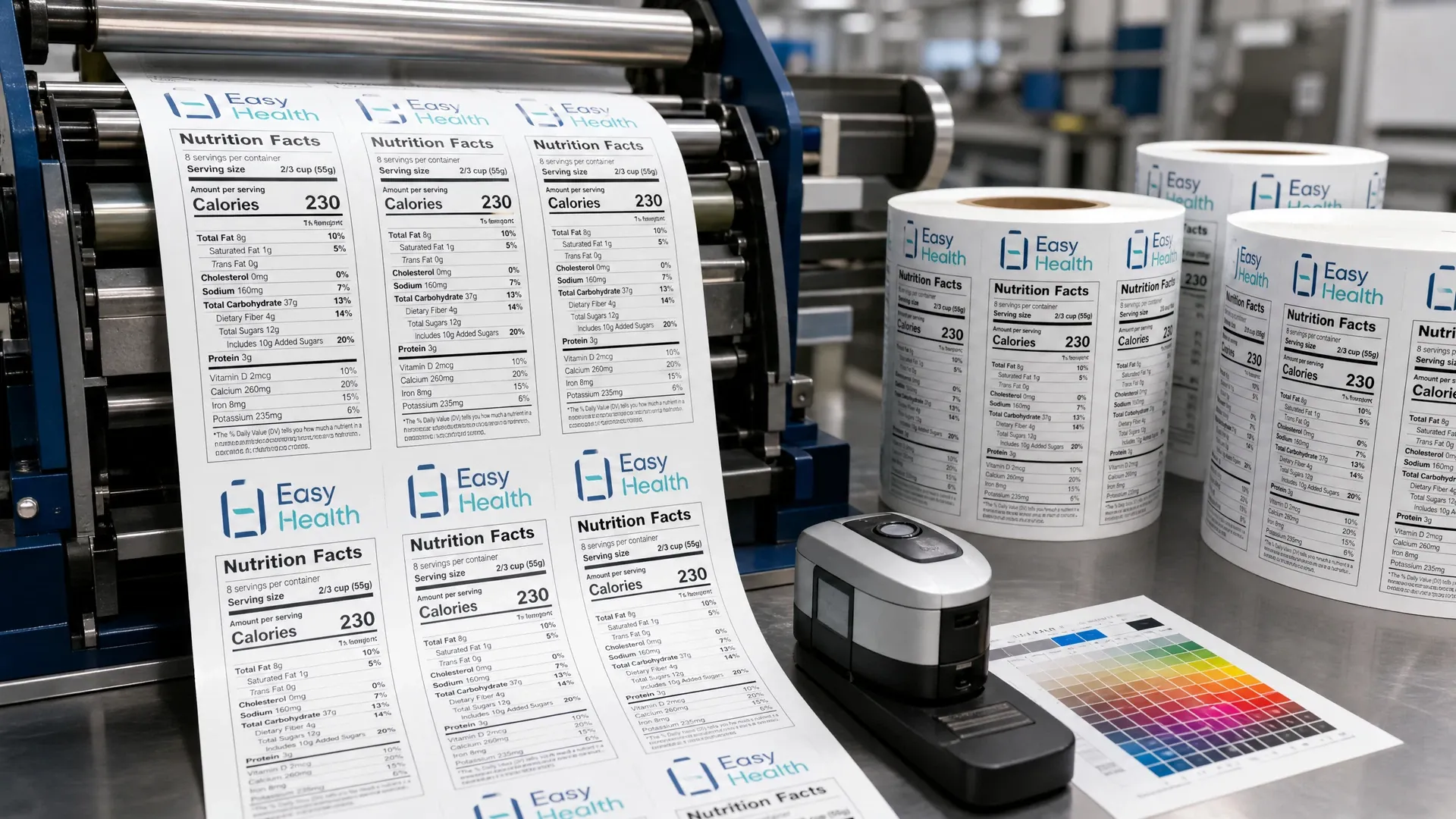
When translating rules into a panel, decide field order, whether to show per 100 g/ml and per serving together, and any reference notes. Standardise column width, leading, rules and decimals across a range for reuse. Data may come from formulation or lab analysis; define consistent conversions and rounding (integer, 1 or 2 decimals) and how to present zeros or trace amounts (0, <0.1, —). Font weight and contrast drive scannability; on small labels, consider vertical tables or linear text with adequate whitespace. Easy Health can coordinate proofing and arrange label/carton production.
- Fix field order and display units
- Unify decimals and separators
- Keep series layouts consistent
- Define zero/trace value notation
How we support label implementation and artwork checks
- Scope and regulatory scan:Review product attributes, target markets and channels; map to Cap. 132W and any GB references if relevant.
- Data consolidation:Compile formulation, nutrition data sources and draft ingredient list; align units, rounding and zero‑value notation.
- Layout and terminology:Fix field order, per serving/per 100 g display, footnotes, reference notes and bilingual terminology.
- Cross‑market check (if needed):If Mainland sales are planned, cross‑check GB 7718/28050 naming, units and formatting.
- Proofing and checks:Supply digital proofs; verify font size, contrast and scannability; fine‑tune columns, leading and rules.
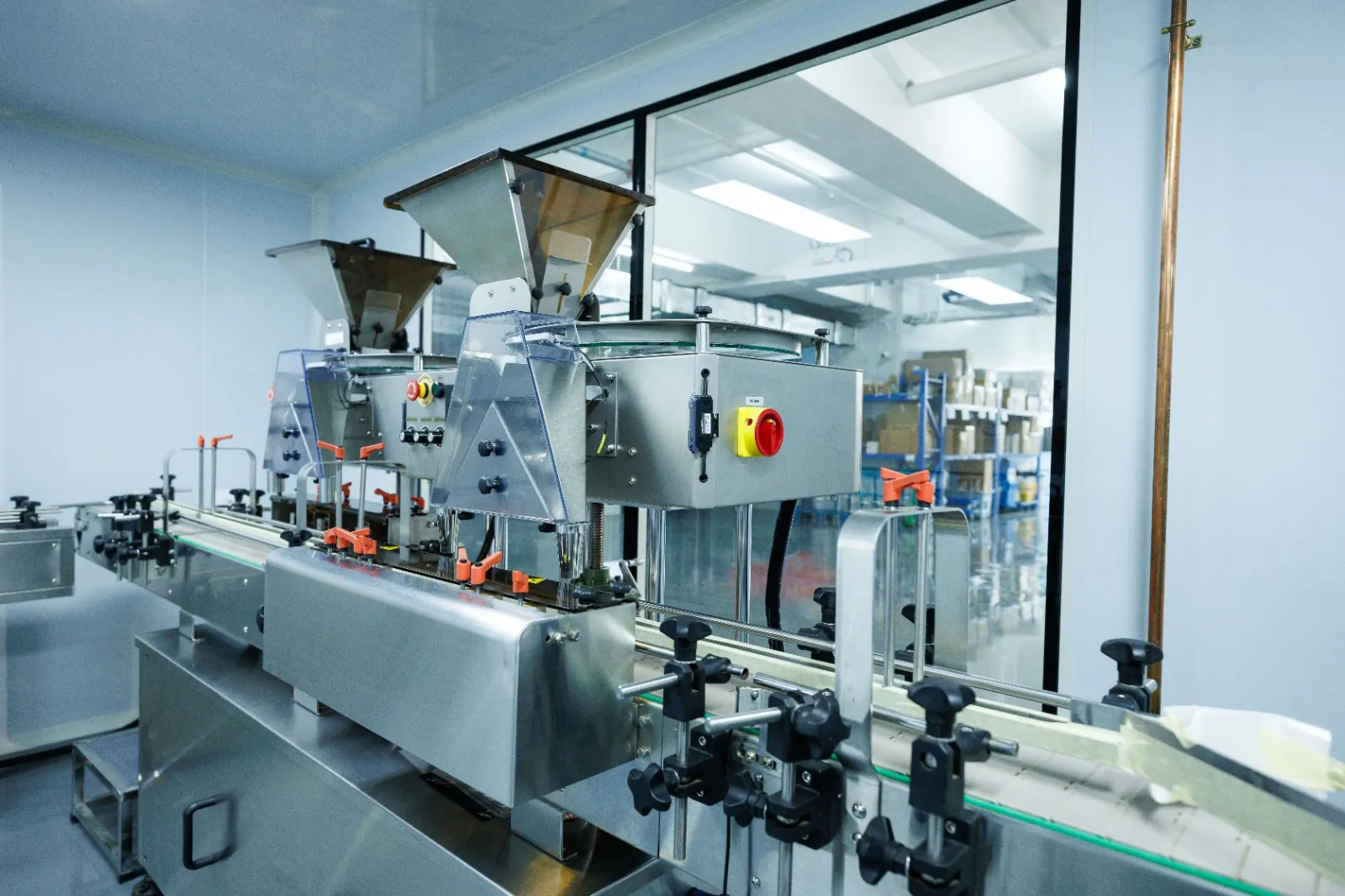
Inside the Easy Health Hong Kong Facility


Nutrition panel layout options by pack type
| Layout | Use case | Display focus | Notes |
|---|---|---|---|
| Vertical table | Bottles, pouches | Clear fields, scannable | Allow adequate column width |
| Horizontal table | Flat boxes, larger area | Side‑by‑side comparison | Keep leading and alignment stable |
| Linear text | Very small labels | Semicolons separate fields | Lower readability potential |
| Dual column | Emphasise serving size | Sync units across both | Avoid cluttering |
Measure printable area, minimum font size and field count before choosing a layout.
Pre-launch nutrition label checklist
- Panel includes energy plus seven core nutrients with bilingual alignment
- Per 100 g/ml and per serving (if used) share consistent units/decimals
- Ingredient list in descending order with proper compound handling
- Rounding and zero/trace value notation are consistent
- Font size, contrast and leading validated via proof
- Hong Kong label exemption applicability and steps assessed
Hong Kong nutrition label 1+7 FAQs
If I do not have lab results, can I use formulation calculations?
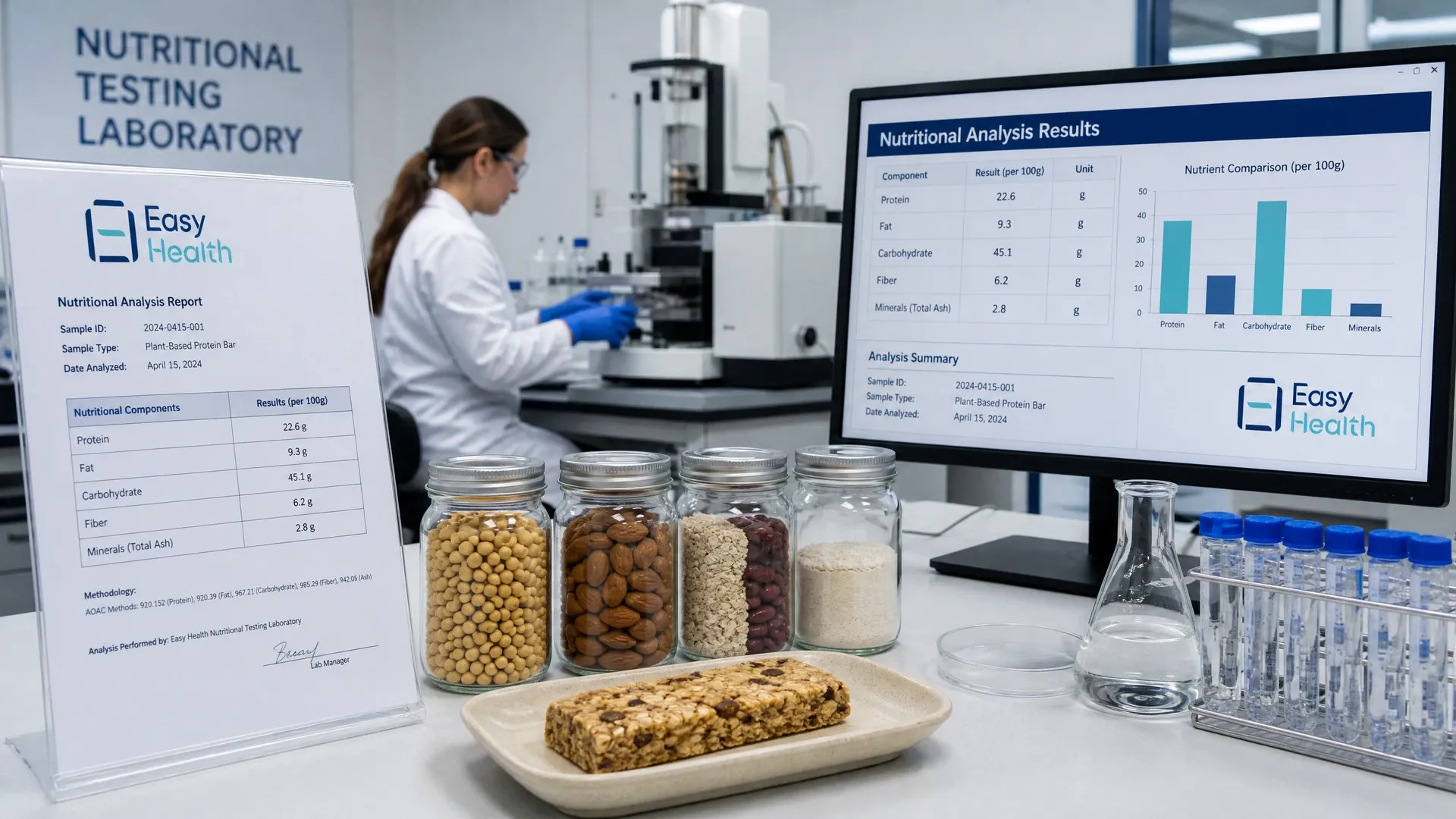
You may draft using formulation calculations if conversions and rounding are consistent and aligned with the actual recipe. For claims, multi‑market distribution or variable recipes, consider laboratory analysis and periodic review. Easy Health can help consolidate data and artwork; details are project‑dependent and confirmed by our account manager.
Should I show per 100 g/ml or per serving?
Both are acceptable. Per 100 g/ml helps cross‑brand comparison; per serving aids real‑world understanding. If space allows, show both and define serving size and servings per pack. Ensure consistent units/decimals and alignment with usage instructions.
How should compound ingredients be declared?
Check if sub‑ingredients must be listed or a class name is acceptable, and keep consistency with the formulation. For flavours, additives and sweeteners, use permitted generic or class terms and align with the nutrition panel’s calculation basis.
Can small packs qualify for nutrition labelling exemptions?
Some small‑area labels or small‑volume cases may qualify for exemption or simplified formats under Cap. 132W, subject to definitions and procedures. Some require application and record‑keeping. Assess pack size, volume and channels before finalising the layout.
What should I check for one artwork across Hong Kong and Mainland China?
Harmonisation via bilingual or dual‑column layouts is possible, but terms, units, nutrient names and formatting differ between Cap. 132W and GB 7718/28050. Build a mapping sheet, flag non‑compatible items, and consider separate versions if clarity or compliance would be compromised.
Related Packaging Services
Discuss your 1+7 nutrition label artwork
Chat on WhatsApp with an Easy Health account manager about your product data, label layout, proofing and print coordination. We operate in Hong Kong and coordinate packaging and printing with documented food‑safety and quality controls; certificate scope and process documentation can be reviewed during onboarding. Timelines depend on the project and are confirmed by our account manager.
Last updated: