Cosmetics packaging FAQ for design planning
Need clarity on the cosmetics packaging design workflow, container choices and decoration options? This page answers the most common questions with practical guidance on materials, structures, labelling, testing and sampling. Easy Health operates in Hong Kong and provides packaging design, label/box coordination and packaging production arrangement.
Summary:Your quick guide to cosmetics packaging FAQs: from design workflow and pack selection to labelling essentials and stability/compatibility checks. Easy Health’s Hong Kong team coordinates sampling and packaging production; timelines are project‑dependent and confirmed by your account manager.
How should I start a cosmetics packaging project?
Start by defining product form (cream, serum, cleanser), use scenarios (home, travel, gifting), target markets (Hong Kong or cross‑border) and channels. Build the cosmetics packaging design workflow around these: preliminary specs and layout direction, container/structure sampling, label text and compliance checks, compatibility and seal tests, decoration and print finalisation, then production and transit tests. Easy Health can coordinate materials and printing, and arrange sampling and packaging production. Timelines are project‑dependent and confirmed by our account manager.
Cosmetics packaging design process: milestones from brief to production
For cosmetics, packaging and formulation influence each other. Lock down viscosity, pH, sensitive actives (acids, essential oils) and filling method early to avoid rework. A typical workflow includes: 1) requirements and creative direction; 2) container pre‑selection and samples (volume, neck size, pump/sprayer spec); 3) label text review (ingredients, purpose, directions, batch/expiry, allergy warnings); 4) compatibility, stability, seal and drop testing; 5) decoration and print artwork sign‑off; 6) outer carton structure and transit testing; 7) production arrangement and warehousing. Easy Health coordinates sampling, printing and material supply, and arranges packaging production at our Hong Kong facility. Each project is individually assessed by an account manager; timelines and details are confirmed step by step.
- Define formulation attributes first to prevent incompatibility
- Match pump/spray hardware to viscosity and rheology
- Run label text and artwork in parallel to compress lead time
- Complete drop/seal/transit tests before artwork lock
Material and structure choices: glass, PET, PP, airless and laminate tubes
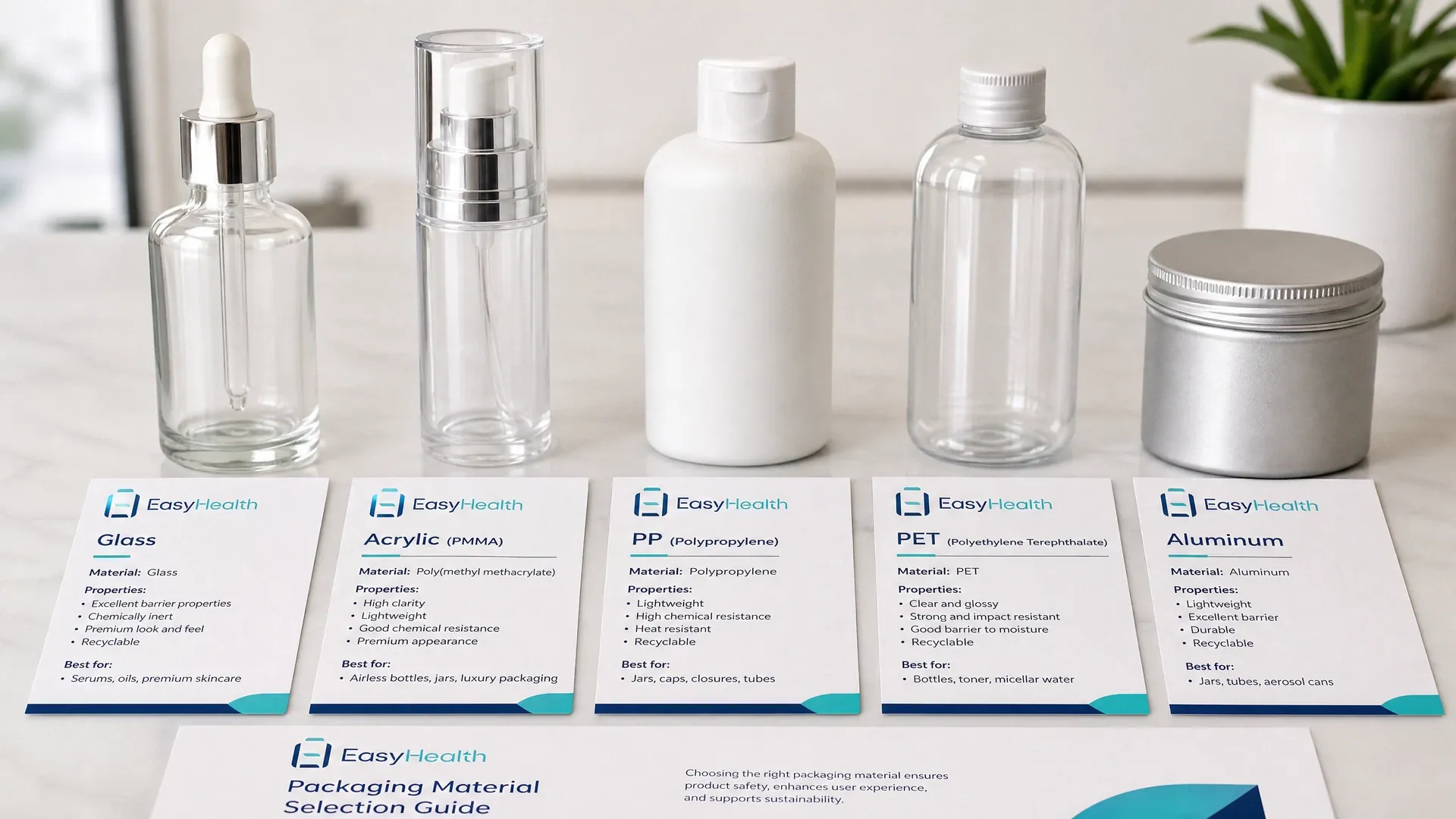
Glass offers strong barrier and premium tactility, ideal for serums and fragrances, but adds weight and requires robust cushioning in transit. PET provides clarity for toners and haircare; check compatibility with alcohols and fragrances. PP has good chemical resistance and is common for cream jars and pump components. Airless packs reduce back‑contamination and protect oxidation‑sensitive formulas; verify spring force and residue rate. Multi‑layer tubes (with barrier layers) balance squeeze feel and protection; test tail‑seal strength and ink adhesion. Outer packaging (cartons, inserts, sleeves) should match retail demands and unboxing, while considering recycling and environmental markings. Easy Health can provide sampling and structural advice based on formula and channel context, coordinating supply and print processes.
- Glass is heavy/brittle; use reinforced inserts
- PET suits toners; high alcohol content requires tests
- PP works for creams and pump parts; good resistance
- Airless: validate residue rate and rebound stability
Visual guide: key decisions from container selection to decoration
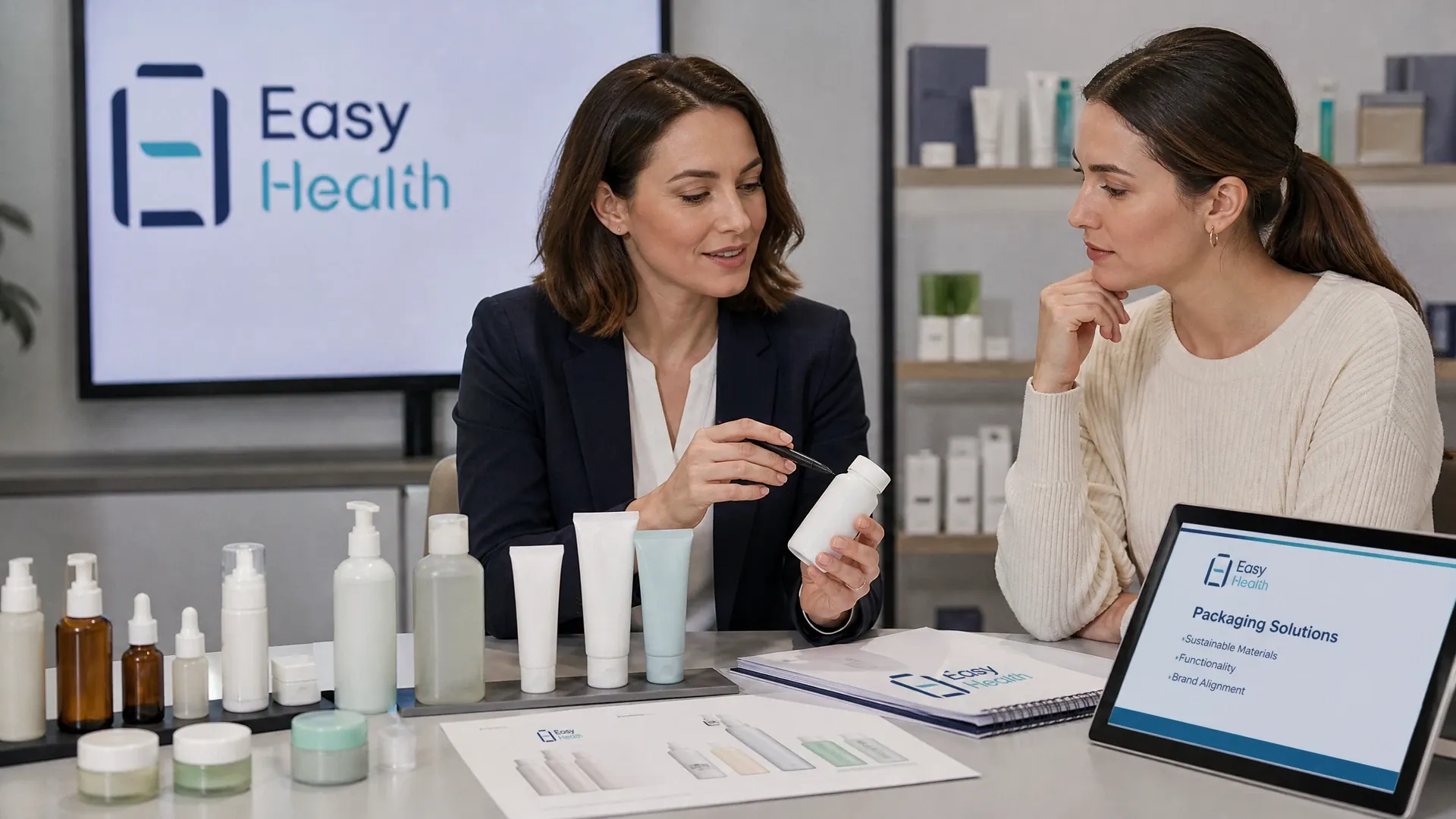
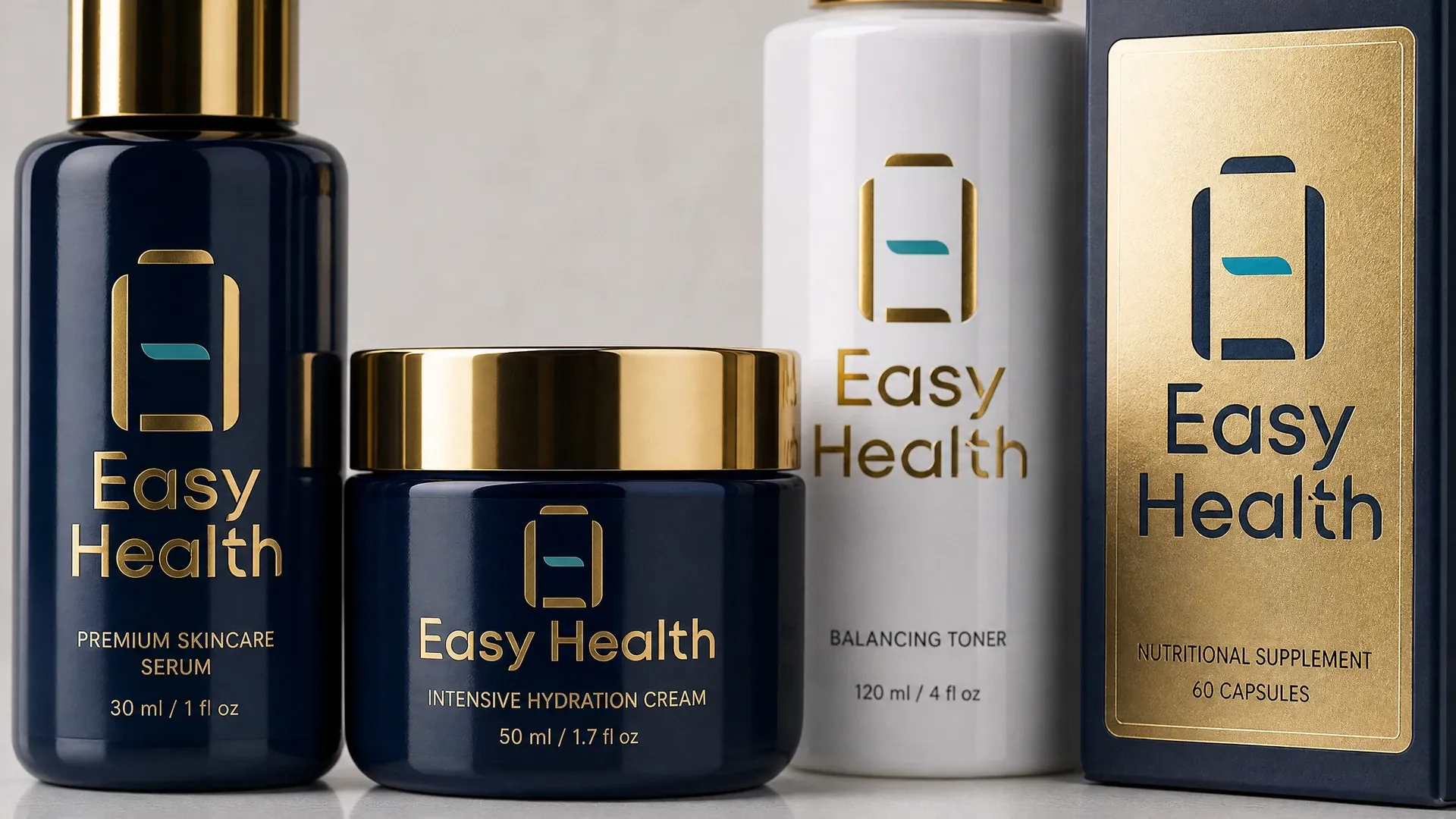
The images illustrate neck and pump matching, outer carton structures and inserts, label hierarchy, and common decorations (hot foil, spot UV, matte, spray coating), helping teams align quickly on direction.
Labelling and leaflet essentials for Hong Kong and cross‑border sales
We recommend cosmetics labels include at minimum: product name, purpose and directions, full ingredients list (in customary order), net content, country of origin, batch number and expiry/PAO, cautions and allergy warnings, and business contact details. For Hong Kong retail, bilingual (Chinese and English) labels aid clarity. If planning cross‑border sales to Mainland China, review naming conventions, claims wording and benefit descriptions early; note that rules for pre‑packaged foods or traditional medicines do not apply to cosmetics. For other markets, confirm requirements with local authorities or professional advisers. Easy Health coordinates label and carton design and can build a labelling checklist alongside layout to reduce omissions and rework.
- Bilingual labels improve HK retail clarity
- List full INCI and allergy warnings
- Show batch and expiry/PAO for traceability
- Pre‑review claims for cross‑border readiness
Testing and validation: compatibility, sealing and transit risk control
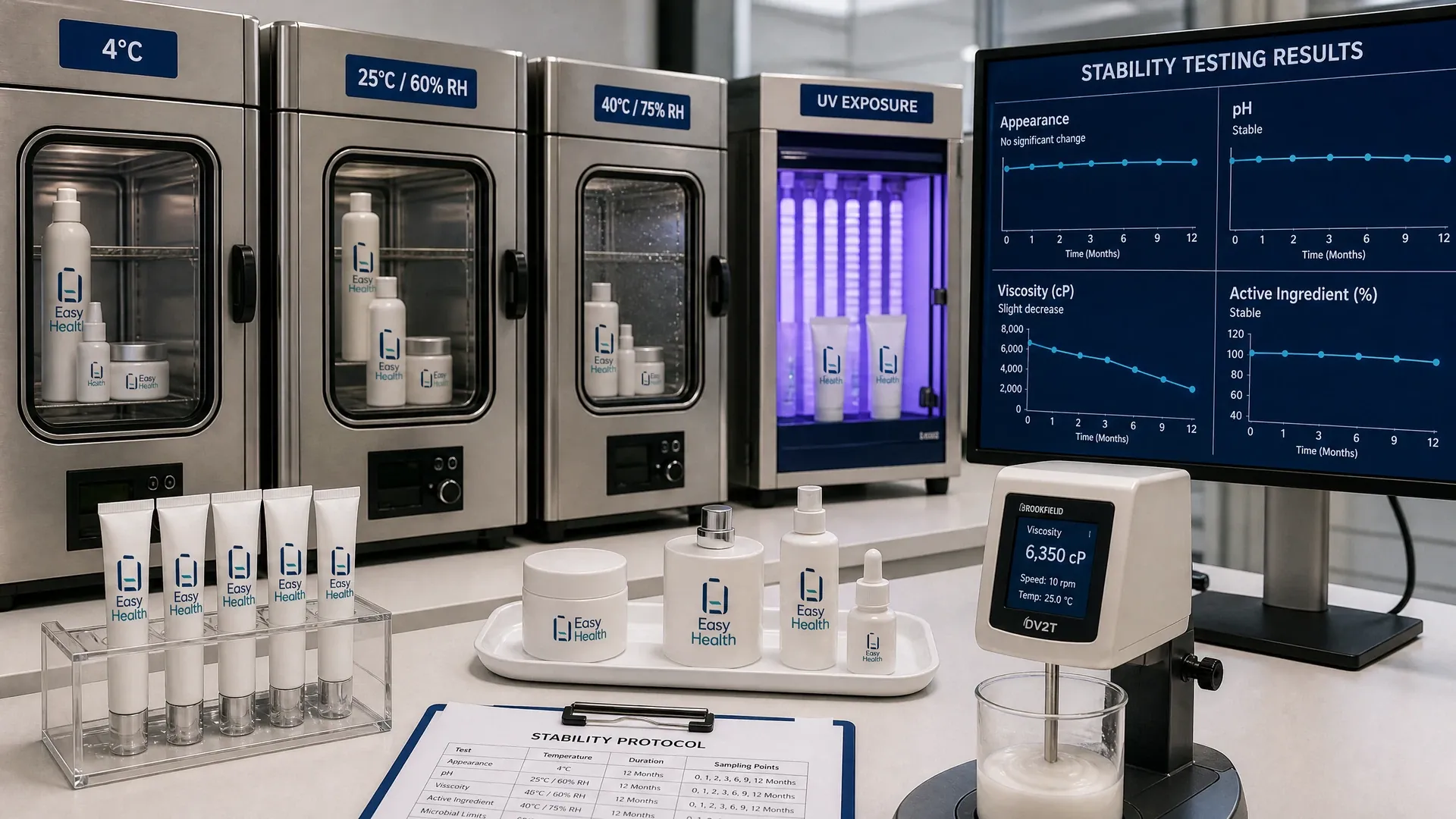
Common failures include bottle cracking, leakage, label lift, ink rub‑off and pump rebound issues. Stage your tests: 1) compatibility (formula vs bottle/gasket/pump); 2) stability (accelerated/ambient observations of appearance, odour, viscosity); 3) sealing and vacuum tests; 4) drop and vibration with carton and shipper as a system; 5) post‑ageing checks for label and print adhesion. For volatile or oil‑rich formulas, pay special attention to gasket materials (PE, EVA, butyl) and corrosion resistance of pump springs. Easy Health can coordinate sampling and test arrangements, and perform packaging production and carton checks at our Hong Kong facility.
- Gate tests: compatibility→seal→transit
- Check gasket material for high alcohol/oil systems
- Re‑test label/ink after ageing
- Test full pack: insert, carton and shipper together
How the cosmetic packaging workflow is coordinated
- Brief and specification:Map formulation traits, volume, channels, markets and creative tone; outline risks and test plan.
- Container and structure samples:Offer glass/PET/PP/airless/tube options; verify fit and user experience.
- Label copy and layout:Build labelling checklist; develop bilingual copy and layout in parallel.
- Testing and refinement:Run compatibility, seal, drop and post‑ageing adhesion tests; iterate as needed.
- Decoration and print coordination:Lock inks/foils/varnish/coatings; coordinate suppliers and colour standards.
Inside the Easy Health Hong Kong Facility

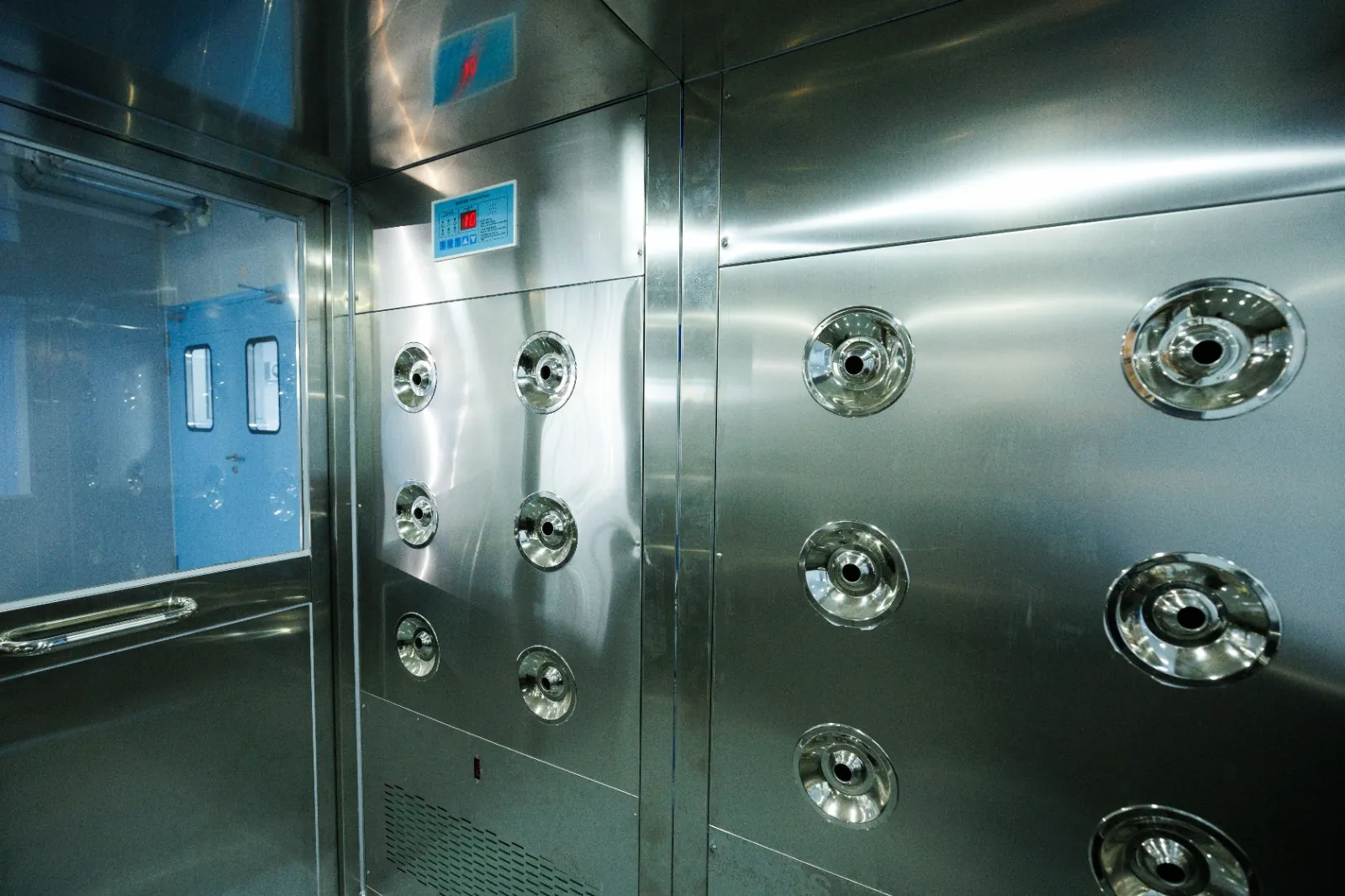
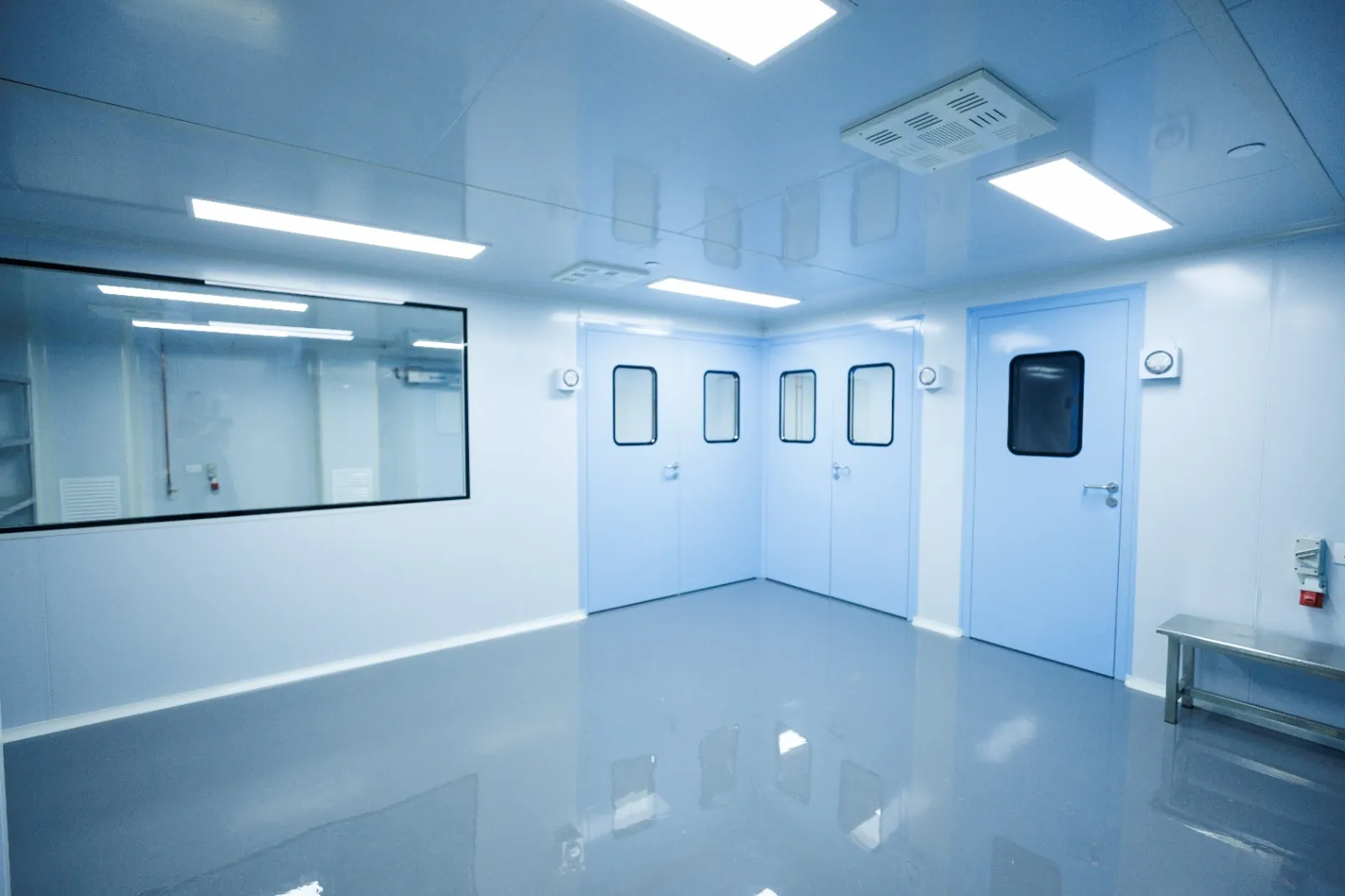
Common cosmetics container structures compared
| Structure | Best for | Strengths | Notes |
|---|---|---|---|
| Glass bottle | Serums, fragrances | High barrier, premium feel | Heavy/brittle; needs robust transit protection |
| PET bottle | Toners, haircare | Clear, lightweight, impact‑resistant | Test with alcohol/fragrance content |
| PP jar/parts | Creams, pump parts | Good chemical resistance | Validate surface treatment/ink adhesion |
| Airless bottle | Oxidation‑sensitive formulas | Reduces back‑contamination | Verify rebound force and residue rate |
| Multilayer tube | Cleansers, lotions | Good squeeze feel, tunable barrier | Test tail‑seal strength and ink adhesion |
This is a general comparison; final selection should reflect formula, channels and test results.
Final checks before artwork lock and production handover
- Ingredients, purpose, warnings and batch/expiry or PAO are correctly laid out
- Pump/spray output matches viscosity; residue rate acceptable
- Carton structure passes drop/vibration; insert prevents movement
- Labels/prints pass ageing tests without lift or rub‑off
- Claims wording and language versions reviewed for cross‑border
Cosmetics packaging planning FAQs
What documents and samples are typically needed for the cosmetics packaging design process?
Prepare a product brief (key formulation parameters, viscosity, pH, volatility), brand guidelines, volume/spec requirements, draft label copy (bilingual), container/structure references, and a test plan/timeline. Samples usually include formula lab samples, empty containers/pumps/tubes, print swatches and paper stocks. Easy Health coordinates sampling and print, with document control and scheduling confirmed by your account manager.
How do I choose pump and spray specifications and output?
Start with viscosity and intended use to define target output and droplet size, then match neck finish and thread spec. Evaluate rebound force, residue rate and anti‑leak features (lock/clip). For alcohol or essential‑oil systems, confirm spring and gasket corrosion resistance. Run small user tests to assess feel and consistency. Easy Health can supply pump samples, testing advice and supplier coordination.
How should I prepare artwork files for labels and cartons?
Provide editable vector files (AI/PDF) with bleed, die lines and 1:1 dimensions; images at 300 dpi or above. Specify spot/CMYK values and layers for finishes such as varnish, foil or spot UV. Reserve an area for batch/expiry over‑print on labels. Request colour proofs and adhesion tests before mass print. Easy Health can coordinate printers and materials, advising on pre‑press checks.
Which baseline tests help reduce leakage and label lift risks?
Prioritise compatibility (bottle, gasket, pump), sealing, vacuum/inversion, drop and vibration tests, then repeat label and ink adhesion after ageing. Extend compatibility observation for high‑alcohol or oil‑rich formulas. Conduct shipper tests with inserts and cartons as a full set. Easy Health can coordinate test arrangements and consolidate results.
Can Hong Kong retail packaging be reused for Mainland cross-border platforms?
Direct reuse is not recommended. Mainland platforms often require specific naming, claims wording, language display and after‑sales contact details; pack images and listings may also need revision. Audit the gaps first, then update label copy and visual assets together. Easy Health can prepare bilingual/multi‑language templates for smoother adaptation.
Related Packaging Services
Discuss your cosmetic packaging workflow with Easy Health
Share your product details and target channels to discuss the cosmetics packaging design workflow, container and labelling needs, and coordination of sampling and production. Timelines are project‑dependent and confirmed by our account manager.
Last updated: