Food packaging FAQ for design and Hong Kong labelling
Built for food brands and buyers, this page addresses what to consider in food packaging design and which Hong Kong food labelling rules apply. Easy Health coordinates the project requirements in Hong Kong. Confirm which certificate scopes, quality records and supporting documents apply to the proposed arrangement.
Summary:Wondering what to consider in food packaging design and which Hong Kong food labelling rules apply? This FAQ explains materials, barrier and shelf life, labelling and nutrition facts, as well as prototyping and production coordination for practical decisions.
New to food packaging—where should I start?
Define product properties and target shelf life, then select material structure and sealing. Plan label fields in parallel (name, ingredients, net quantity, origin, usage, allergens, nutrition “1+7” if applicable). During prototyping, verify dimensions, tolerances, barrier and transit/drop tests. Supply artwork with bleed, dieline, colour references and scannable barcode. Timelines vary by project and are confirmed by our account manager; Easy Health coordinates materials and packaging production.
Which food packaging design considerations affect materials and structures?
Match barrier and temperature performance to food state (dry, oily, aqueous, acidic, frozen, reheated). Typical laminates include PET/AL/PE or PET/NY/PE; sauces often require high-barrier, retort-capable structures; bakery and snacks focus on oxygen and moisture protection. Rigid options (glass, HDPE, PET) differ in heat tolerance and permeability. Sealing impacts hermeticity and reusability (zippers, tear notches, seal width). Allow space for oxygen/moisture absorbers and assess secondary packaging for stacking strength.
- Align barrier to fat/moisture activity
- Plan for ambient/chilled/frozen routes
- Use heat-capable structures for hot-fill/retort
- Seal design affects leakage risk
Which Hong Kong food labelling regulations apply?
Under Hong Kong’s Food and Drugs (Composition and Labelling) Regulations (Cap.132W), indicate name, ingredients list (including additive class/name), net quantity, origin (if applicable), directions for use/storage, date mark, and lot ID; in Chinese and/or English. Nutrition labelling often follows the “1+7” format (energy, protein, total fat, saturated fat, trans fat, carbohydrates, sugars, sodium) with specified presentation. Frequent errors include missing allergen statements, poor legibility, unclear date/lot placement, and barcodes with low contrast or cropped edges.
- Chinese and/or English, ensure legibility
- Declare allergens and additives
- Show date, lot and storage together
- Present the “1+7” nutrition panel correctly
Visual references for testing and packing alignment
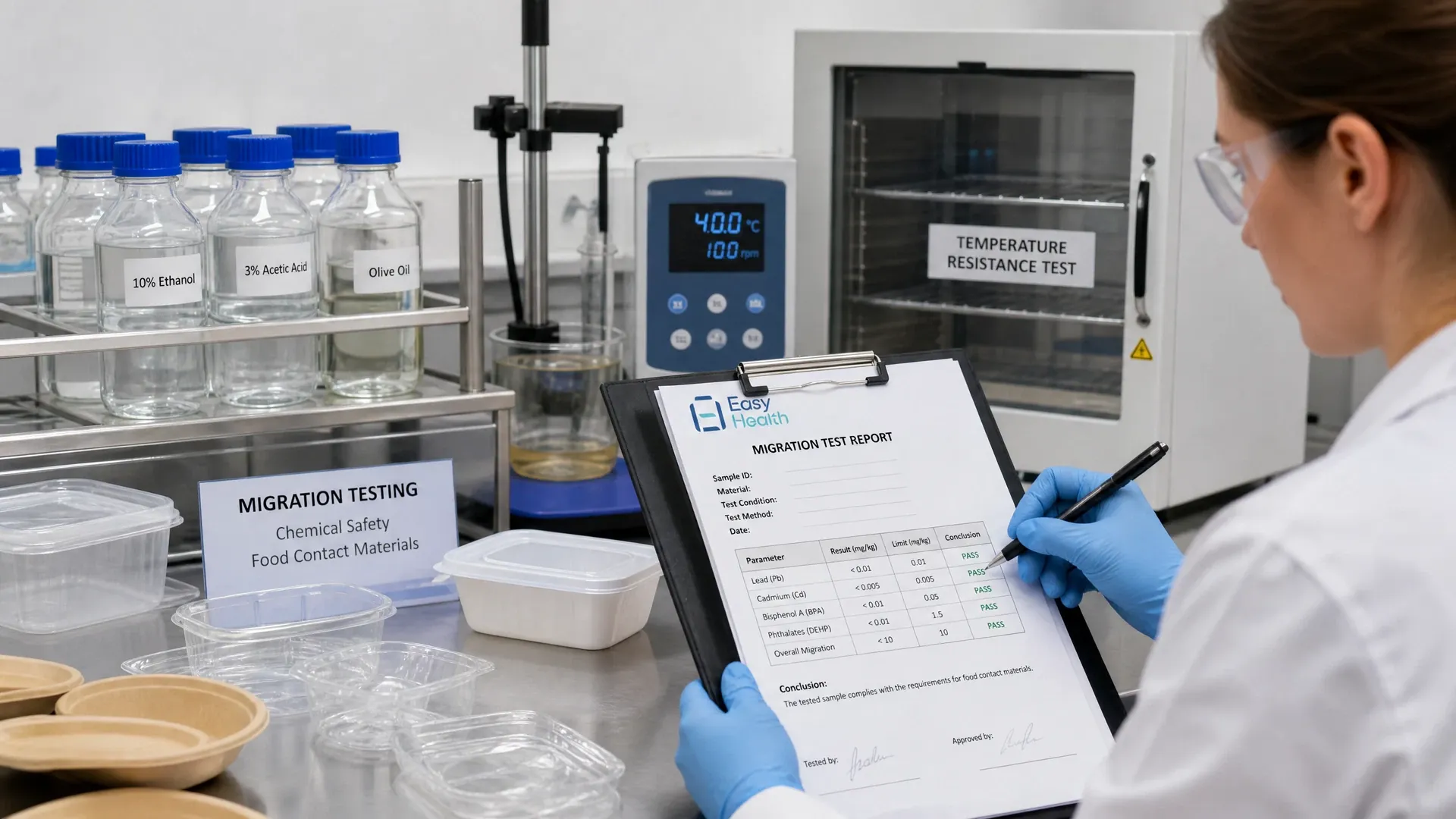
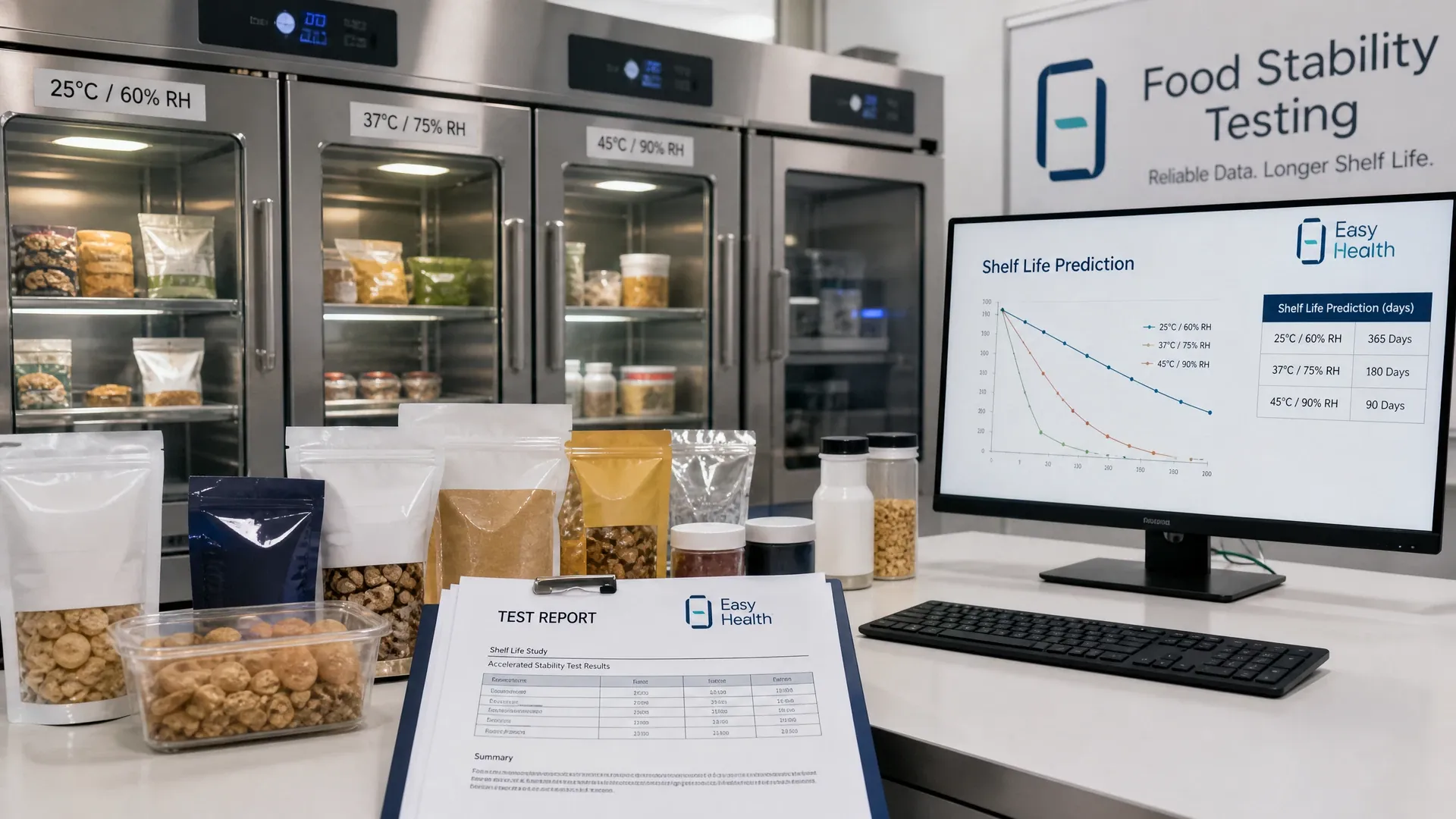
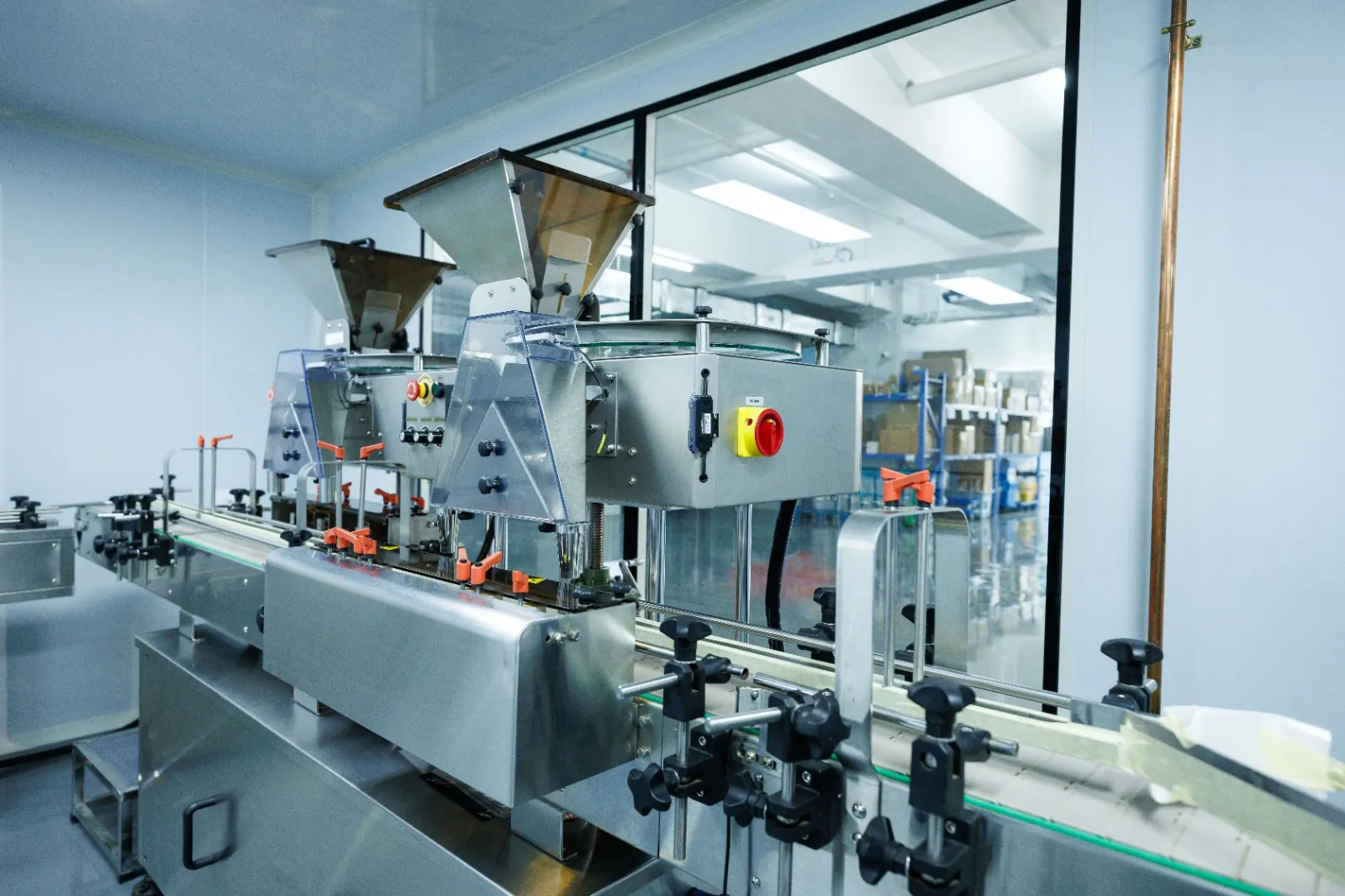
Images illustrate food safety testing, shelf-life studies, hygiene standards and automated packaging. Use them to align on test setups, seal checks, clean-zone practices and pouch/bottle operations before validation and production.


Shelf life, barrier performance and early testing
Shelf life depends on formulation, barrier, seal integrity and logistics. Work backwards from target durability: profile water activity/pH/fat, then choose materials and thickness with suitable OTR/WVTR. Where needed, run accelerated and real-time stability, drop/vibration, thermal cycling and seal integrity tests. For reheatable foods, validate seal robustness and inner-layer heat resistance. Check label adhesion under cold and humid conditions. Easy Health can coordinate prototyping and packaging-related test workflows.
- Back-calc materials/testing from target shelf life
- Verify OTR/WVTR and seal strength
- Validate transport and temp/humidity cycles
- Confirm label adhesion in cold/moist conditions
Cross-market labelling, barcodes and artwork handover
If one pack serves Hong Kong and Mainland China, align Hong Kong rules with GB 7718 and GB 28050 formats; use layered artwork for version control. Barcodes (typically EAN-13) require quiet zones and strong contrast. Supply press-ready PDF/AI with 3 mm bleed, dieline, spot colours/references and outlined fonts. For special finishes (matte film, spot gloss, foil), label layers clearly. Printing and material supply are coordinated by Easy Health.
- Check both Hong Kong and Mainland label rules
- Reserve barcode quiet zones and test scan
- Provide bleed, dieline and colour refs
- Layer and label any special finishes
How is a food packaging project typically coordinated?
- Needs and product assessment:Define food properties, target shelf life and cold-chain/routes to shape material and testing direction.
- Material and structure proposal:Recommend bottle/pouch/stick/blister options and sealing, with notes on barrier and temperature trade-offs.
- Labelling and layout planning:Map required fields per regulations, reserve barcode/date/lot and legible zones for compliance checks.
- Prototyping and tests:Produce samples and arrange seal, transit and stability tests; timing varies by project, confirmed by our manager.
- Artwork handover and print coordination:Check bleed/dieline/colour refs, coordinate materials and printing steps, and confirm quality criteria.
Inside the Easy Health Hong Kong Facility


Common food packaging materials at a glance
| Material | Typical structure | Barrier | Heat tolerance | Use cases | Notes |
|---|---|---|---|---|---|
| PET/AL/PE | 3-layer | High | Med–High | Snacks, coffee | Metal may affect detectors |
| PET/NY/PE | 3-layer | Med–High | High | Sauces, reheat | Good puncture resistance |
| OPP/CPP | 2-layer | Medium | Medium | Biscuits, bakery | Moisture focus |
| Glass bottle | Mono | Very high | High | Sauces, drinks | Fragile; cushion |
| HDPE bottle | Mono | Low–Med | Medium | Dairy, powders | Watch permeability |
Guidance only. Final structures depend on product; please confirm with our account manager.
Pre-launch checklist
- Name, ingredients, net quantity, date and lot are complete and legible
- Nutrition “1+7” format and units are consistent
- Barcode quiet zones reserved and scan-tested
- Seal strength, leak and drop tests passed
- Label adhesion holds on cold/moist surfaces
- Secondary pack stacking and transport marks set
Food packaging FAQ: common design and labelling questions
What are the top things to check in food packaging design?
1) Match material/structure and barrier to product and target shelf life. 2) Ensure seal and heat resistance suit hot-fill, reheating or cold chain. 3) Present labels per Cap.132W and “1+7” with clear legibility. Then refine look, opening experience and stacking. Easy Health coordinates sampling and production.
Which labelling fields are mandatory under Hong Kong rules?
Under Cap.132W, indicate product name, ingredients list (including additive class/name), net quantity, origin (if applicable), directions for use/storage, date mark and lot identification in Chinese and/or English. If nutrition labelling applies, use the “1+7” panel with the prescribed presentation.
How should labels be handled for Hong Kong and Mainland China?
List differences (field names/order, nutrition format, claim thresholds) and manage two versions with layered artwork to avoid conflicts. Refer to GB 7718 and GB 28050 for Mainland. For formal content, confirm with local authorities or advisers. Easy Health can coordinate artwork and production.
How should the nutrition label be laid out clearly?
Ensure consistent units, aligned values and strong contrast. Commonly show per 100 g/100 mL and per serving with a defined serving size. Avoid seams or folds. Print at actual size to check legibility before proofing.
Can oily foods use kraft-with-foil pouches?
Possible with verification. Oily/aromatic foods need high oxygen/odour barriers; use foil or equivalent high-barrier layers and test seal and puncture resistance. Kraft is decorative and needs abrasion/moisture checks. Run accelerated and real-time observations for oil staining and sensory change.
Related Packaging Services
Discuss food packaging specifications and labelling
Share your product details, target shelf life and markets. We will confirm materials, structures, label fields and prototyping via WhatsApp. Timelines vary by project and are confirmed by our account manager.
Last updated: