Pet soft chew packaging for chews, powders and liquids
Different pet dosage forms demand distinct packaging structures and barriers. This page focuses on soft chew, powder and liquid packaging for pets, covering pouches, stick packs, bottles and blisters. Easy Health coordinates the project requirements in Hong Kong. Confirm which certificate scopes, quality records and supporting documents apply to the proposed arrangement.
Summary:Guide to selecting pet dosage-form packaging—soft chews, powders, liquids—covering materials, structures, barrier needs, and labeling essentials. Includes OEM/ODM, design, sampling, and packaging production coordination, supported by an FSSC 22000 food safety system at a Hong Kong facility.
How do you match packaging to each pet dosage form?
Start with three checks: moisture/oxygen sensitivity (barrier and desiccant needs), dose delivery (single-serve sticks/sachets, scoop, dropper/pump), and use case (home multi-serve vs travel). Soft chews often use zipper pouches or jars with desiccants; powders suit alu-laminate sticks or jars with a scoop; liquids benefit from foil-induction sealed amber bottles, droppers or pumps. Timelines vary by project and are confirmed by our project manager. Message us on WhatsApp to discuss.
Pet soft chew packaging: aroma retention, moisture control and portability
Pet soft chews often contain fats and flavours, making them prone to moisture uptake and oxidation. Choose moisture/oxygen barrier laminates with zipper pouches or jars, include desiccants and an easy-tear feature. For single-serve and travel, consider small sachets or blisters (subject to chew firmness and push-through suitability), and add tamper-evident elements. Labels should clearly state suggested feeding amounts and storage. For sales in Hong Kong or Mainland China, prepare general labelling points in line with Hong Kong Cap.132W and the “1+7” nutrition labelling framework, and GB 7718/GB 28050 as applicable to your product positioning (seek regulatory advice). Easy Health coordinates the project requirements in Hong Kong. Confirm which certificate scopes, quality records and supporting documents apply to the proposed arrangement.
- Zipper pouches/jars with desiccants to curb moisture
- High-barrier laminates or sturdy jars to limit oxidation
- Single-serve sachets or blisters for travel and dosing
- Label clear feeding guidance and post-open storage
Pet powder packaging: anti-caking and precise dosing
Powder formats require moisture control, anti-caking and consistent dosing. Alu-laminate stick packs or sachets suit single-serve use and reduce humidity ingress; family sizes can be jar-packed with a scoop, induction foil seal and desiccant. For hygroscopic or active-rich blends, consider high-barrier materials, low OTR structures, nitrogen flushing and seal integrity checks. Labelling should show per-serve instructions and mixing/administration guidance, with clear storage warnings against heat and humidity. Easy Health provides evaluation, sampling and production coordination for pet powder packaging; our project manager will confirm details based on formulation and channel needs.
- Alu-laminate sticks/sachets for single-serve dosing
- Jars with scoop and foil seal for home use
- High barrier and nitrogen help hygroscopic blends
- Include mixing guidance and moisture-avoidance notes
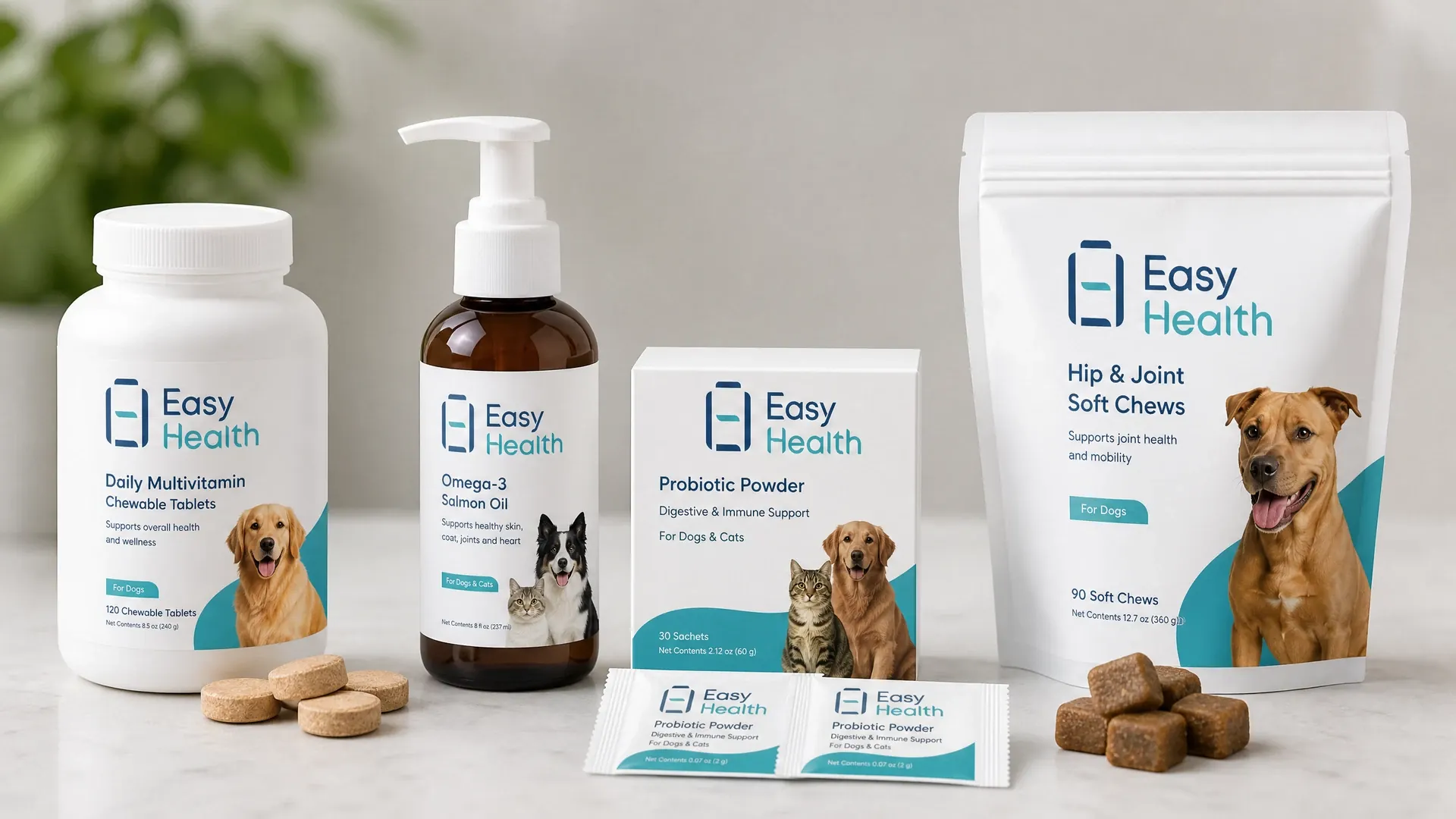
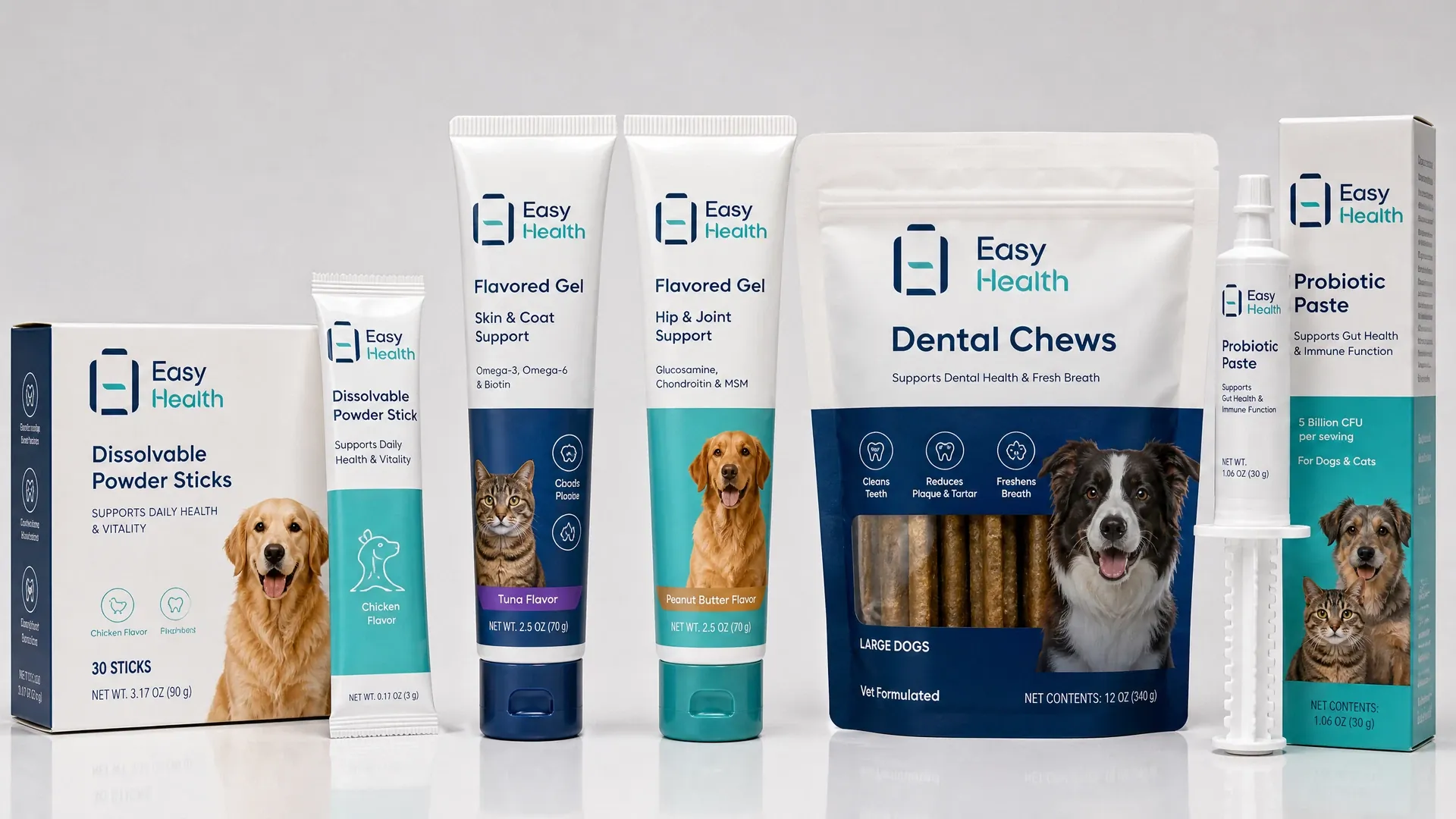
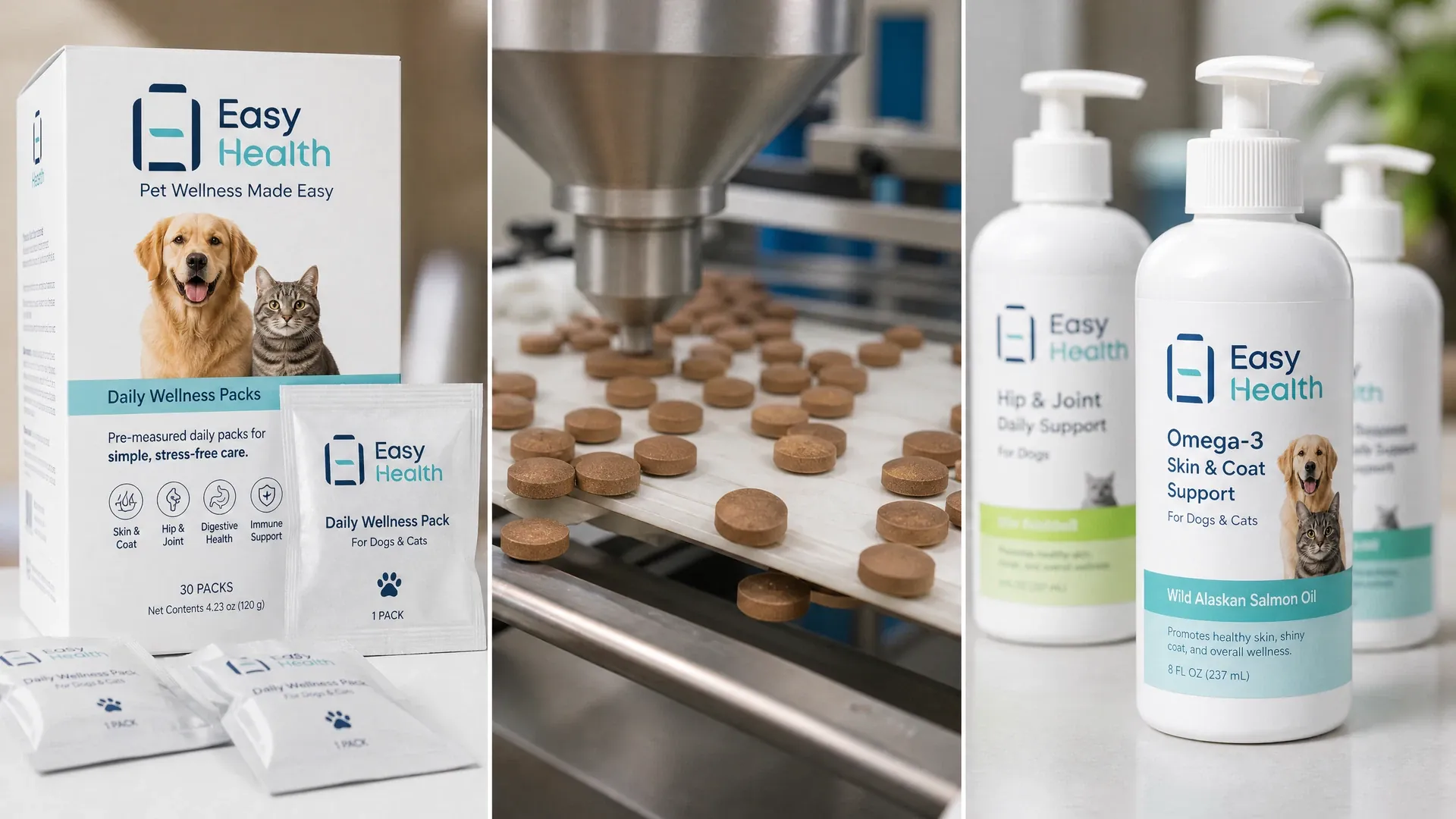
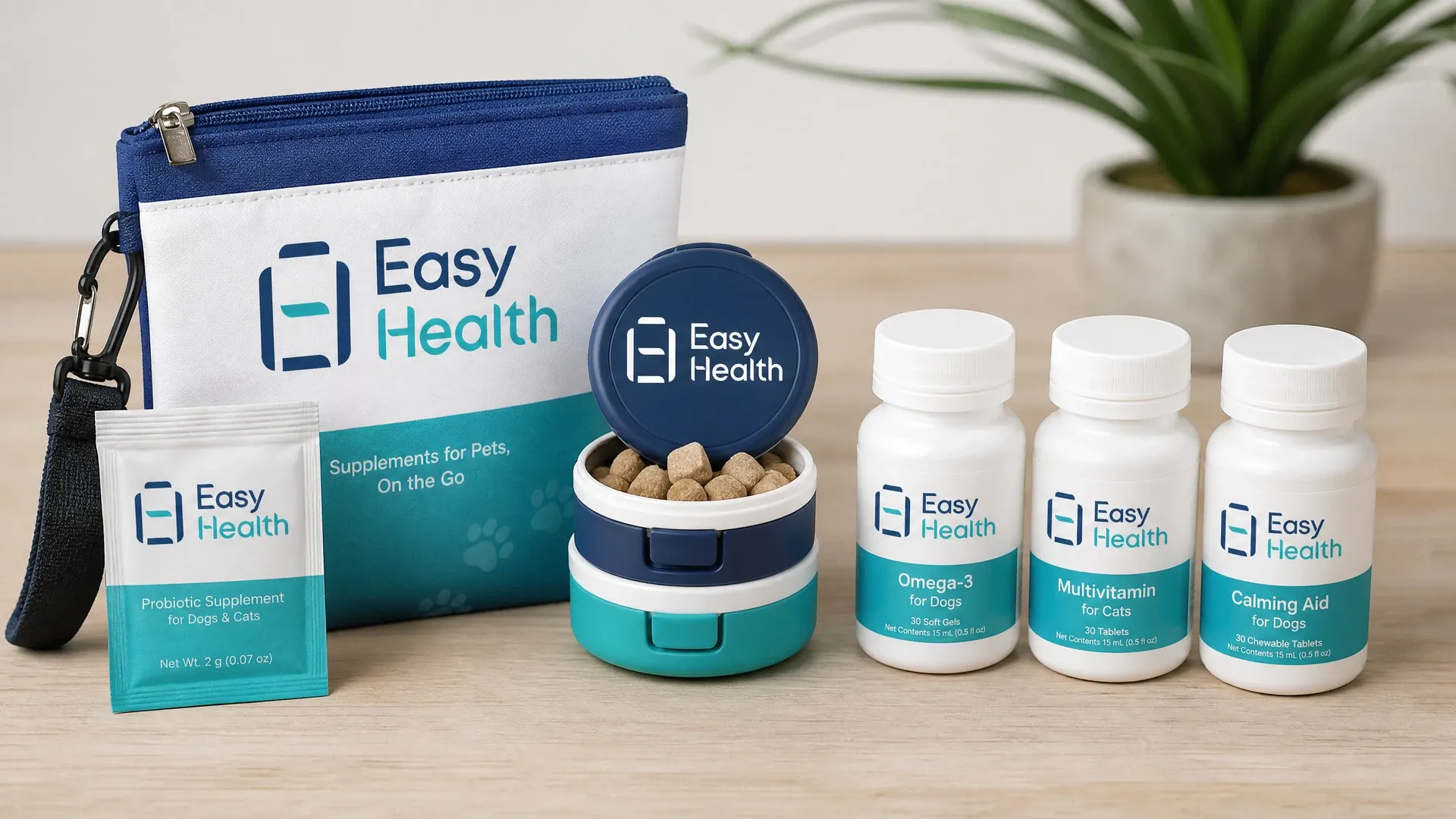
Visual guide: common pet dosage formats and use cases
Explore images that illustrate mainstream structures, closures and accessories for soft chews, powders and liquids—zipper pouches, alu-laminate sticks, amber bottles with droppers/pumps, desiccant placement and secondary-pack stabilisation for travel.
Pet liquid packaging: leak resistance, light protection and dose control
Liquid pet products prioritise sealing, leak resistance and light protection. Common choices include amber bottles with droppers, measuring cups or dosing pumps; squeezable tubes; and alu-laminate single-serve sticks for travel or one-off doses. For light- or oxygen-sensitive actives, use light-shielding materials, suitable barrier liners, induction foil seals and tamper-evident rings. Add leak pads and stabilising secondary packs for transport. Labels should show mL per dose and administration steps, including shake or chill advice where applicable. Easy Health coordinates bottle/pouch/stick/blister options, accessories and cartons, with packaging production overseen in our Hong Kong facility.
- Amber bottles with droppers/pumps for light control
- Induction foil and TE rings to reduce leakage risk
- Single-serve sticks for travel and precise dosing
- Label mL per dose and shake-before-use notes
Pet nutrition labelling checks by market
Pet nutrition products often follow general packaged food labelling principles. For Hong Kong, reference Cap.132W and the “1+7” nutrition labelling framework; for Mainland China, GB 7718 and GB 28050. Focus on ingredient list, net quantity, suggested feeding amount, storage guidance, allergen notices, responsible party/origin, lot and date marks. Requirements vary by market—seek local authority or professional advice for your specific positioning. Easy Health can coordinate label/box design, materials and provide sampling for review.
- Show ingredients, net content and lot/date marks
- State feeding directions, storage and allergen notes
- Align with target-market labelling frameworks
Packaging coordination process for pet dosage formats
- Needs and dosage evaluation:Assess formula traits, dosing, channel and use cases to propose formats and barrier levels.
- Material and structure selection:Compare pouch/bottle/stick/blister options, films or bottle resins and accessories to confirm sealing and compatibility.
- Labelling and carton design:Prepare key labelling items for target markets, align artwork and arrange material sourcing.
- Sampling and test recommendations:Provide samples; recommend seal integrity, drop and transit simulations.
- Packaging production coordination:Oversee production in our Hong Kong facility with defined step checks and process controls referencing GMP principles.
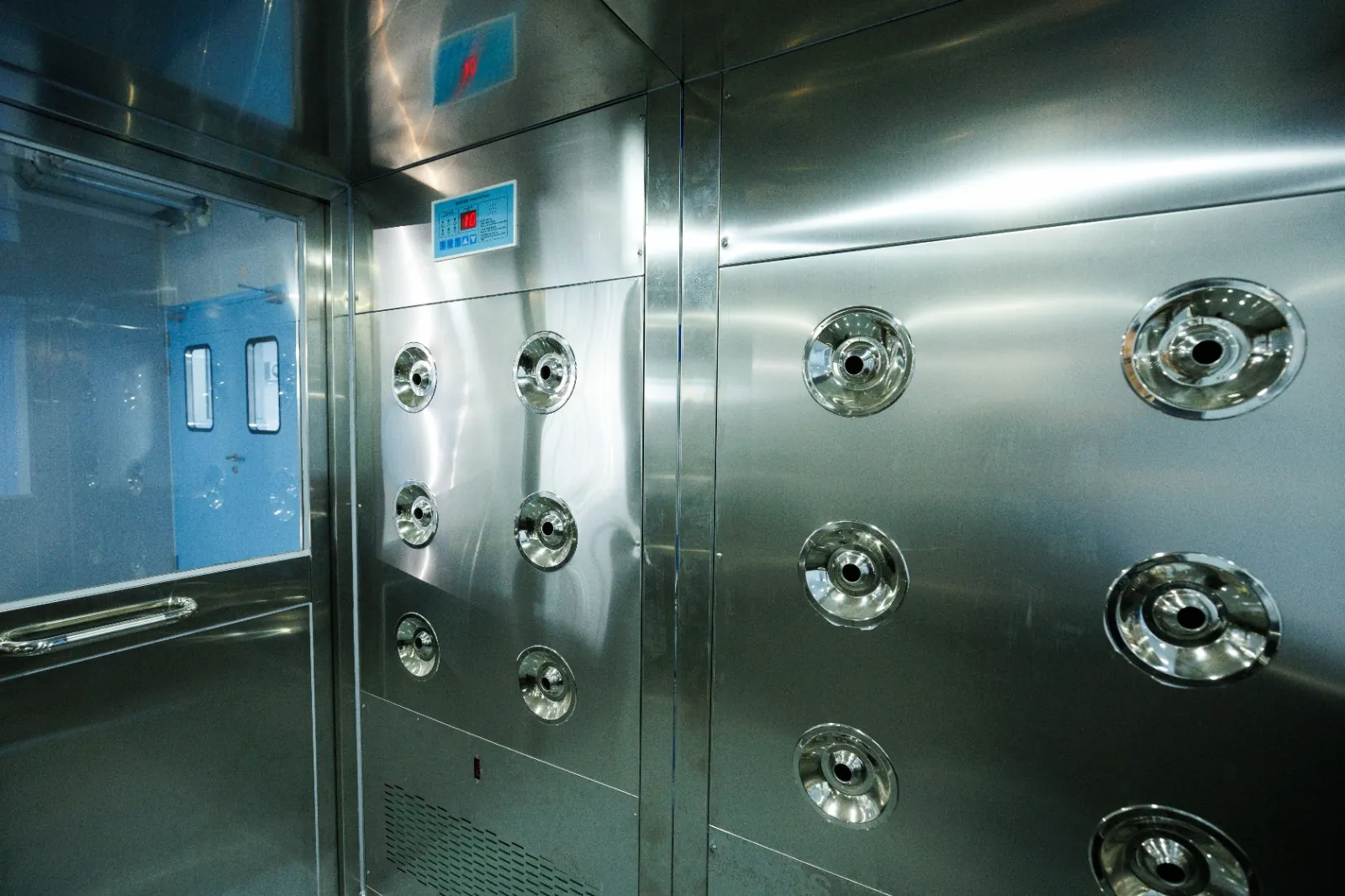
Inside the Easy Health Hong Kong Facility


Pet dosage form packaging comparison
| Pet soft chew packaging | Pet powder packaging | Pet liquid packaging | Cross-form design focus |
|---|---|---|---|
| High barrier zipper pouch | Foil single-serve stick | Amber dropper bottle | Food-grade inner layer |
| Nitrogen flushing | Dual seals anti-leak | Anti-backflow closure | Moisture control plan |
| Single piece dosing | Scoopless gram control | Clear drop count scale | Legible dosing labels |
| Anti-sticking oil barrier | Low water activity pack | Light-shield oxygen barrier | Store cool and dry |
| Treat-like compliance | Mix feed or water | Easier oral dosing | Portable and handy |
The above is for general reference; the actual solution will be assessed and confirmed by your account manager.
Packaging selection checklist for soft chews, powders and liquids
- Confirm water activity, fat content and O2/light sensitivity
- Choose single-serve vs multi-serve: sticks/sachets or jars/bottles
- Assess dosing accessories: scoop, dropper, cup or pump
- Set target shelf-life and select barrier grade and closure
- Decide on desiccants, nitrogen flushing or light-shielding
- Plan transport protection: leak pads and secondary stabilisation},{
Pet dosage packaging FAQs
Can soft chews be packed in blisters?
It depends on firmness and oil exudation. Very soft or oily chews may stick and be hard to push through; consider single-serve sachets or high-barrier zipper pouches with desiccants. If blistering is feasible, choose high-barrier films, suitable cavity sizing and easy-tear lidding, and run transit/drop tests.
How can we reduce caking risk for powders?
Use high-barrier alu laminates with robust sealing; consider nitrogen flushing and include desiccants. Single-serve sticks reduce repeated humidity exposure. For jars, add an induction foil seal and scoop, and state moisture-avoidance on labels.
How can liquid packaging minimise leakage risk?
Apply induction foil seals with tamper-evident rings, verify compatibility between droppers/pumps and liners, add leak pads and stabilising secondary packs, and validate with inversion and vibration tests.
Do pet nutrition products require nutrition labelling?
It depends on positioning and market. In Hong Kong, reference Cap.132W and the “1+7” framework; in Mainland China, refer to GB 7718 and GB 28050. Consult local authorities or advisers for your specific case.
What packaging samples can be arranged?
We can arrange appearance/structure samples for pouches, sticks, bottles and blisters to test sealing, barrier and user handling. Arrangements and timelines vary by project and are confirmed by our project manager.
Related Packaging Services
Discuss your pet soft chew, powder or liquid packaging needs
For soft chews, powders or liquids, message Easy Health on WhatsApp. Share your product details, channels and use cases; we will assess materials, structures, labelling and sampling, and coordinate subsequent packaging production.
Last updated: