Stick pack packaging for powders: single-serve sachet design
For protein, fibres and prebiotics, we optimise powder stick sachets from barrier selection and seal cleanliness to the tear‑and‑pour experience. Our Hong Kong operations follow GMP‑oriented controls and a food safety management system referencing the FSSC 22000 framework. We provide OEM/ODM, labels and cartons, sampling, and coordinated packaging production, with each project reviewed by an account manager.
Summary:Powder stick sachets demand strong moisture barriers, clean heat‑sealing despite dust, and precise dosing. Easy Health coordinates the project requirements in Hong Kong. Confirm which certificate scopes, quality records and supporting documents apply to the proposed arrangement. We help evaluate tear/dispensing experience and trade‑offs versus large pouches or canisters, case by case via an account manager.
What key decisions will this page help me make?
- When to choose stick sachets versus large pouches or canisters. - Suitable flexible packaging structures and moisture barrier levels for hygroscopic powders. - How powder dust affects heat seals and practical seal design tips. - Balancing dose accuracy with smooth dispensing; tear notch, opening geometry and flow guidance. - Common Hong Kong and Mainland labelling points for prepackaged foods and reserving space in artwork. For case‑specific reviews, contact our account manager on WhatsApp.
When should you choose single-serve powder packaging?
Stick sachets excel for single‑serve clarity, portability and hygiene—ideal for on‑the‑go protein, fibres and prebiotics. For hygroscopic formulas prone to caking, sticks shorten exposure after opening and can match high‑barrier flexible films for stability. Large pouches or canisters suit home or gym settings with more display area and repeated use, but need attention to moisture ingress and possible desiccant accessories. Evaluate channel display, storage temperature/humidity, consumer pouring behaviour, dose size and mixing tools. For protein powder packaging design, plan sticks and larger packs in parallel: sticks for mobility, larger formats for home replenishment, aligned with secondary or gift packaging to support brand positioning.
- Sticks: single‑serve, portable, hygienic
- Pouches: home use, ample panels
- Canisters: stackable and tidy
- Hygroscopic formulas favour sticks
How do materials and barriers affect powder sachet packaging?
Caking is common in high‑protein, oligosaccharide and mineral blends. First map sensitivities to moisture, oxygen and light, then select suitable flexible structures such as PET/AL/PE, PET/MPET/PE, or nylon‑reinforced laminates for puncture resistance. Priorities are low WVTR and seal integrity: residual powder in the seal zone weakens heat seals. Address both film and process—choose an inner layer that sheds powder better, design wider seals or anti‑powder lead‑ins, and include de‑dusting and settling steps before sealing. We coordinate material and print suppliers and, where needed, arrange related tests (e.g., barrier and seal strength), with the account manager assessing and confirming per formula and market.
- Define formula sensitivities first
- Select high barrier with puncture guard
- Seal width and cleanliness matter
- Design de‑dusting and settling
Visual references for filling, sealing and sachet details
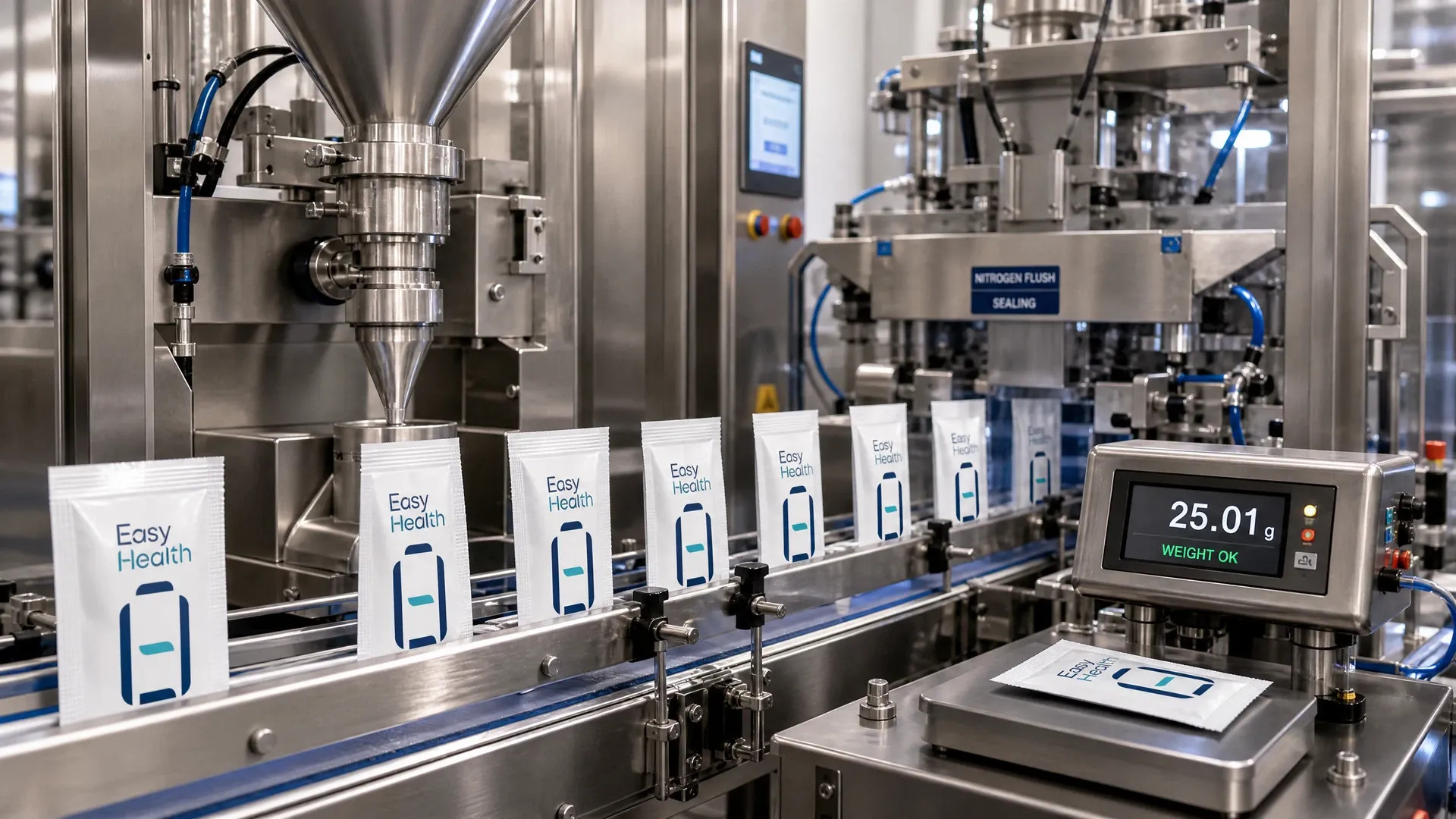
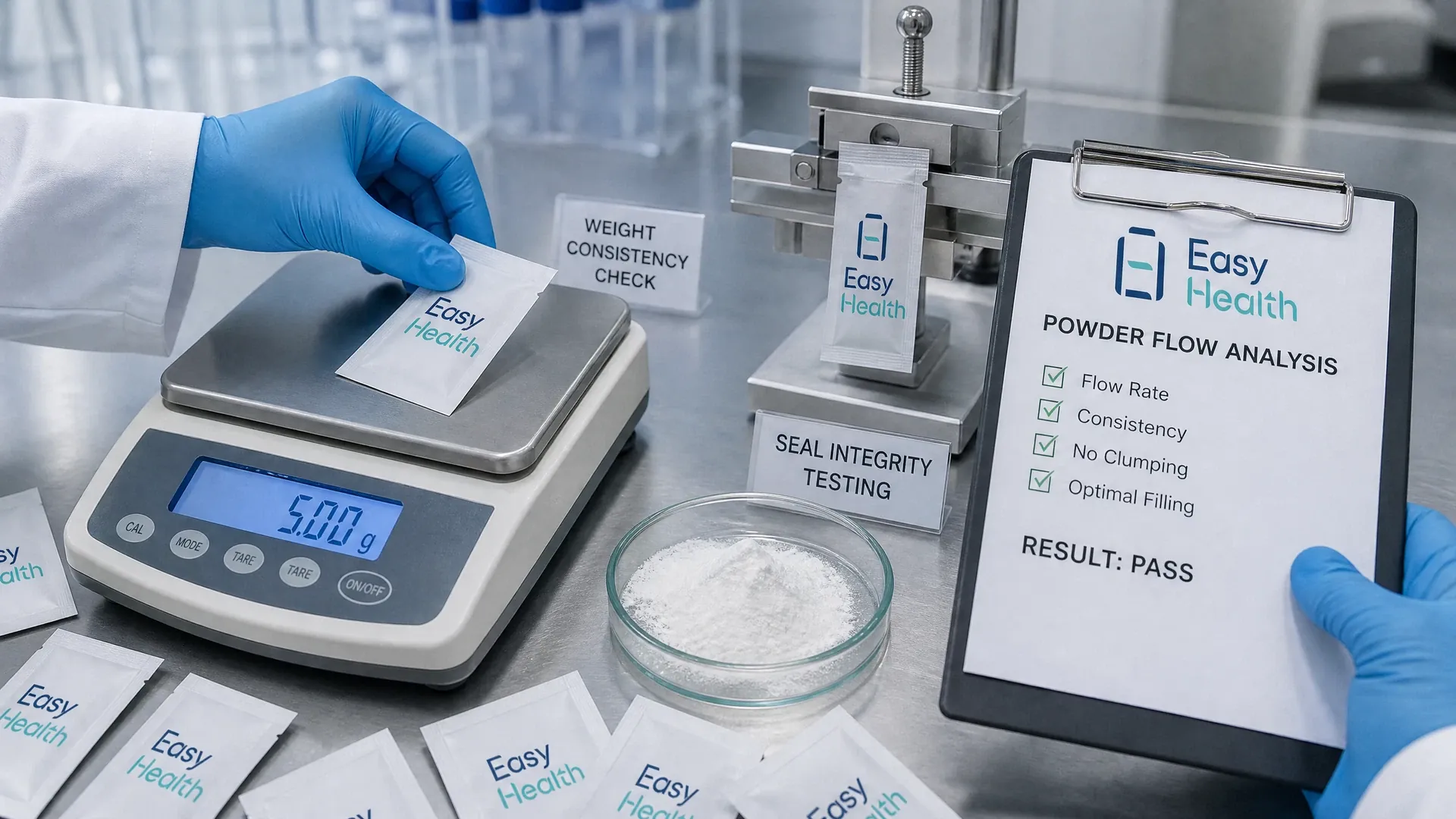
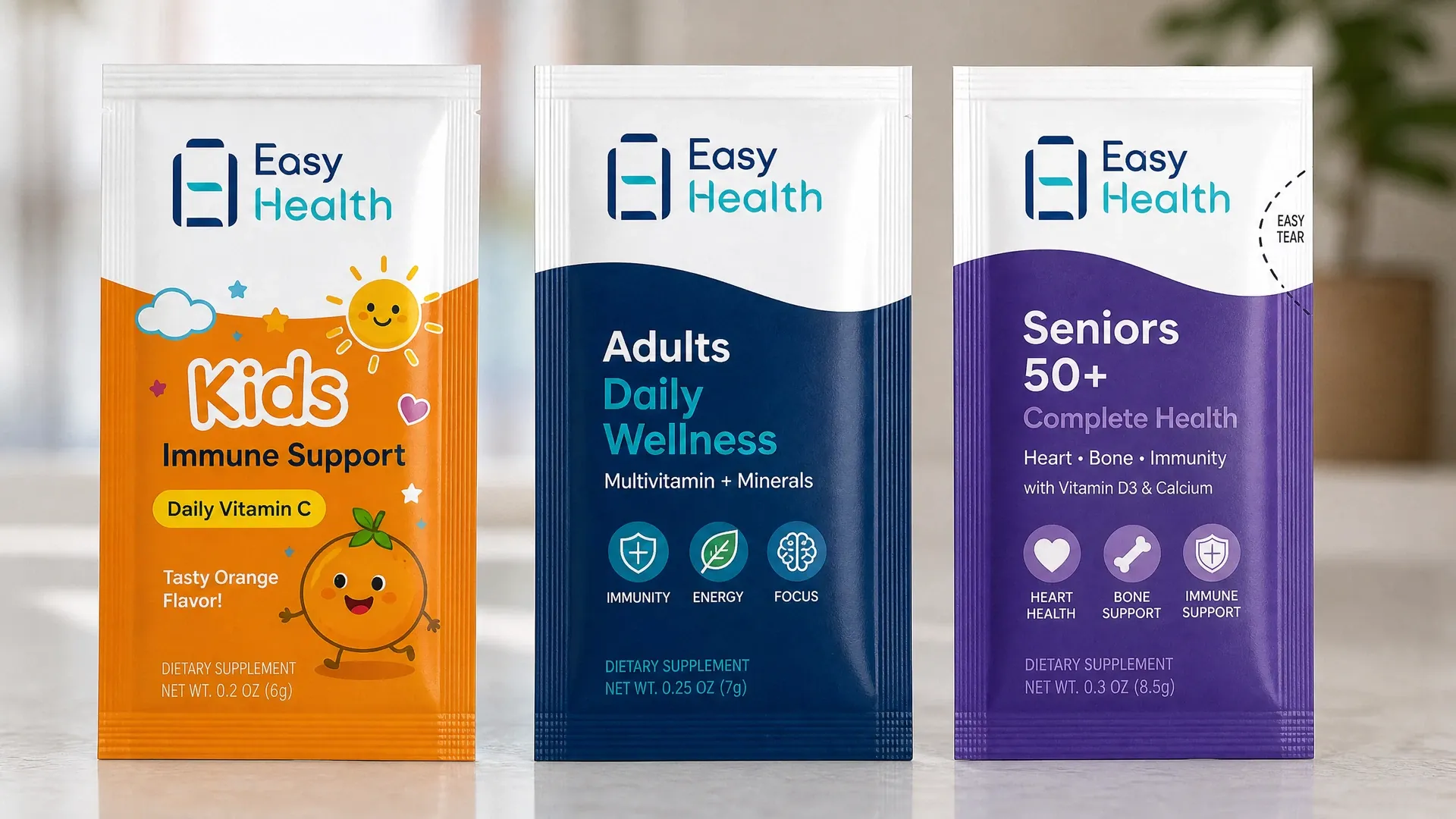
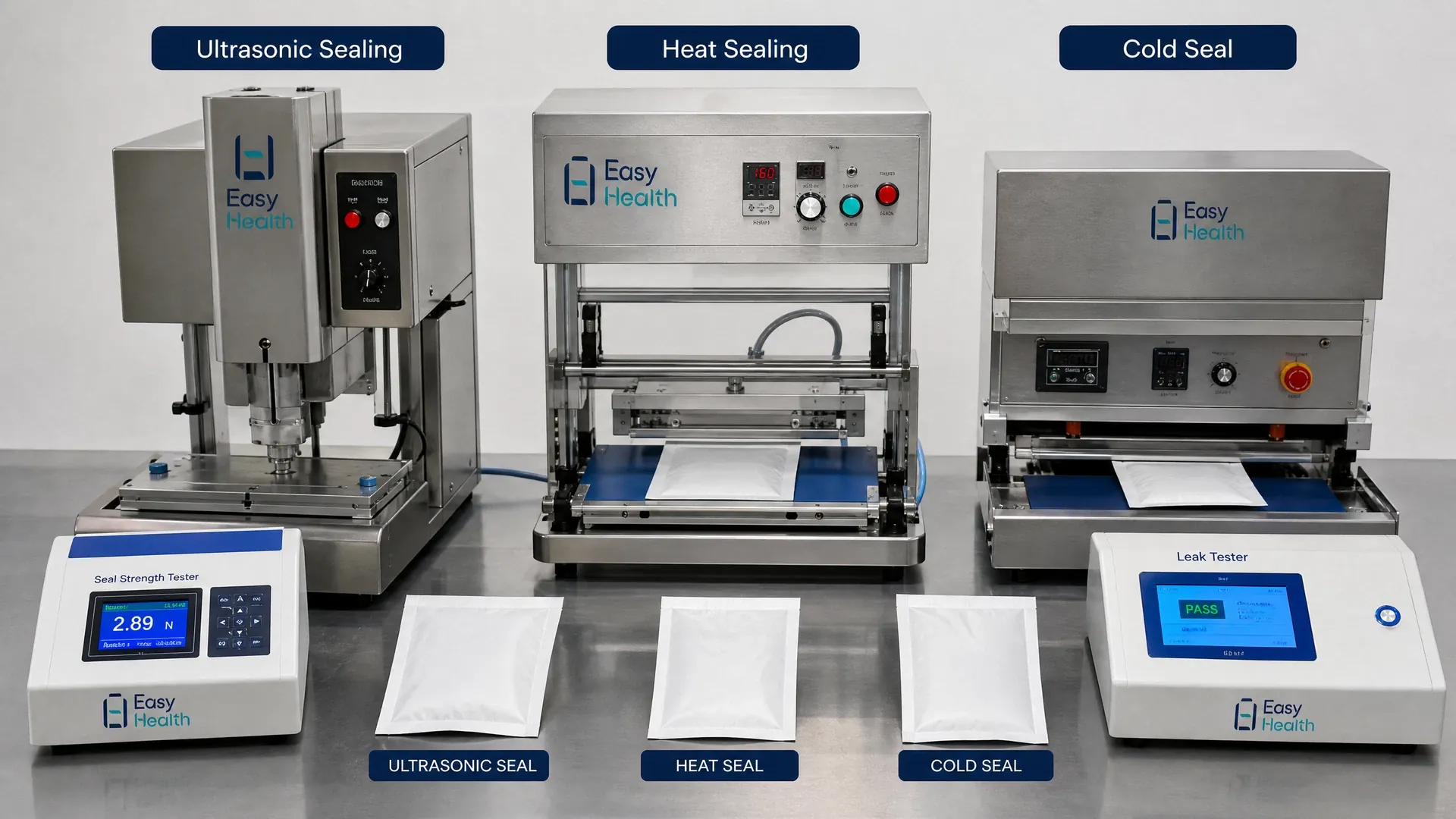
Images illustrate filling, de‑dusting and heat‑sealing steps in powder stick production, key quality control checkpoints and seal structures, plus how innovative formulas present on different films to assess tear and pour paths.
Heat-sealing and dosing considerations
Powder dust critically affects sealing: the seal area must remain clean, flat and at stable temperature. Consider flow guides, inner‑layer COF, graded seal widths and end‑seal buffers; operationally add static control, vacuum/air‑knife cleaning to reduce trapped powder. For dosing accuracy, match the metering method to powder flow and target dose, then verify repeatability and fill stability during sampling and pilot runs. Headspace and angle of repose influence pour path and dusting once opened. Easy Health provides sampling and coordinated packaging production, and can arrange related tests and process refinement. Specific methods and timelines depend on the project and are confirmed by our account manager.
- Keep the seal zone clean and stable
- Use flow guides to reduce trapping
- Match metering to flowability
- Verify repeatability in sampling
Tear-and-pour design for stick sachets
User experience hinges on tear direction, opening geometry and flow guidance. Consider positioned tear notches or laser scoring (arranged per project), and design the opening radius and rounded corners to avoid powder build‑up or sharp edges. For dusty powders, add a pour neck or internal fold to reduce plume; if tapping during pour is common, tune sachet length ratio and stiffness layer. Depending on channel needs, arrange display cartons with windows or tear‑strips for easy pick. These details shape protein powder packaging design in practice—can users tear one‑handed, pour into bottles cleanly, and avoid residue on the seal? Trial these in sampling; where needed, the account manager can arrange supplier tweaks to tooling and film parameters.
- Choose notches or laser score
- Rounded opening reduces build‑up
- Flow guides cut dusting
- Pick‑friendly display cartons
Sachet design coordination process
- Needs and formula review:Assess hygroscopicity, target dose, channels and storage/transport to frame format and barrier direction.
- Structure and material proposal:Propose film, seals and tear options by market and use case; confirmed case by case by the account manager.
- Artwork and labelling plan:Provide carton/label dielines and help cross‑check common prepackaged food labelling points and info space.
- Sampling and pilot run:Arrange samples and line trials to observe seal cleanliness, tear feel and pouring stability.
- Packaging coordination:Coordinate materials, printing and cartoning, and arrange related tests as needed; timelines are project‑specific.
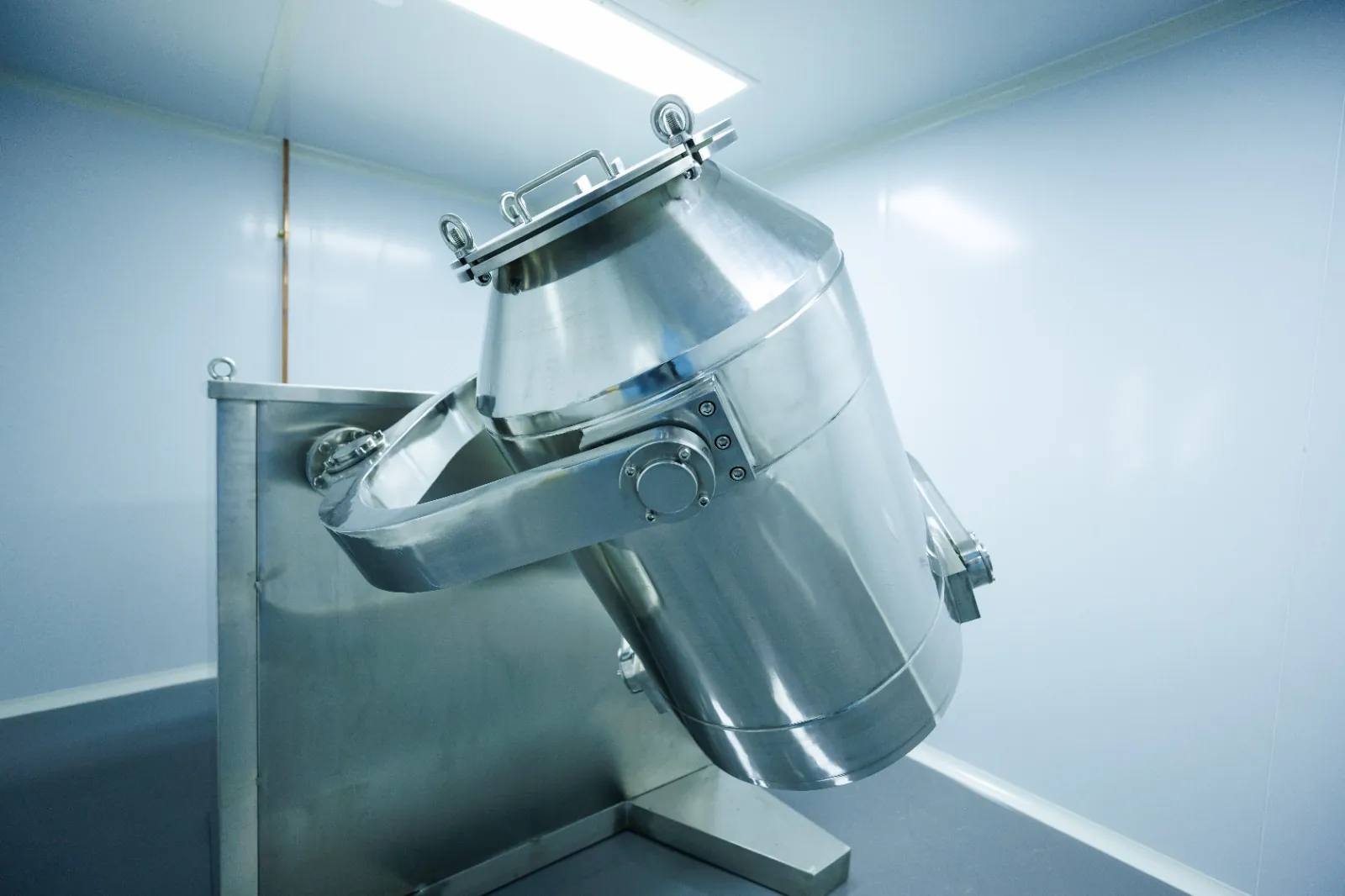
Inside the Easy Health Hong Kong Facility


Powder pack format trade‑offs
| Item | Stick sachet | Large pouch | Canister |
|---|---|---|---|
| Single‑serve clarity | Very high | Medium | Medium |
| Moisture control | High (high barrier) | Depends on seal/desiccant | High (with closure) |
| Portability | Designed for portability | Average | Average |
| Label area | Limited | Larger | Larger |
| Dust impact on seal | High attention | Manageable | Lower impact |
Guidance only. Final choice depends on formula and channels, to be confirmed by our account manager.
Stick sachet project checklist
- Assessed hygroscopicity and caking risk
- Confirmed single‑serve dose and volume
- Define pouring vessel and opening angle
- State storage and transport temperature/RH
- Labelling languages and markets (HK/Mainland)
- Need display cartons and tear‑strip method?
Stick pack packaging for powders FAQs
How does powder dust affect heat seals?
Yes. Residual powder weakens seals. Add de‑dusting (air‑knife or suction), anti‑static control, settling and flow guidance; choose inner layers that shed powder and use appropriate seal gradients. During sampling and pilot runs, observe seal cleanliness and residue after tearing. Where needed, the account manager can arrange supplier tweaks to film and tooling.
What film structures suit hygroscopic powders?
High‑barrier laminates such as PET/AL/PE or PET/MPET/PE are typical; add nylon if puncture resistance is needed. Final choices depend on target markets, channels and storage/transport. We can arrange barrier and seal strength tests and have the account manager confirm the proposal.
How should tear openings be designed to limit dusting?
Use positioned notches or laser scoring with a generous opening radius to avoid sharp corners. Add internal flow guides or folds, and test pouring at different angles and bottle diameters during sampling. If users tap while pouring, tune sachet length ratio and stiffness to limit dust plumes.
What labelling points should you review for Hong Kong and Mainland China?
For prepackaged foods in Hong Kong, follow Cap. 132W and the “1+7” nutrition labelling points; in Mainland China, refer to GB 7718 and GB 28050 (for Mainland prepackaged foods). If bilingual, provide product name and ingredient list in both languages. Use “best before” or “use by” wording for dates. For other markets, consult local authorities or advisers.
Can samples and packaging tests be arranged first?
Yes. We can arrange samples and pilot runs to assess fill stability, seal cleanliness, tear feel and pouring performance, and arrange related tests. Timelines and arrangements are project‑specific and confirmed by our account manager.
Related Packaging Services
Discuss stick pack packaging for powders
Easy Health coordinates the project requirements in Hong Kong. Confirm which certificate scopes, quality records and supporting documents apply to the proposed arrangement. Share your formula, dosage and markets via WhatsApp for case‑by‑case assessment by our account manager.
Last updated: