Pouch Types Guide for Formats, Seals and Resealability
Define product form, retail channel and expected re-open counts before choosing a sachet. This page maps the display strength of stand-up pouches, the reseal role of zip-locks, the filling efficiency of flat pouches, and how three-side, centre back and eight-side seals affect barrier and stacking. Coordinated sampling and packaging are managed by Easy Health in Hong Kong.
Summary:Your sachet type drives barrier, opening experience and display. This guide compares stand-up, zip-lock, flat, three-side seal, centre back seal and eight-side gusset options, with resealability, display and labelling points, to support practical decisions for your product and sales channels.
How Do You Choose Pouch Structure and Reseal Features?
Start with channel: for shelf presence and large print panels, choose stand-up; for multi-serve use, add a zip-lock; for single-serve and high packing speeds, flat pouches excel. Then match product state (solid, granule, semi-liquid) and barrier needs with three-side, centre back or eight-side seals. Add tear notches or directional tears as needed. Filling and heat-seal settings are aligned to product heat tolerance and confirmed by your account manager.
Stand-Up Pouch vs Flat Pouch: Formats and Seal Options
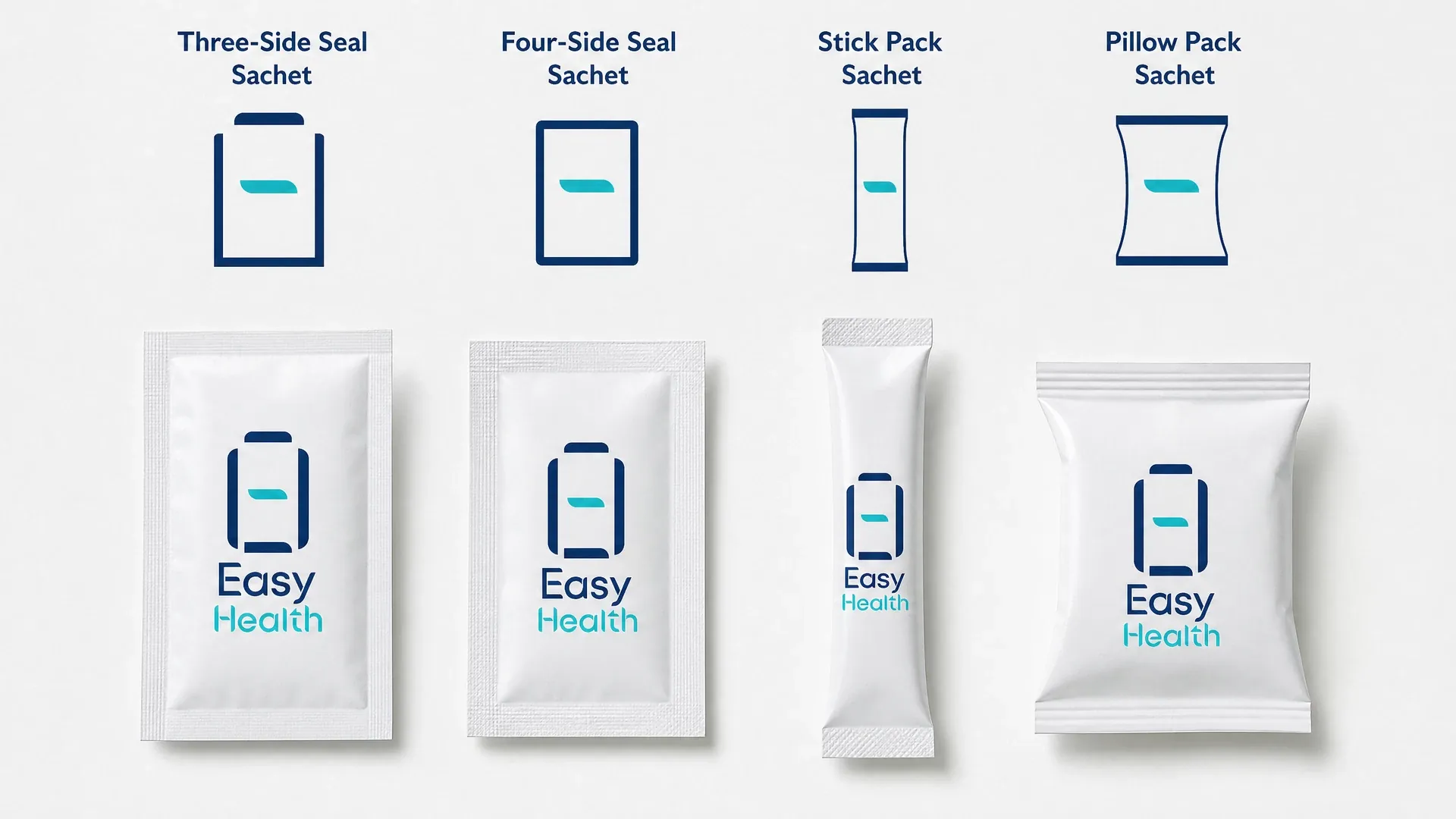
Bag choice starts with base and sealing. Stand-up pouches use a bottom gusset or rounded base to stand on shelves, ideal for larger display panels. Flat pouches have no gusset, stack efficiently and suit single-serve or sampling. Three-side seals join two films on three edges for a sleek profile and strong barrier; centre back seals suit continuous forming with efficient web use; eight-side gusset formats offer stable, boxy shapes with multiple panels. Consider product flow, intended shelf display, shipper stacking strength and vibration in transit. Easy Health coordinates film-structure pairing and sampling.
- Stand-up suits shelf display
- Flat favours high-speed fill
- Three-side: sleek, strong barrier
- Back seal: continuous forming
Resealable Pouch Packaging: Zip-Locks and Tear Features
If multi-serve is expected, specify a zip-lock (single or double track) with an initial top seal. Single-serve flat or three-side pouches rely on tear notches and directional tears for clean opening. Hang holes, rounded corners and safe edges improve merchandising and handling. Reseal features occupy seal real estate, affecting usable volume; for semi-liquids, assess leakage risk and pair with stand-up formats. Easy Health can arrange opening force and seal strength testing, with project-by-project confirmation by your account manager.
- Zip-lock supports multi-use
- Tear notch for single-serve
- Reseals reduce net volume
- Hang holes aid peg display
Visual Guide to Common Sachet Structures and Uses
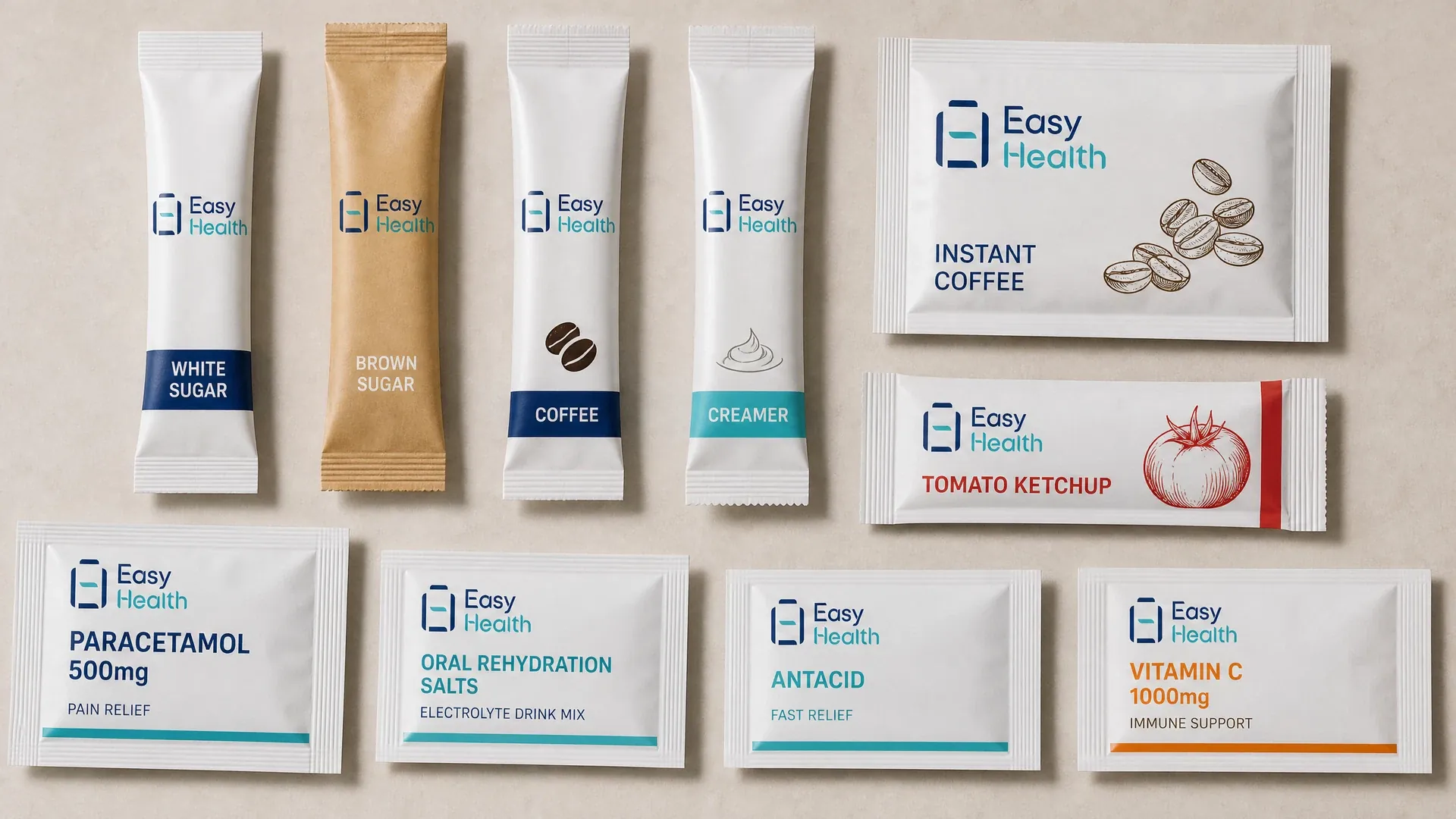
Diagrams show the differences between stand-up, zip-lock and flat formats, plus three-side, back and eight-side seals. Compare panel areas, seal locations, shelf display, peg hanging and shipper stacking, with layer build-up at the seal zones.
Materials and Barrier Requirements for Sealability
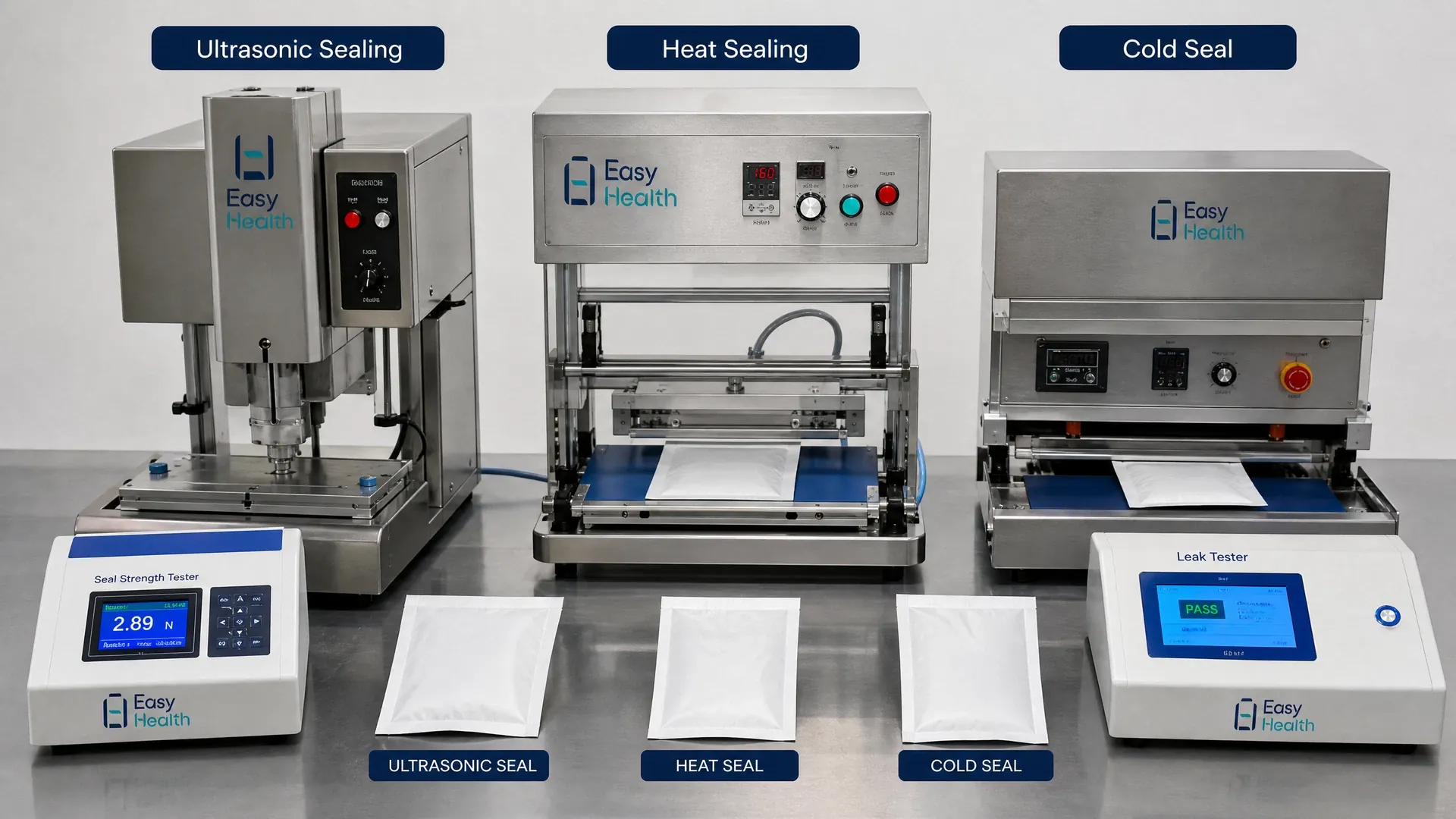
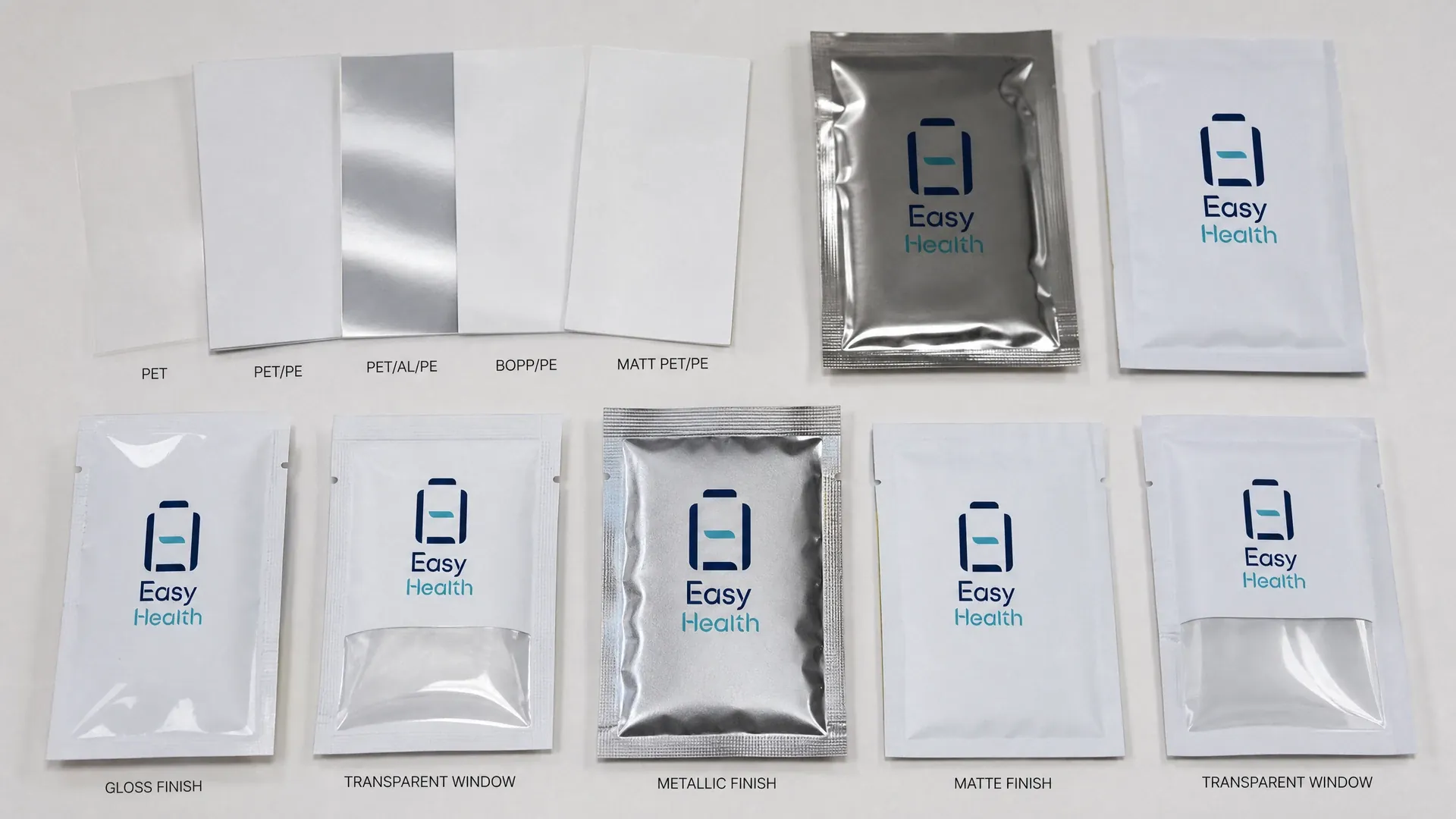
Materials must balance barrier, sealability and print. Typical laminates separate the print web from the heat-seal layer, then add moisture/oxygen/light protection as required. For higher barriers, consider metallised or coated options; for heat exposure, validate thermal resistance and seam integrity. Seal widths and settings should match equipment to avoid weak or over-sealed seams. With a Hong Kong facility and GMP-standard environment, Easy Health coordinates material sourcing and print, and verifies sealability and form during sampling.
- Print outside, seal inside
- Match barrier to sensitivity
- Trial sealing parameters
- Consider metallised films
Merchandising and Logistics for Stand-Up and Eight-Side Pouches
Retail shelves and e-commerce impose different needs. Stand-up pouches offer strong on-shelf presence; eight-side gusset pouches stack more stably in shippers for volume channels. Back-seal flat pouches suit peg displays or inner packs placed into cartons. For end-caps, allow for hang holes and reinforced tops. In transit, choose structures that tolerate vibration and compression, and design dividers to control void space. For fragile granules or tablets, run pilot transit trials; your account manager will coordinate and refine seal widths and stiffness before scale-up.
- Stand-up for shelf impact
- Eight-side stacks stably
- Back-seal suits pegs/inners
- Pilot transit trials first
How We Coordinate Pouch Selection
- Brief and reference samples:Share product form, channels and display goals; confirm any reference packs or target dimensions.
- Structure and material proposal:Recommend pouch type, seal style and barrier level; outline filling method and sealing parameter ranges.
- Sampling and test coordination:Arrange samples and coordinate required tests, e.g., opening force or seal strength, confirmed per project.
- Artwork and label checks:Before final art, review labelling language and key points; confirm tear notches and hang hole positions.
- Packaging production:Coordinate materials and packaging at our Hong Kong facility; timeline depends on project and is confirmed by your manager.
Inside the Easy Health Hong Kong Facility


Pouch Structure and Reseal Feature Comparison
| Aspect | Stand-up pouch | Zipper pouch | Flat pouch |
|---|---|---|---|
| Display | Stands upright on shelf | Upright or hung via peg hole | Usually laid flat, boxed or carded |
| Reclosure | Zip or press-seal optional | Reopens and recloses repeatedly | Usually single use |
| Typical contents | Powders, granules and gummies | Multi-serve powders or snacks | Single doses, samples or outer bags for sticks |
| Print area | Front, back and gusset | Allow space for the zip line | Smaller panels; keep text concise |
| Design note | Gusset size affects stability | Zip position affects tearing and pouring | Seal width affects moisture protection and opening |
This is general guidance only; the final solution is assessed and confirmed by the account manager for each project.
Quick Checklist for Pouch Choice
- Need shelf stand-up or peg hanging?
- Is the product solid, granular or semi-liquid?
- Require zip-lock reseal or single-use tear?
- What barrier and light protection are needed?
- Filling method and acceptable seal temperature?
- Shipper stacking and transit route conditions?
Pouch Types Guide FAQs
Which Pouch Format Suits Semi-Liquids or Oily Products?
Consider stand-up formats with inner layers optimised for sealability to reduce leakage and allow upright display. For single-serve, back-seal or three-side flat pouches with tear notches work well. Heat-seal and cooling settings should match product heat tolerance; your account manager can coordinate relevant testing.
What Should You Check for Zip-Lock Reseal Pouches?
Allow sufficient headspace for the initial top seal. Check whether particulates may foul the tracks and affect closure. Zips reduce usable volume and alter opening feel, so balance capacity and ergonomics. Run opening and seal-strength trials before production; our manager will coordinate.
What Are Basic Labelling Points for Prepackaged Foods in Hong Kong and Mainland China?
In Hong Kong, prepackaged foods generally follow Cap.132W and the “1+7” nutrition labelling scheme; when bilingual, the food name and ingredient list should appear in both languages. For Mainland sales, refer to GB 7718 and GB 28050 for prepackaged foods. Date marks may use “best before” or “use by”. Confirm specifics with local authorities or advisors.
What Information Is Needed for Sampling?
Share product attributes, target barrier level, display intent, filling method (cold, hot, nitrogen, etc.) and target dimensions. For stand-up or zip-lock bags, indicate gusset depth, zip position and hang hole needs. Provide editable vector artwork and colour references for print coordination.
How Should Seals and Forming Stability Be Validated Before Scale-Up?
Run pilot lots to assess seal appearance, opening feel and post-transit seam integrity. Easy Health can coordinate relevant tests where needed. Use findings to tune sealing temperature, pressure, dwell and seam width, confirmed per project by your account manager.
Related Packaging Services
Discuss Your Pouch Selection Requirements
Share product, channel and reseal needs. Easy Health can coordinate sampling and packaging in Hong Kong. Timelines depend on the project and will be confirmed by your account manager. Message us on WhatsApp to get started.
Last updated: