White label supplements in Hong Kong and repacking support
Focus on health-supplement white-label and repacking that connect ready formulations and packaging options to your brand. Easy Health operates in Hong Kong and coordinates project planning, sampling and packing arrangements. Before proceeding, review the scope and relevance of any food-safety certificates or GMP/FSSC documentation for the specific project. An account manager can discuss packaging structures and label requirements.
Summary:Easy Health offers white-label and repacking coordination in Hong Kong: choose existing or coordinated formulations, pair them with brand packaging and labels, and plan filling and packing arrangements for the project. Any food-safety certificates or GMP/FSSC documentation should be reviewed for scope and relevance case by case. Workflow and timing are confirmed by the account manager for each project.
White label vs repacking: key differences and preparation
White‑label uses an available or coordinated formulation with your brand’s packaging and labels. Repacking fills your designated raw material or finished product into chosen packs (bottles, pouches, sticks, blisters, etc.) under hygienic conditions at our Hong Kong facility, with batch records for traceability. Prepare: brand name and mark files, product name and directions for use, preferred pack type and fill size, label languages (Chinese/English), intended nutrition/ingredient details, target market (Hong Kong or Mainland, etc.), and whether to state “best before” or “use by”. All particulars and timelines are confirmed per project by the account manager.
When should you choose white label supplements or repacking services in Hong Kong?
Use health‑supplement white‑label to launch your brand with an available or coordinated formulation; choose repacking in Hong Kong when you already have bulk material or finished goods that need hygienic filling and labelling. Both routes support bottles, pouches, sticks, or blisters, and can coordinate labels and cartons. Define early: target market (drives label language and mandatory particulars), sales channels (tamper‑evident and opening features), storage conditions (barrier and seal choice), and whether third‑party tests are to be arranged. All collaboration models and steps are confirmed per project by the account manager.
- Have formulation ready? Choose white‑label
- Have bulk material? Choose repacking
- Fix market and language needs first
- Match channel with tamper/portable features
Hong Kong labelling essentials for white label and repacking
For prepackaged foods in Hong Kong, the Food and Drugs (Composition and Labelling) Regulations (Cap.132W) and the “1+7” nutrition scheme apply. If bilingual, the food name and ingredient list should appear in both Chinese and English. Typical white‑label items include: brand name, food name, net quantity, ingredient list, allergen advice, nutrition label (where applicable), directions for use, storage, “best before” or “use by”, and the name and address of the manufacturer or packer (with contact details where applicable). For Mainland sales of prepackaged foods, GB 7718 and GB 28050 are commonly referenced. Easy Health can assist in checking label fields and batch/date print locations; for other markets, seek confirmation from local authorities or professional advisers.
- Cap.132W and “1+7” for prepackaged foods
- Bilingual food name and ingredients if dual‑language
- Define batch and date print locations
- Rules differ by market; confirm individually
Visual guide: from brand brief to dispatch
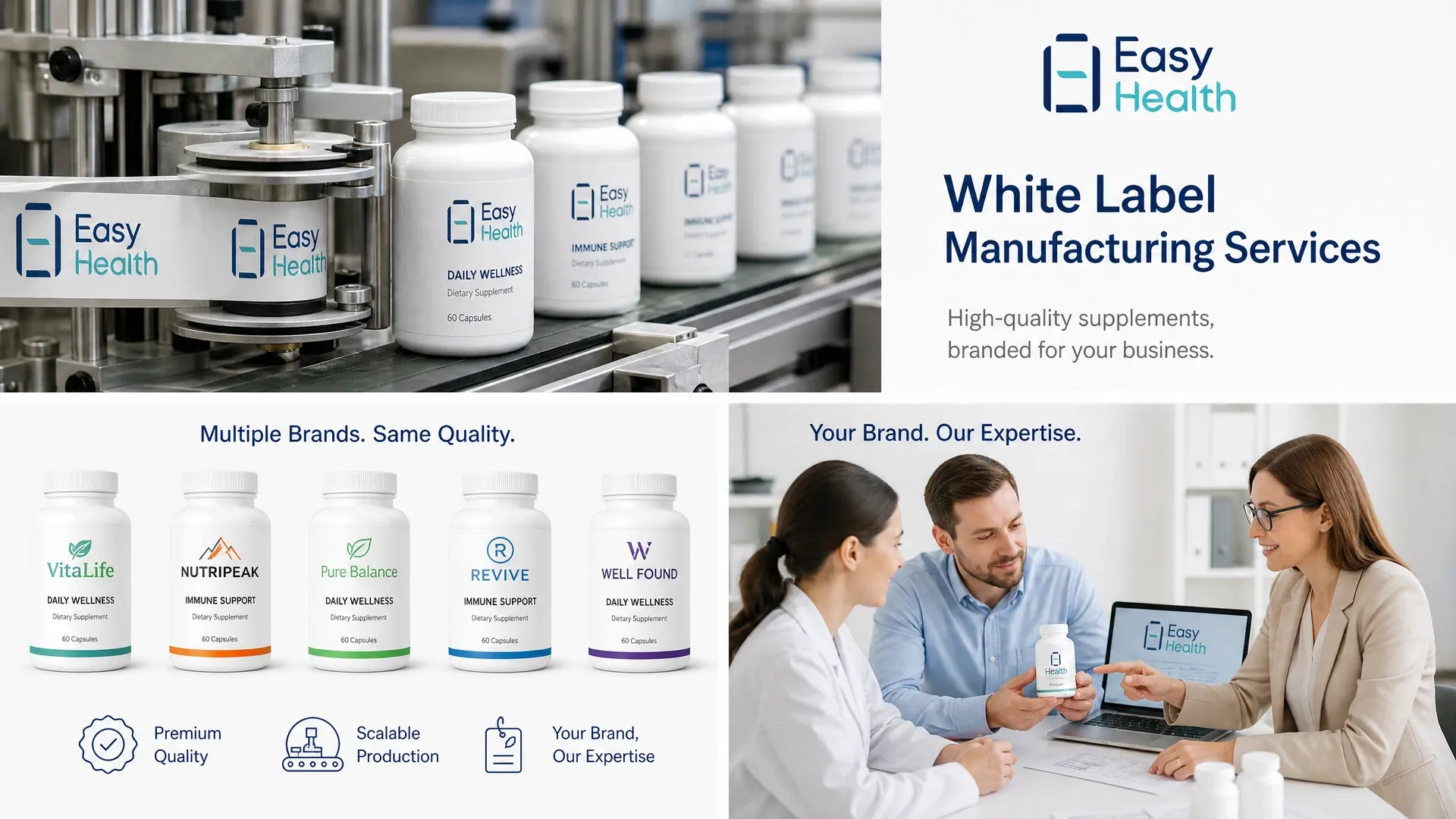
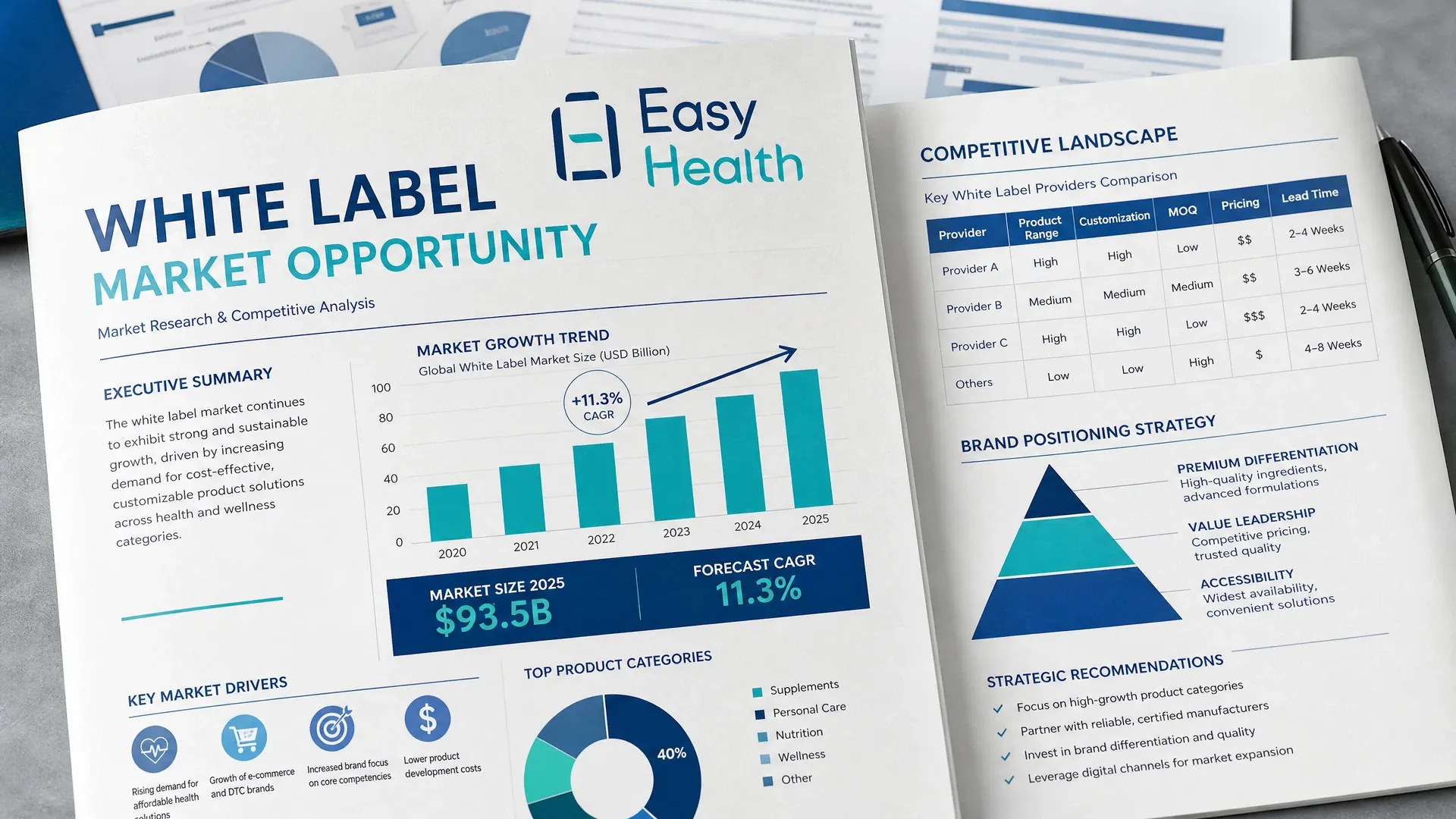
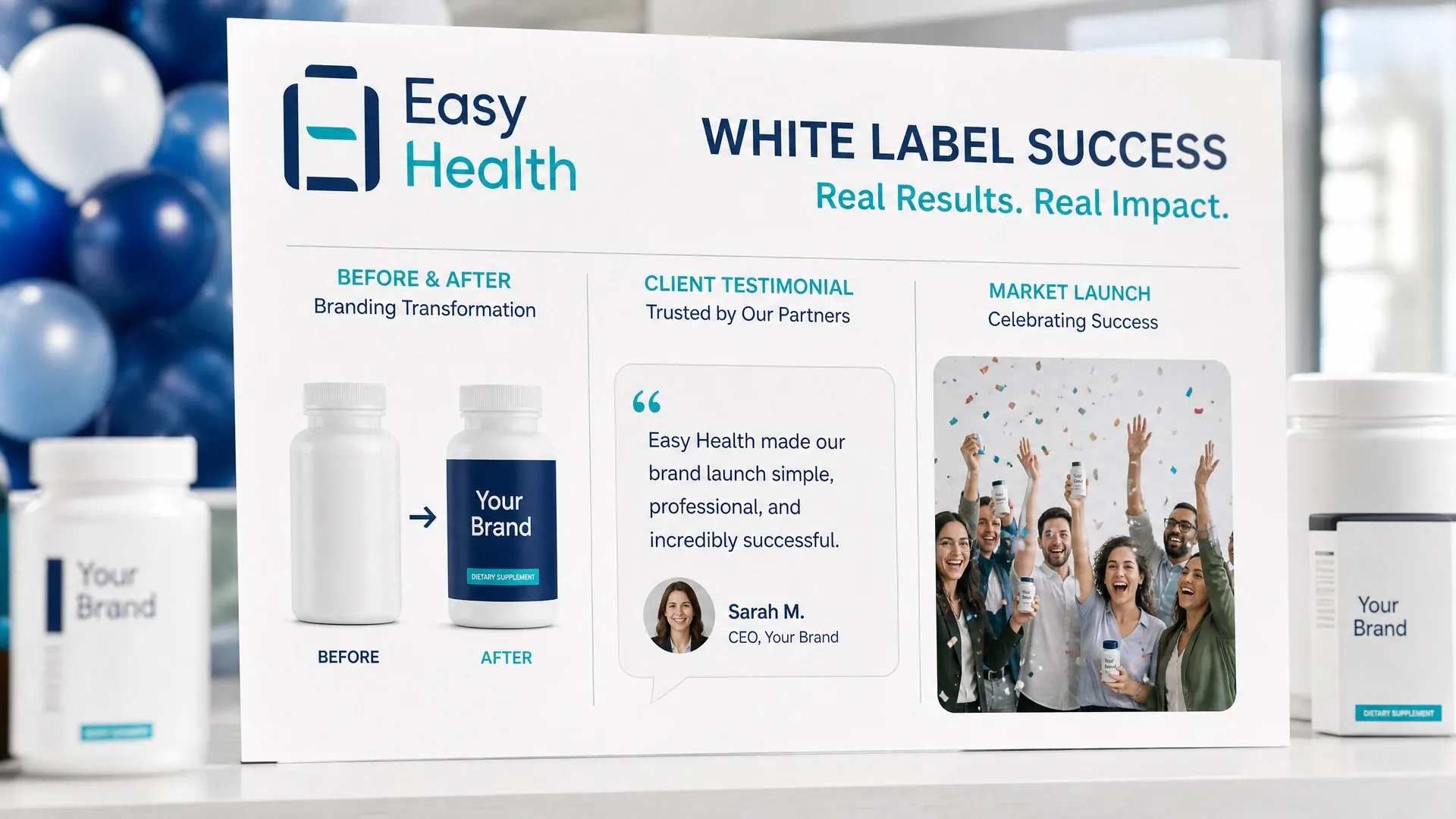
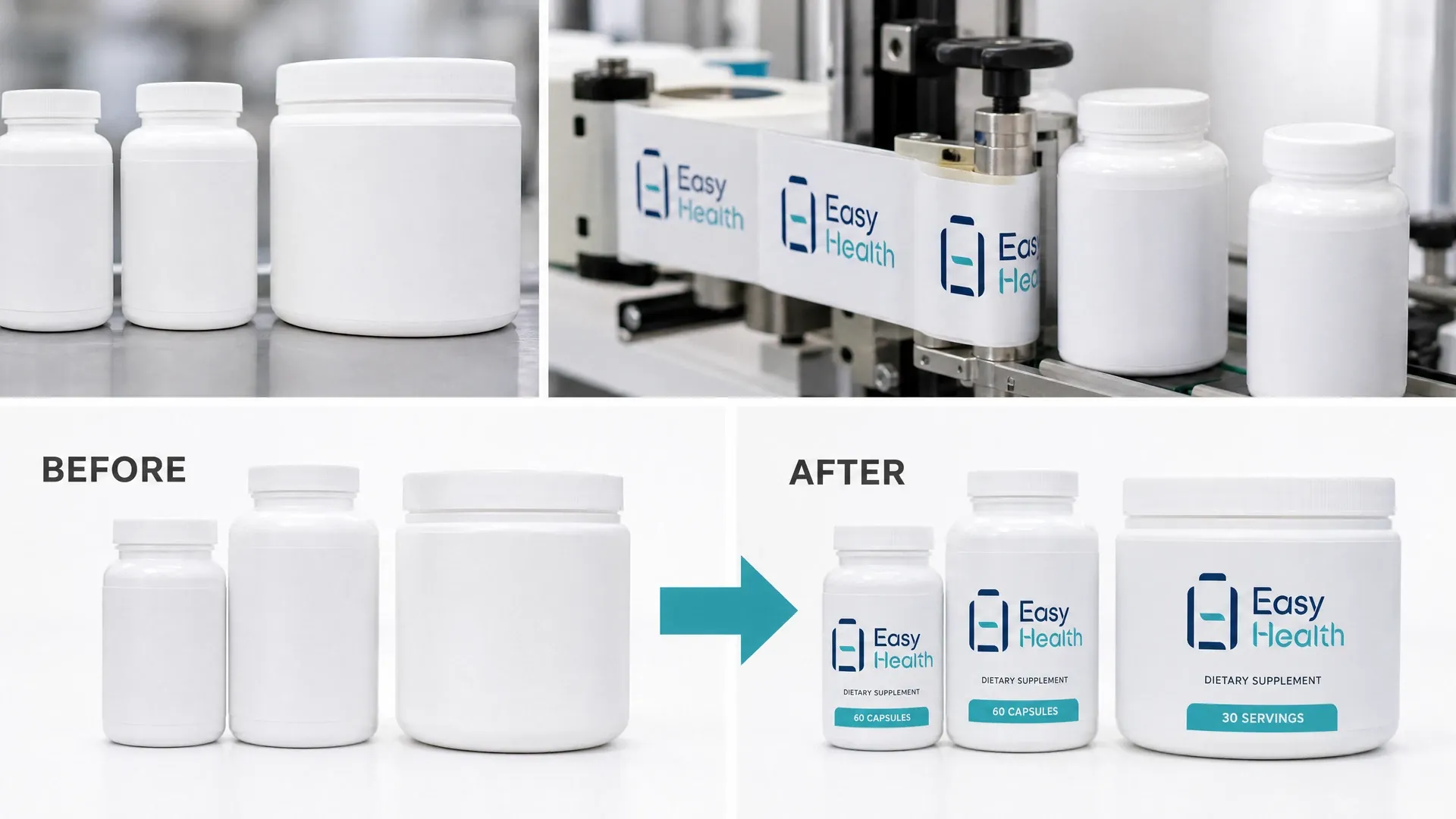
Use this schematic to see key milestones: formulation or bulk material confirmation, pack format selection, label field planning, sample sign‑off, Hong Kong facility filling, batch/date coding, shipper and handling marks, and release readiness.
Selecting pack formats, barriers and filling steps
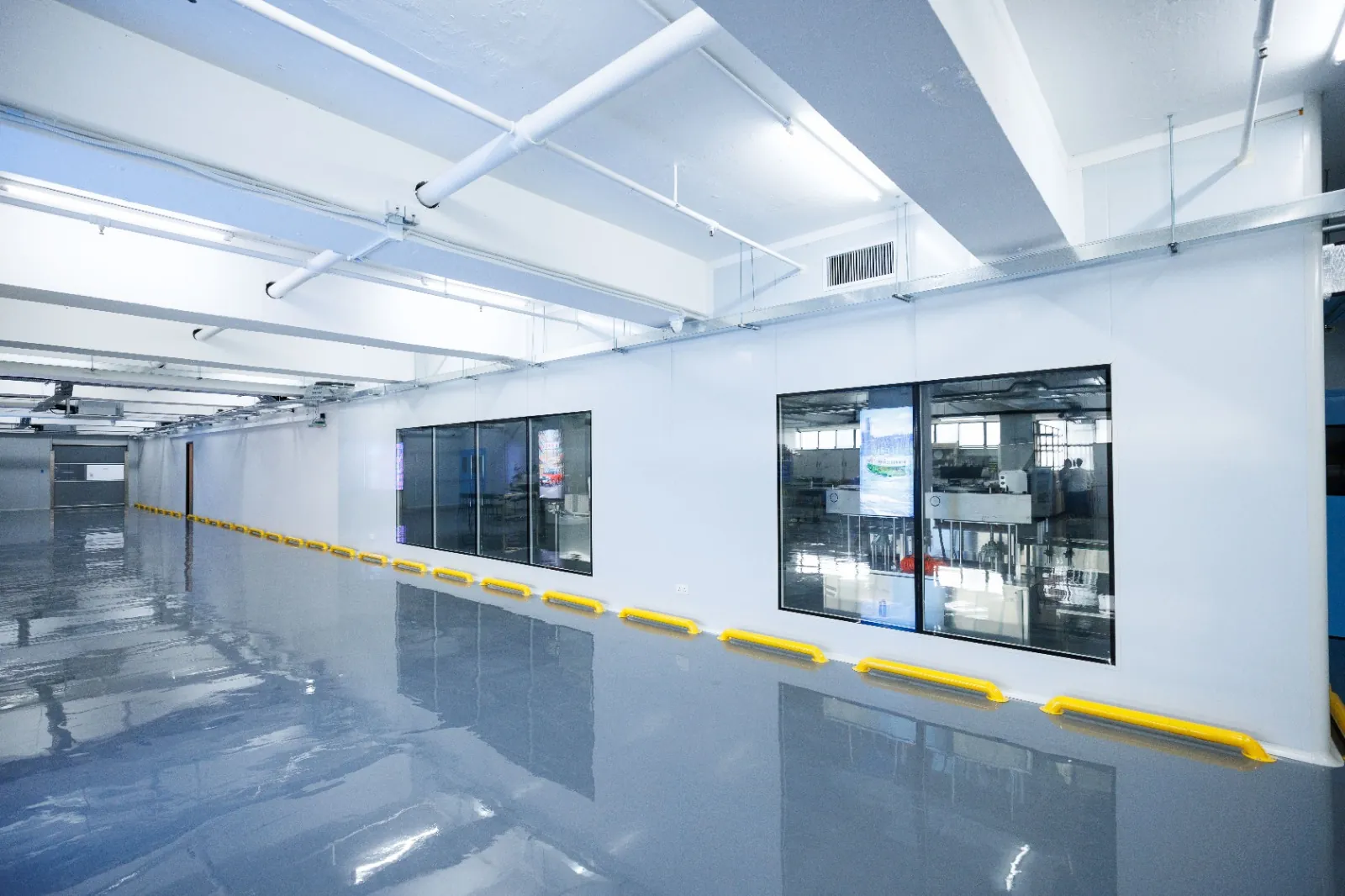
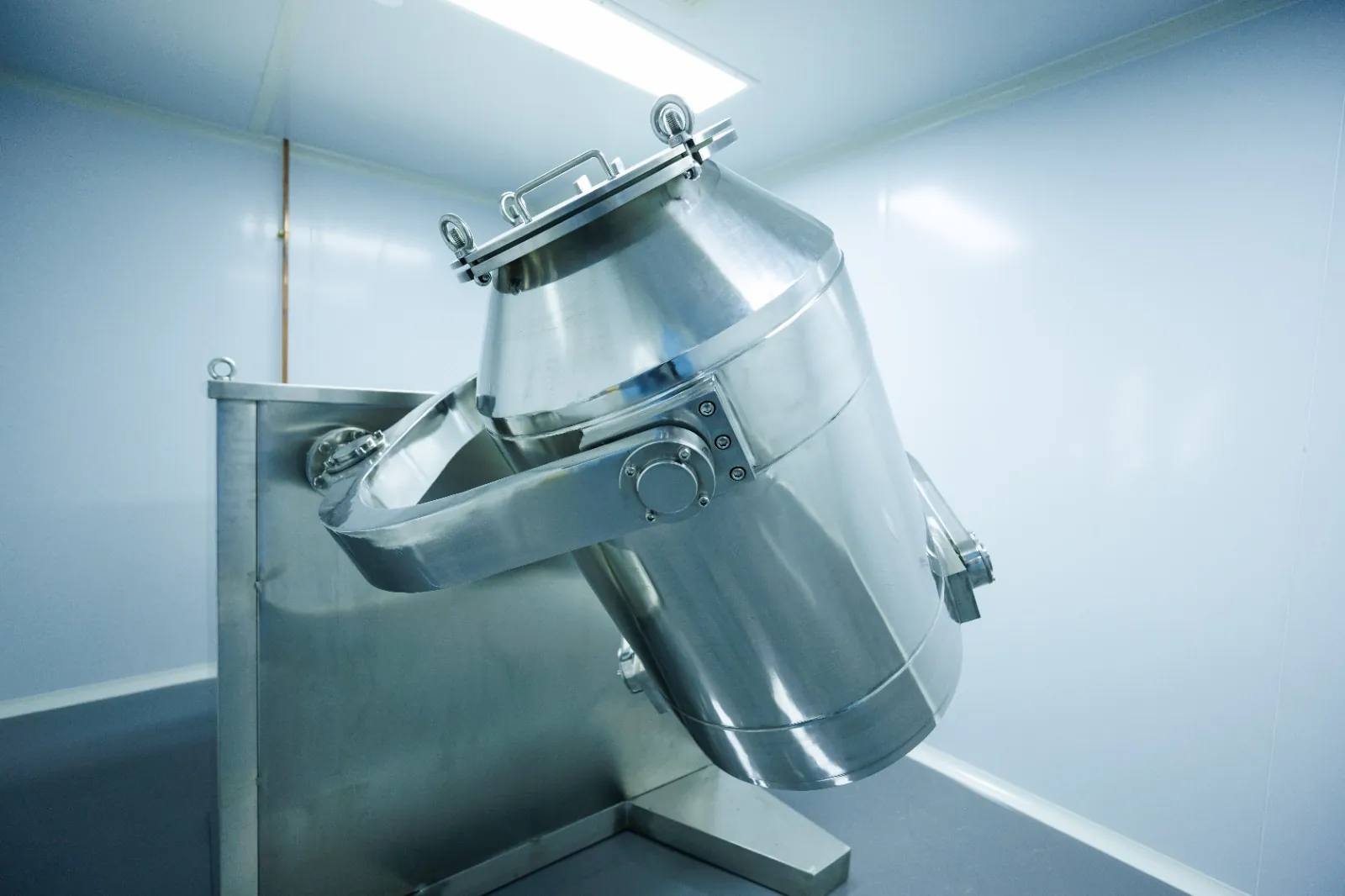
Go beyond appearance: match pack structure and barrier to formulation and usage. Oil‑containing items may suit foil‑laminated pouches; on‑the‑go use points to stick packs; moisture‑sensitive single doses may use blisters. For bottles, consider liners and tamper‑evident closures. Key filling controls concern hygiene and consistency: room cleanliness, sieving/dosing, sealing parameters, and arrangements for metal detection or visual checks—confirmed per project by the account manager. Easy Health coordinates labels and cartons, sampling, and bottle/pouch/stick/blister formats, operated in a GMP‑standard environment in Hong Kong.
- Choose barrier by formulation sensitivity
- Portability/single‑dose drive structure
- Match liners and tamper features
- Pre‑agree filling parameters and checks
Traceability, batch codes, storage and logistics
Batching and records should support traceability of incoming materials, fill dates and output lots, with date marking planned alongside batch codes. For storage and transport, define temperature and humidity needs first, then select inner and outer materials for barrier and cushioning; for cross-border distribution, review pallet sizes, shipper stacking and handling marks. Easy Health can coordinate packaging arrangements. Where testing or stability assessment is needed, agree the scope, method, provider and supporting documentation for the project. Release and dispatch arrangements are confirmed case by case by the account manager.
- Plan batch code format and print area
- Align date marking with batch info
- Set storage limits before material choice
- For cross‑border, plan stacking/marks
Engagement process for white label and repacking projects
- Consultation and market scoping:Define white‑label or repacking, target market (HK/Mainland etc.), label languages and sales channels to prioritise labelling and structure.
- Formulation/materials and format:Select an available formulation or provide materials; choose bottle/pouch/stick/blister structures and materials, and outline filling and sealing.
- Label planning and regulatory check:Plan label fields per market; assist in checking Cap.132W, “1+7” or GB items; define batch/date coding locations.
- Sampling and parameter lock‑in:Coordinate print proofs and provide samples; confirm colours, fit, seal parameters and opening experience; arrange third‑party tests if needed.
- Filling and packing in Hong Kong:Operate in a GMP‑standard environment; coordinate materials, filling, sealing, checks and cartoning, with full lot records.
Inside the Easy Health Hong Kong Facility

White label and repacking service comparison
| Aspect | White-label on existing formulas | Repacking service | Custom brand packaging |
|---|---|---|---|
| Best for | Launching a branded product sooner | Changing pack formats for existing products | Building a distinctive brand identity |
| What brands can change | Brand name, labels and cartons | Labels, pack format and fill size | Bottle, box, materials and finishes |
| Label checks | Name, ingredients and net quantity | Packer details, lot and date marks | All particulars for each sales market |
| Sampling focus | Label and carton appearance | Sealing, fill and pack appearance | Structure, materials and print |
| Timeline | Depends on the project | Depends on the project | Depends on the project |
This is general guidance only; the final solution is assessed and confirmed by the account manager for each project.
Pre-kickoff checklist
- Brand name, artwork files and authorisations
- Product name, directions and net quantity
- Label languages (ZH/EN) and target market
- Ingredients, allergens and nutrition (if applicable)
- Intended pack format and fill size
- Batch code rules and date marking style
White label and repacking FAQs
How should manufacturer and packer details appear on white label products?
Prepackaged foods generally require the name and address of the manufacturer or packer (with additional contact details where applicable). If filled and packed in Hong Kong, the packer’s name and address can be shown accordingly. For other markets, align naming and format to local practice. Easy Health can assist in checking fields and placement; final content is confirmed by the brand.
How should batch codes and date marks be arranged for repacking?
Define batch code rules (e.g., date code plus sequence) and print areas at project start, and plan how “best before” or “use by” will be stated. Codes should be legible and avoid folds or high‑curvature zones. Specific formats and equipment are coordinated per project by the account manager.
What differences apply between Hong Kong and Mainland China labels?
Hong Kong prepackaged foods follow Cap.132W and the “1+7” scheme, while Mainland prepackaged foods commonly reference GB 7718 and GB 28050. Differences include field naming, presentation and nutrition declaration. For dual‑market products, consider separate layouts or versions and seek local confirmation.
What does sampling involve?
Typically, structure fit checks (bottle, pouch, stick, blister), print proofs for labels and cartons with colour checks, and key sealing/opening tests. Third‑party tests or short stability observations can be coordinated if needed. Scope and timelines are confirmed per project.
Which design files and formats should I supply?
Provide editable vector files (AI/PDF), fonts and linked images, with die‑lines and bleed. Separate layers for effects such as foil or spot UV. Clear file naming and version control help reduce errors; pre‑press checks are coordinated by the account manager.
Related Packaging Services
Discuss your white label or repacking project
Share your brand assets, formulation or materials, target markets and intended pack formats. Easy Health coordinates the project requirements in Hong Kong. Confirm which certificate scopes, quality records and supporting documents apply to the proposed arrangement. All steps and timelines are confirmed per project by the account manager.
Last updated: