Pharmaceutical packaging safety features guide
This page focuses on practical pharma safety packaging: selecting effective moisture barriers, evaluating child-resistant mechanisms, configuring tamper-evident designs and light-shielding materials. Easy Health coordinates bottles, blisters, pouches, cartons and labels, offers prototyping and packaging production coordination. Each project is individually assessed by an account manager.
Summary:Pharma and health supplement safety packaging focuses on moisture protection, child-resistant closures, tamper-evident features and light shielding. Easy Health operates in Hong Kong, providing supplement OEM/ODM (food category), packaging design and packaging production coordination. For food-category work, GMP and FSSC 22000 frameworks are referenced; applicable certificate scope and documentation are checked per project. Each project is assessed by an account manager. Contact via WhatsApp.
How should I balance moisture protection, child resistance and tamper evidence?
Start by defining dosage form moisture sensitivity and storage/transport conditions to decide on high-barrier blisters, foil seals and desiccants. Then, based on users and channels, choose a suitable child-resistant closure (e.g. push-and-turn) and tamper-evident devices (bands or seals). Finally, review light shielding and label legibility. Easy Health can coordinate prototyping and related testing; timelines depend on the project and are confirmed by the account manager.
Moisture control and barrier choices
Moisture-sensitive forms (tablets, capsules, powders) require a holistic moisture barrier. Typical solutions include high-barrier blisters (alu-alu or enhanced barrier films), induction foil seals with in-bottle desiccants, and clear storage/date statements for food-category products. For supplements as food in Hong Kong, consider the Food and Drugs (Composition and Labelling) Regulations (Cap.132W) and the “1+7” nutrition label. For Mainland China exports, refer to GB 7718 and GB 28050. Easy Health coordinates materials and printing, arranges performance testing with partners, and offers prototyping.
- High-barrier blister reduces WVTR
- Bottle + foil seal + desiccant
- Storage humidity notice on label
- Match desiccant to dosage form
Child-resistant packaging considerations
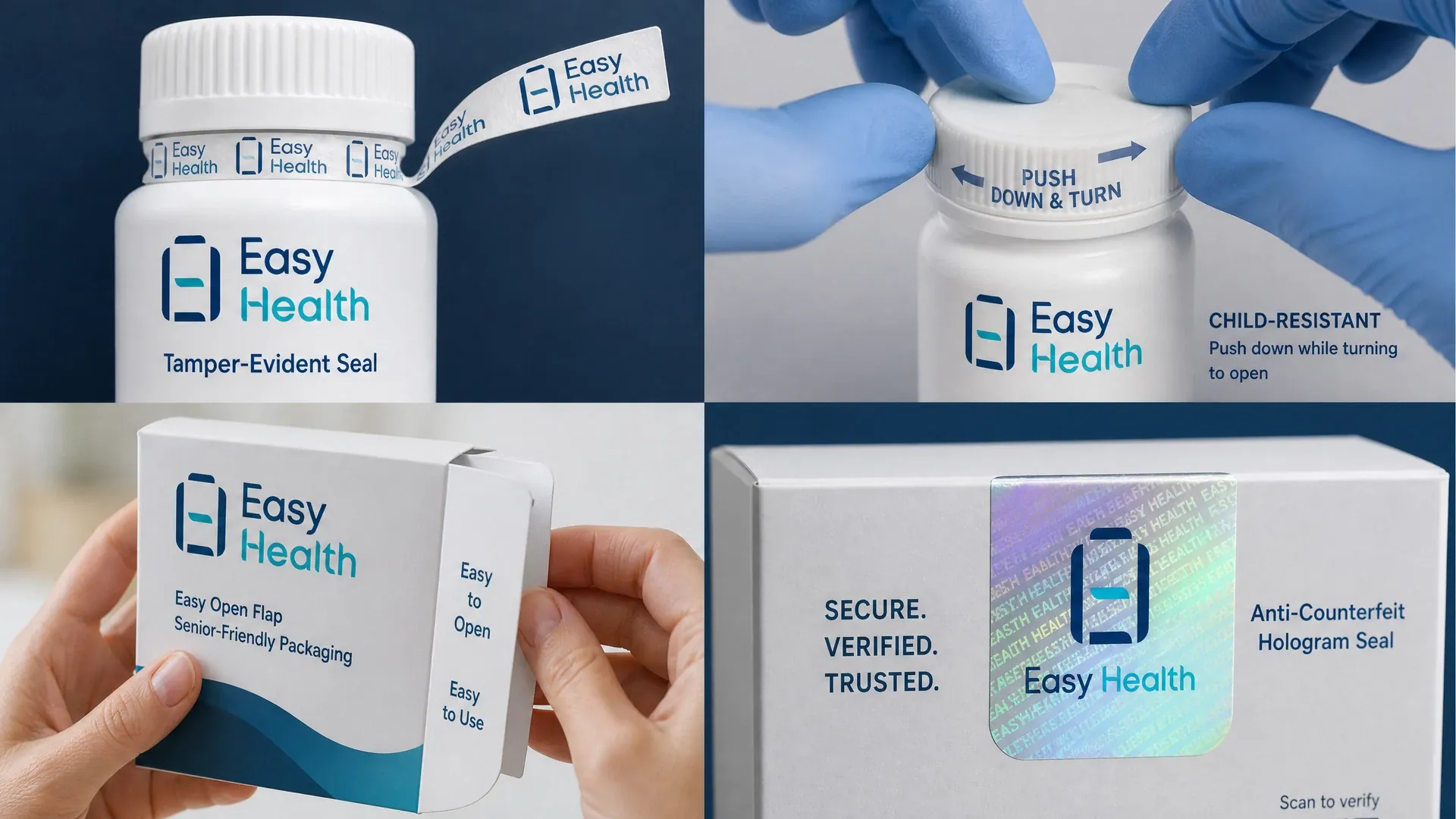
Common child-resistant mechanisms include push-and-turn, alignment buttons and dual-action designs. Selection should reflect end users (elderly grip strength, caregiver frequency), product risk and channel requirements. These features increase opening difficulty and guide correct steps but do not claim absolute prevention. Neck finish, thread type and application torque matter. Easy Health provides structural advice, coordinates sourcing and samples, and can arrange third-party tests and user instructions; timelines are project-specific and confirmed by the account manager.
- Push-and-turn is widely used
- Consider elderly grip needs
- Match neck finish and torque
- Provide clear opening cues
Visualising safety features and traceability
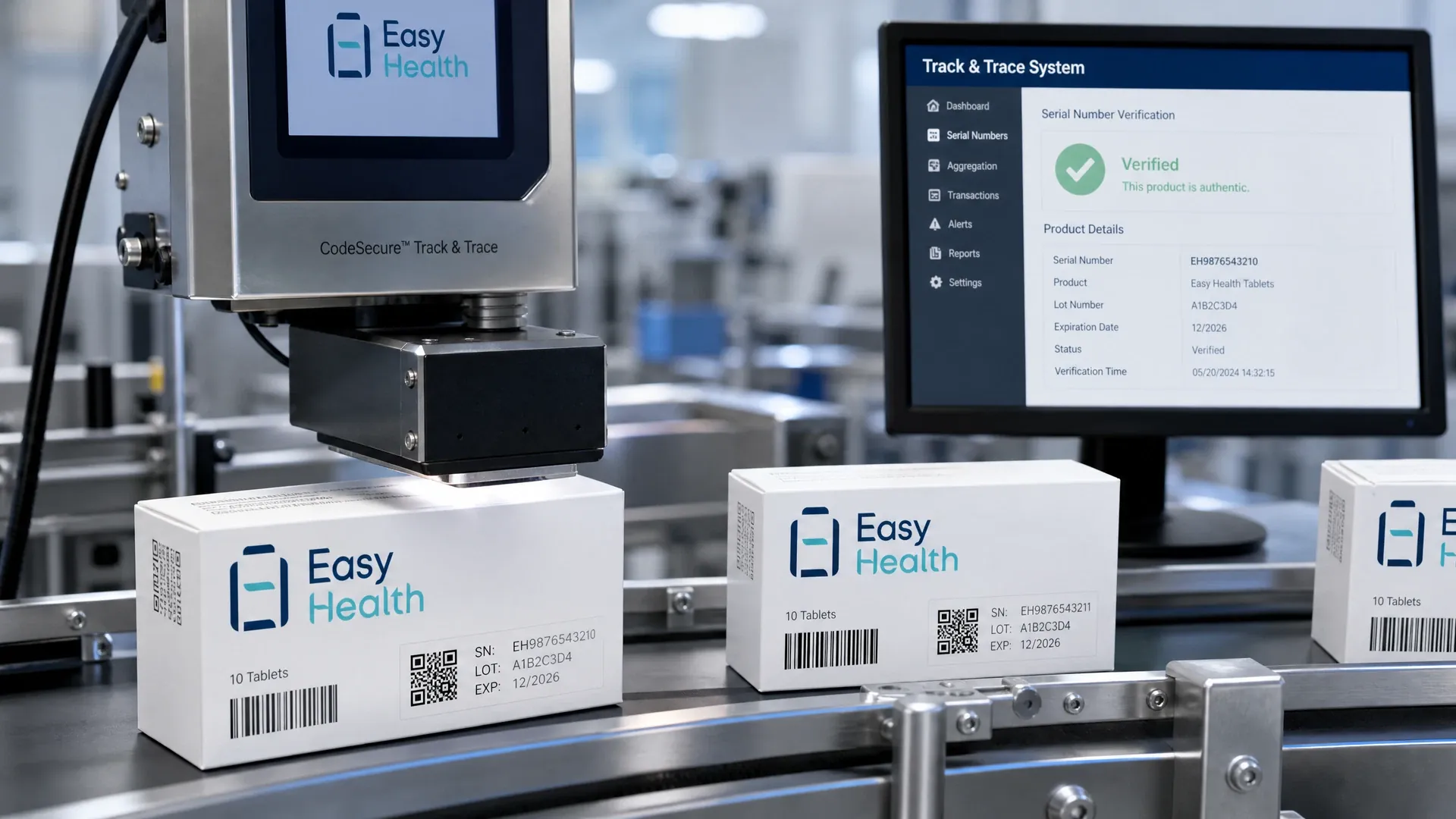
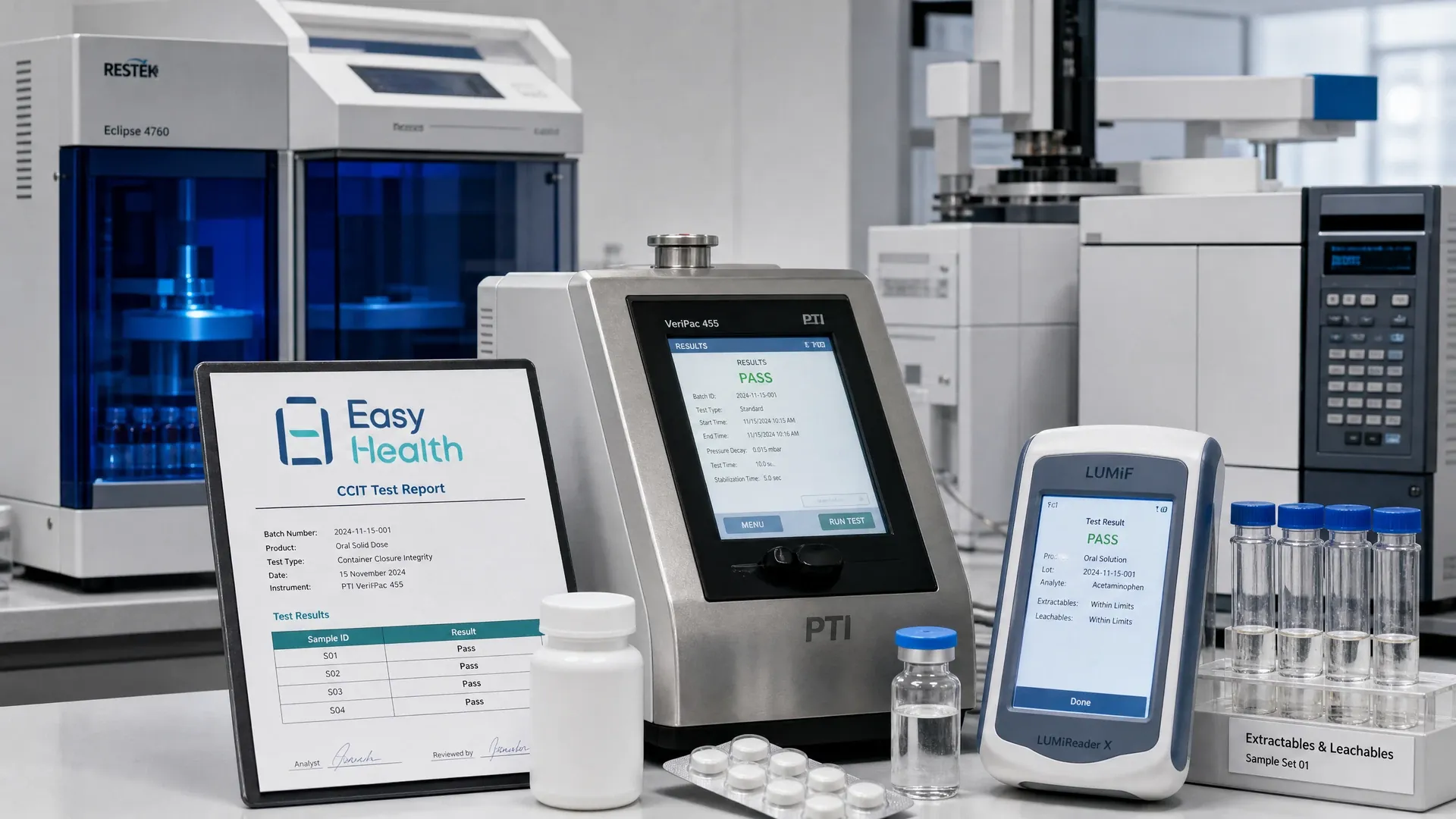
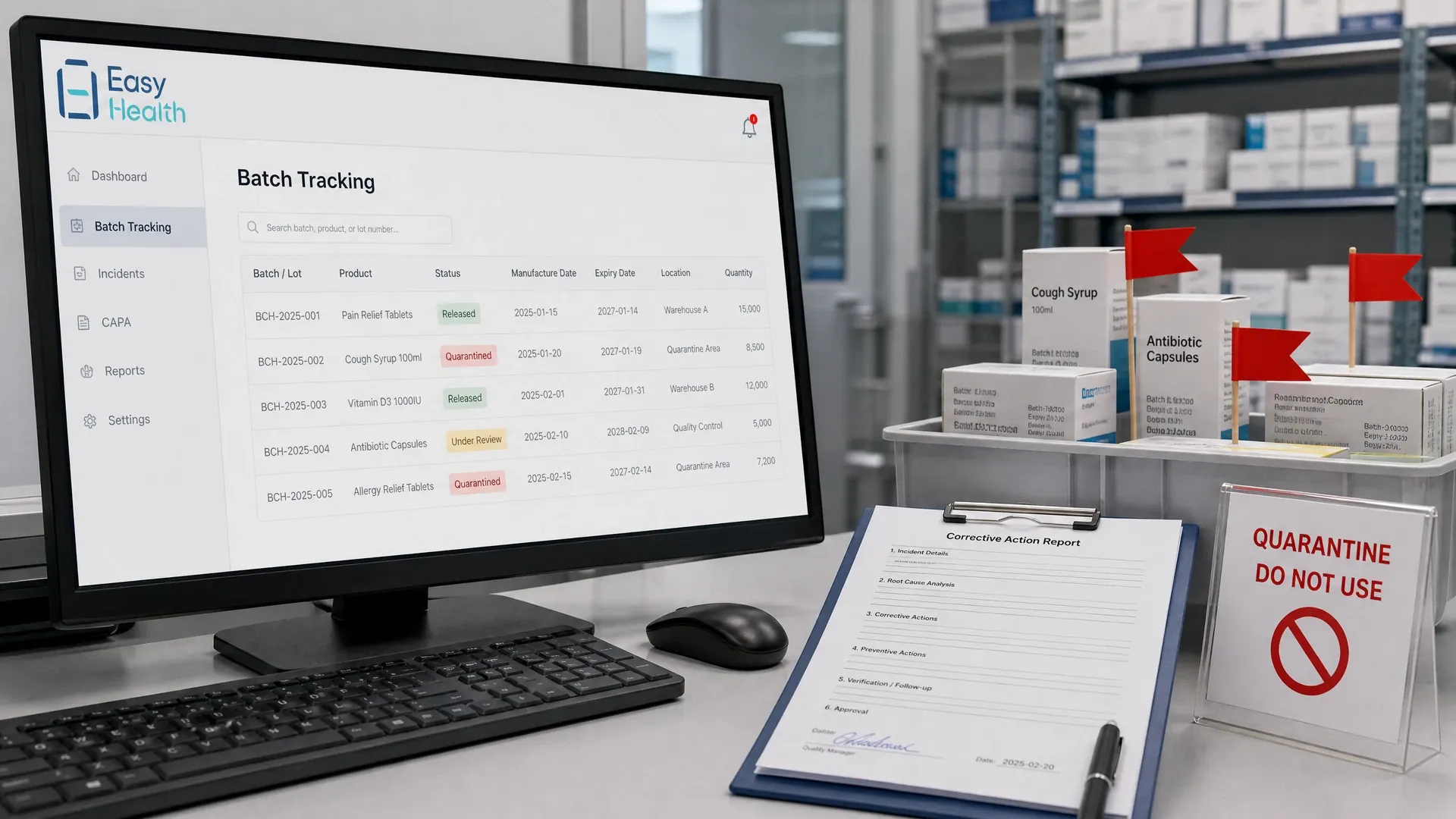
Images illustrate shrink bands, foil seals and high-barrier blister details, plus suggested layouts for serial codes, batch and date marks, and typical integrity test scenes—useful for internal reviews and recall readiness.
Tamper-evident packaging options and checks
Tamper-evident designs rely on visible, one-time breakage. Typical devices include shrink bands, tear-tab seals, induction foil liners and carton void labels. Factor in transit vibration, temperature/humidity and retail handling; both over- and under-strength devices can impair usability. Easy Health coordinates materials and print, arranges drop/vibration or seal integrity testing with partners, and advises on barcode, serialisation and batch layouts to support recall readiness. Tamper-evident features should also let consumers see at a glance whether a pack has been opened, for example by adding a clear message on the seal or shrink band.
- Shrink band signals closure
- Foil liner shows first opening
- Void label shows tampering on cartons
- Link to batch/serial data
Light protection and on-pack legibility
Photosensitive actives may degrade under UV and visible light. Solutions include amber bottles, alu-alu blisters, metallised pouches and labels with higher white underlay. In parallel, keep on-pack information readable and scannable in retail and daily use; avoid overly dark or glossy finishes that reduce contrast or barcode scan rates. Easy Health advises on substrates, inks and finishes, coordinates colour proofs and prototypes, and assists in checking mandatory label elements and languages for target markets. Before designing, list the information each panel must carry, such as product name, directions, warnings and lot number, then decide on light-blocking layers and print colours, so the structure does not need to change later to fit extra text.
- Amber glass lowers light ingress
- Alu-alu provides high light shielding
- White underlay improves contrast
- Place barcodes away from glare
Safety feature review workflow
- Define needs and risk points:Clarify dosage form, moisture sensitivity, target markets and channels; list priorities for moisture, child resistance, light and tamper evidence.
- Solution and prototyping:Propose materials and structures, coordinate label/carton design, and arrange prototypes and colour proofs to validate details.
- Testing and compliance checks:Arrange relevant performance/usability tests and assist in checking label languages and mandatory elements per target market.
- Packaging production coordination:Coordinate material procurement and printing; schedule production per project. Timelines are project-specific and confirmed by the account manager.
- Dispatch and trace data setup:Confirm batch, dates and serialisation markings, and provide templates to support internal acceptance and recall management.
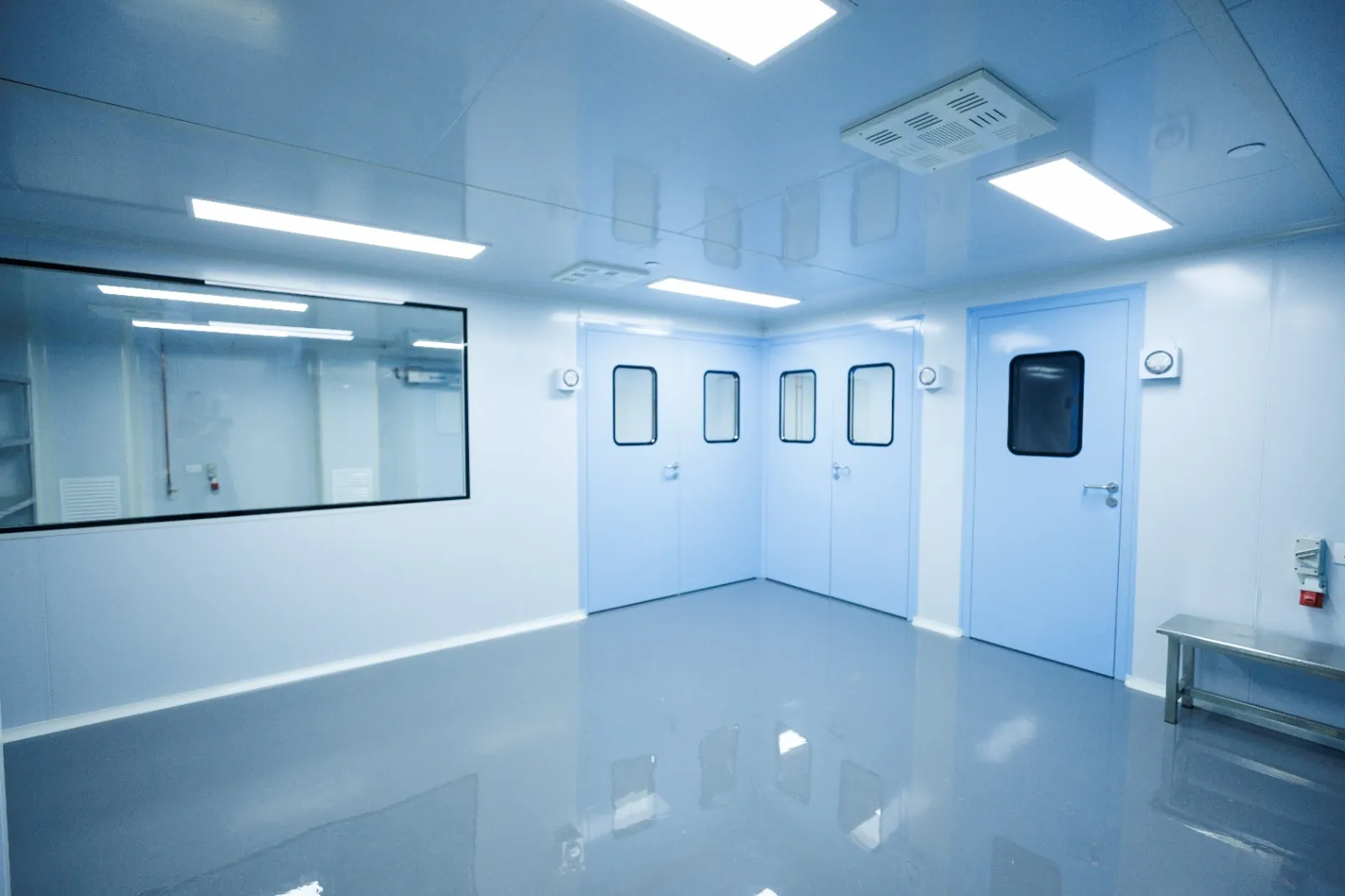
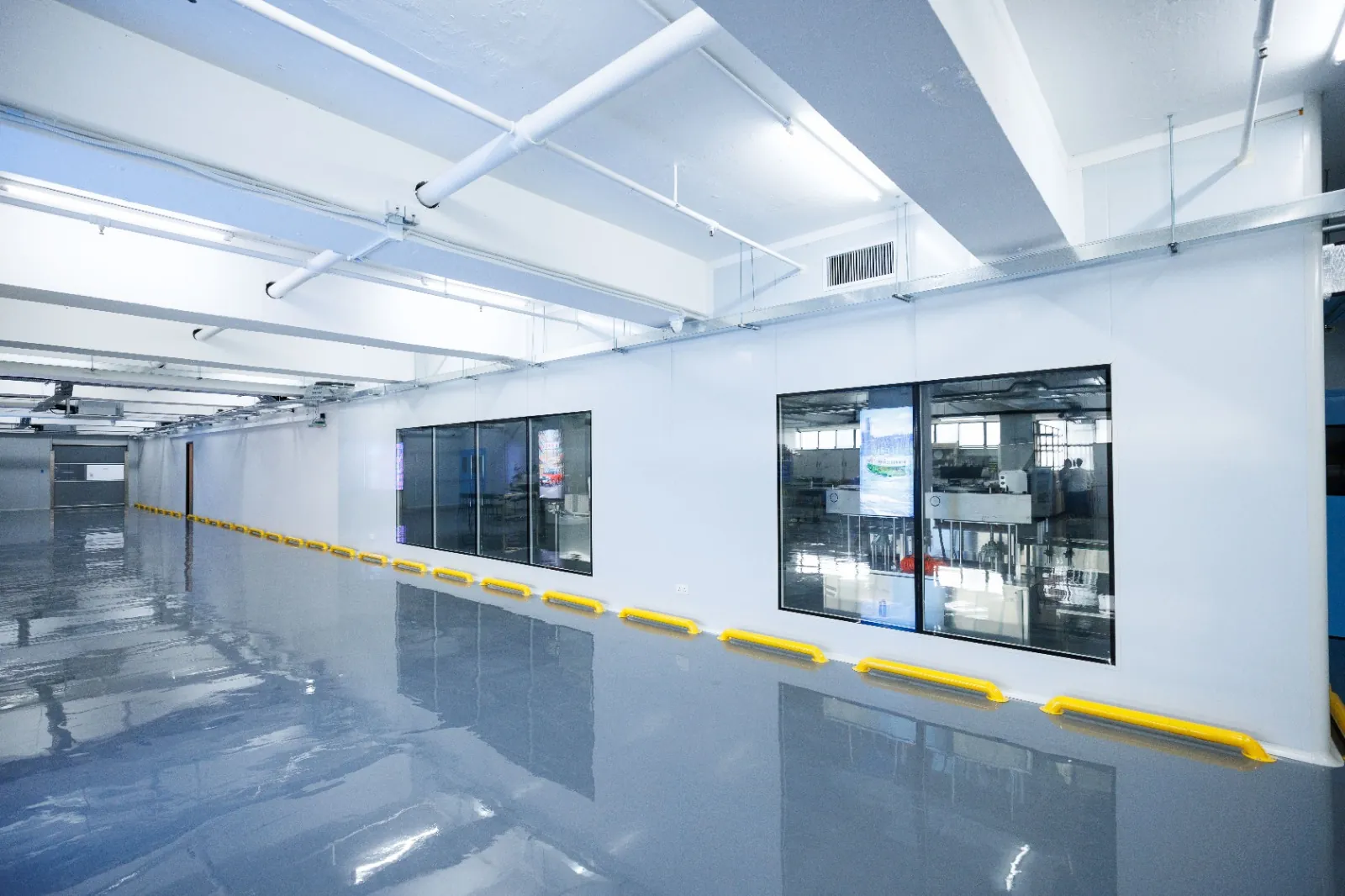
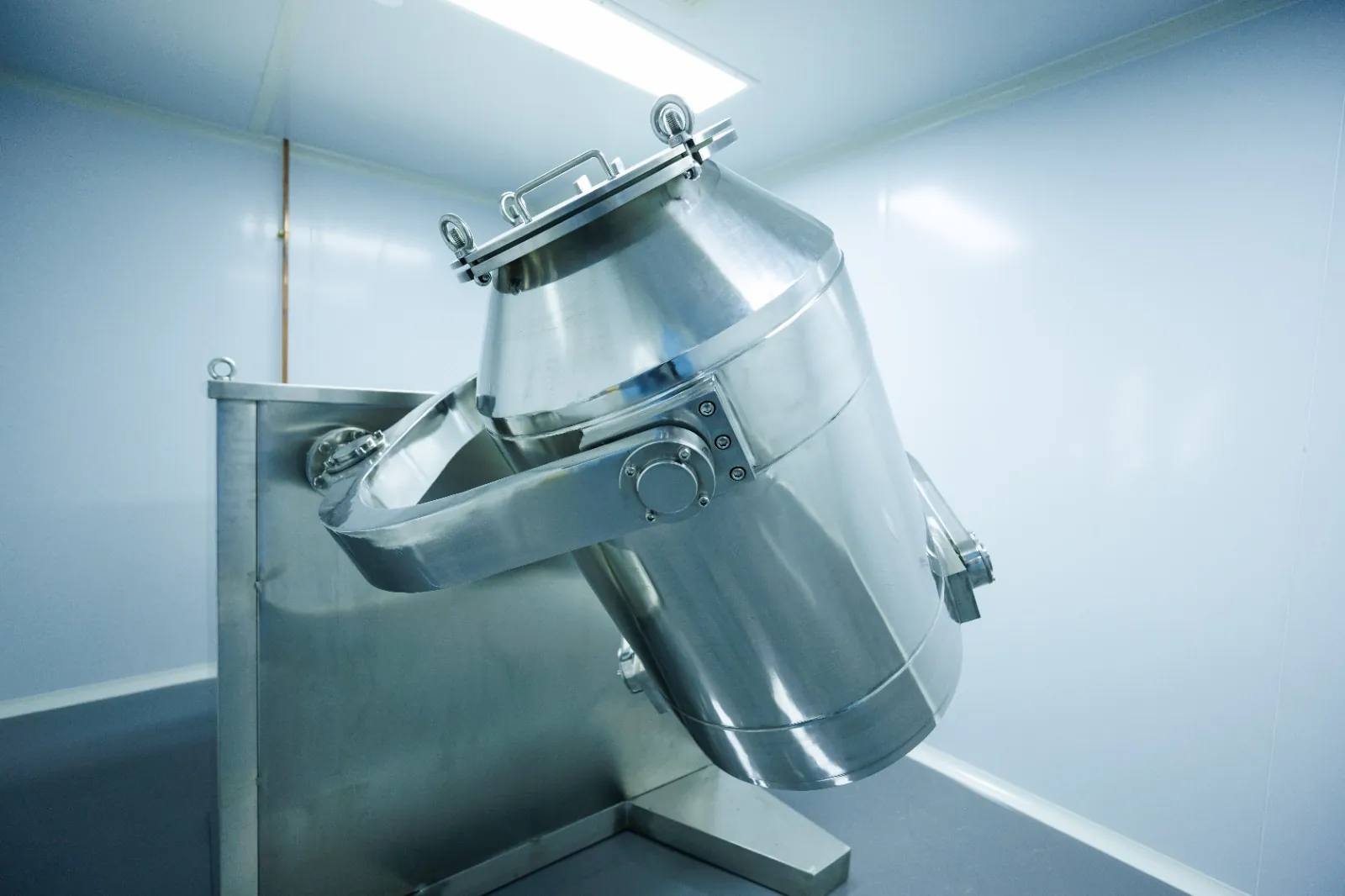
Inside the Easy Health Hong Kong Facility
Comparison of moisture, light and child-resistant features
| Aspect | Bottle + desiccant | Alu-alu blister | Bottle with child-resistant cap |
|---|---|---|---|
| Moisture control | Liner seal plus desiccant | High barrier on both sides | Depends on bottle material and seal |
| Light protection | Depends on bottle colour | High light shielding | Depends on bottle colour |
| Child resistance | Can pair with a CR cap | Requires a suitable card design | Push-and-turn or similar mechanisms |
| User experience | Repeated opening | Single units, easy to track | Clear opening icons needed |
| Design note | Size desiccant to the product | Cold-form cavities take more space | Balance with ease of opening for older users |
This is general guidance only; the final solution is assessed and confirmed by the account manager for each project.
Information to confirm before packaging review
- Dosage form and moisture sensitivity (tablet/capsule/powder)
- Requirement for child-resistant closure and mechanism preference
- Tamper-evident type (shrink band/seal/foil liner)
- Light-shielding level and pack colour (amber/opaque film)
- Label languages and markets (HK, Mainland or others)
- Batch, date, barcode/serialisation requirements to print on-pack
Pharmaceutical packaging safety features FAQs
How do I choose desiccant type and loading?
Assess the product moisture content, pack headspace, packaging WVTR and expected storage and transport conditions before choosing the desiccant type and amount. Common options are silica gel, molecular sieve and clay. Easy Health can coordinate third-party tests for validation per project; the final setup is confirmed by the account manager.
What testing is needed for child-resistant closures?
Child-resistant closures are generally assessed against the standards used in the target market, typically covering how difficult they are for children to open and whether adults, including older users, can open them as instructed. Confirm the method and whether testing is required with the relevant authority or an adviser in each sales market. Easy Health can coordinate samples and third-party test arrangements per project, with timing confirmed by the account manager.
Do labels need both Chinese and English?
For prepackaged foods in Hong Kong, Cap.132W applies: Chinese or English, and if both are used, the name and ingredients in both. Pharmaceutical products are regulated under the Pharmacy and Poisons Ordinance (Cap.138). For Mainland food sales, refer to GB 7718/GB 28050. Easy Health assists in checking applicable requirements.
How do we balance light shielding and barcode readability?
Use amber bottles or alu-alu as the primary shield, then specify labels/cartons with strong white underlay and matte finishes. Keep barcodes away from glossy areas and reserve a scanning window. Prototype and scan-test if needed.
Can we add serial codes for recall support?
Yes. Reserve spaces on labels or cartons for batch numbers, serial codes and date marks, aligned with your internal systems. Easy Health advises on layout and printing methods, and coordinates the relevant materials and print.
Related Packaging Services
Discuss packaging safety feature requirements
Whether you need stronger moisture protection, to evaluate child-resistant closures, or to configure tamper-evident and light-shielding features, Easy Health can coordinate design, prototyping and packaging production in Hong Kong. Message us on WhatsApp to discuss your product and packaging needs.
Last updated: