Chinese Medicine Packaging Printing Coordination
Focused on TCM packaging printing and outer packs: from cartons and labels to blisters and sachets. In Hong Kong, Easy Health coordinates printing with materials, covering varnish/lamination, hot foil, emboss, anti-scuff and barcode/QR readability. We support bilingual layouts and regulatory details, with sampling, proofing and production orchestration. Your account manager evaluates and confirms each project.
Summary:This page clarifies TCM packaging printing requirements, covering labelling compliance, material compatibility, batch traceability and export standards. It also outlines Hong Kong–based GMP and FSSC 22000 support, vendor coordination, and services for outer-pack sampling and end‑to‑end production orchestration.
Preparing Chinese Medicine Label Artwork for Pre-Press Checks
Share your AI/PSD/INDD files and product specs (dosage form, fill, claims, storage, origin, batch/expiry method, barcode/QR format). Our account manager reviews regulatory fields (e.g., Cap.132W and “1+7”) and print feasibility (line screen, spot gold/white, foil area, lamination/varnish), then recommends print methods and sampling aligned with your materials (cartons, labels, blisters, sachets, sticks). Timelines and arrangements vary by project.
Which Print Methods Fit Chinese Medicine Carton Design Files?
TCM packaging printing must balance structure, versioning and rub resistance. Folding cartons commonly use offset with matt/gloss lamination or aqueous varnish; multi-language, multi-version labels suit flexo or digital; extensive spot gold/white or continuous tints may call for gravure or high-line-screen offset; blister cards require attention to heat-seal coatings and ink heat resistance. For botanical illustrations, consider spot colours or higher line screens; keep barcodes/QRs high-contrast and without glossy interference. In Hong Kong, Easy Health coordinates printers and material suppliers, providing sampling, colour references and production orchestration so the Chinese medicine outer packaging delivers on visuals, readability and process fit. Arrangements are assessed and confirmed by an account manager.
- Cartons: offset + lamination/varnish for durability
- Labels: flexo/digital for multi-version runs
- Blister cards: check heat-seal and stiffness
- Halftones: higher line screen or spot colours for detail」「Codes: high contrast, avoid high-gloss overprint
How Do Confirmed Label Requirements Become Print-Ready Layouts?
For Chinese medicine outer packaging, artwork must be legible, printable and verifiable. In Hong Kong, Cap.132W and the “1+7” nutrition scheme cover name, ingredients, net quantity, origin and nutrition; products within scope should also consider the Chinese Medicine Ordinance (Cap.549). For Mainland China, GB 7718 and GB 28050 are common references. Tips: harmonise font sizes/leading for presbyopic readability; allocate clear areas for batch/expiry by inkjet or labels; align Chinese and English/Simplified terminology; separate mandatory text from marketing; reserve quiet zones for barcodes. Easy Health coordinates label/carton layouts, sampling and proofreading. Details are confirmed by an account manager.
- Keep Chinese/English fields consistent
- Reserve windows for batch/expiry coding
- Provide barcode quiet zones and contrast
- Prioritise mandatory over marketing text; match nutrition/ingredient terms to rules
Finishes and Readability in Print Samples
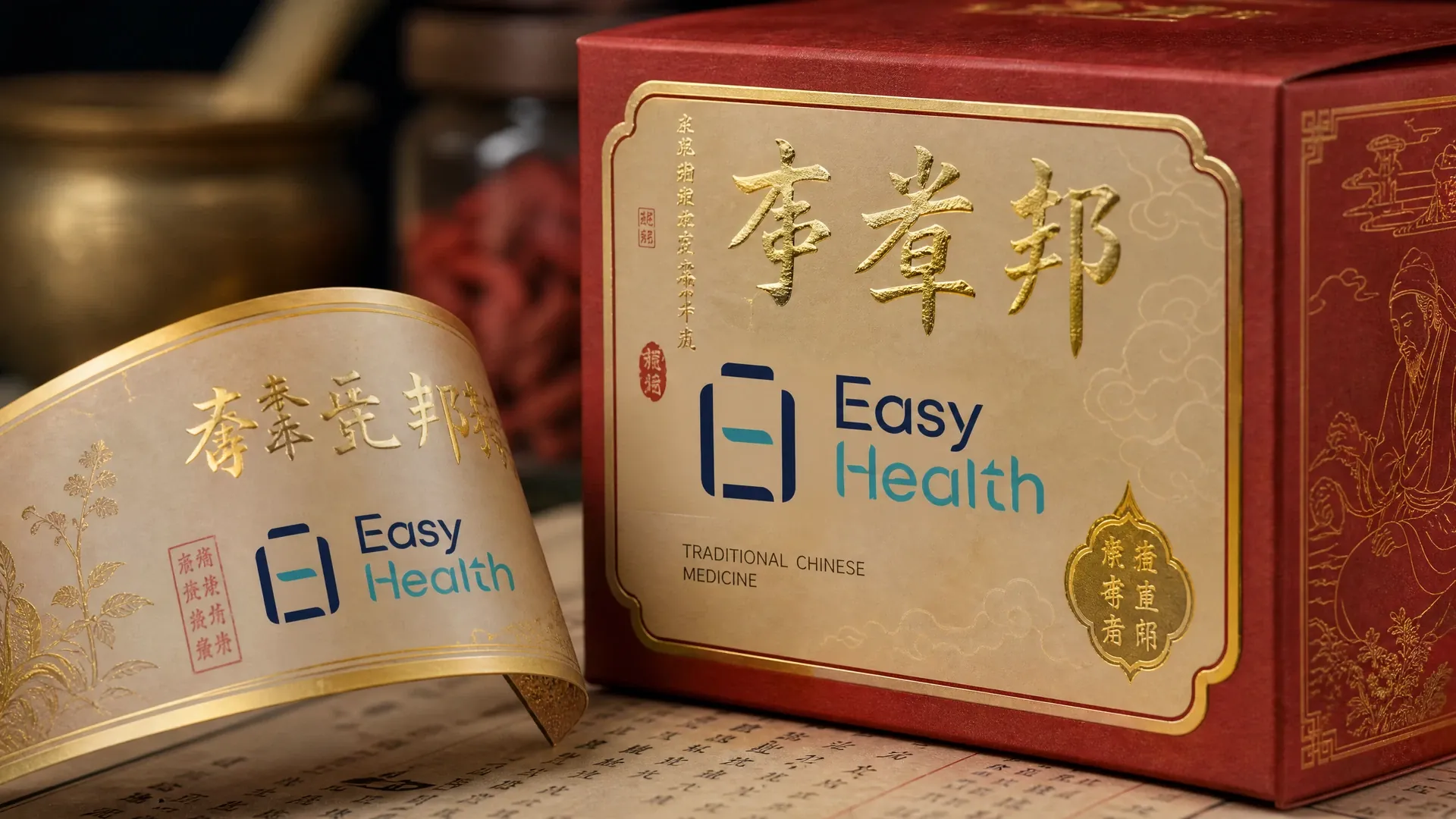
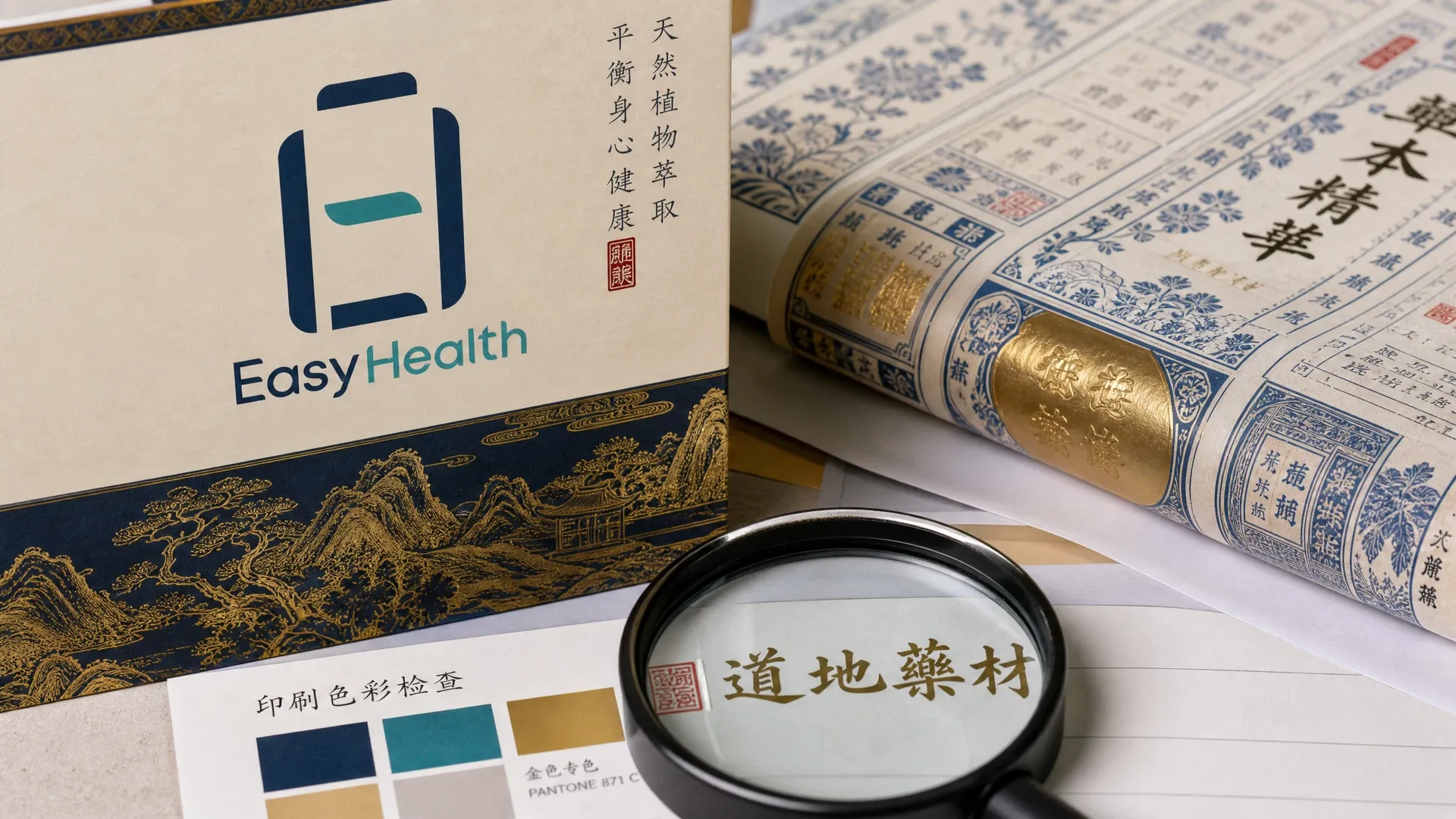
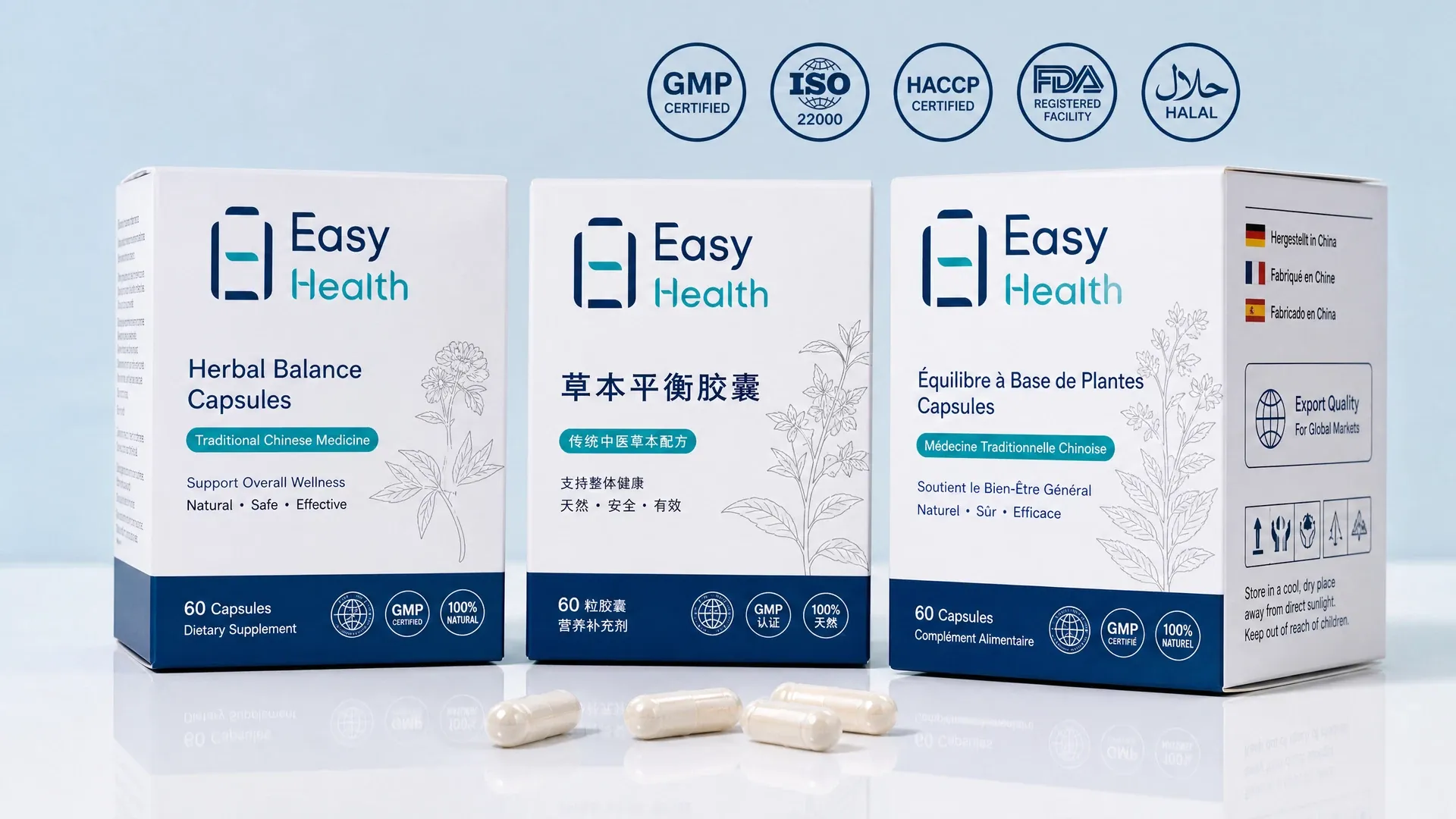
Images illustrate how board stocks, varnish/lamination, hot foil and embossing affect TCM outer packs, plus best-practice quiet zones and placement for barcodes, QR and batch coding—helping you choose the right Chinese medicine packaging printing approach.

How Do Materials and Structures Affect Print Outcomes?
Carton board weight, grain and coating affect stiffness and colour gamut. Label stocks (coated, synthetic, easy-tear or condensation-resistant) determine adhesion and rub resistance. Sachet/stick laminates (PET/AL/PE or paper-based) change ink anchorage and crease behaviour; blisters must match PVC/PET with card and heat-seal coatings. For moisture/light protection, consider matt films plus spot gold/white or metallised boards with selective varnish; for long shipping, add anti-scuff varnish or wear-resistant films. Easy Health offers bottle, pouch, stick and blister packaging options, coordinating material–print compatibility, with Hong Kong-based sampling and tests for colour variance, abrasion, creasing and sealing stability.
- Cartons: basis weight/grain for crease control
- Labels: stock/adhesive suit surface and climate
- Flexibles: laminates impact ink and seals
- Blisters: match plastics to heat-seal cards」「Add anti-scuff for long-haul logistics
Identification, Tamper-Evidence and Export Handling
TCM packaging printing often handles both ID and tamper evidence. Options include tamper seals, frangible labels, UV invisible marks, serialised QR, sequential labels and outer-case barcodes. For export, add clear shipping marks, moisture warnings and stacking orientation, and check language and regulatory differences between markets (e.g., GB 7718/28050 and Hong Kong rules). Reserve zones for variable data, barcode quiet areas and non-coated inkjet windows; test abrasion, alcohol rub and scanning at sampling. Easy Health coordinates labels, cartons and shippers in Hong Kong to keep readability robust through storage, picking and customs.
- Tamper/frangible labels deter tampering
- Serialised QR supports warehousing/recall
- Shippers show stacking/moisture marks
- Keep variable data and inkjet windows」「Scan and rub tests during sampling
Our Print and Materials Coordination Workflow
- Requirements and regulatory scoping:Gather product info, markets and label fields; map artwork sections to applicable rules.
- Structure–material recommendations:Assess cartons/labels/flexibles/blisters for method compatibility and rub resistance.
- File prep and sampling:Provide dielines and output specs; arrange samples, ink/material tests and code scans.
- Proofing and production orchestration:Verify text/placement and finishes; coordinate printers and material readiness.
- Checks and shipment:Check colour variance, rub and sealing; finalise shipper marks and documents.
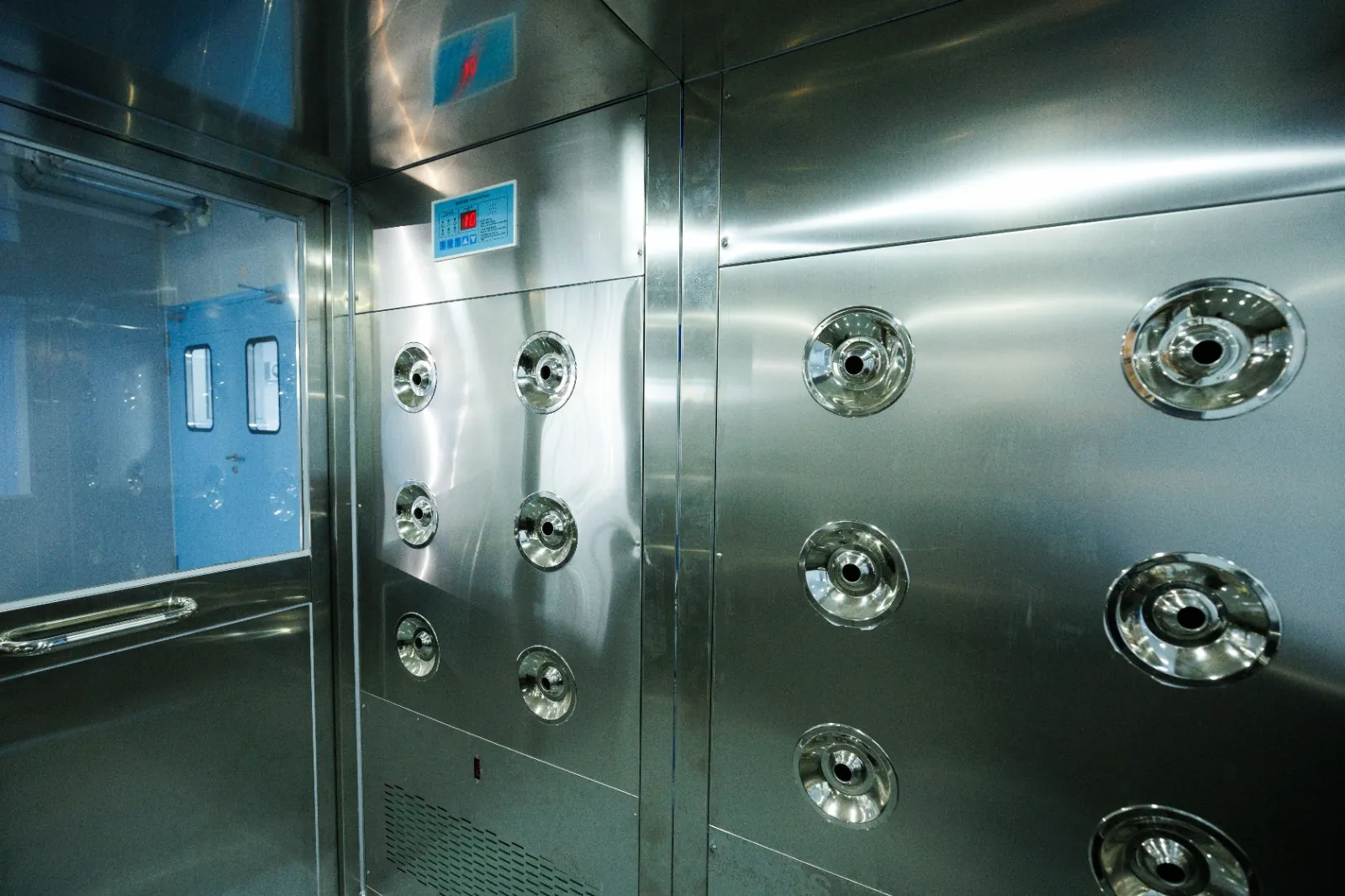
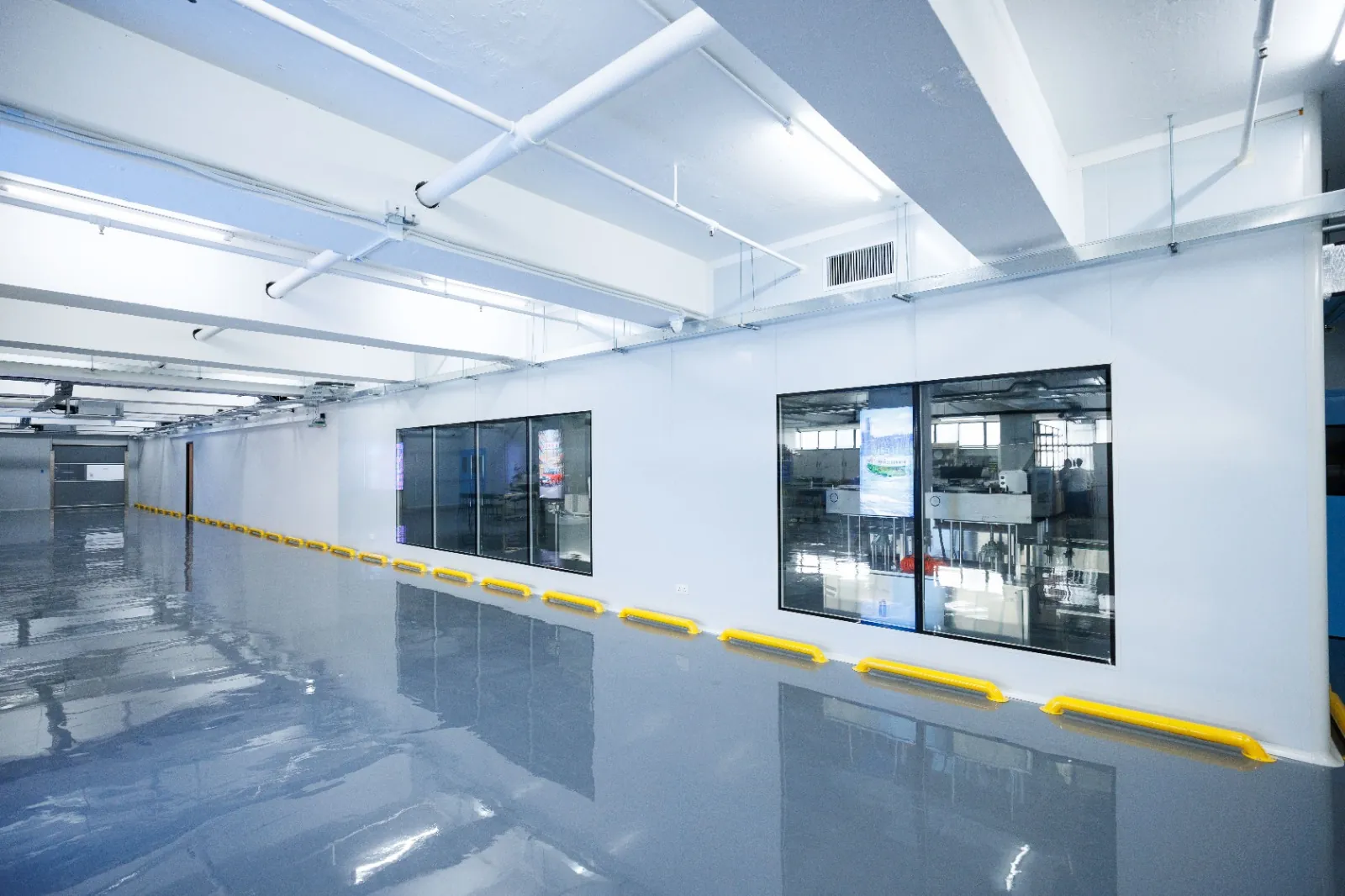
Inside the Easy Health Hong Kong Facility

Print Methods at a Glance
| Method | Suitable materials | Variable/versioning | Colour/halftone | Finish compatibility | Typical uses | Watch-outs |
|---|---|---|---|---|---|---|
| Offset | Cartons, cards | Moderate versioning | Fine halftones, stable spots | Works with lam/varn/foil | Folding cartons, inserts | Mind grain direction and creasing |
| Flexo | Labels, films | Good for versions | Improving halftones | Selective varnish friendly | Roll labels, shrink sleeves | Match anilox and ink system |
| Digital | Labels, short-run cartons | Excellent variable/serial | Stable colour, no plates | Connects to many finishes | Multi-language/serial labels | Check substrate fit and colour profiling |
| Gravure | Films, laminates | Less frequent changes | Uniform solids, metallics | Compat. with lamination/seal | Sachets, stick films | Early sampling and cylinder setup |
General guidance only. Final selection is assessed and confirmed per project by an account manager.
Pre-Press Checklist for Packaging Files
- Chinese/English key fields aligned and legible
- Barcodes/QRs high-contrast with quiet zones
- Batch/expiry inkjet area without lamination/gloss
- Dieline includes bleeds, creases and window marks
- Confirm lamination/varnish and foil logic
- Anti-scuff or wear-resistant coat for long haul
Chinese Medicine Packaging Printing Coordination FAQs
How Should I Choose Inks for Chinese Medicine Packaging?
Select ink systems compatible with your substrate and finish—water-based, solvent or UV—considering low odour, alcohol rub resistance and condensation. Keep barcodes/QR and inkjet zones without high-gloss or dark backgrounds. We coordinate supplier testing and sampling to confirm suitability.
Can You Align Colours Between Cartons and Roll Labels?
We can harmonise colours across substrates using LAB targets, grey balance and spot density ranges, plus consistent lamination/varnish. Minor visual differences may remain between processes; rely on sampling and physical proofs before production.
How Should Confirmed Bilingual Label Fields Be Prepared?
List mandatory fields per Cap.132W, the “1+7” scheme and, where applicable, Cap.549, and cross-check GB 7718/28050 for Mainland sales. Use a shared glossary and type hierarchy, avoid line breaks splitting key terms, and provide editable text and fonts. We supply dielines and review during proofing.
What Checks Are Used During Print Sampling?
Typically colour checks, barcode/QR scans, abrasion/anti-scuff, alcohol rub, seal strength (for sachets/blisters) and crease integrity (for cartons). For heat-seal or condensation risks, we add heat and condensation simulations to refine inks, coatings and layouts.
How Should Finished Packs Be Stored and Shipped to Manage Scuffing?
Keep in a cool, dry environment; stack properly with moisture and stacking marks on shippers. For long-haul, use anti-scuff coatings or wear-resistant films and inserts to reduce friction. Avoid heavy pressure and heat shortly after printing to let inks and coatings stabilise. Details are project-specific.
Related Packaging Services
Discuss Your Label and Carton Print File Coordination
Share your product info and artwork. Easy Health coordinates printing and materials for labels, cartons, bottles, pouches, sticks and blisters, with sampling and production orchestration in Hong Kong. Your account manager will confirm details via WhatsApp.
Last updated: