TCM granule packaging by Chinese medicine dosage form
Different TCM dosage forms require different packaging rules. Granules and powders prioritise moisture barrier and portable unit-dosing; pills need odour cross-contamination control and impact resistance; pastes focus on clean filling, anti-stick surfaces and secondary leak prevention. Easy Health offers options for granule, pill and paste packaging, and can coordinate labels, cartons and sampling, with arrangements confirmed case-by-case by our account manager.
Summary:This page focuses on packaging by TCM dosage form—granules, pills, pastes, tea bags and powders. We cover moisture protection, light barrier, aroma retention, unit-dose formats, paste filling and closure details, with actionable material and structure choices. Easy Health operates its own Hong Kong facility; an account manager evaluates each project and coordinates sampling and packaging production, with facility standards and documentation confirmed case-by-case.
How is this page different from the general Chinese medicine packaging page?
The category page covers brand look-and-feel and range planning; this page focuses on structure and materials by dosage form: moisture barrier and sticks for granules, blisters and light-resistant bottles for pills, anti-stick coatings and inner plugs for pastes, tea bag mesh and nitrogen flushing, and anti-static films for powders. Brief reminder: for proprietary Chinese medicines, labels and leaflets should follow the Chinese Medicine Ordinance (Cap. 549) and related regulations. We can help check common labelling elements. Timelines and arrangements are project-dependent and confirmed by our account manager. Contact us via WhatsApp.
TCM granule packaging: moisture control and portable dosing
Granules readily absorb moisture and cake, so barrier and seal integrity come first. Popular options include unit stick-packs or small sachets using foil-based structures (e.g. PET/AL/PE or metallised films), balancing tearability and dust escape. Desiccants may be placed in the outer carton, not in direct contact with the product. For smoother reconstitution, consider low-friction inner films and state granule size considerations on the label. If bilingual labelling is needed, allocate fields for Chinese and English and “best before”/“use by” dates. Choose between sticks, sachets-in-box, or perforated chain sachets to match dosing and portability. Our account manager can suggest materials and sampling based on moisture sensitivity and retail scenarios.
- Use high-barrier films to reduce moisture uptake
- Unit sticks minimise repeated opening
- Balance easy-tear with anti-dust features
- Place desiccant in carton, not in contact with product
TCM pill packaging: light protection, impact resistance and odour control
Pills are sensitive to light, oxygen and mechanical impact. Common formats include light-resistant bottles (amber or barrier-coated) and blister cards. For formulas with volatile oils, choose low gas-permeability materials and use closure liners to enhance seal and odour retention. In bottles, manage headspace and liner thickness to reduce transport vibration damage; for blisters, size cavities and seal strength for single-pill access without loosening. Labels should reserve batch and “best before”/“use by” fields; bilingual layouts can be used if required. Easy Health coordinates labels, cartons and inserts, and can arrange samples as needed.
- Use light-resistant or barrier-coated bottles
- Add closure liners to limit odour escape
- Control headspace to reduce shock damage
- Match blister cavity to pill size for easy pick
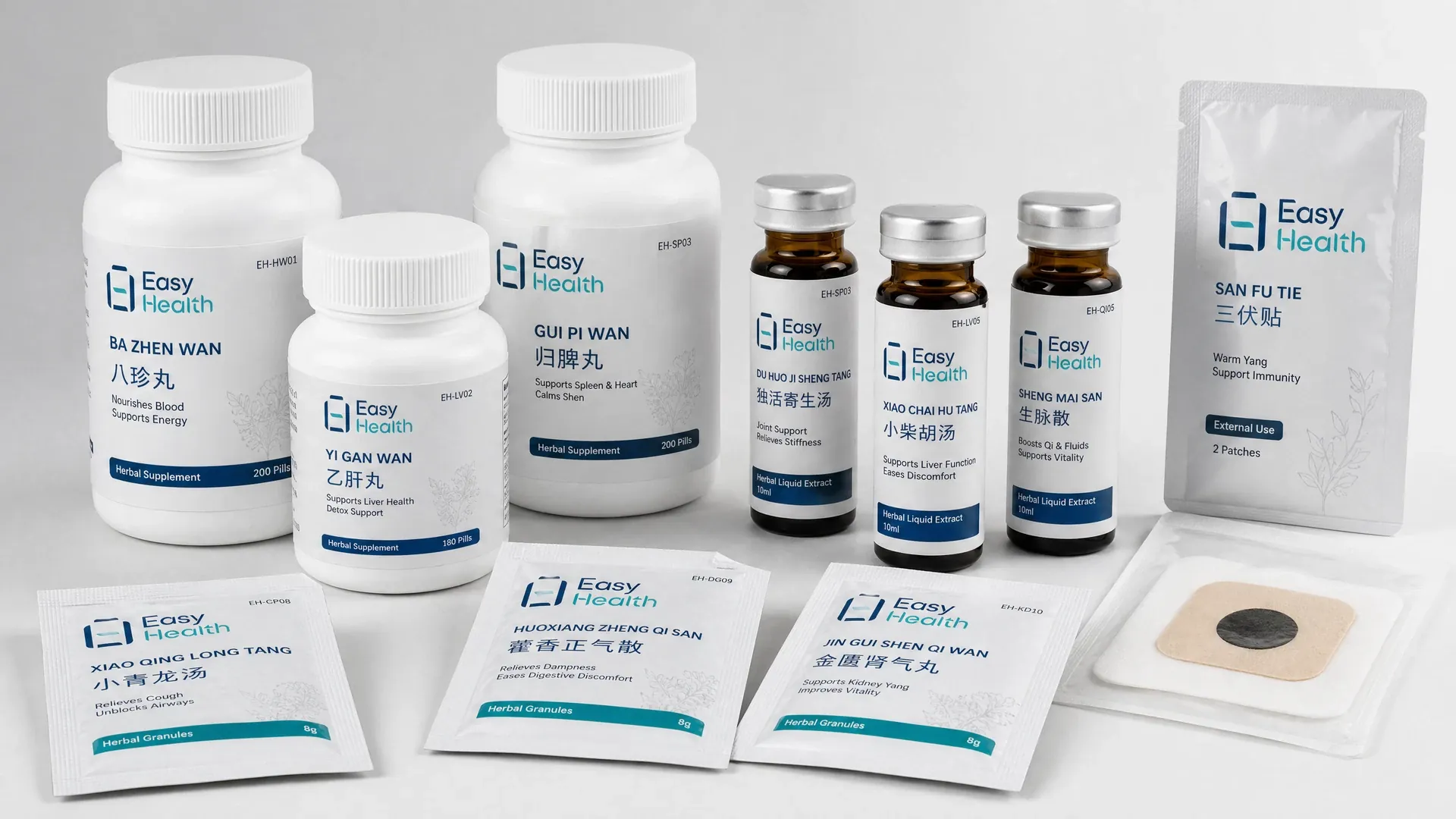
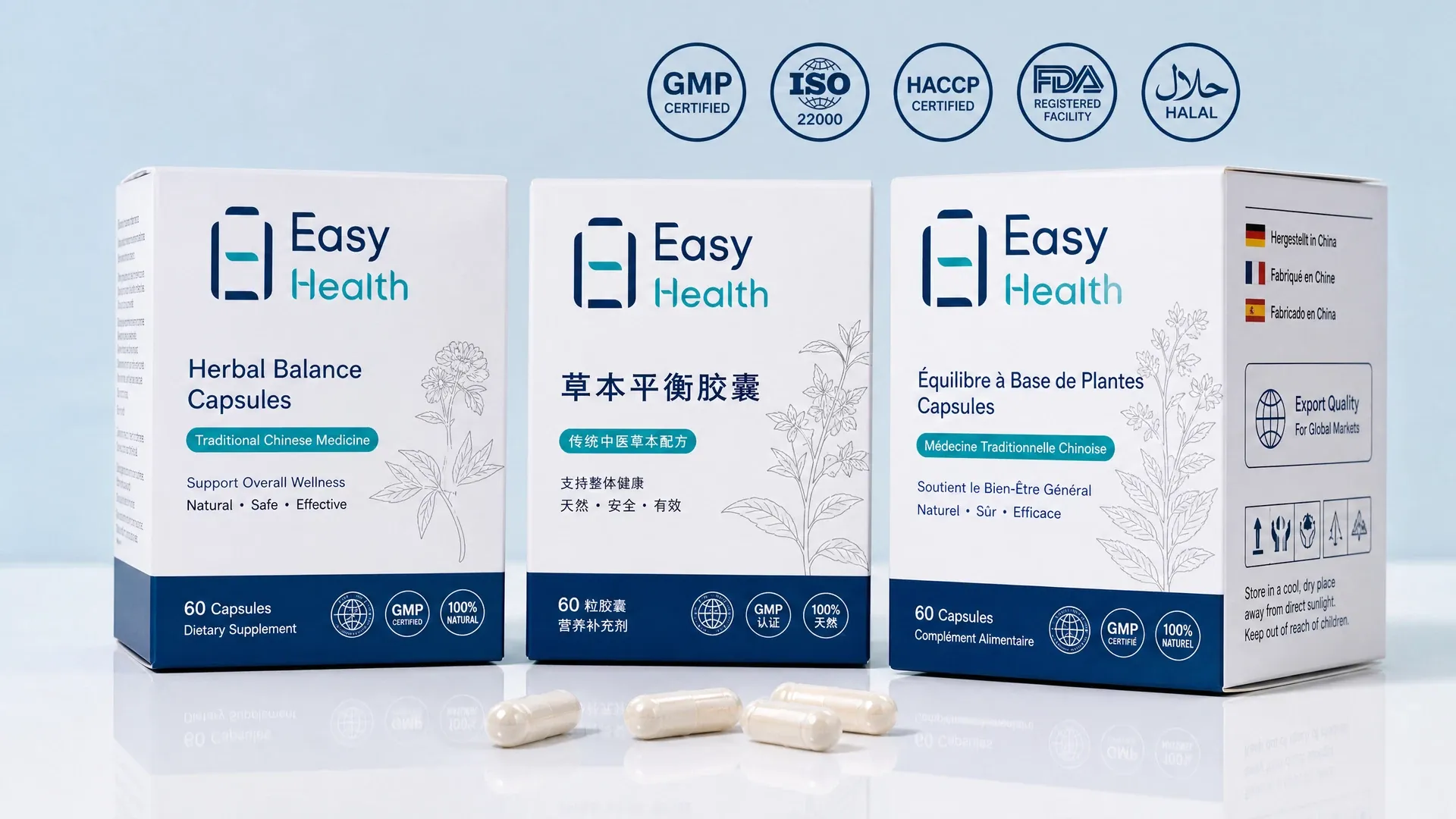
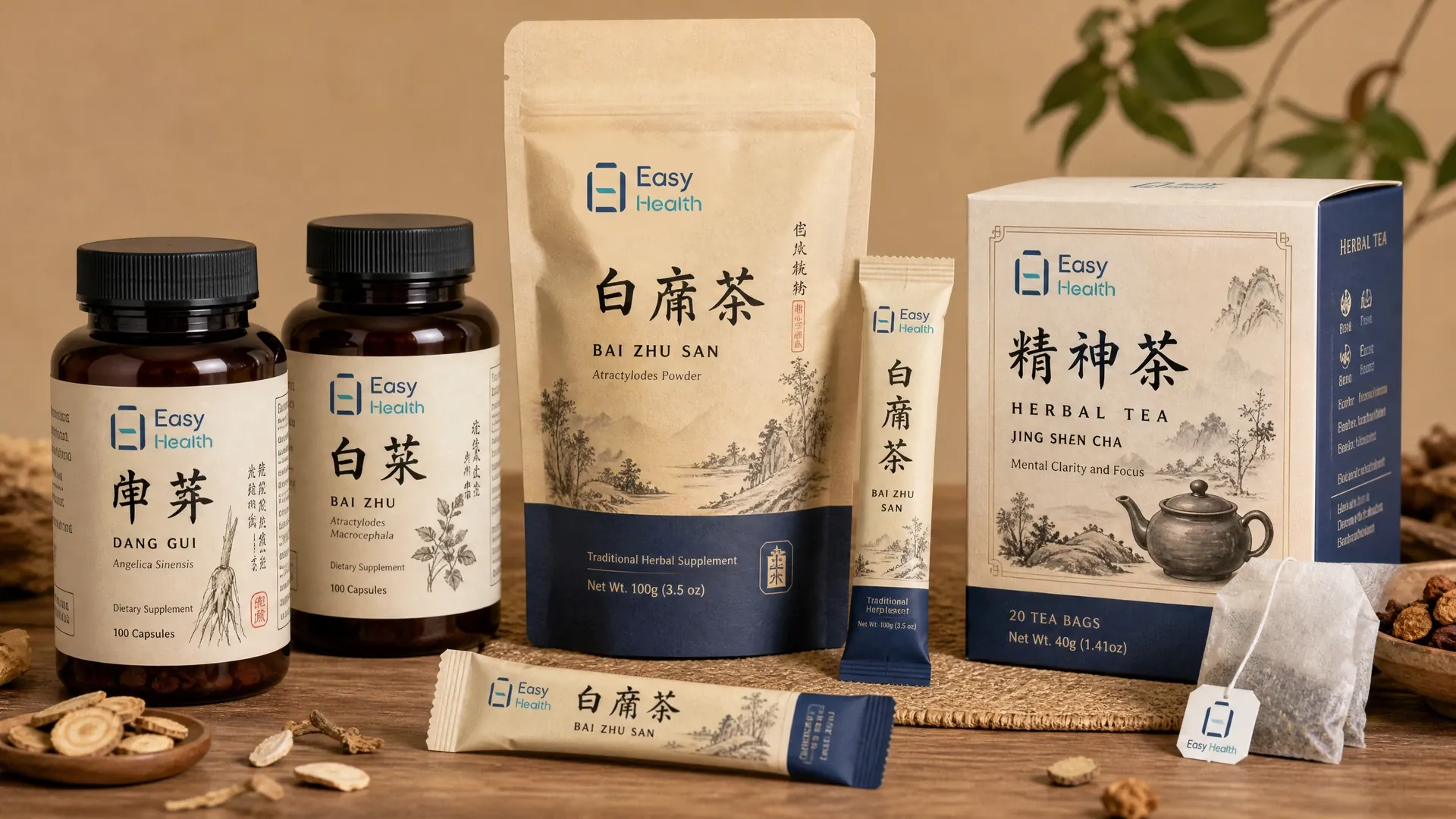
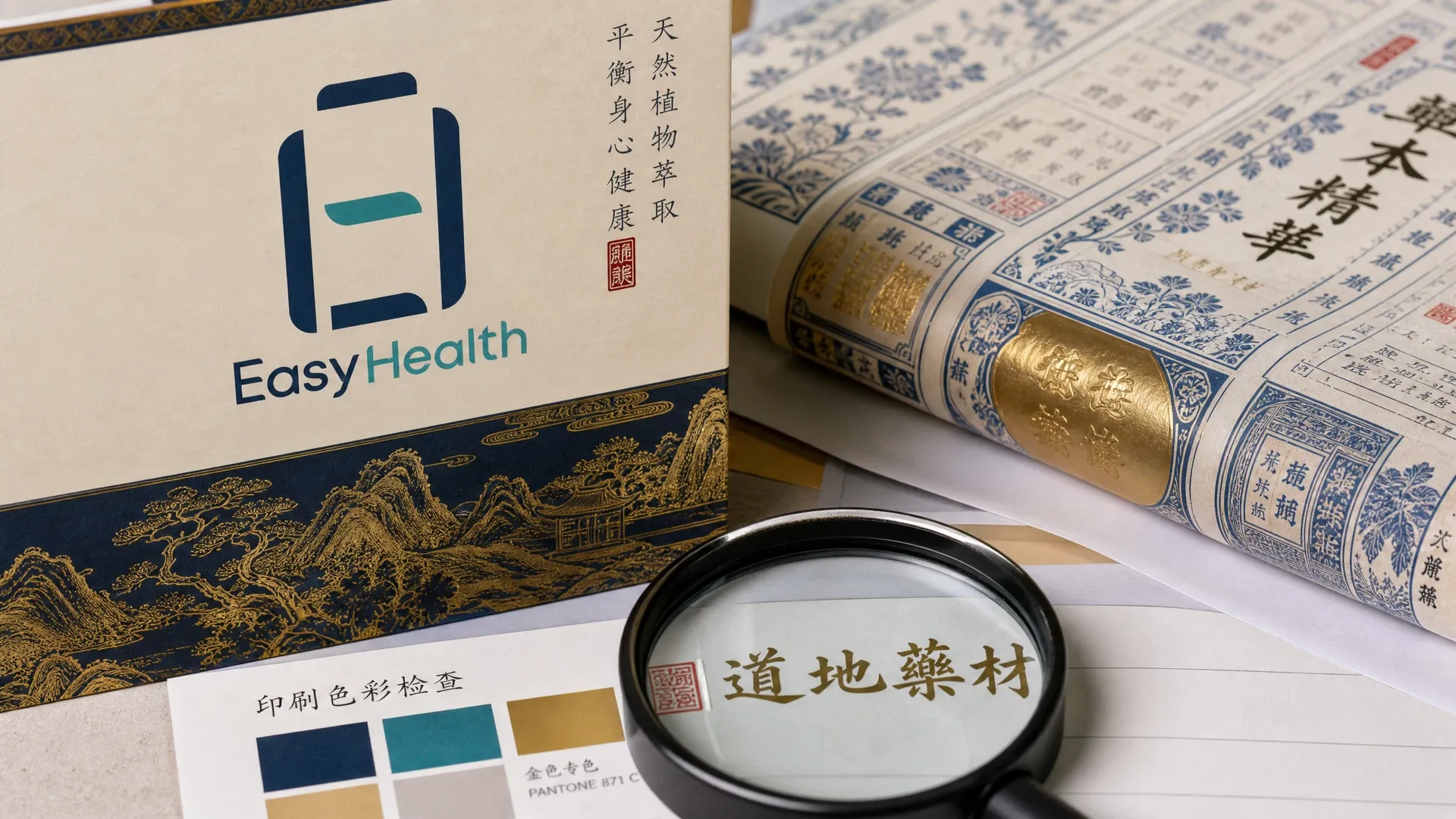
Visual guide: dosage forms and packaging structures
The visuals map each TCM dosage form to key packaging details: tear notches for granule stick-packs, blister cavity sizing for pills, inner plugs and secondary seals for pastes, tea bag mesh and outer sachet gas flushing, and anti-static layers for powders. Use them to brief your team on materials and opening features.
TCM paste packaging: anti-stick surfaces and leakage control
Pastes are viscous and often sugar- or oil-based. Priorities include internal coatings, inner plugs and secondary seals. Use glass or high-barrier plastic jars with anti-stick surfaces and leak-resistant closures; provide a measuring spoon and bilingual usage guidance for multiple servings. Control filling temperature and viscosity to ensure smooth dispensing and clean sealing; add a peel-off induction or film seal for first-open evidence. Cartons and leaflets should clearly state storage conditions and post-opening guidance with “best before”/“use by” phrasing. We provide sampling and accessory coordination for paste packaging, confirmed case-by-case by our account manager.
- Glass or high-barrier plastic with inner plug
- Anti-stick surfaces and secondary sealing
- Peel-off seal for first-open evidence
- Include spoon and bilingual instructions
Tea bags and powders: mesh, gas flushing and anti-static
Tea bags must balance infusion efficiency with dust retention. Options include heat-sealable filter paper or nylon/PLA pyramids; select mesh density to match cut size. Individual outer sachets may use nitrogen or inert gas flushing to reduce oxidation and aroma loss. For powders, consider anti-static inner layers to improve flow and dosing accuracy; for hygroscopic powders, adopt foil structures and adequate seal widths. Both favour unit-dose formats, with clear brewing/usage, storage and batch information on the outer carton. Easy Health coordinates material supply and print details, and can arrange pilot samples for infusion and pour tests.
- Match mesh to herb cut size
- Consider nitrogen flushing for sachets
- Use anti-static films for powders
- Foil structures with adequate seal width
Packaging coordination workflow
- Needs and dosage evaluation:Review formula traits, moisture sensitivity, volatility and usage scenarios to suggest initial structures and formats.
- Material and structure selection:Propose feasible films, bottles/jars and accessories by barrier, heat, anti-static and light needs.
- Sampling and filling trials:Arrange trial samples to review filling, sealing, tearability and pourability, then fine-tune.
- Label and carton layouts:Coordinate label/carton print details with batch/date fields and bilingual layouts.
- Regulatory checkpoints:For proprietary Chinese medicines, help check common labelling elements under Cap. 549 and related rules.
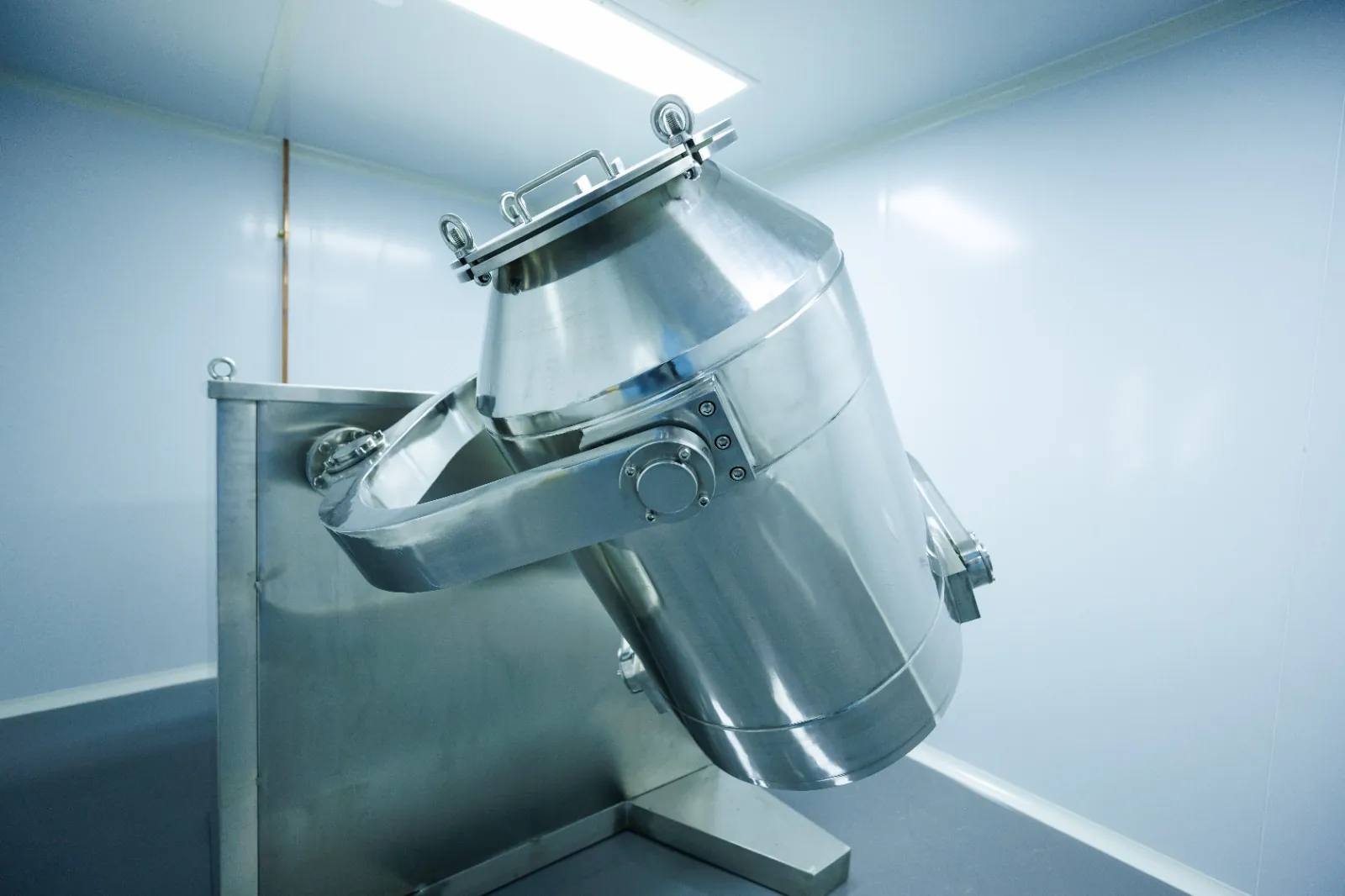
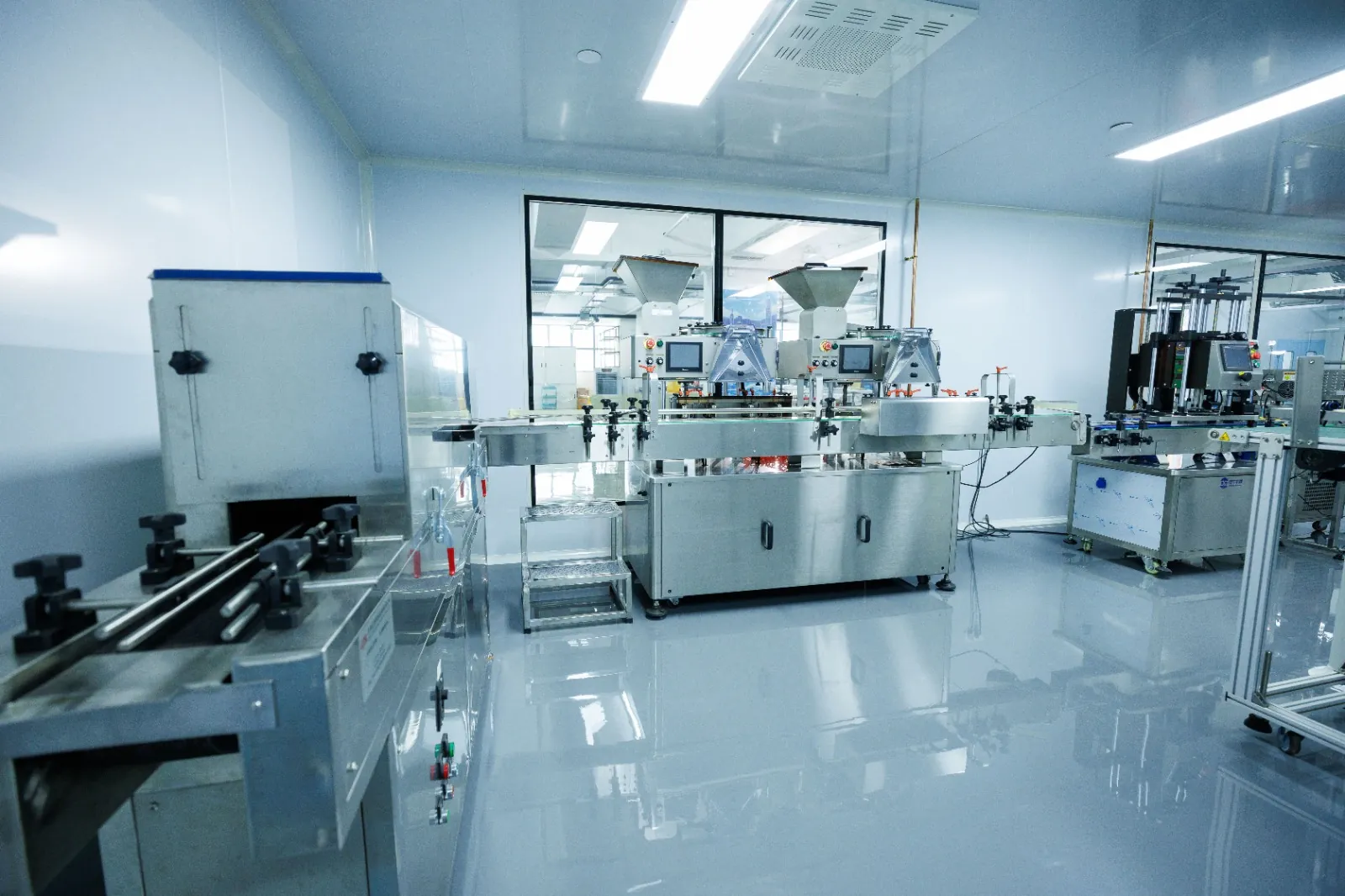
Inside the Easy Health Hong Kong Facility

Comparison of packaging formats for granules, pills and pastes
| Aspect | Granules | Pills | Pastes |
|---|---|---|---|
| Typical packaging | Stick or sachet + carton | Light-resistant bottle or blister + carton | Glass or barrier plastic jar + plug + carton |
| Protection focus | High moisture barrier film | Light shielding and low gas permeability | Leak prevention and aroma retention |
| How it is used | Tear open one dose | Take single pills or pour from the bottle | Scoop out with a spoon |
| Typical add-ons | Desiccant (in the carton) | Liner or insert | Peel seal and spoon |
See the sections below for tea bags and powders. This is general guidance only; the final solution is assessed and confirmed by the account manager for each project.
Pre-brief checklist
- Confirm dosage form and unit-dose or multi-dose intent
- State moisture sensitivity, aroma/volatile concerns, light and heat needs
- Select inner film or bottle barrier grade and closure method
- Decide on nitrogen flushing, desiccant placement and portioning
- Prepare bilingual label/leaflet and date fields
- Arrange samples to test filling, sealing, tear and pour performance
TCM dosage form packaging FAQs
How do I choose a moisture barrier for granules or powders?
Assess moisture sensitivity via water activity and product moisture, then select foil (highest), metallised or high-barrier co-ex films. Use PET or paper-laminate outers for tear feel; PE or sealable inners for heat sealing. We recommend sampling and caking checks under intended storage and transit conditions.
How can packaging help manage odour from pills with volatile oils?
Choose low-permeability bottles with suitable closure liners and manage headspace. Avoid label seam pathways for leakage. A carton sleeve reduces light exposure. For single doses, consider blister structures with lidded foil.
How can paste packaging help manage stringing and rim soiling?
Control filling temperature/viscosity, use anti-stick interiors and inner plugs. Add a clean-up step and a peelable seal for first-open integrity. Pilot runs help tune flow rates and nozzle geometry.
Do tea bags need nitrogen flushing?
It depends on oxidation sensitivity and aroma targets. For volatile-rich blends or longer shelf-life, consider nitrogen or inert gas in the outer sachet with oxygen-barrier films. Run retention and infusion tests before deciding.
Which labelling rules apply to TCM packaging labels and leaflets?
For proprietary Chinese medicines, refer to requirements under the Chinese Medicine Ordinance (Cap. 549) and related regulations. Prepackaged foods in Hong Kong involve Cap. 132W and the “1+7” nutrition scheme. We can help check common elements and bilingual layouts; confirm specifics with relevant bodies or advisers.
Related Packaging Services
Discuss TCM dosage form packaging with Easy Health
Easy Health (Hong Kong facility) offers health supplement OEM/ODM, labels and cartons, plus bottle/sachet/stick/blister formats. Each project is individually assessed by an account manager who coordinates sampling and packaging production. Where FSSC 22000/GMP documentation is relevant, we review the scope and evidence with you on a project basis. Message us on WhatsApp to discuss your product and packaging needs.
Last updated: